

Curious about the types of silver metal used in jewelry? This comprehensive guide is designed for jewelry buyers, collectors, and enthusiasts who want to make informed purchasing decisions, avoid low-quality items, and appreciate the craftsmanship behind each piece. Many types of silver are available on the market today, offering a wide range of options for different preferences and needs. These silver metals include a variety of alloys and materials used in jewelry, each offering unique characteristics and quality standards.
Understanding the differences between pure silver and popular alloys like sterling and Argentium is essential for selecting the right jewelry, ensuring authenticity, and preserving value. Many silver alloys are created by combining silver with two or more elements to achieve specific properties such as increased durability, tarnish resistance, or a particular appearance. While silver comes in many forms, there are also various types of gold plating for jewellery that you might consider for a different finish and appearance. Whether you’re seeking fine jewelry or cost-effective options, knowing these types will help you make informed choices.
Key Takeaways
-
Silver jewelry often utilizes alloys to enhance durability and appearance, with common types including pure silver, sterling silver, and Argentium silver.
-
Quality marks on silver jewelry are crucial for verifying purity and authenticity, with common testing methods including X-ray testing and wet chemical analysis.
-
Proper care and maintenance of silver jewelry, such as regular cleaning and storage in airtight containers, are vital for preserving its beauty and longevity.
Understanding Silver Metal Alloys
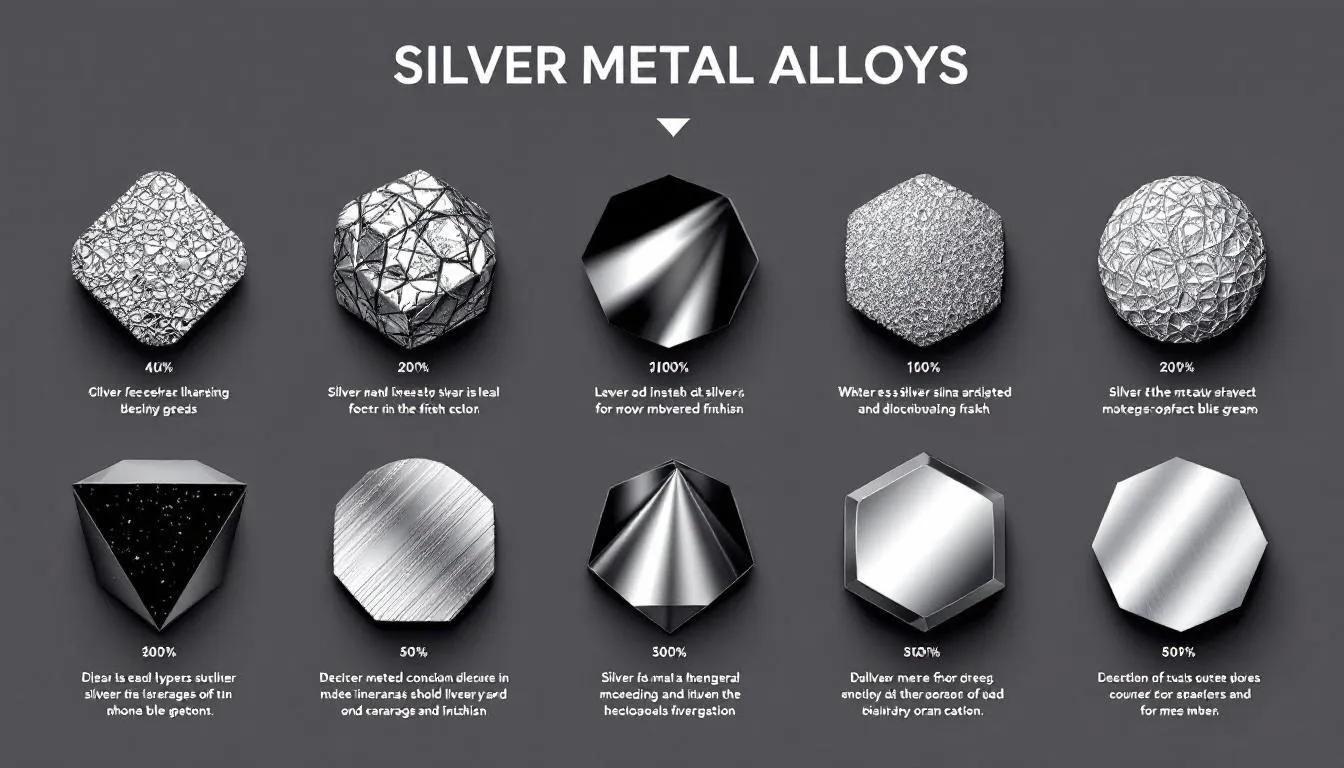
Silver is a versatile and beloved metal in jewelry making, but pure silver—known as fine silver—is often too soft for practical use in everyday jewelry. To address this, jewelers use silver alloys, which are mixtures of silver and other metals designed to improve durability, appearance, and overall quality.
What Are Silver Alloys?
Alloys are created by blending silver with metals like copper, zinc, or germanium. Silver alloys are composed of silver combined with two or more elements to achieve specific properties such as increased strength, durability, or resistance to tarnish. This process results in more robust and tarnish-resistant pieces suitable for daily wear, often featuring layered metal designs.
Common Types of Silver Alloys
Here are the most common types of silver alloys used in jewelry, and understanding these different types of silver metal and their quality grades will help you choose pieces that best match your needs:
-
Fine Silver (.999): Fine silver, marked .999, contains 99.9% silver and is softer than sterling silver.
-
Sterling Silver (.925): Sterling silver is an alloy of 92.5% silver and 7.5% copper, making it the most common type of silver used in jewelry.
-
Argentium Silver: Argentium silver is an alloy with a minimum of 92.5% silver that includes germanium, which enhances tarnish resistance.
-
Coin Silver: Coin silver contains 90% silver and 10% copper.
-
Silver-Filled: Silver-filled jewelry consists of a thin layer of sterling silver bonded to a base metal, typically brass, comprising 5% to 10% silver by weight.
-
Nickel Silver (German Silver): Nickel silver, also known as German silver, contains no actual silver and is mainly composed of copper, nickel, and zinc.
-
Tibetan Silver: Tibetan silver refers to a costume jewelry alloy that usually contains no real silver and may consist of metals like tin and nickel.
Why Use Silver Alloys?
The addition of other metals to silver not only enhances its physical properties but also expands its range of applications in jewelry making. The right alloy can significantly improve the metal’s hardness, making it more suitable for intricate designs and everyday wear. Silver nanoparticles (AgNPs) range from 1 to 100 nanometers and have high antimicrobial effectiveness due to their surface-area-to-volume ratio.
This versatility is what makes silver alloys so valuable in the creation of high-quality, long-lasting jewelry pieces. Next, let’s explore the unique characteristics of pure silver.
Pure Silver (Fine Silver .999)
Pure silver, also known as fine silver or FS999, boasts an impressive purity level of 99.9%. Fine silver, marked .999, contains 99.9% silver and is softer than sterling silver. Key characteristics include:
-
High resistance to tarnish, making it ideal for low-maintenance jewelry.
-
Malleability that allows for exquisite and intricate designs, favored by artisans for detailed earrings and pendants.
-
Softness that makes it more prone to scratches and dents, limiting its use in everyday wear items like rings and bracelets.
Despite its drawbacks, fine silver remains a popular choice for those who value purity and elegance. Often used in pieces less subject to heavy wear, it helps jewelry retain its pristine condition over time. Fine silver is highly resistant to tarnish, making it ideal for jewelry like earrings and necklaces.
For those seeking jewelry that combines beauty with minimal maintenance, fine silver is an excellent choice.
While fine silver is valued for its purity, most jewelry uses alloys like sterling silver for added durability. Let’s look at sterling silver next.
Sterling Silver (.925)
Sterling silver is an alloy of 92.5% silver and 7.5% copper, making it the most common type of silver used in jewelry. The 925 hallmark is a percentage of pure silver, 92.5% of the composition. The remaining 7.5% is usually copper or other types of metals. The blend ensures the durability of sterling silver and its beauty. Sterling silver is harder than fine silver but it is still soft compared to other metals. The addition of copper not only enhances the metal’s strength but also makes it more resistant to tarnishing compared to pure silver.
Sterling silver is the most popular type of silver for making jewelry, thanks to its versatility and affordability. These qualities make sterling silver ideal for:
-
Jewellery Shops in London – discover some of the best jewellery shops in London for every style
-
Rings
One of the key features of sterling silver jewelry is its hallmark, often stamped with ‘925’ to indicate its purity. These hallmarks not only signify the amount of pure silver content but can also provide information about the date of completion and the country of origin, adding an element of historical interest to the piece.
Its blend of aesthetic appeal, durability, and traceability—highlighted in the latest sterling silver jewellery trends for 2025—makes sterling silver, including sterling silver anklet bracelets for every occasion, highly desirable for both jewelry makers and consumers.
As jewelry trends evolve, new alloys like Argentium silver have emerged to offer even greater tarnish resistance and ease of care.
Argentium Silver and Non-Tarnish Alloys
Argentium silver is an alloy with a minimum of 92.5% silver that includes germanium, which enhances tarnish resistance. Non-tarnish alloys like Argentium are often at least 92.5% silver but can still tarnish under extreme conditions. Key features include:
-
Incorporation of germanium into the alloy
-
Enhanced durability
-
A brilliant shine that lasts longer than traditional sterling silver
-
Available in grades of 935 and 960
-
Higher silver content than standard sterling, making it an excellent choice for high-end jewelry
One of the standout features of Argentium silver is its ease of use in jewelry making. It can be fused without the need for solder, allowing for more innovative and intricate designs. Additionally, the presence of the element germanium prevents the formation of firestains during heating, making the metal more user-friendly for artisans.
Although Argentium silver is typically more expensive, its long-lasting beauty and ease of maintenance make it a worthwhile investment for quality silver jewelry.
For those interested in historical and collectible pieces, coin silver offers a unique blend of tradition and durability.
Coin Silver Jewelry
Coin silver contains 90% silver and 10% copper. Coin silver is an alloy of 90% silver and 10% copper, historically used in the U.S. for making coins and jewelry. Coin silver jewelry carries a unique historical charm, as it was originally made from melted-down U.S. silver coins and monetary coins. Quality stamps like .900 are commonly used for coin silver jewelry.
Over time, most U.S. coins stopped being made from real silver, leading to a decline in coin silver jewelry. This type of silver jewelry was especially popular in the 19th century and remains highly sought after by antique collectors today.
The appeal of coin silver jewelry lies not only in its craftsmanship but also in its historical significance. Vintage pieces often feature intricate designs and exceptional artistry, making them valuable collectibles, much like exquisite handcrafted jewellery and custom designs created by modern artisans.
If you’re looking for affordable alternatives to solid silver, silver-filled jewelry is a practical option.
Silver-Filled Jewelry
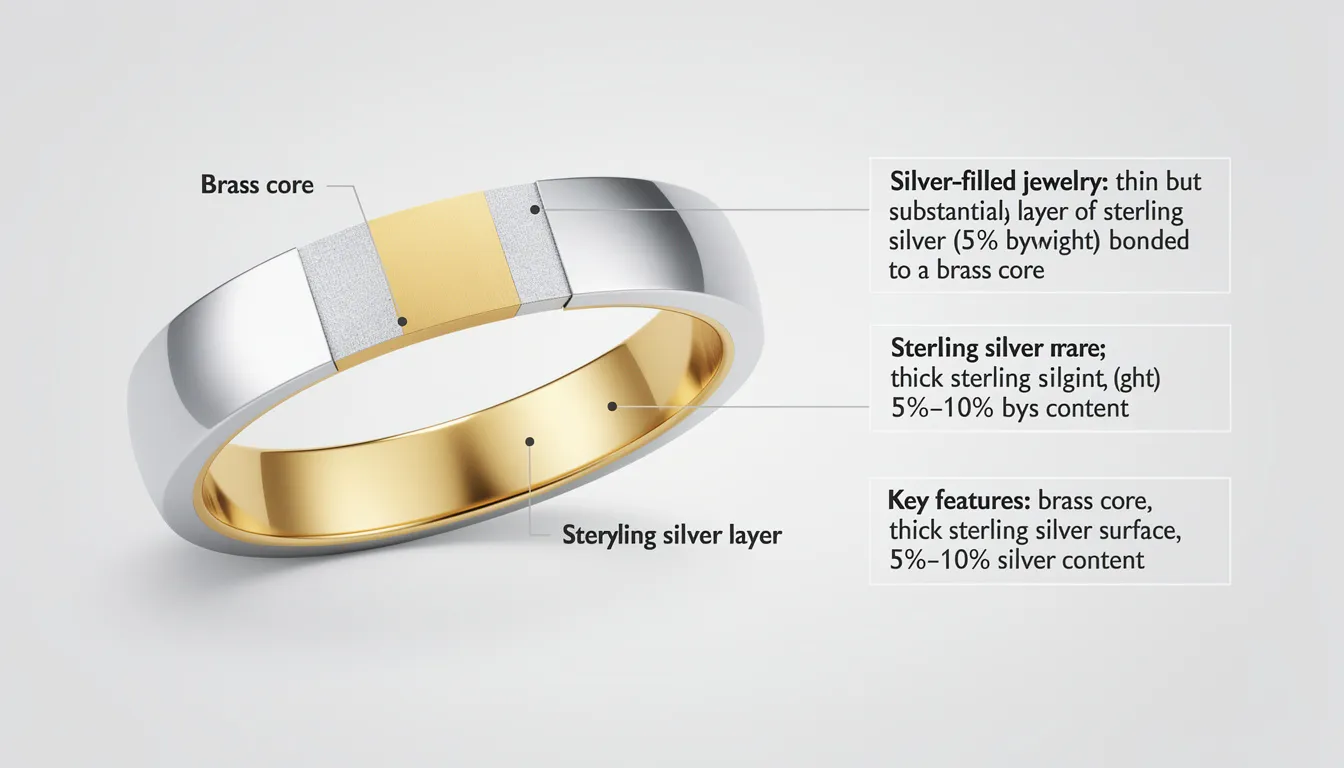
Silver-filled jewelry consists of a thin layer of sterling silver bonded to a base metal, typically brass, comprising 5% to 10% silver by weight. Silver-filled metal is made with a thick layer of silver bonded to a base metal. Key features include:
-
A core material, typically brass
-
A substantial layer of sterling silver bonded to the surface
-
Sterling silver content ranging from 5% to 10%
Exquisite Handmade Gold-Plated Ring with Unique Design Verdant Harmony: Handcrafted Double Emerald Gold-Plated Ring This combination provides a durable and attractive option for those on a budget. Check out our Gold Plated Rings Collection | Elegant and Versatile | Saras Beads UK for a diverse range of styles.
While silver-filled jewelry is more durable than silver-plated items, it does have some limitations. Over time, the base metal may show through, affecting the piece’s appearance. However, with proper care and regular cleaning using a silver polishing cloth, silver-filled jewelry can maintain its beauty for a long time.
Silver-filled jewelry offers a compelling balance between silver quality and affordability, making it a great option for those who want to buy silver.
If you’re seeking even more budget-friendly options, sterling silver jewelry, such as this Small Hamsa Hand and Evil Eye Necklace or other Hamsa hand with eye rhodium-plated sterling silver necklaces, is another alternative.
Silver Plated Jewelry
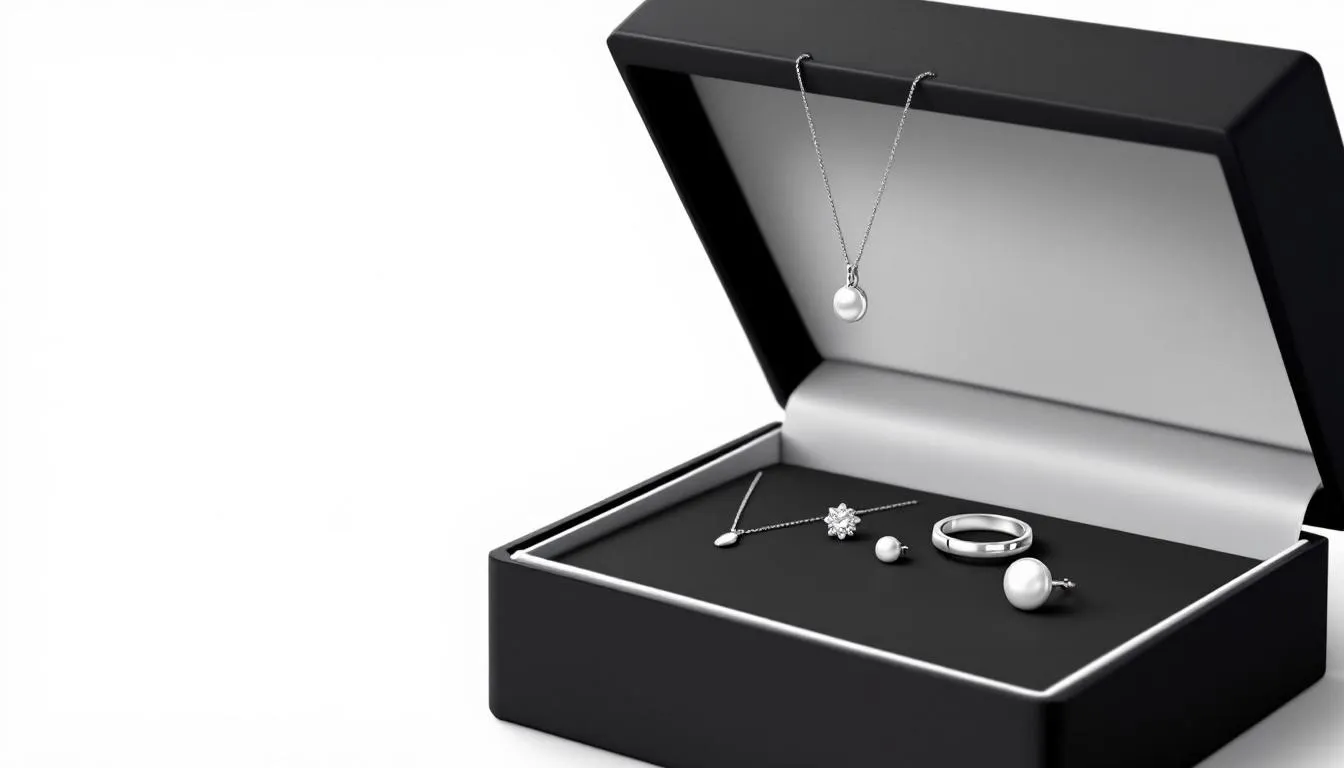
Silver-plated jewelry features a thin layer of silver applied over a base metal, such as brass, through a process that involves heat and pressure. This affordability makes silver-plated items, as well as similar gold plating techniques, popular choices for fashion and costume jewelry.
However, the thin silver layer means that these pieces are more prone to tarnishing and wear, leading to a shorter lifespan compared to sterling silver products.
Despite these limitations, silver-plated jewelry remains a favorite for those looking to accessorize on a budget. Its affordability allows for a wide range of designs and styles, making it easy to keep up with the latest fashion trends without breaking the bank.
Proper storage and occasional polishing help extend the life of silver-plated jewelry, keeping it a vibrant part of your silver plate collection.
For those interested in costume jewelry, nickel silver offers a unique look but comes with important considerations.
Nickel Silver (German Silver)
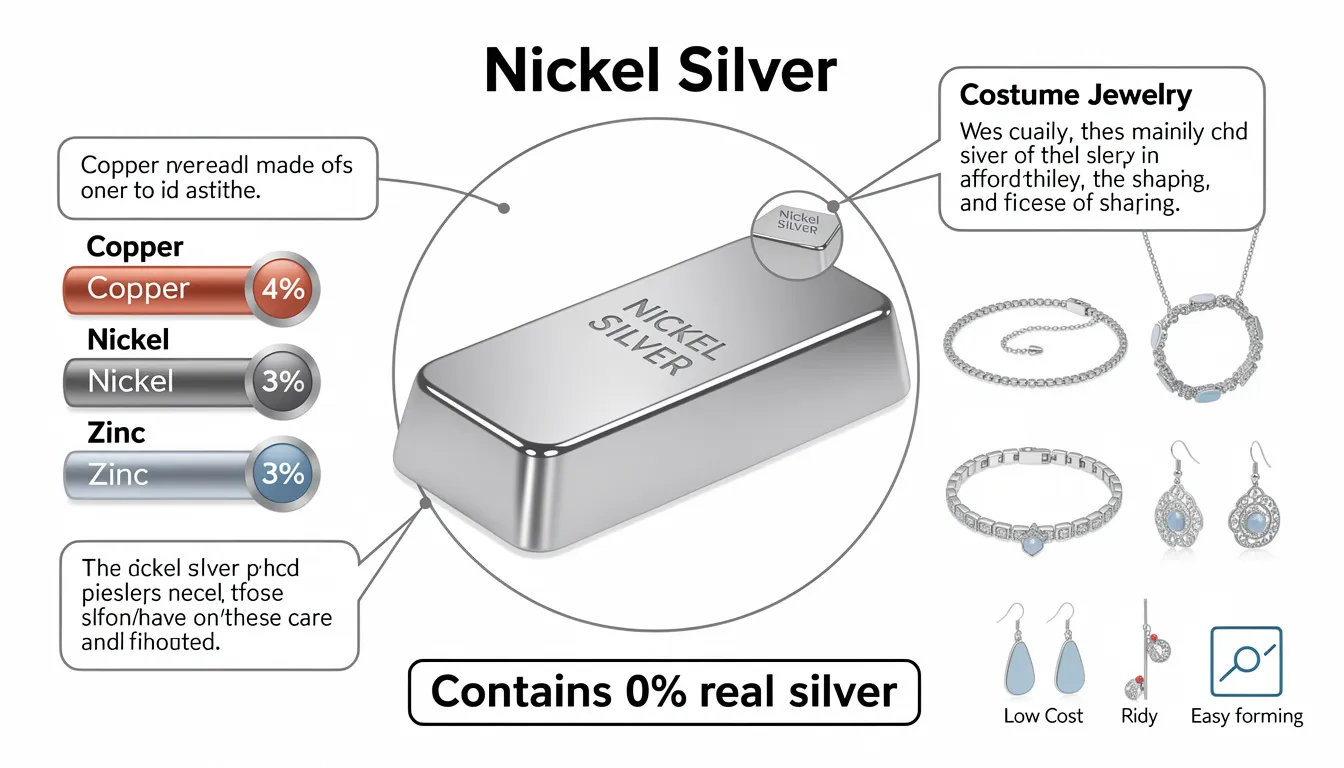
Nickel silver, also known as German silver, contains no actual silver and is mainly composed of copper, nickel, and zinc. Instead, it is primarily composed of copper, nickel, and sometimes zinc. This alloy is commonly used in costume jewelry due to its affordability and ease of shaping. However, it’s important to note that nickel silver has zero silver content, which can be misleading to some consumers.
An issue with nickel silver is that about 15% of the population experiences sensitivity to nickel allergy, which can cause allergic reactions. Despite this, its strength and aesthetic appeal make it a popular choice for fashion jewelry.
If you’re considering nickel silver pieces, it’s advisable to check for any potential allergies and opt for items that are labeled to avoid misunderstandings.
For those who appreciate cultural artistry, Tibetan and tribal silver offer distinctive designs but require careful consideration regarding metal content.
Tibetan and Tribal Silver
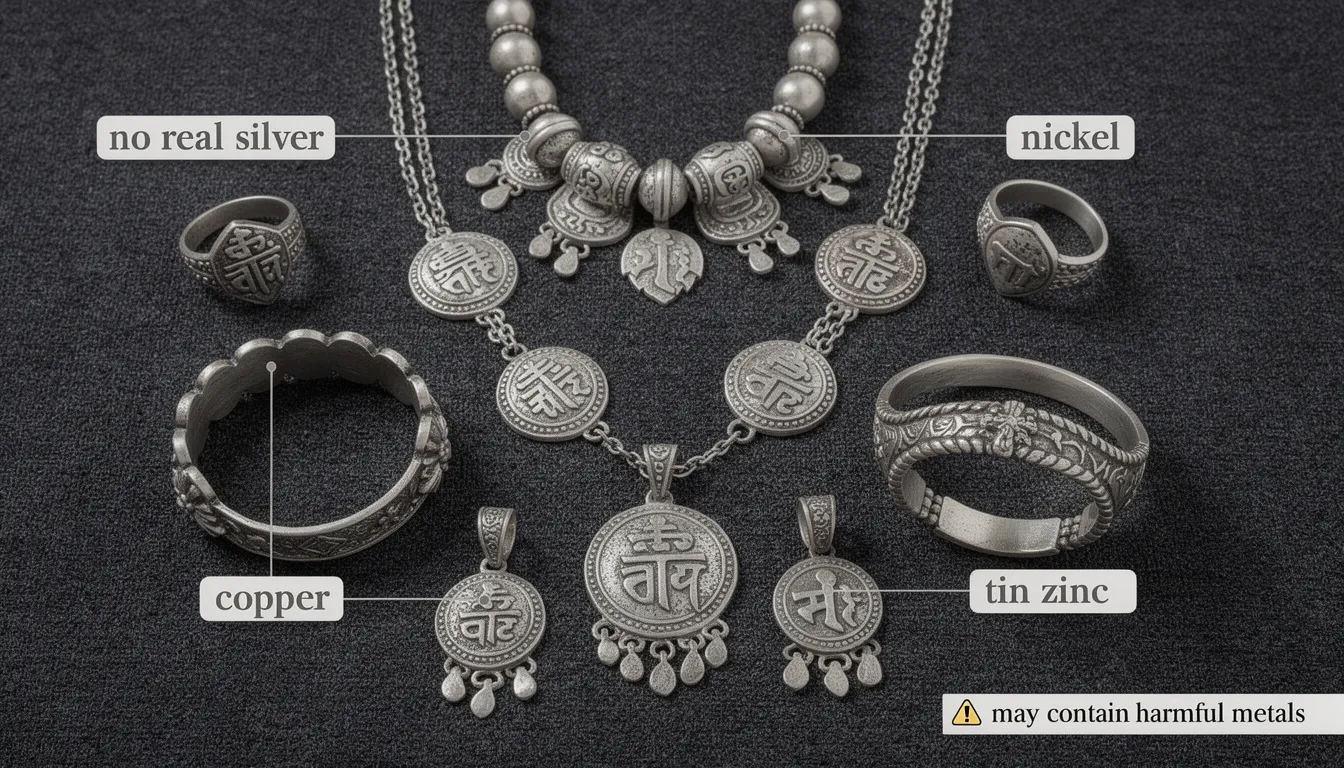
Tibetan silver refers to a costume jewelry alloy that usually contains no real silver and may consist of metals like tin and nickel. Tibetan silver often contains no real silver and may include harmful metals. Tibetan and tribal silver jewelry are renowned for their unique and intricate designs, often reflecting rich cultural heritage, much like Hamsa Hand with Evil Eye sterling silver bracelets and other protective motifs. However, these pieces typically contain little to no actual silver, being primarily made of base metal alloys. Common metals found in Tibetan silver include nickel, copper, tin, and zinc, which can sometimes pose health risks due to the presence of harmful elements.
The value of tribal silver lies more in its artistic and cultural significance rather than the metal’s monetary worth. When purchasing tribal silver jewelry, it’s essential to verify the metal content to avoid harmful alloys and to appreciate the craftsmanship and design of each piece.
Tibetan and tribal silver provide a beautiful and meaningful option for those who value unique and culturally rich jewelry, similar in spirit to Hamsa Hand with Evil Eye charm earrings and related symbolic pieces and other sterling silver Hamsa hand bracelet with evil eye designs.
If you’re interested in regional craftsmanship or symbolic motifs like the Hamsa Hand Eye of Protection necklace, silver from Bali, Thailand, and Mexico offers another layer of artistry and tradition.
Bali, Thai, and Mexican Silver
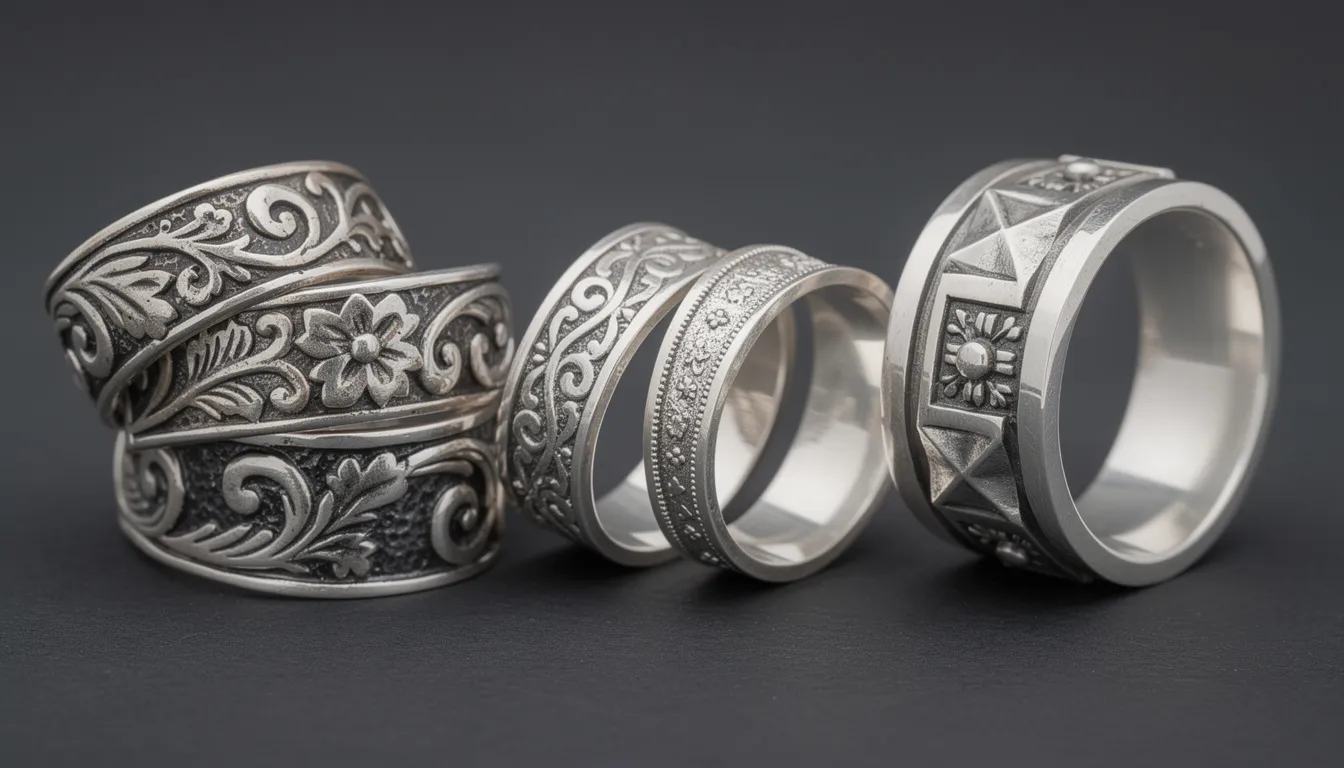
Silver jewelry from Bali, Thailand, and Mexico is celebrated for its craftsmanship and intricate designs. However, the quality of silver from these regions can vary significantly, with some pieces containing lower-grade silver alloys. Not all jewelry labeled as originating from these regions guarantees genuine silver content, making it crucial for consumers to look for quality stamps or labels.
When buying silver from Bali, Thailand, or Mexico, verify the silver content by checking for a quality stamp. This not only ensures that you’re buying genuine silver but also helps you avoid pieces made from lower-grade alloys. Being mindful of these aspects allows you to enjoy the beauty and craftsmanship of exotic silver jewelry with confidence.
To ensure you’re getting authentic silver, it’s important to understand quality marks and how to test for purity.
Quality Marks on Silver Jewelry
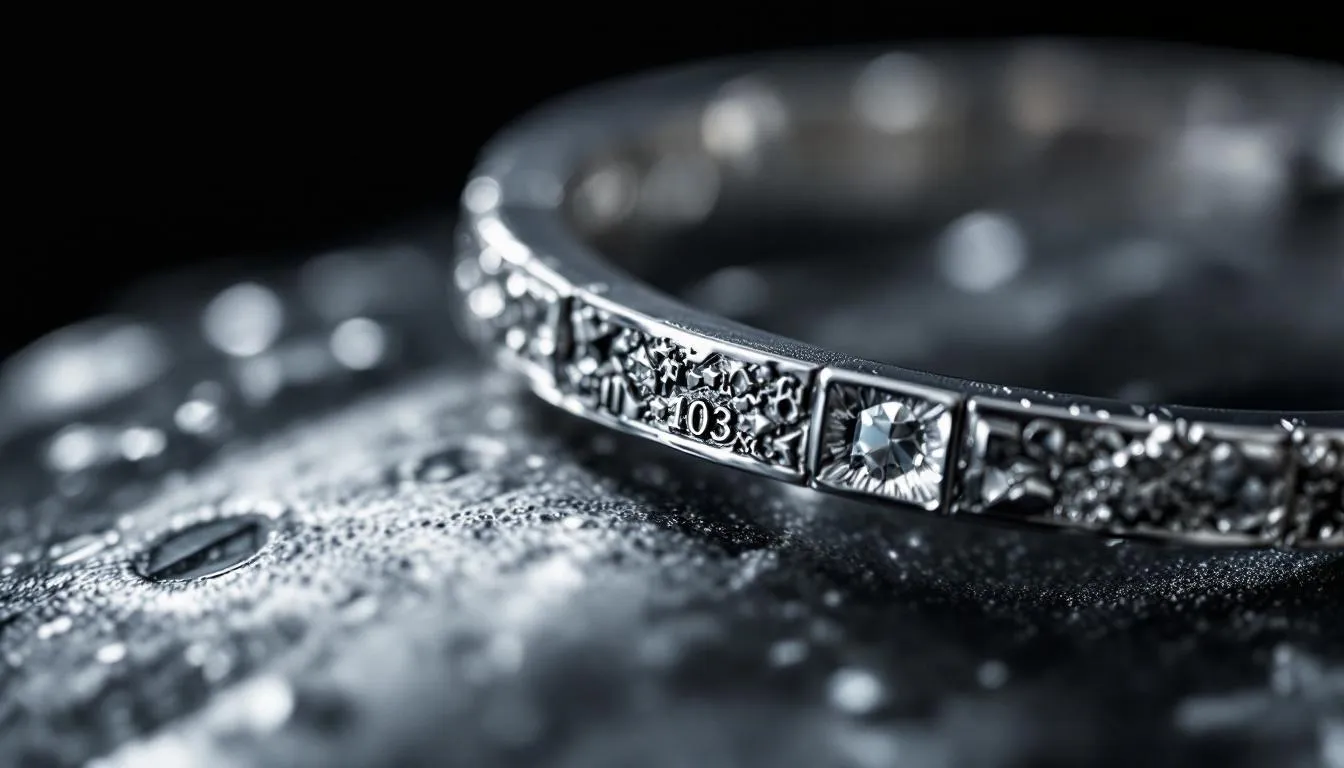
Quality marks on silver jewelry are essential for identifying the purity and authenticity of the metal. Often requiring magnification to read, these stamps indicate the silver content and sometimes additional information such as the date of completion and country of origin. The higher the silver quality mark number, the purer the silver content. Many low-quality silver items lack proper quality stamps, misleading consumers about their actual silver content. Jewelry artists and manufacturers are legally required to stamp pieces with quality designations when space permits.
Understanding these marks helps consumers make informed purchasing decisions and ensures they are getting quality silver items, especially when paired with educational jewellery articles on materials and trends.
While false markings are relatively uncommon, it’s still important to purchase silver jewelry from reputable sources and look for these quality stamps. If a piece lacks any markings, additional testing methods such as acid tests can be performed to verify its authenticity.
Being vigilant about quality marks allows you to confidently invest in silver jewelry that meets your quality mark standards.
If you want to confirm the authenticity of your silver, testing methods are available.
Testing Silver Purity
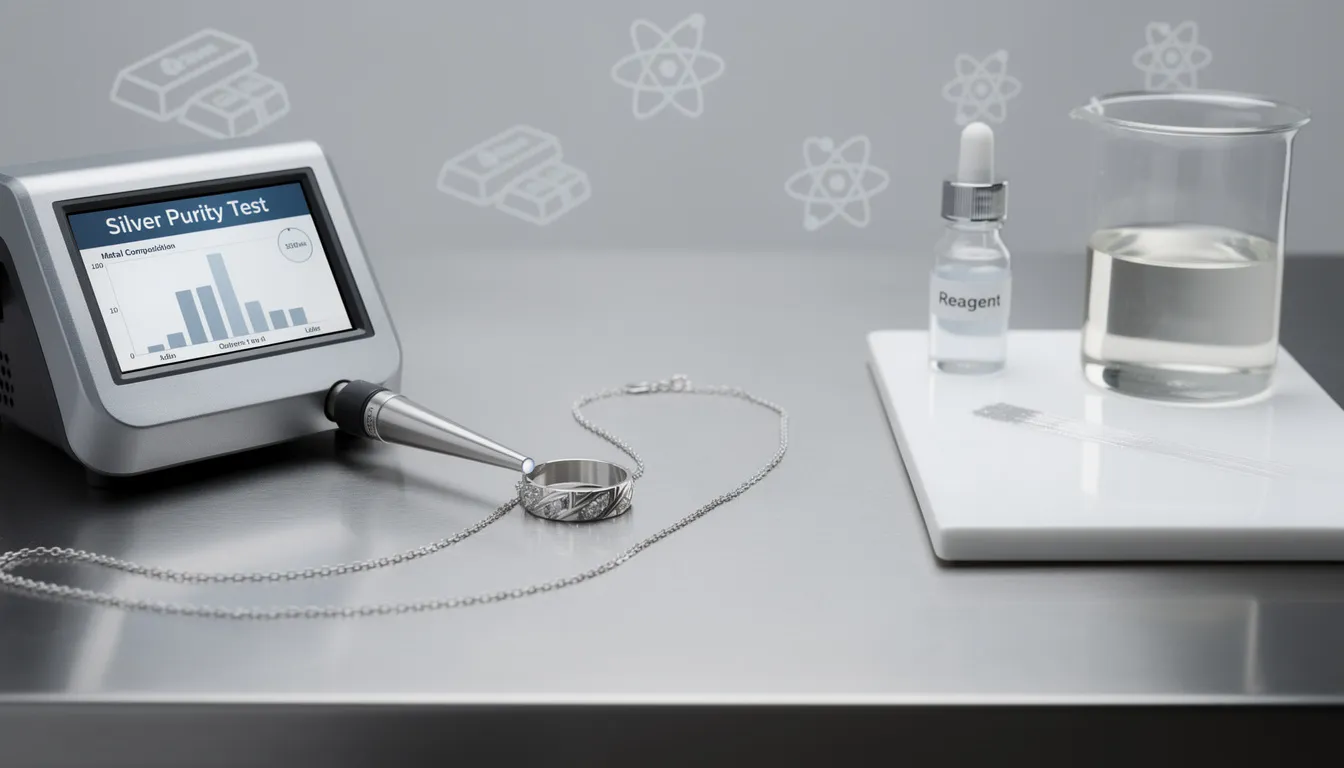
Testing the purity of silver jewelry is crucial for confirming its value and authenticity. Common methods include X-ray testing and wet chemical analysis.
-
X-ray testing: Accurate and non-destructive, but typically requires sending jewelry to a lab and involves expensive equipment.
-
Wet chemical methods (such as silver titration): Cost-effective and reliable for measuring silver content in complex samples.
-
Acid tests: Available for consumers as a more accessible option for verifying authenticity.
Titration is particularly useful for long-term use as it does not require calibration, ensuring consistent results over time. These testing methods are invaluable for both jewelers and consumers who want to ensure they are dealing with genuine and high-quality silver pieces.
Once you’ve confirmed your silver’s authenticity, proper care will help maintain its beauty and value, particularly for exquisite jewellery and handcrafted custom designs you plan to wear daily.
Caring for Your Silver Jewelry
Proper care is essential for maintaining the beauty and longevity of silver jewelry. Follow these tips to keep your pieces looking their best.
Cleaning Tips
-
Clean your silver jewelry regularly using a mild dish soap mixed with warm water.
-
Use soft polishing cloths, preferably made from 100% cotton, to safely remove tarnish without scratching the surface.
-
Silver tarnish is easy to clean with readily available polishing products.
-
Tarnish is most easily removed when it first becomes visible.
Storage Recommendations
-
Store silver jewelry in airtight containers to help prevent sterling silver tarnish and silver tarnish.
-
Avoid humid environments, such as bathrooms.
-
Store silver jewelry in a cloth pouch or a separate compartment in your jewelry box to minimize scratches and damage.
Avoiding Damage
-
Avoid exposing silver jewelry to household chemicals, like bleach and ammonia, as these can damage sterling silver.
-
Wearing silver jewelry often helps prevent tarnishing.
Following these simple care steps ensures that your silver jewelry remains a cherished part of your collection for years to come, especially when you choose unique handcrafted pieces that elevate your style.
To wrap up, let’s summarize the key points for making the most of your silver jewelry collection.
Summary
Understanding Silver Types
In conclusion, understanding the different types and grades of silver is key to making informed decisions about your jewelry. From the purity of fine silver to the durability of sterling silver and the unique beauty of tribal pieces, each type of silver offers unique benefits.
Recognizing Quality and Care
By learning how to care for your silver jewelry and recognizing quality marks, you can enjoy the lasting beauty and value of your treasured pieces. Regular cleanings of all silver items will prevent tarnish and keep silver bright and sparkly.
Embracing Silver’s Versatility
Embrace the world of silver with confidence and let its timeless elegance shine in your collection.
Frequently Asked Questions
What is the main difference between sterling silver and fine silver?
Sterling silver is composed of 92.5% silver mixed with other metallic elements like copper to increase durability, while fine silver is 99.9% pure silver, making it a soft metal with a more vitreous luster. Fine silver is more prone to scratches and dents, whereas sterling silver offers greater strength for everyday wear. Sterling silver is widely used in jewellery making due to its balance of beauty and toughness, making it ideal for rings, bracelets, and necklaces.
How can I tell if my silver jewelry is genuine?
The best way to verify silver quality is through professional lab testing, which provides accurate results. For consumers, acid tests are also available as a practical option and can be purchased at hardware stores. Additionally, look for quality stamps or hallmarks on finished silver jewelry that indicate the silver content, such as .925 for sterling silver or .999 for fine silver jewelry. Buying from reputable sellers who provide quality alloys and proper certification is also recommended to avoid counterfeit or low-quality silver items.
What are the benefits of Argentium silver over traditional sterling silver?
Argentium silver is a type of non-tarnish alloy that contains a minimum of 92.5% silver along with the element germanium, which enhances tarnish resistance. It generally requires less maintenance than traditional sterling silver and offers greater ease in jewelry making, including the ability to fuse without solder. Argentium silver also offers a brighter silver color and improved durability, making it a preferred choice for modern jewellery making. Its tarnish resistance helps maintain the shine longer, reducing the need for frequent polishing silver products.
Why is my silver jewelry tarnishing, and how can I prevent it?
Silver tarnish occurs when silver reacts with sulfur or moisture in the air, causing a darkened layer to form on the surface. Sterling silver tarnish is common due to the copper content in the alloy. Tarnish is easiest to remove when it first becomes visible by using a soft polishing cloth designed specifically for silver. Wearing silver jewelry often helps prevent tarnishing by reducing exposure to air and moisture. Storing silver in airtight containers or anti-tarnish bags further minimizes tarnish buildup. Avoiding contact with household chemicals like bleach and ammonia also protects silver jewelry. Regular cleaning and proper storage are key to preserving the metal’s beauty and longevity.
What is silver-filled jewelry, and how does it differ from other types?
Silver-filled jewelry consists of a thick layer of sterling silver bonded to a base metal, typically brass. This layered metal offers better durability and silver content than silver-plated jewelry but is not solid silver throughout. Silver-filled pieces contain about 5% to 10% silver by weight, making them a quality alloy option for budget-conscious buyers. While silver-filled jewelry can tarnish, it is easier to maintain than silver-plated items. Proper care includes gentle cleaning with polishing silver cloths and avoiding abrasive materials that can wear away the silver layer, exposing the base metal underneath.
Are there any health concerns with wearing nickel silver jewelry?
Nickel silver, also known as a nickel alloy or alpaca silver, contains no actual silver but is mainly composed of copper, nickel, and zinc. It can cause allergic reactions in individuals sensitive to nickel, so it is recommended to avoid wearing nickel silver jewelry if you have a nickel allergy. Due to its base metal composition, nickel silver is often used in costume jewelry rather than fine silver pieces. In the jewelry trade, it is important to clearly label nickel silver items to prevent confusion with real silver alloys. If you are prone to skin sensitivities, consider opting for hypoallergenic metals like sterling silver or fine silver jewelry.
How do I care for and maintain my silver jewelry?
To keep your silver jewelry looking its best, clean it regularly using mild soap and warm water, followed by drying with a soft cloth. Use polishing silver cloths or specialized silver cleaning products to remove tarnish safely. Store silver pieces in airtight containers or anti-tarnish pouches to minimize exposure to air and humidity. Avoid wearing silver jewelry when swimming in chlorinated water or using household chemicals, as these can damage the metal. Wearing your silver jewelry often can also help reduce tarnish buildup by preventing prolonged exposure to air. Proper care extends the life and shine of your precious metals and quality alloys.
What are common silver quality marks to look for?
Common silver quality marks include .999 or FS for fine silver jewelry, indicating 99.9% purity, and .925 or Stg for sterling silver, indicating 92.5% silver content. Argentium silver may also bear a .925 mark but sometimes includes additional branding. Coin silver jewelry typically carries a .900 stamp, representing 90% silver content. Silver-filled items may be marked as SF or 1/20, indicating the silver layer thickness. Silver-plated jewelry usually lacks quality stamps but might have markings like “Silverplate” or “EPNS.” Understanding these marks helps buyers identify genuine silver pieces and avoid low-quality or counterfeit items.
Can silver jewelry be resized or repaired easily?
Yes, most silver jewelry, especially sterling silver and Argentium silver, can be resized or repaired by a professional jeweler. The metal mixture in these alloys allows for solder seams to be made and repaired without compromising the piece’s integrity. Fine silver jewelry is softer and may require more delicate handling during repairs. Silver-filled jewelry can be more challenging to repair due to its layered metal structure, so it’s best to consult a jeweler experienced with this material. Regular maintenance and prompt repairs help preserve the beauty and durability of your silver jewelry.
How do silver prices affect the cost of silver jewelry?
Silver prices fluctuate based on market demand, supply, and economic factors, impacting the cost of silver jewelry. Higher silver prices can increase the price of sterling silver and fine silver jewelry, as these contain significant amounts of precious metals. Silver-filled and silver-plated jewelry usually have lower prices since they contain less actual silver. Understanding silver prices and silver grades helps buyers make informed decisions when purchasing jewelry or investing in precious metals. Keeping an eye on market trends can also guide when to buy silver jewelry for the best value.
What is the difference between silver-plated and silver-filled jewelry?
Silver-plated jewelry has a very thin layer of silver applied over a base metal, often brass or copper. This layer is much thinner than in silver-filled jewelry and can wear off quickly, exposing the base metal underneath. Silver-filled jewelry contains a much thicker layer of sterling silver bonded to the base metal, making it more durable and longer-lasting. While both options are more affordable than solid silver, silver-filled pieces offer better silver content and quality alloys. Proper care and polishing silver can help maintain the appearance of both types, but silver-filled jewelry generally provides greater longevity.
Why do some silver jewelry pieces have a yellow gold appearance?
Some silver jewelry pieces are plated with yellow gold or combined with yellow gold accents to create a two-tone look. This combination offers the beauty of precious metals and adds versatility to jewelry designs. Gold plating over silver provides a luxurious finish while keeping costs lower than solid gold jewelry. When purchasing two-tone pieces, check for quality stamps indicating the silver and gold content. Proper care is needed to maintain both the silver and gold layers, including gentle polishing to avoid damaging the plating.
What should I know about silver clay products?
Silver clay products are made from fine silver particles mixed with an organic binder, allowing artisans to mold and shape silver like clay. After firing, the binder burns away, leaving pure silver jewelry. These products offer intricate designs and are popular among handmade jewellery makers. Silver clay items are typically made from fine silver (.999) and are highly tarnish-resistant. However, due to their softness, they are best suited for earrings, pendants, and other pieces not subject to heavy wear. Proper care includes gentle cleaning and storage to preserve their delicate beauty.
Leave a comment