

Semi precious stones have captured human fascination for millennia, adorning everything from ancient royal crowns to modern mala beads. These gems encompass an extraordinary range of minerals, rocks, and organic materials that bring colour, meaning, and natural beauty to jewellery and décor. Today, they’re more popular than ever—powering the boho necklace trend, stacking bracelets for yoga practitioners, and elegant earrings for everyday wear.
The traditional term “semi precious” emerged from 19th-century European gem traders who reserved “precious” status exclusively for diamond, ruby, sapphire, and emerald. Everything else—from glowing amethyst to iridescent opal—fell into the semi precious category. But here’s what many people don’t realise: some so-called semi precious gemstones, like high-grade tsavorite garnet or Imperial jade, can be extremely rare and command prices that dwarf those of low-quality precious stones. A fine tsavorite might sell for $3,000 to $20,000 per carat, while a commercial-grade diamond fetches just $100.
Whether you’re drawn to semi precious stones for fashion jewellery, spiritual practice, or the simple joy of collecting natural beauty, this guide will walk you through everything you need to know—from classification and care to the most popular gem types on the market.
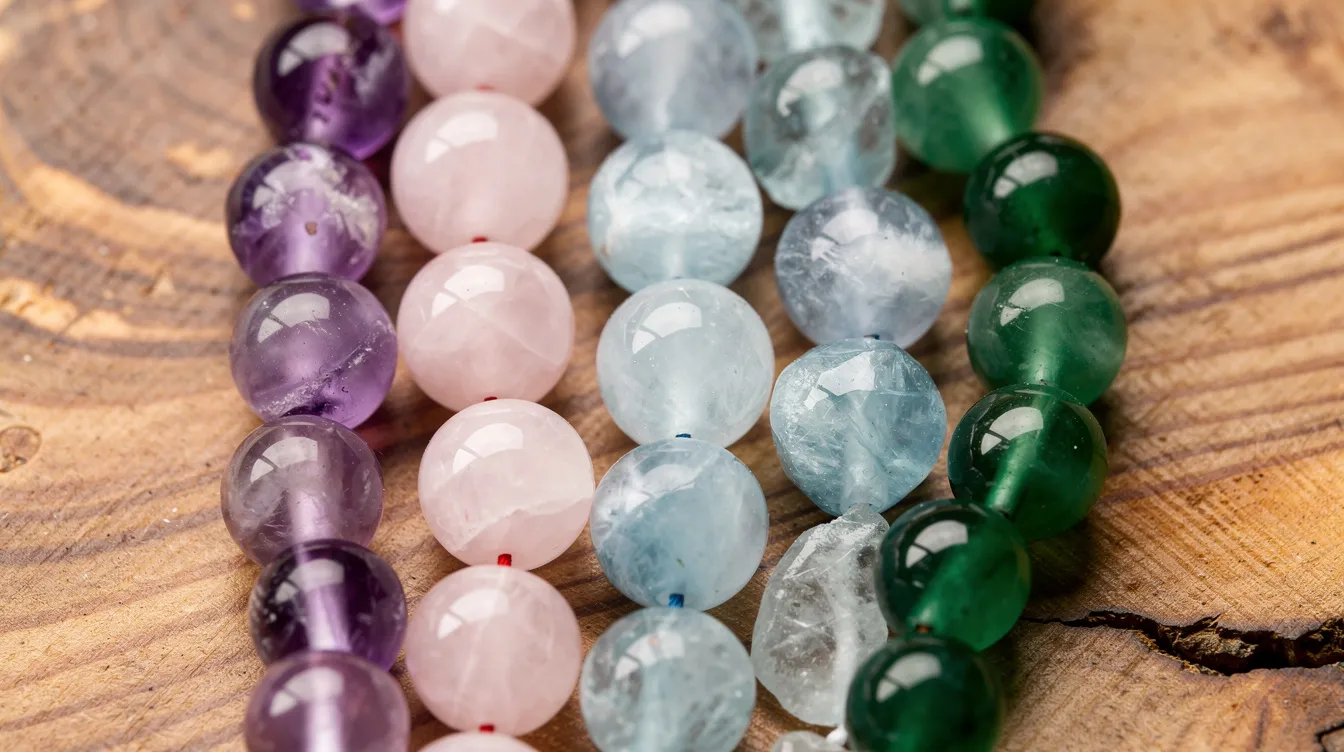
What Are Semi Precious Stones?
Semi precious stones include all gemstones apart from the traditional “big four” of diamonds, rubies, sapphires, and emeralds. This broad category spans minerals like amethyst and aquamarine, rocks like lapis lazuli, and organic materials such as amber and pearls.
The precious versus semi precious split originated in the mid-1800s when massive amethyst deposits were discovered in Brazil and Uruguay. Before then, amethyst was considered as valuable as ruby. The discovery flooded the market, dramatically reducing its rarity and shifting it into the semi precious group—a classification based more on commerce than science.
Modern gemology has largely moved away from these outdated labels. Professionals now classify gems by:
-
Mineral family and chemical composition (e.g., quartz varieties share SiO₂)
-
Crystal system (hexagonal, orthorhombic, etc.)
-
Quality factors including colour, clarity, cut, and carat weight
-
Physical properties like hardness, which ranges from turquoise at 5-6 on the Mohs scale to topaz at 8
-
Transparency, spanning fully opaque stones like jade to crystal-clear aquamarine
Characteristics of Semi Precious Gemstones
Semi precious gemstones are celebrated for their remarkable diversity, natural beauty, and the unique qualities that set them apart from precious stones like diamonds, rubies, sapphires, and emeralds. These natural stones, which include favorites such as rose quartz, garnet gemstones, and citrine, are highly valued in jewellery making for their excellent quality, vibrant colors, and affordability.
One of the defining features of semi precious stones is their hardness, measured on the Moh’s scale. Most gemstones in this category, such as quartz, agate, and jasper, fall between 5 and 9 on the scale, making them durable enough for everyday jewellery, especially when you understand how the Mohs hardness scale affects gemstone durability and selection. While diamonds top the scale at 10, many semi precious gemstones offer a perfect balance of beauty and resilience, allowing for a wide range of creative designs in rings, earrings, and necklaces.
Color is another hallmark of semi precious gemstones. These gems are available in an impressive spectrum, from the soft pink of rose quartz and the deep red of garnet to the sunny yellow of citrine and the lush green of beryl. Blue and blue green tones are found in stones like lapis lazuli and turquoise, while opal dazzles with its play-of-colour, and amethyst enchants with its regal purple hues. The presence of trace minerals and natural inclusions often gives each stone its distinctive shade and character, making every piece truly one-of-a-kind.
Rarity also plays a significant role in the appeal of semi precious stones. While some, like amethyst and agate, are widely recognized and readily available, others—such as red beryl and benitoite—are extremely rare and highly prized by collectors. The value of a semi precious gemstone is influenced by its rarity, color intensity, clarity, and the skill with which it is cut and polished. Faceted gems, like sapphires and fine garnet, are expertly shaped to maximize brilliance, while cabochons—smooth, rounded stones—highlight the natural beauty of opal, turquoise, and other stones with unique surface patterns.
Natural inclusions, such as the golden flecks in lapis lazuli or the swirling bands in agate, add to the individuality and charm of semi precious gemstones. These features are often celebrated rather than hidden, as they showcase the stone’s natural origin and contribute to its overall beauty.
Whether you’re drawn to the bold colors of garnet gemstones, the subtle elegance of rose quartz, or the rare allure of red beryl, semi precious stones offer endless possibilities for jewellery making and collecting. Their combination of excellent quality, wide color range, and accessible pricing makes them a favorite among designers and enthusiasts alike. From faceted gems that sparkle in the light to cabochons that reveal the wonders of the earth, semi precious gemstones continue to captivate with their natural beauty and enduring appeal.
What Are Semi Precious Stones Used For?
Semi precious stones are incredibly versatile, serving purposes that range from high-fashion jewellery to meditation altars. Their affordability compared to precious stones makes them accessible for both collectors and crafters.
Typical uses include:
-
Fashion jewellery: Boho-style earrings, mala and rosary necklaces, stacking bracelets with natural semi precious stones, beaded anklets, cabochons set in rings, and wire-wrapped pendants
-
Home décor: Geode slices as coasters, bookends, and display pieces
-
Wellness accessories: Pocket stones, worry stones, and crystal grids for meditation spaces
-
Spiritual practice: Chakra balancing sets, intention-setting rituals, and energy cleansing (though these are symbolic beliefs without medical validation)
Style versatility is a major draw. Rose quartz pairs beautifully with sterling silver for delicate bridal looks, while black onyx creates striking contrast against gold-plated findings. Turquoise dominates Southwestern aesthetics, and deep blue lapis lazuli suits both vintage and modern statement pieces.
Supplies & Techniques for Semi Precious Bead Jewellery
Quality supplies transform semi precious beads into polished, lasting jewellery. Investing in proper findings and stringing materials makes a noticeable difference in your finished pieces.
Essential findings:
-
Clasps (lobster, toggle, magnetic)
-
Jump rings (4-6mm for most projects)
-
Crimp beads (2mm silver-lined) and crimp covers
-
Ear wires (shepherd’s hook or leverback styles)
-
Headpins and eyepins (2-inch, 22-gauge)
-
Bails and pendant settings for cabochons
Stringing materials:
-
Griffin Bead Silk for traditional knotted gemstone necklaces
-
Beading wire (0.45mm or .019 soft flex) for bracelets requiring flexibility
-
Stretchy cord (1mm) for simple stacking bracelets
Complementary metals:
-
925 sterling silver (classic, tarnish-resistant)
-
14K gold-filled or rose gold-plated brass that echo the warm tones and refined look of gold plated earrings with semi precious stones
-
Stainless steel for hypoallergenic, budget-friendly options
For jewellery making techniques, focus on mastering crimping and finishing ends, creating simple and wrapped loops for dangles, knotting between beads (pearl-style), and setting cabochons in bezels or prong mounts—skills that pair beautifully with silversmithing jewellery techniques for working in silver.
How Gemologists Classify Semi Precious Stones
Professional gemologists don’t actually use the term “semi precious” in scientific contexts. Instead, they focus on mineral species, physical properties, and quality metrics that determine real-world value.
Key classification factors include:
-
Chemical composition: Quartz varieties (amethyst, citrine, rose quartz) share SiO₂; beryl family members (aquamarine, emerald) share Be₃Al₂Si₆O₁₈. Sapphires are not limited to blue; 'fancy sapphires' include a wide range of colors such as pink, green, yellow, and orange, with these color variations influenced by trace impurities.
-
Crystal system: Hexagonal for quartz and beryl, orthorhombic for peridot
-
Natural inclusions: Matrix veining in turquoise, pyrite flecks in lapis lazuli
Value assessment follows the familiar 4Cs:
-
Colour: Deep violet amethyst commands higher prices than pale stones; “Madeira” orange citrine beats lemon yellow
-
Clarity: Eye-clean specimens are preferred for transparent stones
-
Cut: Faceted gems maximise sparkle in transparent materials; cabochons showcase opaques like opal and turquoise
-
Carat weight: Larger stones of excellent quality carry premium pricing
Common enhancements include heat treatment (turning amethyst into citrine at 400-500°C), dyeing (agate, howlite), and stabilisation (turquoise with resin). Ethical sellers disclose these treatments, which affect both durability and value.
Popular Types of Semi Precious Stones
This section introduces a curated selection of widely used semi precious gemstones spanning different mineral families, colours, and price points. Each stone has its own character, history, and ideal applications in jewellery. Some semi precious stones, such as cat's eye, are prized for their rare optical phenomena and are highly valued by collectors.
The stones below are grouped loosely by popularity and consumer interest, starting with quartz varieties before moving through beryl, organics, and other gemstones. Whether you’re shopping for semi precious beads or faceted gems, understanding these options will help you make informed choices and explore semi precious gemstone necklace styles for every occasion.
Amethyst
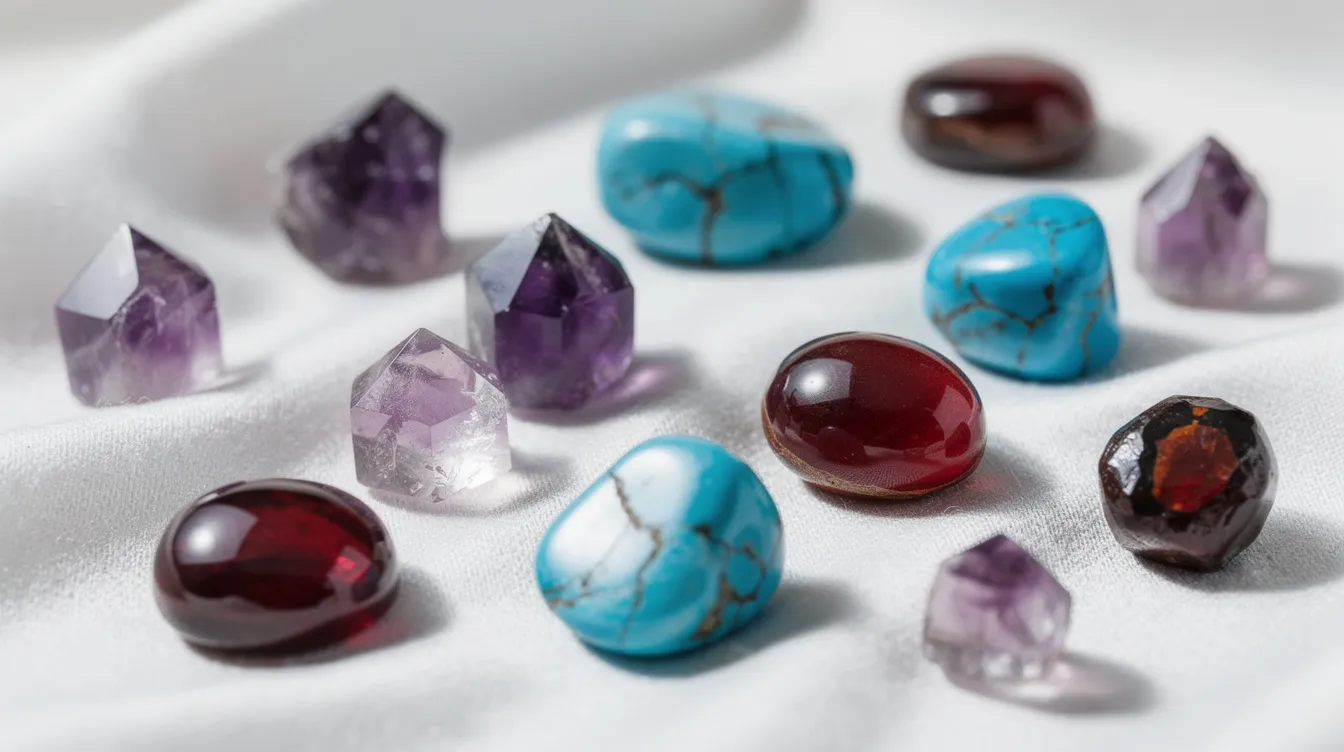
Amethyst is the purple variety of quartz, displaying colours from pale lilac to deep royal purple with occasional red and blue flashes caused by iron impurities and natural irradiation. In ancient times, it was considered as valuable as ruby—the Greek name “amethystos” means “not intoxicating,” reflecting beliefs that the stone protected against drunkenness.
Everything changed when massive deposits were discovered in Brazil during the 1820s. Today, Brazil supplies roughly 80% of the world’s amethyst, with Uruguay, Zambia, and Russia contributing stones of varying shades and saturation. Deeper, more saturated purple commands higher prices, with top-quality faceted stones reaching $50 per carat while pale beads sell for as little as $5.
As February’s birthstone, amethyst appears in faceted rounds, smooth 6-8mm beads for malas, rings, and pendants, making it a favourite for those drawn to the February birthstone and amethyst’s deeper meaning. Traditional beliefs associate it with calm, clarity, and protection—though these remain symbolic rather than medical claims, and many jewellery lovers explore amethyst jewellery’s healing properties and symbolism when choosing pieces.
Rose Quartz
Rose quartz is a soft pink, often translucent quartz variety that crystal enthusiasts associate with romance, self-love, and compassion. Its gentle colour comes from trace amounts of titanium, iron, or manganese within the SiO₂ structure.
Brazil produces approximately 90% of rose quartz beads, with Madagascar, South Africa, and the United States (particularly Idaho) contributing larger crystals. The stone typically forms in massive deposits rather than distinct crystals, making it ideal for tumbled stones, smooth beads, polished hearts, and even facial rollers.
Design-wise, rose quartz pairs elegantly with sterling silver for delicate bridal jewellery, or with matte black onyx for bold contrast, and as a January birthstone alongside garnet, rose quartz carries its own romantic symbolism. One care note: this beautiful stone can fade 20-50% with prolonged UV exposure, so store pieces away from direct sunlight.
Citrine
Citrine is the yellow to orange variety of quartz, but here’s the industry secret: natural citrine is rare, comprising only about 5% of the market. Most affordable citrine is created by heating amethyst or smoky quartz to 400-560°C, which transforms purple or brown into warm yellow tones.
Colours range from pale lemon to rich “Madeira” orange, with richer shades typically more sought after and priced between $30-100 per carat for top quality. Brazil dominates production, with additional sources in Bolivia, Spain, and Madagascar.
As a November birthstone, citrine appears frequently in rings, pendants, and beaded bracelets, and many jewellery lovers look to November birthstone guides for topaz and citrine jewellery ideas for design inspiration. Modern metaphysical practice associates it with abundance and prosperity—making “abundance bracelets” a popular category—though these are traditional beliefs rather than proven effects, and many people choose citrine as a November birthstone gemstone symbolising positivity and success when designing November birthstone citrine and topaz jewellery.
Aquamarine
Aquamarine belongs to the beryl family alongside emeralds, displaying blue to blue green colours caused by trace iron. The name comes from Latin “aqua marina” (sea water), and ancient sailors believed the stone ensured safe voyages.
Brazil’s Minas Gerais region produces roughly 70% of the world’s aquamarine, with notable deposits in Nigeria, Mozambique, Pakistan, and Madagascar. Darker, more saturated blues command significant premiums—sometimes exceeding $1,000 per carat—while paler stones remain accessible.
As March’s birthstone, aquamarine typically appears faceted in rings and pendants due to its excellent clarity, though smooth beads create refined necklaces, much like the calming designs highlighted in handcrafted amazonite and semi precious gemstone necklaces. With hardness around 7.5-8 on the Mohs scale, this fine gem handles daily wear well but should still be protected from hard impacts.
Turquoise
Turquoise has been treasured since ancient Egypt and pre-Columbian Mesoamerica, valued for its distinctive opaque blue to blue green colour. This copper aluminium phosphate mineral develops its colour from copper content, with “robin’s egg” or sky blue shades (with or without matrix veining) being most prized.
Historic sources include Iran’s Nishapur mines, while the American Southwest (Nevada’s Kingman mine, now closed) and China contribute significantly to modern supply. High-quality natural turquoise from classic sources can reach $100+ per carat.
The stone is relatively soft (5-6 on the Mohs scale) and porous, so approximately 80% of market turquoise is stabilised with resin to improve durability. Popular in Southwestern and boho jewellery—chunky necklaces, inlay rings, statement cuffs, and standout pieces like a copper turquoise necklace that elevates everyday style—turquoise requires care: avoid perfumes, cosmetics, heat, and ultrasonic cleaners.
Jade (Jadeite & Nephrite)
The term “jade” actually covers two different minerals with distinct properties. Jadeite is rarer and capable of more vivid green colors (coloured by chromium), while nephrite is tougher and has been used for carvings and tools across cultures.
Imperial Jade—vivid emerald-green jadeite from Myanmar—ranks among the world’s most valuable semi precious stones, with exceptional pieces fetching over $3 million per kilogram, and many buyers compare jadeite versus emerald when choosing a green gemstone. Myanmar supplies roughly 90% of fine jadeite, while China, Canada, Russia, and New Zealand produce various nephrite types.
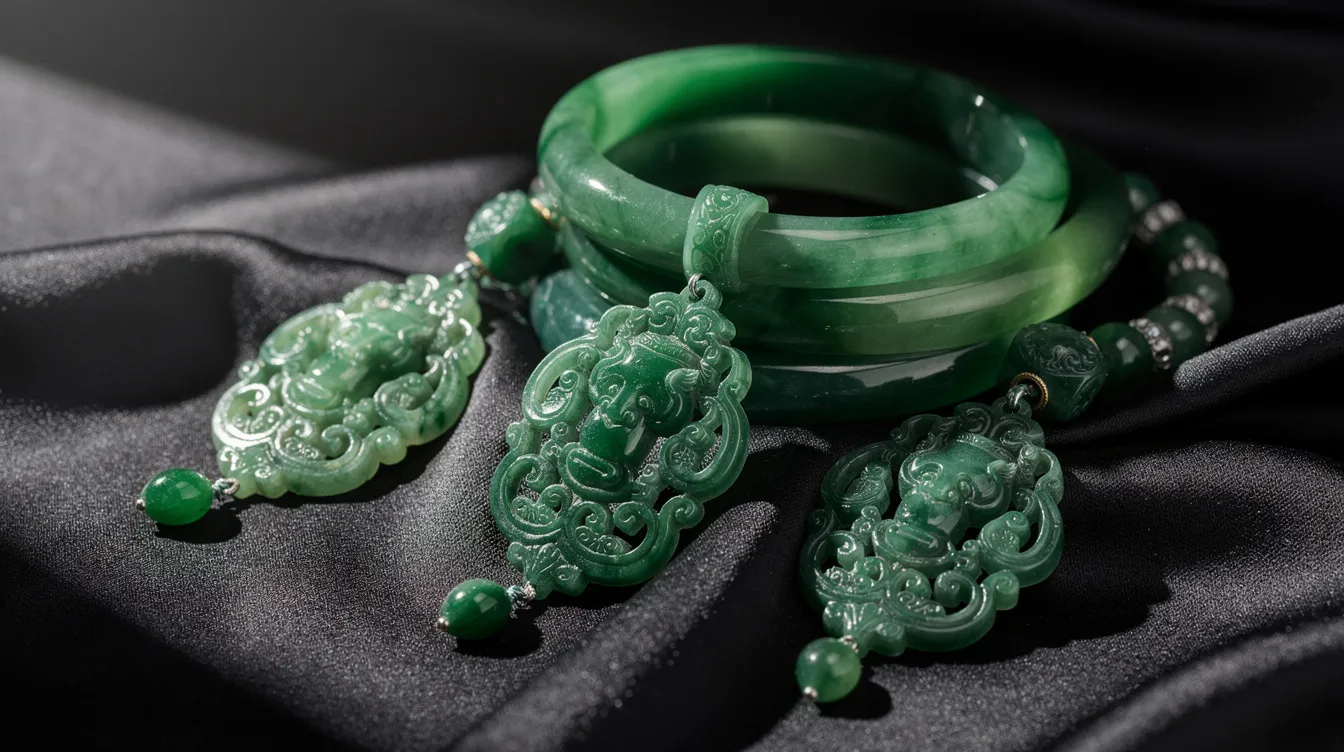
Jade holds profound cultural significance across East Asia, symbolising purity, status, longevity, and protection for over 2,000 years. Chinese burial suits made entirely of jade pieces demonstrate this reverence. Typical jewellery forms include bangles, cabochon rings, pendants, and carved Buddha figures.
Amber
Amber isn’t a mineral at all—it’s fossilised tree resin, typically 30-90 million years old. This organic gem often contains preserved plant matter or insects, with about 1-8% of Baltic amber containing such inclusions.
Colours range from golden honey to deep cognac, with rarer green, red, and blue varieties commanding premiums. The Baltic region (especially Kaliningrad, Russia) has historically produced 90% of the world’s amber, with the Dominican Republic contributing rare blue specimens.
Amber is remarkably lightweight (specific gravity 1.05-1.10) and warm to the touch, making large statement necklaces and earrings surprisingly comfortable. The ancient “Amber Road” trade route connected Baltic producers to Mediterranean markets as early as 2000 BCE. Care for amber by avoiding alcohol, perfumes, and heat; polish gently with a soft cloth.
Pearl
Pearls are organic gemstones formed inside molluscs, composed of calcium carbonate layers called nacre. While natural pearls exist, approximately 99% of today’s market consists of cultured pearls grown with human assistance.
Main pearl types include:
-
Freshwater: China produces 95% by volume; affordable at $5-50 per strand
-
Akoya: Japanese specialty; 6-8mm white pearls, $100-500
-
South Sea: Australia/Indonesia; large 10-20mm gold or silver pearls, $2,000-20,000
-
Tahitian: French Polynesia; 8-16mm black pearls, $1,000-10,000
Pearls symbolise purity and elegance, remaining classics for bridal, formal, and minimalist jewellery, and their enduring appeal is explored in depth in guides to why pearl jewellery never goes out of style. The widely recognised care rule: “Pearls should be the last thing on and first thing off.” Keep them away from chemicals and perfumes, and store flat in soft pouches.
Opal
Opal is a hydrated silica known for its distinctive “play-of-colour”—flashes of red, green, blue, and other colours that appear as the stone moves. This phenomenon results from light diffracting through microscopic silica spheres arranged in regular patterns.
Precious opal (with play-of-colour) differs from common opal (without). Australia remains the dominant source, producing 95% of precious opal from sites like Coober Pedy and Lightning Ridge, where black opals can reach $10,000 per carat. Ethiopia and Mexico contribute notable deposits as well.
Opal rates around 5.5-6.5 on the Mohs scale and is sensitive to dehydration and temperature shocks—10-20% of specimens may develop crazing (fine cracks). Cabochon cuts in protective bezel settings showcase broad colour flashes in rings, pendants, and earrings. Traditional beliefs link opal to creativity and intuition.
Garnet
Garnet isn’t a single stone but a group of related minerals sharing similar crystal structures, and as the January birthstone garnet symbolises love and enduring friendship. The red variety most people know includes almandine and pyrope, but the garnet family also contains rare gemstones like green tsavorite and fiery demantoid.
Garnet gemstones have been used since the Bronze Age, associated with loyalty, vitality, and protection across many cultures, and they share January birthstone status with rose quartz—both celebrated in guides to January birthstones and their meanings. Sources vary by variety: red garnets come primarily from India and Mozambique; tsavorite from Kenya and Tanzania ($3,000-20,000 per carat); demantoid from Russia and Namibia ($5,000+ per carat for fine specimens).
As January’s birthstone, red garnet is widely available in beads, cabochons, and faceted gems for rings, pendants, and beadwork. With hardness around 6.5-7.5, garnet handles everyday wear well with normal care.
Topaz
Topaz is a silicate mineral found in many colours: colourless, blue, yellow, orange, pink, and the coveted reddish-orange “Imperial Topaz.” Natural Imperial Topaz from Brazil can exceed $5,000 per carat, making it the red variety collectors prize most.
Most affordable blue topaz (Swiss Blue, London Blue) results from treating colourless stones with irradiation and heat. Major sources include Brazil, Sri Lanka, Nigeria, Pakistan, and Russia.
As November’s birthstone alongside citrine, topaz frequently appears in faceted engagement rings, pendants, and statement cocktail rings, inspiring many to explore the best stones for November birthstones and their significance. Despite hardness 8 on the Mohs scale, some topaz crystals exhibit brittleness, so settings should protect points and corners from impact.
Other Popular Semi Precious Stones (Agate, Tiger’s Eye, Lapis & More)
Beyond the major stones above, many gems deserve mention for their unique beauty and accessibility.
-
Agate/Jasper: Banded chalcedony quartz varieties; Mohs 7; extremely durable and affordable ($0.10/g) for beads and cabochons
-
Tiger’s Eye: Chatoyant golden-brown quartz with cat’s eye effect; South Africa primary source
-
Lapis Lazuli: Deep blue rock with gold pyrite flecks; Afghanistan’s Badakhshan region supplied it since 7000 BCE for jewellery and pigments
-
Moonstone: Feldspar with ethereal blue adularescence; Sri Lanka and India
-
Labradorite: Plagioclase feldspar showing iridescent labradorescence in other colours; Madagascar
-
Peridot: Olive-green olivine; August birthstone; Kenya and Pakistan sources
-
Rhodochrosite: Pink banded manganese carbonate; Argentina produces stunning specimens
Agate and jasper varieties are especially popular for affordable beads and cabochons due to their durability and endless pattern variations, often coming together in handmade mixed semi precious stone necklaces with unique designs.
Natural, Treated, and Synthetic Semi Precious Stones
Semi precious stones reach the market in three main forms, each with distinct characteristics for buyers and makers to understand.
Natural stones are mined and minimally altered—only cut and polished. Examples include untreated garnet ($10-500/ct depending on quality) and natural turquoise (rare, $50+/ct untreated). These command premiums from collectors valuing rarity.
Treated stones undergo enhancement processes:
-
Heat treatment transforms amethyst to citrine (90%+ of citrine is treated)
-
Dyeing adds colour to agate and howlite (often to imitate turquoise)
-
Stabilisation improves turquoise durability (80% of market)
-
Oiling enhances some jade appearance (Type B jade may fade over time)
Synthetic gemstones are lab-grown with identical chemical composition to natural stones—synthetic quartz, spinel, and corundum offer vivid colour at roughly 1/10 the cost. These aren’t imitations; they’re chemically identical.
Simulants (glass, resin, plastic) only mimic appearance without matching chemistry. Always check product descriptions and request disclosure from sellers.
Caring for Semi Precious Stone Jewellery
Different stones have different care needs, but following general guidelines protects most gemstone pieces and extends their lifespan.
Cleaning basics:
-
Use lukewarm water with mild soap
-
Gently scrub with a soft brush or cloth
-
Avoid harsh chemicals, bleach, and abrasive cleaners
Special care for soft or porous stones (turquoise, opal, amber, pearls—Mohs below 6.5):
-
No ultrasonic cleaners
-
Limited heat exposure
-
Keep away from perfumes and cosmetics
-
Avoid prolonged sunlight (especially opal, which may craze)
Storage tips:
-
Separate pouches or compartments prevent scratching between stones
-
Store silk-threaded pieces and strands flat to prevent stretching
-
Keep in dark, cool spaces to preserve colour in light-sensitive stones
Remove gemstone jewellery before sports, swimming, showering, or heavy household chores. This simple habit dramatically extends the life of your pieces.
Choosing the Right Semi Precious Stones for Your Project
Selecting semi precious stones—whether for personal wear, gifting, or jewellery making—involves balancing aesthetics, practicality, and personal meaning.
Consider your style: Minimalist designs pair well with single-stone aquamarine solitaires, while bohemian aesthetics embrace turquoise stacks and layered agate. Vintage lovers gravitate toward amethyst and garnet, while modern tastes often favour sleek black onyx or moonstone.
Factor in colour harmony: Warm-toned metals (gold, rose gold) complement citrine, amber, and warm garnets. Cool-toned metals (silver, white gold) enhance amethyst, aquamarine, and blue topaz.
Think about symbolism if it matters to the wearer: rose quartz for love, amethyst for calm, turquoise for protection, citrine for abundance. While these are traditional associations rather than proven effects, they add personal meaning for many wearers.
Balance beauty with durability: For daily-wear pieces, choose stones with Mohs hardness above 7 (quartz, beryl, topaz). Save softer stones like opal and turquoise for occasional pieces. Consider bead size and weight for comfort—6-8mm beads typically feel comfortable for most wearers.
The world of semi precious stones offers endless possibilities. Experiment with combinations, mix unexpected colours, and build a collection that reflects your personal style. Whether you’re drawn to the deep purple of amethyst, the warm glow of amber, or the mysterious flash of labradorite, there’s a stone waiting to become your next favourite.
Frequently Asked Questions About Semi Precious Stones
What are some popular types of semi precious stones?
Popular semi precious stones include amethyst, rose quartz, citrine, aquamarine, turquoise, jade, amber, pearl, opal, garnet, and topaz. Other notable stones are lapis lazuli, known for its deep blue color and use in bold beaded jewelry or decorative bowls; spinel, often mistaken for ruby due to its rich red color but chemically distinct; red beryl (also called bixbite), an extremely rare and prized bright red beryl; and tanzanite, a unique blue gemstone found only in Tanzania’s Merelani Hills.
How are semi precious stones used beyond jewelry?
Beyond jewelry making, semi precious stones are crafted into smaller decorative items such as bookends, coasters, and display pieces that enhance room aesthetics. Larger slabs of stones like agate and quartz are polished and used to create statement furniture pieces, including dining tables. Some luxury designs incorporate these stones into wash basins, frames for mirrors and artwork, as well as kitchen countertops, wall cladding, and staircases, adding a unique and sophisticated atmosphere to interior spaces.
What should I know about making jewelry with semi precious stones?
When creating jewelry with semi precious beads, quality findings such as clasps, ear wires, jump rings, and crimp beads are essential to ensure durability and a polished finish. Stretch elastic cord is commonly used for stringing beads to make flexible and comfortable stacking bracelets and other jewelry styles. Semi precious stones lend themselves well to a variety of designs, from casual to elegant, due to their unique markings, colors, and natural beauty.
Are semi precious stones more affordable than precious stones?
Generally, semi precious stones are more affordable than the traditional precious stones—diamond, ruby, sapphire, and emerald—making them accessible for a wide range of budgets and uses. However, this classification can be misleading, as some semi precious stones like high-quality tsavorite garnet or rare varieties of red beryl can be more valuable and rare than lower-quality precious stones.
What influences the value of semi precious stones?
The value of semi precious stones is influenced by several factors, including clarity, rarity, color saturation, cut quality, and overall beauty. Natural inclusions and treatments can also affect value. As the gemstone industry continues to grow—estimated at US$1.55 billion in 2023 and projected to reach $4.46 billion by 2033—the demand for high-quality and rare semi precious stones is expected to increase significantly.
How do I care for semi precious stone jewelry?
Care depends on the stone’s hardness and porosity. Softer or porous stones like turquoise, opal, amber, and pearls require gentle cleaning with mild soap and water, avoiding harsh chemicals, ultrasonic cleaners, and prolonged sunlight. Harder stones like quartz varieties and topaz are more durable but still benefit from careful storage to prevent scratches. Always store semi precious jewelry separately in soft pouches or compartments.
What are the two forms of jade?
Jade consists of two pure minerals: jadeite and nephrite. Jadeite is rarer, harder, and prized for its vivid green colors, while nephrite is tougher and widely used for carvings and jewelry. Imperial jade, a high-quality jadeite from Myanmar, is among the most valuable semi precious stones.
Can semi precious stones have healing properties?
Many semi precious stones are believed to have symbolic or metaphysical properties. For example, rose quartz is known as the "gem of love" and is often worn or placed in homes for emotional healing and compassion. Peridot is thought to aid learning and healing, while amethyst is associated with calm and clarity. These beliefs are traditional and symbolic rather than medically proven.
Are synthetic or treated semi precious stones common?
Yes, many semi precious stones on the market have undergone treatments like heat enhancement, dyeing, or stabilization to improve color and durability. Synthetic versions of stones such as quartz and spinel are also available, offering vivid colors at lower prices. Ethical sellers disclose treatments, which can affect both value and care requirements.
How is the term ‘semi precious’ viewed today?
The terms "precious" and "semi precious" originated from historical classifications but can be misleading commercially, as they imply inherent value differences that are not always accurate. Modern gemology prefers classification based on mineral species, chemical composition, and quality factors rather than these traditional labels. Despite this, the terms remain widely recognized and used in the jewelry industry and by consumers.
Leave a comment