Evil Eye Protection: 9 Authentic Ways to Shield Your Energy in Modern Life
Evil eye protection is one of humanity’s oldest and most widespread spiritual practices, rooted in the popular belief that certain looks or intentions can cause harm, and that protective rituals are necessary across many cultures. For individuals seeking practical and authentic ways to protect themselves from negative energy in modern life, understanding and applying these ancient methods is more relevant than ever. This guide covers the origins, cultural significance, and nine essential methods of evil eye protection, with practical tips for daily use. Whether you are new to the concept or looking to deepen your knowledge, this resource is designed to empower you with actionable strategies for spiritual security in contemporary settings.
The growing interest in eye protection across the UK reflects increasing awareness of energy dynamics and their impact on personal wellbeing. For those in the capital, exploring authentic evil eye jewellery in London helps connect traditional symbolism with high-quality contemporary designs. Unlike superstitious beliefs or fashion trends, genuine evil eye protection draws upon centuries of documented effectiveness in shielding against jealousy, negativity, and psychic intrusion. Our handcrafted evil eye jewellery honours these authentic traditions whilst meeting contemporary British preferences for quality and discretion. For a beautiful combination of tradition and style, consider our Sterling Silver Evil Eye Necklace.
Summary: Common and Effective Evil Eye Protection Methods
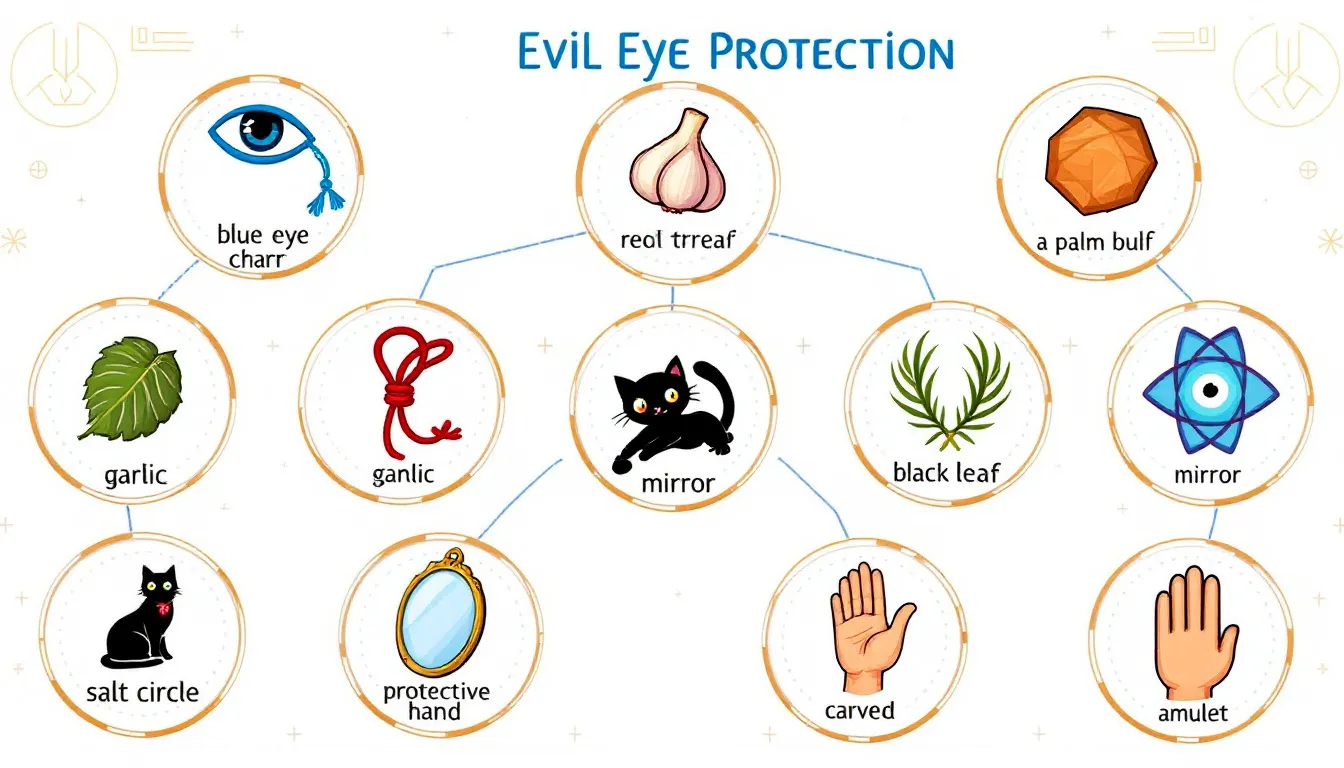
Common protective practices include using amulets, performing rituals, and reciting specific phrases to ward off the evil eye. Wearing protective talismans, such as the nazar or hamsa, is a common method to ward off the evil eye and its negative effects. The most effective methods include:
-
Wearing protective talismans: Such as the nazar (blue eye amulet) or hamsa (hand-shaped symbol).
-
Performing rituals: Cleansing with salt, burning herbs like sage or frankincense, and blessing objects.
-
Reciting specific phrases: Such as “Masha’Allah” after compliments to prevent envy.
-
Placing protective symbols: In homes, workplaces, or vehicles to create energetic barriers.
-
Using gemstones: Like black tourmaline, obsidian, or lapis lazuli for added protection.
-
Teaching family traditions: Passing down knowledge and practices for generational security.
These practices are widely recognized across cultures for their effectiveness in deflecting negative energy and maintaining spiritual wellbeing.
Understanding the Evil Eye Phenomenon
The evil eye is an ancient supernatural belief in a curse cast by a malevolent glare, typically fueled by envy or jealousy. It is believed that the evil gaze can cause misfortune, illness, or physical harm to the person it is directed at, even if cast unintentionally. This belief is widespread across many cultures, including Mediterranean, Middle Eastern, South Asian, and Latin American societies, often associated with envy and the transmission of harm through a malevolent gaze. Other cultures, such as those in Spain and Puerto Rico, also have their own unique interpretations and protective practices related to the evil eye phenomenon.
Historical Origins
Evil eye protection addresses a universal human experience recognised across diverse cultures worldwide. The phenomenon involves harmful energy transmitted through jealous or malicious gazes, capable of causing misfortune, illness, or energetic depletion in targeted individuals. The belief in the evil eye dates back over 5,000 years to ancient Mesopotamia, with roots in Sumerian, Egyptian, ancient Greece, Greek, and Roman civilizations. It likely originated within Indo-European, Mediterranean, and Middle Eastern cultures, starting in Sumeria—where Sumerian deities were associated with early evil eye beliefs and protective powers—and spreading through the Greco-Roman world, India, and beyond.
Cultural Prevalence
The British Museum’s extensive collection of ancient amulets demonstrates the historical prevalence of evil eye beliefs across Mediterranean, Middle Eastern, and European civilisations. References to the evil eye appear in ancient Greek literature from the 6th century BC, highlighting its deep cultural roots. A 2015 Pew Research Survey found a median of 48% of adults in Central and Eastern Europe reported believing in the evil eye, with majorities in several countries including Greece and Latvia.
Vulnerability to the evil eye is considered higher in infants, pregnant women, and particularly successful or beautiful individuals. In cultures where the evil eye is believed to exist, individuals often feel compelled to avoid sharing personal successes to prevent attracting envy, which can lead to social anxiety. Additionally, certain actions or omens—such as breaking a mirror or opening an umbrella indoors—are considered bad luck and are believed to increase one's susceptibility to misfortune or the evil eye.
Psychological Perspectives
Scientific perspectives on evil eye protection focus on psychological and social dynamics rather than supernatural mechanisms. Research into social psychology confirms that jealousy and negative attention can indeed impact targeted individuals through stress, anxiety, and altered behaviour patterns. Whether viewed through spiritual or psychological lenses, eye protection provides valuable tools for maintaining personal boundaries and emotional security.
The Lebanese tradition recognises evil eye protection as essential for family safety, business success, and personal wellbeing. Our cultural understanding encompasses both the spiritual mechanics of negative energy transmission and practical methods for deflecting harmful influences. This comprehensive approach distinguishes authentic evil eye protection from superficial trend adoption or decorative symbolism.
With this background, and a broader understanding of the evil eye’s origins, beliefs, and protection methods, let's explore the most effective methods for protecting yourself from the evil eye in modern life.
The Nine Essential Methods of Evil Eye Protection
1. Traditional Evil Eye Amulets and Jewellery
Authentic evil eye protection begins with traditional amulets and jewellery designed specifically for spiritual defence. The classic blue and white eye symbol, known as an evil eye charm, is called “nazar” in Turkish, “ayin hara” in Hebrew, “mati” in Greece, and “malocchio” in Italy. This amulet creates a reflective barrier that returns negative energy to its source. The nazar amulet, often made of glass, features concentric blue and white circles and is a common protective symbol against the evil eye.
Evil eye jewellery is often designed with the eye motif, a recurring protective symbol found across many cultures. Specific colors carry different meanings; for example, blue is commonly associated with protection, while orange represents happiness and creativity. The blue colouration traditionally associated with evil eye protection corresponds to spiritual sight and divine protection. White elements represent purity and clarity, whilst black centres symbolise the absorption and neutralisation of negative energies.
Evil eye jewelry has gained popularity as a fashion statement, with many people wearing it not only for its protective properties but also for its aesthetic appeal, and there is now a wide range of stylish evil eye jewellery pieces that protect and empower. Our handcrafted evil eye jewellery incorporates traditional colour combinations and symbolic elements that maximise protective effectiveness.
Quality considerations for eye protection jewellery include authentic materials, proper proportions, and spiritual preparation methods. Mass-produced evil eye symbols often lack the energetic integrity necessary for genuine protection, serving merely as decorative elements without spiritual function.
Our Lebanese craftsmanship ensures that each piece receives proper blessing and intention-setting for maximum protective benefit, embodying the essence of affordable spiritual luxury. Amulets featuring the eye motif have been found dating back thousands of years in archaeological sites, highlighting their enduring role in evil eye protection.
2. Hamsa Hand Protection Symbols
The Hamsa hand, also known as the Hand of Fatima or Hand of Mary, represents another powerful form of evil eye protection, particularly valued in Middle Eastern and North African traditions. This open palm symbol, featuring an eye in the centre, provides comprehensive spiritual defence whilst invoking divine blessings and guidance. Consider wearing a Sterling Silver Hamsa Hand Bracelet for both symbolic protection and timeless style. Our Hamsa hand jewellery combines traditional symbolism with contemporary design aesthetics for versatile protection.
Historical documentation traces Hamsa hand protection across multiple religious traditions including Islam, Christianity and Judaism. The University of Oxford's anthropological research confirms the symbol's widespread use for evil eye protection throughout the Mediterranean region. This cross-cultural acceptance demonstrates the Hamsa's universal protective power. Additionally, the Hamsa is considered a lucky charm in several cultures, believed to provide protection and deflect negative energy.
The five fingers of the Hamsa hand correspond to different protective qualities including strength, blessing, power, love, and divine connection. When combined with eye symbolism, the Hamsa creates layered protection that addresses multiple forms of negative energy and spiritual intrusion.
Our combination pieces featuring both symbols provide enhanced security for individuals facing complex energetic challenges, drawing on the deep symbolism and cultural significance of the Hamsa.
3. Protective Gemstone Combinations
Specific gemstones enhance evil eye protection through their natural energetic properties and traditional protective powers. Black tourmaline, obsidian, and hematite are believed to create powerful grounding and protective barriers, whilst blue stones like lapis lazuli and sapphire are valued for their protective powers and strengthen the traditional evil eye colour symbolism. Our gemstone evil eye pieces combine multiple protective elements for comprehensive spiritual security, and combining them with birthstones for evil eye protection can add a personalised layer of meaning and resonance.
The selection of protective gemstones requires understanding both traditional associations and individual energy needs. Sensitive individuals may benefit from gentler protective stones like amethyst or moonstone, whilst those facing intense negative attention might require stronger barriers created by black tourmaline or obsidian. Our consultation process helps identify optimal gemstone combinations for specific protection requirements.
Evil eye protection integrates effectively with other spiritual practices including meditation, prayer, energy healing, and religious observance. Rather than conflicting with established spiritual traditions, authentic evil eye protection enhances overall spiritual security and wellbeing. Our interfaith approach respects diverse religious backgrounds whilst providing universal protective benefits.
4. Blessing and Consecration Rituals
Proper blessing and consecration rituals activate eye protection items for maximum effectiveness. Traditional Lebanese methods involve specific prayers, incense burning, and lunar timing that imbue protective items with spiritual power. Our jewellery receives authentic blessing according to family traditions passed down through generations of Lebanese craftspeople.
The timing of blessing rituals significantly influences their effectiveness, with new moon periods traditionally favoured for protection work. Specific prayers and intentions during consecration create energetic programming that directs the protective item's function. These traditional methods, whilst varying between cultures, share common elements that enhance spiritual effectiveness.
Personal blessing practices allow individuals to maintain and strengthen their evil eye protection over time, complementing faith-based approaches such as Islamic strategies for protection from the evil eye. Simple methods include moonlight exposure, prayer recitation, and intention renewal that keep protective items energetically active. Our care instructions include traditional blessing methods that customers can perform to maintain their jewellery's protective power.
5. Environmental Protection Strategies
Evil eye protection extends beyond personal jewellery to include environmental strategies that shield homes, workplaces, and vehicles from negative energies. Traditional methods involve placing evil eye symbols at entry points, using protective mirrors, and creating energetic barriers through specific arrangements of protective items. These environmental approaches complement personal protection for comprehensive spiritual security.
-
Home protection: Focuses on main entrances, windows, and areas where guests gather, as these locations represent primary points of energetic vulnerability. Our decorative evil eye pieces serve dual purposes as beautiful home accessories and functional spiritual protection. Strategic placement according to traditional guidelines maximises their protective effectiveness.
-
Workplace protection: Requires discretion whilst maintaining spiritual security in professional environments. Subtle evil eye jewellery provides personal protection without drawing unwanted attention, and choosing a bracelet for evil eye as stylish protective jewellery is an effective option for many professionals, whilst small protective items can be placed in offices or workspaces according to traditional guidelines. The key involves balancing spiritual needs with professional appropriateness.
For example, placing an evil eye amulet near the front door is a common practice to prevent negative energy from entering the home. Similarly, mirrors placed facing the front door are believed to reflect harmful gazes away.
6. Recognition and Response Techniques
Effective protection includes recognising signs of negative energy attack and responding appropriately to neutralise harmful influences. Traditional symptoms include sudden fatigue, unexplained illness, relationship difficulties, or business problems that arise without clear cause. Understanding these patterns enables prompt protective response before serious damage occurs.
The Lebanese tradition emphasises the importance of trusting intuitive warnings about negative attention or harmful intentions from others. Sudden feelings of unease, energy depletion, or emotional disturbance in specific social situations may indicate evil eye influence. Developing sensitivity to these subtle signals enhances overall protective effectiveness.
Response techniques include immediate protective visualisation, prayer recitation, and physical contact with protective amulets. Our evil eye jewellery provides convenient access to protective energy during challenging situations. Quick response methods can neutralise negative influences before they establish energetic footholds that require more intensive clearing work.
Common rituals for removing the evil eye include:
-
Using salt and herbs for cleansing
-
Burning herbs like sage or frankincense to disperse malevolent intentions
-
Lighting a camphor or sage stick for purification
-
Chanting protective phrases, such as 'Masha'Allah' after compliments
7. Cultural Adaptation and Modern Applications
Contemporary evil eye protection adapts traditional methods to modern life's unique challenges including social media exposure, workplace competition, and urban energy pollution. Digital age considerations include protection from online negativity, cyberbullying, and the energetic impact of constant social comparison through social media platforms.
Professional environments present specific challenges for evil eye protection, requiring discrete methods that maintain spiritual security without compromising career advancement. Our subtle evil eye jewellery designs provide professional-appropriate protection whilst honouring traditional symbolism. Understanding workplace energy dynamics helps identify when protection is most needed.
Urban living exposes individuals to concentrated negative energies from stress, competition, and social tension that traditional rural communities rarely experienced. Modern protection must address these intensified conditions through stronger protective methods and more frequent energetic maintenance. Our urban-appropriate designs consider these contemporary challenges.
8. Family and Generational Protection
Traditional evil eye protection emphasises family and generational security, recognising that negative energies often target entire family units rather than isolated individuals. Children require special protection due to their energetic sensitivity and inability to defend themselves spiritually. Our children's evil eye jewellery provides age-appropriate protection whilst introducing young people to their cultural heritage.
Generational protection involves teaching family members about evil eye recognition and response whilst maintaining protective traditions across generations. The Lebanese approach emphasises passing down authentic knowledge rather than superficial symbol adoption. Our family consultation services help establish comprehensive protection strategies for entire households.
Pregnancy and childbirth represent particularly vulnerable periods requiring enhanced protection for both mother and child. Traditional methods include specific amulets, blessing rituals, and protective practices that shield the developing child from negative influences. Our maternity protection pieces honour these ancient traditions whilst meeting contemporary safety standards.
9. Integration with Other Spiritual Practices
Evil eye protection integrates effectively with other spiritual practices including meditation, prayer, energy healing, and religious observance. Rather than conflicting with established spiritual traditions, authentic evil eye protection enhances overall spiritual security and wellbeing. Our interfaith approach respects diverse religious backgrounds whilst providing universal protective benefits.
-
Meditation: Protective amulets create energetic boundaries that prevent psychic intrusion whilst allowing beneficial spiritual connection.
-
Energy healing: Practitioners often wear evil eye jewellery as professional protection whilst working with clients carrying heavy energetic burdens, choosing from top stylish evil eye jewellery pieces that balance symbolism with aesthetics.
Authentic evil eye protection requires careful selection of genuine symbols, quality materials, and proper spiritual preparation. Mass-produced evil eye items often lack the energetic integrity necessary for genuine protection, serving merely as decorative accessories without spiritual function. Understanding quality indicators ensures investment in effective protective tools rather than superficial trend items.
Traditional evil eye symbols exhibit specific proportions, colour combinations, and design elements that maximise protective effectiveness. Variations from these traditional standards may compromise spiritual function even when aesthetically appealing. Our Lebanese heritage ensures adherence to authentic design principles that preserve protective power whilst meeting contemporary style preferences.
Material quality significantly influences the protection effectiveness, with natural materials generally providing superior energetic properties compared to synthetic alternatives. Sterling silver, gold, and natural gemstones create optimal conditions for spiritual energy transmission and protection, especially in thoughtfully designed evil eye necklace styles for protection and style. Our commitment to quality materials ensures maximum protective benefit from every piece.
Maintaining your protection is just as important as choosing the right methods.
Maintaining Your Evil Eye Protection

Proper maintenance preserves the effectiveness whilst extending the lifespan of protective jewellery and amulets. Regular energetic cleansing removes accumulated negative energies that may diminish protective power over time. Traditional cleansing methods include moonlight exposure, salt water cleansing, and sage smudging that restore protective items to optimal function.
Physical care involves protecting evil eye jewellery from damage that could compromise its protective symbolism. Cracked or damaged evil eye symbols may lose protective effectiveness and require replacement or repair, particularly in delicate pieces such as a sterling silver evil eye bracelet. Our care instructions include both physical and energetic maintenance methods that preserve protective power whilst maintaining aesthetic beauty.
Periodic re-blessing strengthens evil eye protection and renews spiritual programming that directs protective function. Annual blessing rituals, particularly during new moon periods, restore protective items to maximum effectiveness. Our blessing service provides professional spiritual maintenance for customers seeking optimal protective performance from their jewellery.
Transitioning from maintenance, let's examine the science behind why these protective symbols and rituals are so effective.
The Science Behind Protective Symbolism

Contemporary research into protective symbolism focuses on psychological mechanisms, including belief effects, ritual benefits, and social signalling functions that contribute to protective outcomes. The National Geographic's cultural documentation confirms the widespread effectiveness of protective symbols across diverse populations and historical periods.
Psychological studies demonstrate that belief in protection creates measurable improvements in stress levels, confidence, and social interaction quality. Whether through spiritual mechanisms or psychological effects, authentic evil eye protection provides genuine benefits for mental health and social well-being. The ritual aspects of wearing protective symbols, or reciting traditional prayers and supplications for evil eye safety, create positive psychological reinforcement that supports overall resilience.
Anthropological research reveals consistent patterns in protective symbol use across cultures that suggest universal human needs for spiritual security and energetic boundaries. The cross-cultural prevalence of evil eye beliefs indicates genuine human experiences that transcend cultural conditioning or superstitious thinking. This universality supports the practical value of evil eye protection methods.
With this scientific perspective, you can build a more informed and empowered protection practice.
Building Your Protection Practice

Developing effective evil eye protection requires gradual skill building and consistent practice rather than relying solely on protective items. Understanding energy dynamics, recognising negative influences, and responding appropriately to spiritual challenges creates comprehensive protection that extends beyond physical amulets. Our educational resources support customers in developing complete protection practices.
Starting with basic evil eye jewellery provides foundation protection whilst learning more advanced techniques, and many people begin with a gold plated evil eye necklace as a stylish statement of protection. Gradual expansion of protective knowledge and tools allows for personalised protection strategies that address individual needs and circumstances. The key involves balancing traditional wisdom with personal experience and contemporary requirements.
Community support enhances evil eye protection through shared knowledge, group blessing practices, and collective spiritual security. Our customer community provides opportunities for learning traditional methods whilst sharing contemporary applications. Building connections with others who understand what it creates additional layers of spiritual support and validation, much like gifting or sharing round evil eye sterling silver bracelets as symbols of mutual protection.
The journey into authentic protection offers profound opportunities for spiritual growth, cultural connection, and enhanced personal security. Whether seeking protection from workplace negativity, social media toxicity, or general life challenges, traditional evil eye methods provide time-tested solutions for modern problems, which can be expressed through elegant pieces such as an adjustable gold plated evil eye ring. Our commitment to Lebanese traditions ensures access to genuine protective wisdom whilst meeting contemporary needs for quality and authenticity.
Conclusion
Evil eye protection is a timeless and cross-cultural practice that offers valuable spiritual and psychological benefits. Rooted in ancient traditions and enriched by centuries of cultural wisdom, these protective symbols and rituals provide a meaningful way to shield oneself from negative energies, jealousy, and misfortune. Whether through traditional amulets like the Hamsa hand and nazar, the use of lucky charms such as the four-leaf clover and rabbit's foot, or contemporary adaptations for modern life, maintaining spiritual security remains essential in today’s complex world. Embracing these authentic methods not only honors cultural heritage but also fosters personal resilience and well-being. By understanding and integrating these practices, individuals can create a protective environment that supports happiness, prosperity, and peace of mind.
Other Cultural Symbols of Luck and Protection
Across the world, many cultures have developed their own symbols and charms believed to bring good fortune and protect against negative energies. While distinct from evil eye protection, these items often serve similar purposes in their respective traditions, just as a Hamsa hand with eye necklace combines luck and protection in one enduring symbol. Common lucky charms and protective symbols include:
-
Ladybugs: Regarded as symbols of good luck in various cultures, particularly in Europe, where they are sometimes referred to as 'lucky bugs.'
-
Horseshoes: When hung with the open end facing up, widely believed to attract good luck and prosperity, much like contemporary Hamsa hand jewellery sets that blend traditional symbolism with everyday wear.
-
Four-leaf clover: Associated with faith, hope, love, and luck; its rarity makes it particularly special, with the chance of finding one approximately one in 10,000, paralleling the way meaningful Hand of Hamsa jewellery designs are chosen to symbolise protection and blessing.
-
Rabbit's foot: A popular lucky charm believed to bring good fortune, rooted in ancient traditions.
-
Maneki Neko: A cat figurine often seen in Japanese culture, considered a lucky charm that attracts good fortune.
-
Pigs: Seen as symbols of prosperity and good luck in various cultures, often associated with wealth.
-
Dreamcatchers: Originating with the Ojibwe people, believed to capture bad dreams while allowing good dreams to pass through, thereby bringing luck to the sleeper.
-
Acorns: Represent luck and are connected to prosperity and fertility in many traditions, particularly in Norse mythology.
-
Beetles: In ancient Egypt, the beetle symbolized rebirth and remains a symbol of good fortune in many cultures today.
-
Lucky bamboo: In Feng Shui, certain plants like lucky bamboo are believed to bring good luck and wealth based on their configuration and number of stalks.
-
Keys: In many cultures, gifting a key is believed to bring good luck and signifies the granting of access to one's home or life.
-
Pennies: Finding a penny on the ground is said to bring good luck, as long as it is facing up.
Common beliefs about bad luck include:
-
Walking under a ladder (thought to anger spirits)
-
Breaking a mirror (believed to result in seven years of misfortune)
-
Gifting someone a clock (associated with bad luck and thought to symbolize an early death)
-
Sticking chopsticks upright in a bowl of rice (taboo in Japanese culture, linked to funerals)
-
Spilled salt (rooted in Christian symbolism associated with betrayal)
-
Opening an umbrella indoors (thought to insult sun gods in ancient Egypt)
-
The number 13 (linked to both good and bad luck in various cultures)
-
The number seven (considered lucky in many cultures)
-
The number eight (considered lucky in Asian cultures, especially China)
-
The color red (regarded as lucky in many cultures, particularly in China)
These symbols and practices, while not directly related to the evil eye, reflect humanity’s enduring desire for protection and good fortune.
Frequently Asked Questions (FAQs) About Evil Eye Protection
The evil eye is an ancient supernatural belief in a curse cast by a malevolent glare, typically fueled by envy or jealousy. This belief is widespread across many cultures, including Mediterranean, Middle Eastern, South Asian, and Latin American societies.
9.16 Is the evil eye or similar concepts referenced in popular culture?
Yes, the concept of the evil eye and similar ideas appear in popular culture. For example, in the Harry Potter series, the basilisk is a fictional creature whose deadly gaze can kill, drawing a parallel to the mythological evil eye. This highlights how the idea of a harmful look has influenced both ancient beliefs and modern storytelling.
What is the evil eye, and why do people seek protection from it?
The evil eye is a supernatural belief in a curse cast by a malevolent gaze, often fueled by envy or jealousy. It is thought to bring misfortune, illness, or bad luck to the person targeted by this harmful energy. People seek evil eye protection to shield themselves from these negative effects and maintain spiritual and emotional wellbeing.
What are some common symbols used for evil eye protection?
Popular symbols include the blue and white nazar amulet, which features concentric circles resembling an eye, and the Hamsa hand, also known as the Hand of Fatima or Hand of Mary. These symbols are believed to reflect or deflect the evil gaze. Other protective symbols include painted eyes, horseshoes, and various lucky charms like the four-leaf clover and rabbit’s foot, each carrying protective and healing properties.
Why is the color blue significant in evil eye charms?
The color blue, especially in shades resembling blue eyes, is traditionally associated with protection against the evil eye. In many cultural contexts, including the ancient Mediterranean and West Asia, blue eyes were thought to transmit the evil gaze more powerfully. Thus, blue-colored evil eye charms serve as a protective mirror, reflecting the evil gaze back to the sender.
Can the evil eye be cast unintentionally?
Yes, the evil gaze or evil eye can be cast both intentionally and unintentionally. Envy or admiration, even without malicious intent, can trigger the curse. This is why many cultures advise caution when giving compliments or openly displaying success, as such actions may inadvertently bring misfortune through the evil gaze.
How can I protect myself from the evil eye in daily life?
Protection methods include:
-
Wearing evil eye jewellery or amulets such as the nazar or hamsa
-
Placing protective symbols in homes or workplaces
-
Performing cleansing rituals using salt, herbs, or smoke like sage or frankincense
-
Reciting protective phrases like “Masha’Allah” after compliments
Are children more vulnerable to the evil eye?
Children, infants, and pregnant women are considered particularly susceptible to the evil eye due to their heightened energetic sensitivity. Many cultures use specific amulets or rituals to protect children, such as tying red strings or wearing evil eye charms, to shield them from harmful gazes and ensure their wellbeing.
What are some traditional rituals to remove the evil eye?
Common rituals to remove the evil eye include:
-
Cleansing with salt or herbal smoke
-
Burning red chilies
-
Using eggs to absorb negative energy
-
Having a healer perform prayers or incantations to neutralize the curse
These rituals often draw upon the protective and healing properties of natural elements.
How do evil eye beliefs vary across different regions and cultures?
Beliefs and practices surrounding the evil eye differ across the ancient Mediterranean, Middle Eastern, South Asian, African, and Latin American cultural contexts. For example, in the Roman Empire, phallic charms were used for protection, while in North Africa and West Asia, the Hamsa hand is prevalent. Despite variations, the core concept of protection against a malevolent gaze is universal.
Is evil eye protection purely superstition, or does it have psychological benefits?
While some view evil eye protection as superstition, contemporary research highlights its psychological and social benefits. Belief in protective symbols and rituals can reduce stress and anxiety caused by envy or negative attention, fostering emotional security and resilience. The practice also reinforces healthy social boundaries and personal wellbeing.
Where can I find authentic evil eye protection items?
Authentic evil eye amulets and jewellery are often handcrafted using traditional materials like glass, silver, and natural gemstones, and are blessed through consecration rituals to enhance their protective power. Reputable artisans and cultural heritage sources ensure the spiritual integrity and effectiveness of such items, distinguishing them from mass-produced decorative pieces.
What is mal de ojo, and how is it related to the evil eye?
Mal de ojo is the Spanish term for the evil eye, widely recognized in Latin American cultures. It refers to the harmful effects caused by a jealous or envious gaze, believed to bring illness or misfortune, especially to children. Protective measures include wearing red strings, using amulets, and performing cleansing rituals to counteract mal de ojo.
Can evil eye protection be combined with other spiritual practices?
Yes, evil eye protection complements various spiritual practices such as meditation, prayer, energy healing, and Feng Shui. Integrating these approaches enhances overall spiritual security and wellbeing, creating layered protection against negative energies and fostering balance in different aspects of life.
What is the significance of painted eyes and eye motifs in ancient cultures?
Painted eyes and eye motifs have been found on artifacts dating back thousands of years in regions like ancient Egypt, Sumeria, and the ancient Mediterranean. These symbols served as protective talismans, believed to watch over individuals and deflect the evil gaze. Such amulets often featured prominently on drinking cups, ships, and jewellery, highlighting their cultural importance.
How do different cultures interpret the evil gaze?
Interpretations of the evil gaze vary; some cultures see it as a deliberate curse, while others believe it can be cast unintentionally through admiration or envy. In some traditions, light colored eyes, including blue eyes, are thought to be more likely to transmit the evil gaze. Protective amulets and rituals are adapted accordingly to address these beliefs across different regions.
Are there any scientific studies or authors mentioning the evil eye phenomenon?
Yes, numerous authors and researchers in fields such as anthropology, psychology, and cultural studies have examined the evil eye. Works published by the University of Wisconsin Press and findings from Asian and African studies explore the cultural contexts, protective symbolism, and psychological effects associated with the evil eye, affirming its enduring significance across different societies.
If you have more questions or want to learn how to incorporate evil eye protection into your life, explore our detailed guides and authentic jewellery collections designed to safeguard your energy and wellbeing.

 https://sarasbeads.co.uk


Leave a comment