

Introduction
When shopping for gold jewelry, you’ll often encounter terms like "vermeil" and "solid gold." This guide explains the key differences between these two popular jewelry types, helping you choose the best option for your style, budget, and lifestyle needs. Whether you’re searching for an heirloom-quality piece or an affordable statement accessory, understanding the distinctions in value, durability, and style ensures you make an informed decision as a shopper.
Choose solid gold if you want jewelry for everyday wear, long-term value and heirloom quality. Choose vermeil if you want the look of real gold at a more affordable price, especially for trend-led pieces, statement pieces or jewellery you rotate rather than wear constantly.
Gold vermeil is a more affordable option compared to solid gold, providing a luxurious look without the high price tag. The right choice depends on your budget, how often you’ll wear the piece, and whether you want an investment or fashion accessory.
Below is a practical comparison of vermeil vs solid gold jewelry.
Vermeil vs Gold Plated vs Gold: Key Differences
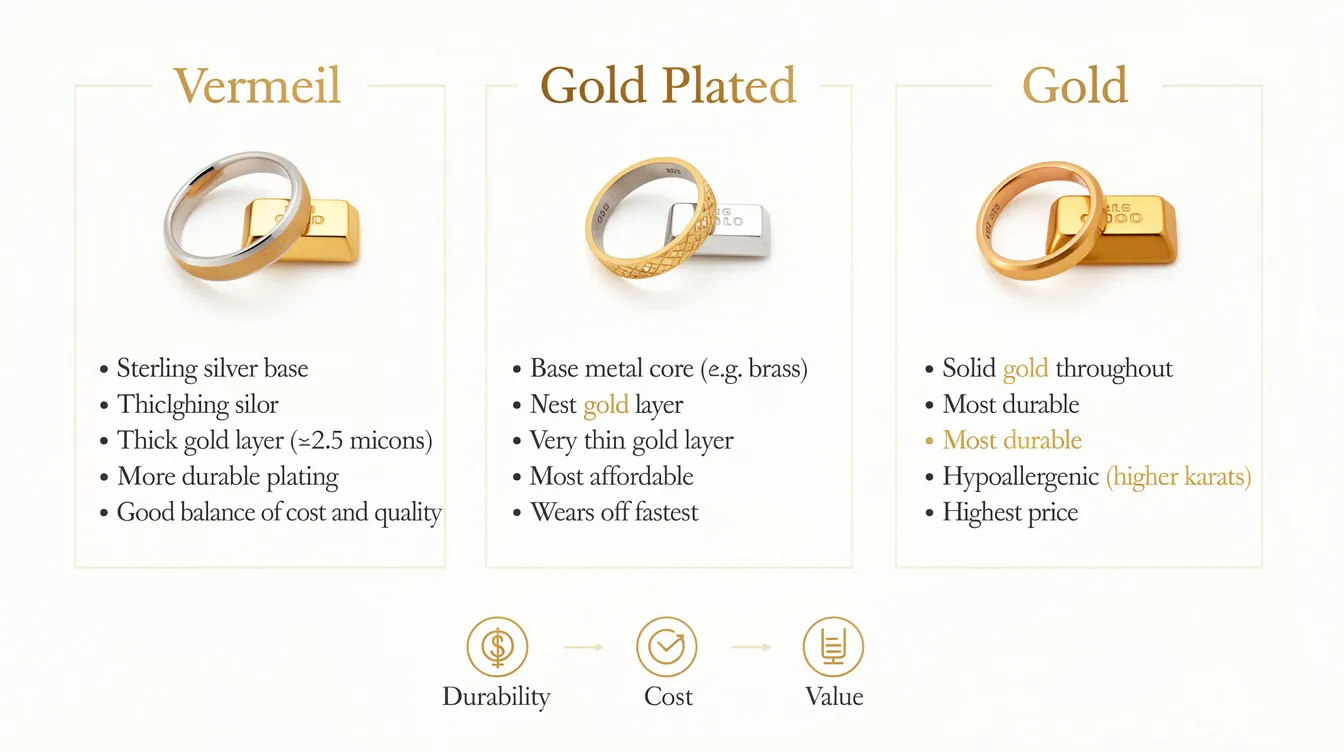
The main difference between gold vermeil and solid gold comes down to construction.
-
Vermeil, pronounced ver may, is gold plated sterling silver.
-
Solid gold is made entirely of a gold alloy throughout the entire piece.
Gold is an entirely precious metal, while gold vermeil is a gold-plated sterling silver alternative that is often more affordable. Gold vermeil jewelry typically consists of a thick layer of gold, at least 2.5 microns, over a sterling silver base, making it a higher quality yet still affordable alternative to gold-plated jewelry.
Standard gold plated pieces usually use a brass base, brass or copper, or another lower-cost base metal with a thin layer of gold. Gold-plated jewellery typically has a very thin layer of gold, often less than 0.05% of its total weight, making it less durable and more prone to tarnishing compared to gold-filled and gold vermeil jewellery. If you’re comparing different types of gold plating for jewellery, this thin layer is one of the most important durability factors to understand.
Gold-filled jewelry sits in another category: gold-filled jewelry consists of a layer of solid gold that must constitute at least 5% of the item’s total weight, making it more durable than gold-plated options. In a gold filled vs gold vermeil comparison, gold filled pieces are usually more wear-resistant, while gold vermeil jewellery offers a sterling silver base and a high quality gold surface at a lower cost than solid gold pieces. If you’re considering plated options as well, it helps to understand key facts about gold plated jewellery so you can weigh cost against longevity.
Both plated and gold vermeil jewelry can be beautiful, but they serve different purposes. Vermeil pieces are best for affordable style and variety, while solid gold pieces are best for durability, resale value and long-term wear.
Cost and Value
Cost is one of the clearest differences between vermeil vs gold.
Vermeil Jewelry Pricing
Gold vermeil offers a balance between quality and affordability, making it a popular choice for those seeking fine jewelry without the cost of solid gold.
Because vermeil uses a sterling silver base instead of solid gold throughout, the price stays moderate. Small gold vermeil pieces such as earrings, pendants, stacking rings and delicate necklaces often sit in accessible price ranges compared with similar designs made in solid gold.
This makes gold vermeil jewellery a strong affordable luxury choice. You still get precious metals, a silver core, and a thick gold layer, but without paying for the full gold weight of the entire piece. If you enjoy building coordinated looks, vermeil pairs well with silver set jewellery collections so you can mix metals while keeping an eye on budget.
The tradeoff is resale value. The gold layer is too thin to offer meaningful melt value, even when the plating is high quality. Vermeil jewellery may retain design value or some silver value, but it should not be treated as an investment in the same way as solid gold jewellery.
Solid Gold Jewelry Pricing
Solid gold has a higher upfront cost because the entire piece contains gold alloy, not just the surface.
The karat level affects price significantly:
-
10k gold contains less pure gold and is usually more affordable.
-
14k gold balances durability, color and price for everyday pieces.
-
18k gold has a richer tone and higher gold content.
-
22k gold is more pure but softer and usually more expensive.
Solid gold is made by mixing pure 24k gold with stronger alloy metals to give it structural integrity. These other metals may include copper, silver, palladium, zinc or nickel, depending on the color and durability required.
The visual tone of solid gold depends on the karat level, with lower karats appearing softer or paler and higher karats displaying a richer yellow hue. The color of solid gold is consistent throughout, holding a rich luster that varies with karat purity.
Solid gold costs more, but it also holds value better. It can be sold, repaired, recycled and passed down, which is why high quality pieces in solid gold are often treated as heirloom-quality jewellery rather than short-term fashion purchases.
Durability and Longevity
Durability depends on whether the gold is only on the surface or present throughout the entire piece.
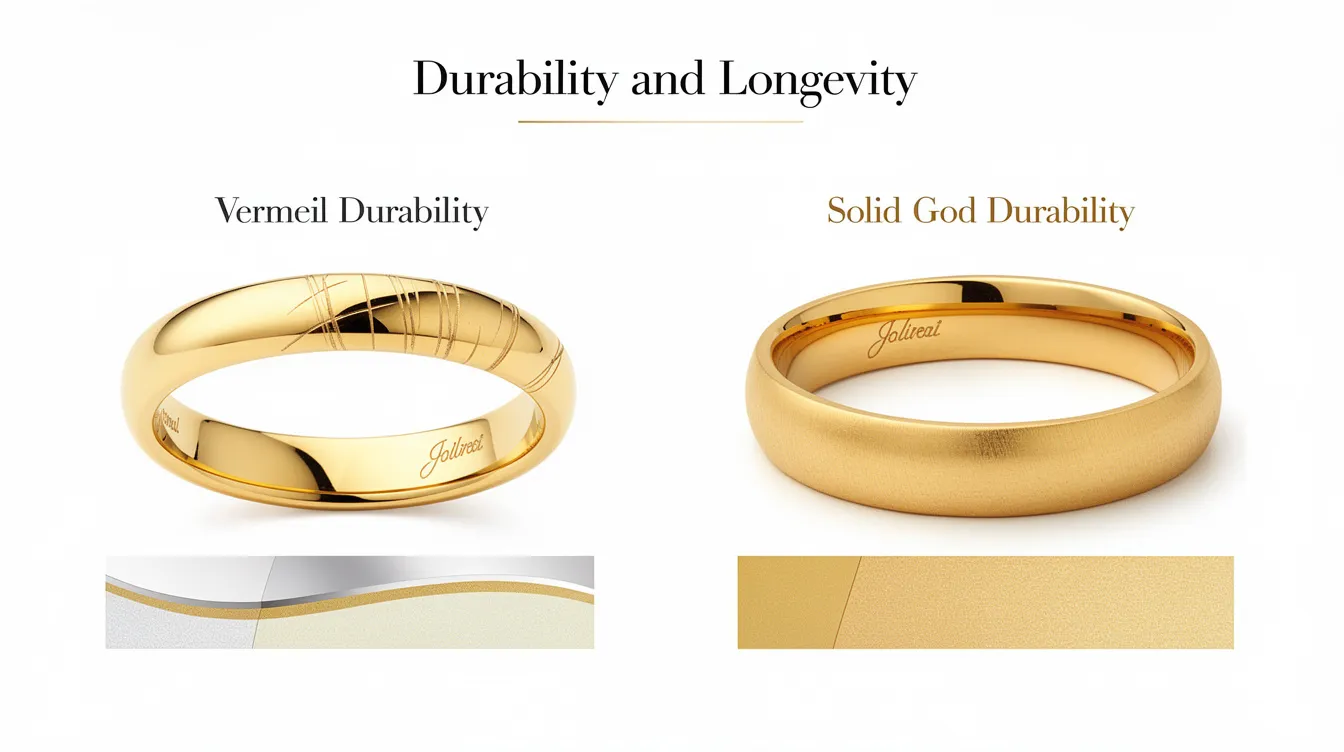
Vermeil Durability
Gold vermeil consists of a base metal of sterling silver and is plated with a thick layer of gold, typically at least 2.5 microns thick, making it more durable than standard gold-plated jewelry.
Gold vermeil is made with a sterling silver base and a thick layer of gold, typically at least 2.5 microns thick, which is significantly thicker than standard gold plating. This thick gold layer gives vermeil better wear resistance than basic plated jewellery, especially when compared with gold plated options over brass or copper.
Gold vermeil is more durable than gold-plated options due to its thicker gold layer and the use of sterling silver as the base metal, which is hypoallergenic. The underlying silver core of vermeil makes it hypoallergenic, unlike cheaper gold plating alternatives.
Still, vermeil is not indestructible. Rings, bracelets and clasps experience friction, so the gold layer can eventually thin. Skin pH, sweat, perfume, lotion, swimming, showering and frequent exercise can all shorten the life of gold vermeil pieces.
With proper care, gold vermeil jewelry can last many years and is less likely to tarnish or wear off compared to gold-plated jewelry. If the layer of gold eventually fades, professional replating can refresh the piece and extend its useful life.
Solid Gold Durability
Solid gold is the most durable jewelry choice as it cannot wear down to a different metal, does not tarnish, and is waterproof.
Because solid gold is gold alloy throughout, it will not change color or expose a different metal underneath. Scratches may appear, and softer high-karat gold can dent, but there is no plating layer that can wear through.
Different karats behave differently. Lower karat gold, such as 10k or 14k, contains more strengthening metals and is usually harder for everyday wear. Higher karat gold, such as 18k or 22k, has a richer gold color but is softer and may need more care in delicate rings or fine details.
Solid gold can be polished, repaired, and recycled, confirming its status as an heirloom-quality piece. Professional polishing can restore shine, resizing is usually possible, and worn settings can often be rebuilt rather than replaced.
For daily gold pieces, wedding bands, staple earrings and necklaces worn often, solid gold is usually the more durable long-term choice.
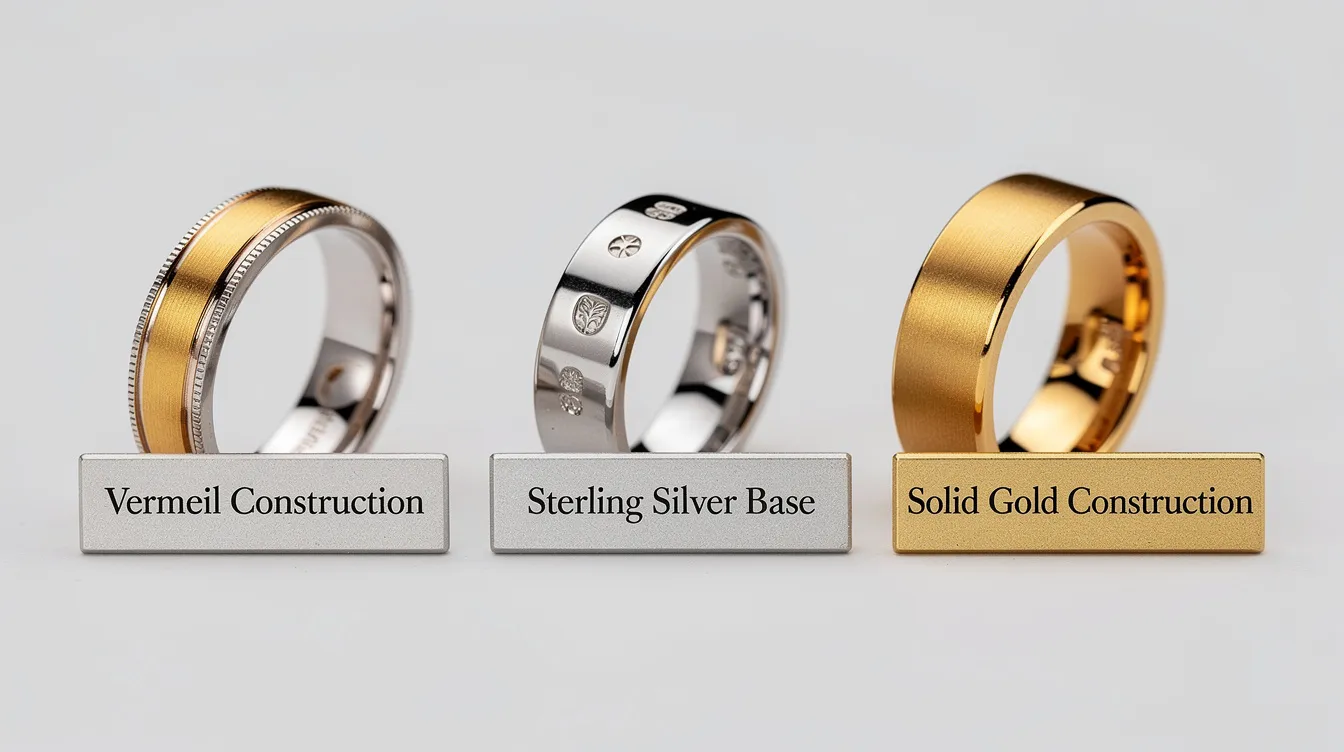
True vermeil must use sterling silver as the base. Sterling silver is 92.5% silver, often marked with a 925 stamp, and sits among the most popular types of silver used in jewellery because it balances quality, strength and affordability.
The gold layer must be a real gold plating layer, not simply gold tone or gold bonded marketing language. In the U.S., vermeil standards generally require gold plating of at least 10k and a minimum thickness of 2.5 microns on significant surfaces.
The electroplating process uses an electric current to deposit gold onto the sterling silver base. Surface preparation matters: polishing, cleaning and adhesion all affect the final quality. A well-made vermeil piece has a smooth, even layer, while lower quality plated jewellery may fade quickly, which is why guides to the main types of gold plating in jewellery often stress process quality as much as metal content.
This is the key difference between gold plated pieces and gold vermeil pieces. Basic gold plated jewellery may use brass, nickel or another inexpensive metal underneath, while vermeil uses a precious sterling silver base.
For sensitive skin, this matters. Sterling silver is usually gentler than a brass base or nickel-containing base metal, although any jewellery can cause an allergic reaction if alloys, coatings or exposed metals irritate the wearer. Pieces such as a sterling silver necklace with pearl accents offer that softer metal with an elegant, classic finish. Many people with sensitivities choose intricate sterling silver earrings for everyday wear because they offer both comfort and style.
Solid Gold Construction
Solid gold is not pure gold in most wearable jewelry. Pure gold is 24k, but pure gold is soft, so it is mixed with other metals for strength.
Common karat markings include:
-
10k, or 41.7% gold
-
14k, or 58.3% gold
-
18k, or 75% gold
-
22k, or 91.7% gold
Alloy metals change both performance and color. Copper adds warmth and helps create rose gold. Silver can soften yellow tones. Palladium or nickel may be used in white gold, though nickel can be a concern for sensitive skin.
Solid gold can appear yellow, rose or white depending on the alloy. White gold is often rhodium plated for a bright white finish, so even some solid gold jewellery may have a surface coating that needs maintenance over time. If you prefer silver tones instead of gold, a sterling silver clover jewellery set gives a similar timeless feel with a cooler metal colour.
Look for quality stamps such as 10k, 14k, 18k, 22k, 417, 585, 750 or 917, along with a maker’s mark where available. These marks help verify authenticity and distinguish solid gold from gold plated options, filled and gold vermeil pieces.
Maintenance Requirements
Vermeil and solid gold both benefit from care, but they require different levels of attention.
Caring for Vermeil
Vermeil needs gentle treatment because the gold is a surface layer.
Use simple care habits:
-
Clean with a soft cloth.
-
Use mild soap and water only when needed.
-
Avoid abrasive cleaners and ultrasonic machines.
-
Store pieces separately to prevent scratching.
-
Keep vermeil away from perfume, lotion and harsh chemicals.
The best rule is jewellery on last, off first. Put gold vermeil jewellery on after skincare and fragrance, and remove it before swimming, showering, exercising or sleeping.
Moisture and friction can cause the plating to wear faster. If the gold layer thins, the sterling silver underneath may oxidize and tarnish. Proper care reduces that risk and helps vermeil pieces keep their luxurious look for longer.
Professional replating may be needed when silver shows through, color dulls noticeably, or high-contact areas lose their gold finish.
Caring for Solid Gold
Solid gold is simpler to maintain.
Clean it with warm water, mild soap and a soft brush or cloth. Dry it fully before storage, especially if gemstones are present.
Solid gold resists daily activities better than gold plated jewellery or vermeil jewellery. It can handle water and sweat more effectively because there is no thin layer of gold that can peel away to reveal a different base metal.
Storage still matters. Keep gold jewellery separated to avoid scratches, especially between rings, bracelets and necklaces. Even durable gold can scratch against harder gemstones or other metals.
Professional polishing can restore shine when the surface becomes dull. White gold may need rhodium replating, but yellow and rose solid gold usually require very little beyond cleaning, inspection and occasional refinishing.
Lifestyle Considerations
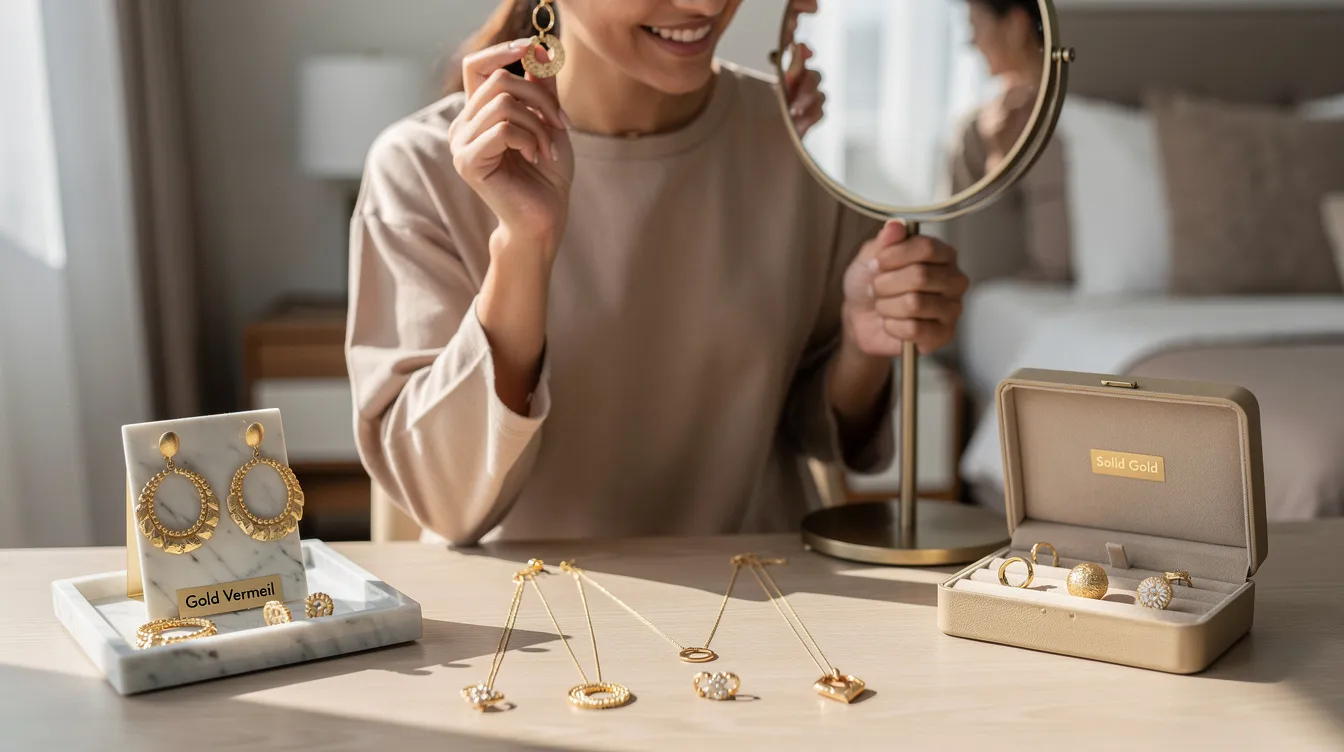
Your lifestyle should guide the choice more than the label alone.
Choose vermeil if you want affordable statement pieces, earrings, pendants, necklaces or occasional-wear jewellery that matches your personal style. Gold vermeil is especially useful when you want larger designs or trend pieces without the hefty price tag of solid gold, especially when combined with gold-plated earrings with semi-precious stones for extra colour and detail.
Vermeil can also work well for office wear, social wear and lower-friction pieces. It is usually a better choice than cheap gold plated jewellery over brass because the sterling silver base is higher quality and more suitable for sensitive skin, though well-made gold-plated necklaces with opal and other gemstones can also offer a luxe look for occasional wear.
Choose solid gold if you want everyday pieces that stay on through normal life. Wedding rings, engagement rings, staple bracelets, everyday earrings and chains worn constantly are better suited to solid gold, and many people reserve coloured gemstone pieces like an emerald necklace in a timeless design for dressier moments.
Activity level matters. If you exercise often, work with your hands, live in a humid environment, swim frequently or prefer never to remove your jewellery, solid gold is the safer option. Vermeil requires more awareness and care, while a sterling silver necklace with an emerald stone pendant can be reserved for lower-impact wear when you want a pop of colour without committing to solid gold.
Style preference also matters. If you love switching between trends, gold vermeil gives flexibility. If you want one perfect piece to wear for decades, solid gold is usually worth the investment.
Vermeil or Gold: Which Should You Choose?
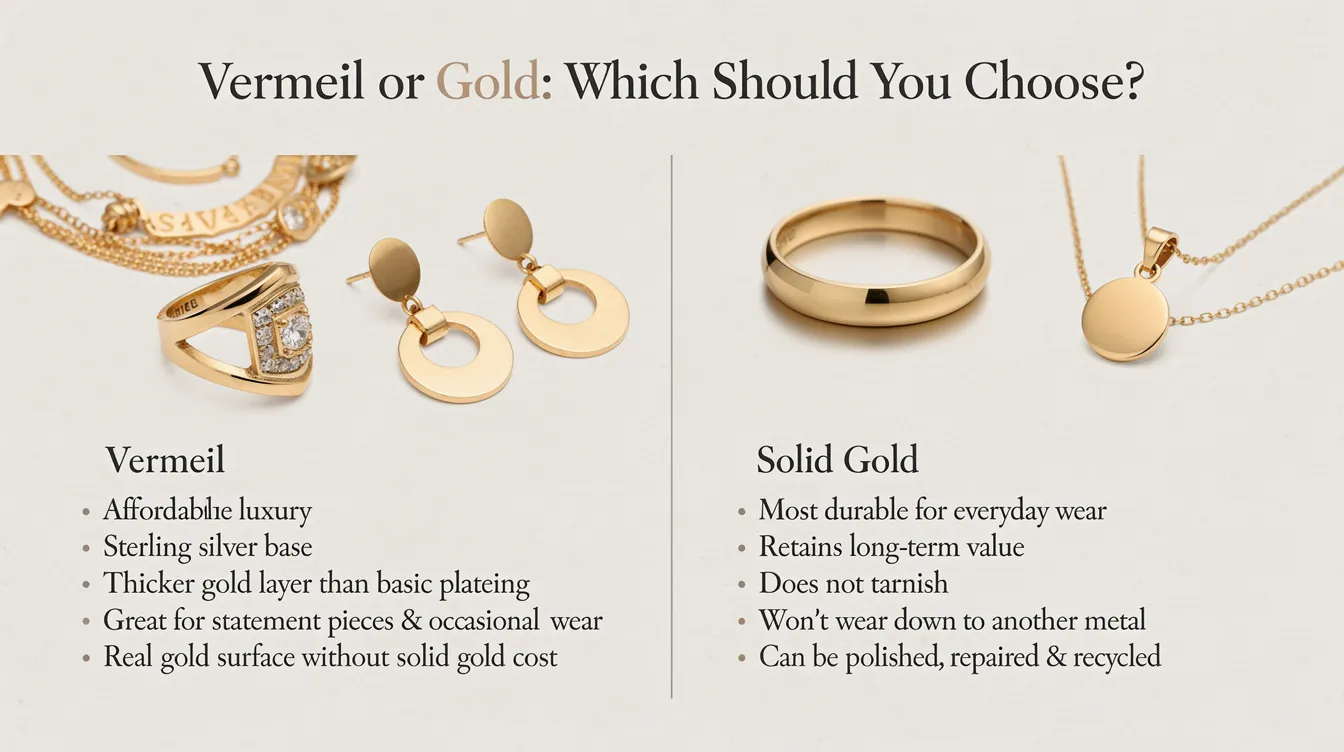
Choose vermeil if you want an affordable option with a luxurious look, a sterling silver base, and better quality than basic gold plated jewellery. It is ideal for fashion-forward designs, statement pieces, occasional wear and buyers who want real gold on the surface without the full cost of solid gold.
Choose solid gold if you want the most durable option for everyday wear, long-term value and heirloom potential. Solid gold pieces cost more upfront, but they do not tarnish, do not wear down to a different metal, and can be polished, repaired and recycled over time.
A simple decision framework:
-
Choose vermeil for affordability, variety and trend-led personal style.
-
Choose solid gold for daily wear, investment value and longevity.
-
Choose vermeil for larger designs that would be expensive in solid gold.
-
Choose solid gold for rings, bracelets and staple pieces exposed to frequent friction.
-
Choose vermeil if you are comfortable with proper care and possible replating.
-
Choose solid gold if you want minimal maintenance.
Both options can create beautiful gold jewellery. The best choice is the one matched to your budget, wear habits and expectations for long-term value.
Frequently Asked Questions About Vermeil and Solid Gold Jewelry
What is the main difference between gold vermeil and solid gold?
The main difference lies in construction. Gold vermeil is sterling silver coated with a thick layer of gold (at least 2.5 microns), while solid gold jewelry is made entirely of gold alloy throughout the piece. This affects durability, price, and maintenance.
Is gold vermeil hypoallergenic?
Yes, gold vermeil is generally hypoallergenic because it uses sterling silver as the base metal, which is less likely to cause allergic reactions compared to base metals like brass or copper found in typical gold-plated jewelry.
How long does gold vermeil jewelry last?
With proper care, gold vermeil jewelry can last several years. The thick gold plating offers better durability than standard gold plating, but it can wear off over time, especially on high-contact areas. Professional replating can restore its appearance.
Can solid gold jewelry tarnish?
Solid gold does not tarnish because it is made entirely of gold alloy. However, lower karat gold with higher alloy content may show slight discoloration due to the other metals mixed in, but it generally remains bright and lustrous with minimal maintenance.
Which is better for everyday wear: vermeil or solid gold?
Solid gold is better suited for everyday wear due to its durability and resistance to tarnishing or wearing through. Gold vermeil is ideal for occasional wear or pieces that are rotated frequently, as it requires more careful handling.
Does vermeil jewelry have resale value?
Vermeil jewelry typically has limited resale value because the gold layer is thin and the core is sterling silver, which is less valuable than solid gold. However, well-crafted vermeil pieces may retain design or sentimental value.
How should I care for vermeil jewelry?
To care for vermeil jewelry, avoid exposure to water, sweat, perfume, and harsh chemicals. Clean with a soft cloth and mild soap when necessary, and store pieces separately to prevent scratching. Remove jewelry before swimming or exercising.
Can vermeil jewelry be replated?
Yes, when the gold layer on vermeil jewelry wears off, professional replating can restore its finish and extend its lifespan, making it a cost-effective way to maintain the piece’s appearance.
What karat gold is used in vermeil?
Vermeil gold plating is typically at least 10k gold, with many quality pieces using 14k or 18k gold plating. The thicker and higher karat the gold layer, the better the durability and richer the color.
Is solid gold jewelry a good investment?
Yes, solid gold jewelry is considered a good investment because it retains intrinsic value, can be resold, recycled, and passed down as heirlooms. Its durability and timeless appeal add to its long-term worth.
Leave a comment