

Overview of Garnets
Garnets represent one of the most versatile and historically significant mineral groups in both the gem world and industrial applications. While many people associate garnets with deep red gemstones, the garnet family actually encompasses minerals that occur in almost every color—from classic reds and vibrant oranges to rare blues and even color-change varieties that shift hue under different lighting conditions.
The garnet group has been known since at least the Bronze Age, with archaeological evidence showing their use as ornamental stones in ancient Egypt and the eastern Mediterranean as early as the 3rd millennium BCE. These durable minerals served both decorative and practical purposes, valued for their natural luster and resistance to weathering.
All natural garnets share an isometric (cubic) crystal structure but differ significantly in their chemical composition. This creates several solid-solution series where elements substitute freely within the crystal lattice. The two main natural series are the pyralspite group (pyrope, almandine, spessartine) and the ugrandite group (uvarovite, grossular, andradite). The name “garnet” derives from the Latin “granatus,” likely referencing both the red color and the resemblance of common garnet crystals to pomegranate seeds—a connection that has persisted for centuries in gemological literature.
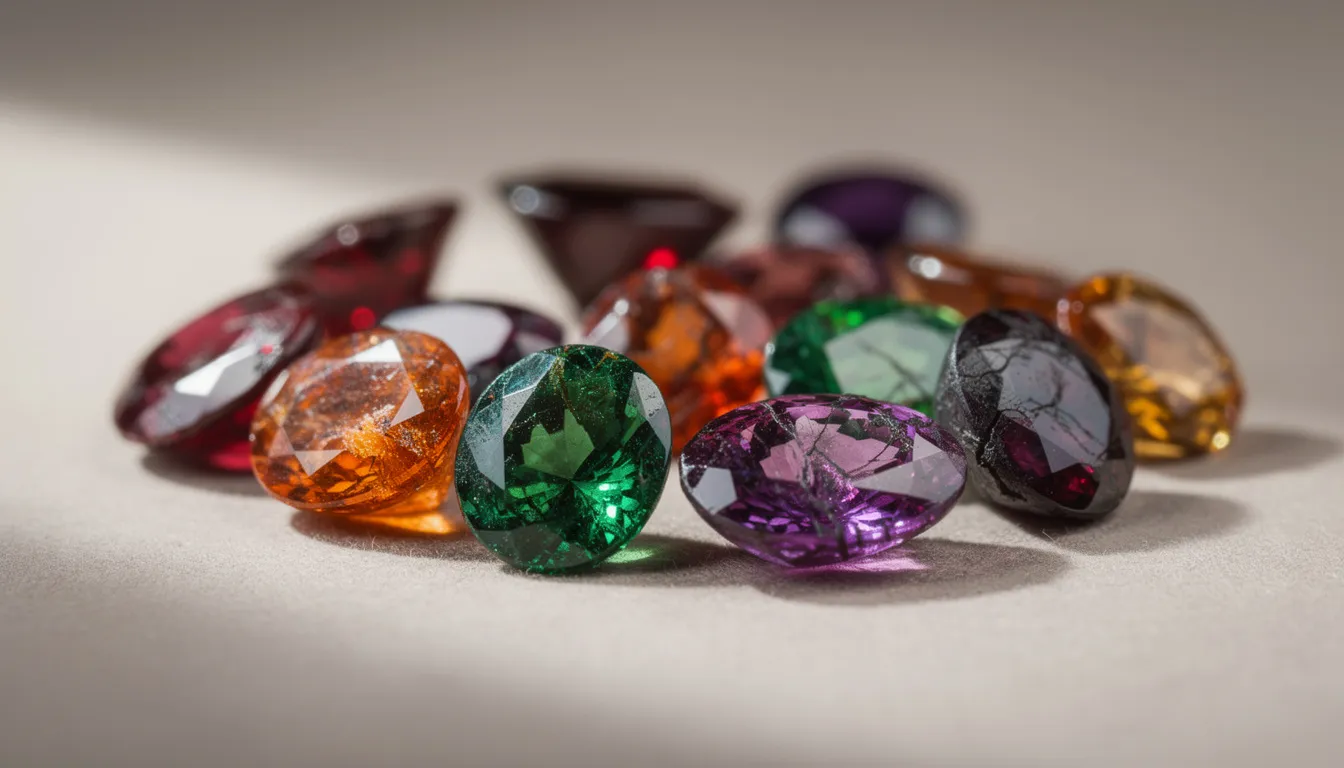
Physical and Optical Properties
Color Range
Garnets rank among the most durable minerals commonly used as gemstones. Their physical properties—combining respectable hardness with a vitreous to resinous, sometimes glass like luster—make them suitable for both fine jewelry and demanding industrial applications like abrasive blasting.
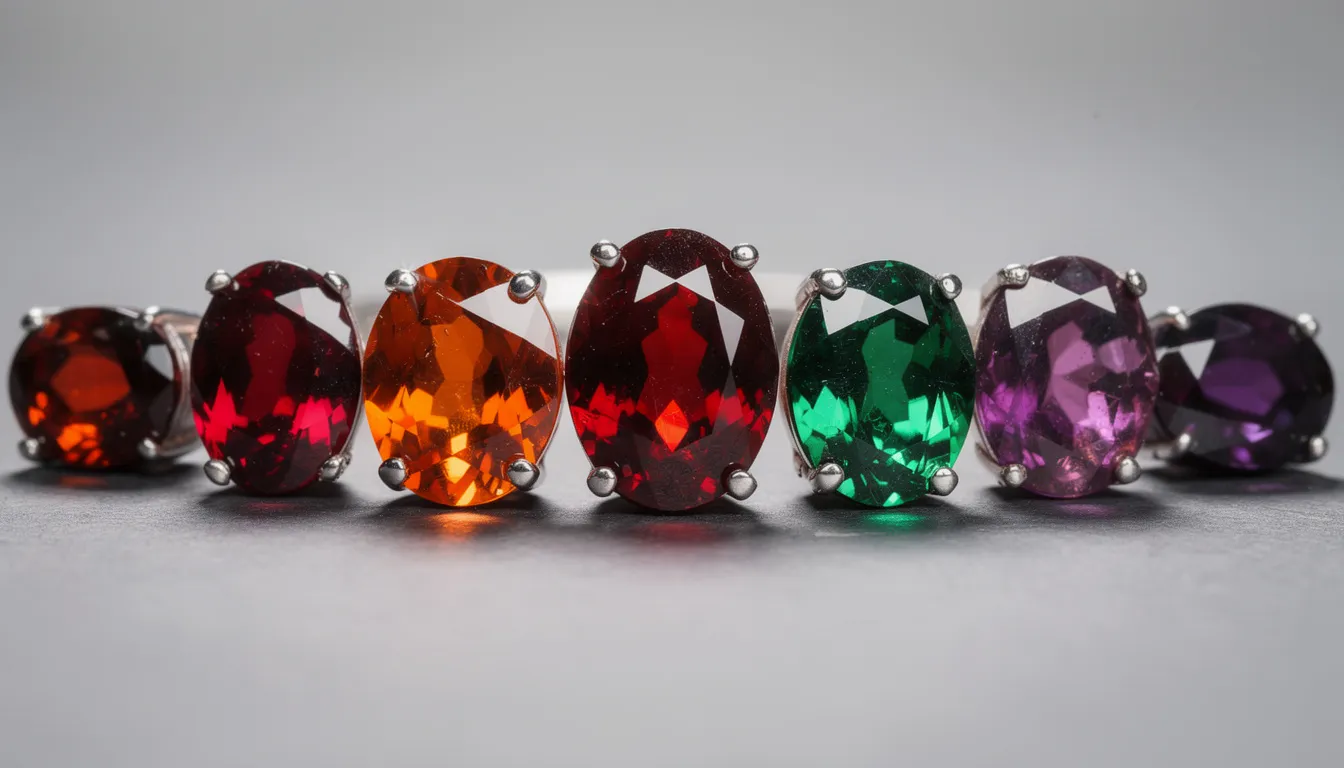
The color range across garnet species is remarkable. Common hues include deep red, reddish brown, brownish red, orange, reddish orange, and yellow. Green garnet varieties like tsavorite and demantoid have gained significant market attention, while blue garnets remain among the rarest gems known. Colorless specimens occur occasionally, and opaque varieties including black melanite serve specific decorative purposes. Many garnets display a dark tone or very dark tone that can mask their true body color, particularly in iron-rich almandine.
Crystal Structure
Garnets crystallize in the isometric system, producing characteristic dodecahedral (12-faced) and trapezohedral (24-faced) crystal form habits. These well-developed crystals are commonly found in metamorphic rocks where slow growth allows excellent crystal faces to develop.
Hardness and Durability
On the Mohs scale, garnet hardness ranges from about 6.5 to 7.5, with almandine typically reaching 7–7.5 and grossular garnet falling around 7–7.5 as well.
Specific gravity varies from roughly 3.5 to 4.3 across the group, with iron-rich varieties like almandine and andradite sitting at the higher end due to their heavier cations. The refractive index clusters between 1.72 and 1.89 depending on species, and garnets are singly refractive—an optical property that helps gemologists distinguish them from doubly refractive minerals like tourmaline or zircon. Despite their hardness, garnets lack cleavage and fracture conchoidally, meaning they can chip if struck sharply.
Chemistry and Structural Group
Chemical Formula and Composition
The garnet minerals share a general chemical formula of A₃B₂(SiO₄)₃, where the A site typically hosts divalent cations such as calcium (Ca²⁺), magnesium (Mg²⁺), iron (Fe²⁺), or manganese (Mn²⁺), while the B site accommodates trivalent cations like aluminum (Al³⁺), iron (Fe³⁺), or chromium (Cr³⁺). This flexible chemical composition allows extensive substitution between elements, creating the diverse garnet species observed in nature.
Crystal Structure
The crystal structure consists of corner-sharing SiO₄ tetrahedra linked with BO₆ octahedra to form a three-dimensional framework. Within this framework, A-site cations occupy positions with 8-fold coordination, surrounded by oxygen atoms. This arrangement is remarkably stable across a wide range of compositions, which explains why garnets form under such varied geological conditions.
Solid Solution and Synthetic Garnets
Extensive solid solution occurs between end-member compositions, so most natural garnets represent mixtures rather than pure chemical species. For instance, many gem-quality red garnets contain both pyrope and almandine components in varying proportions. Crystal habit sometimes correlates with chemical composition—dodecahedral crystals are more typical of grossular, while trapezohedra appear more frequently in pyrope almandine compositions.
Synthetic garnets exploit this same structural flexibility. The garnet crystal structure can accommodate many different cations beyond those found in natural stones, including rare earth elements, gallium, and germanium. Materials like yttrium aluminum garnet (YAG) and yttrium iron garnet (YIG) maintain the garnet framework while serving entirely different technological purposes.
Pyralspite Garnets (Mg–Fe–Mn–Al Series)
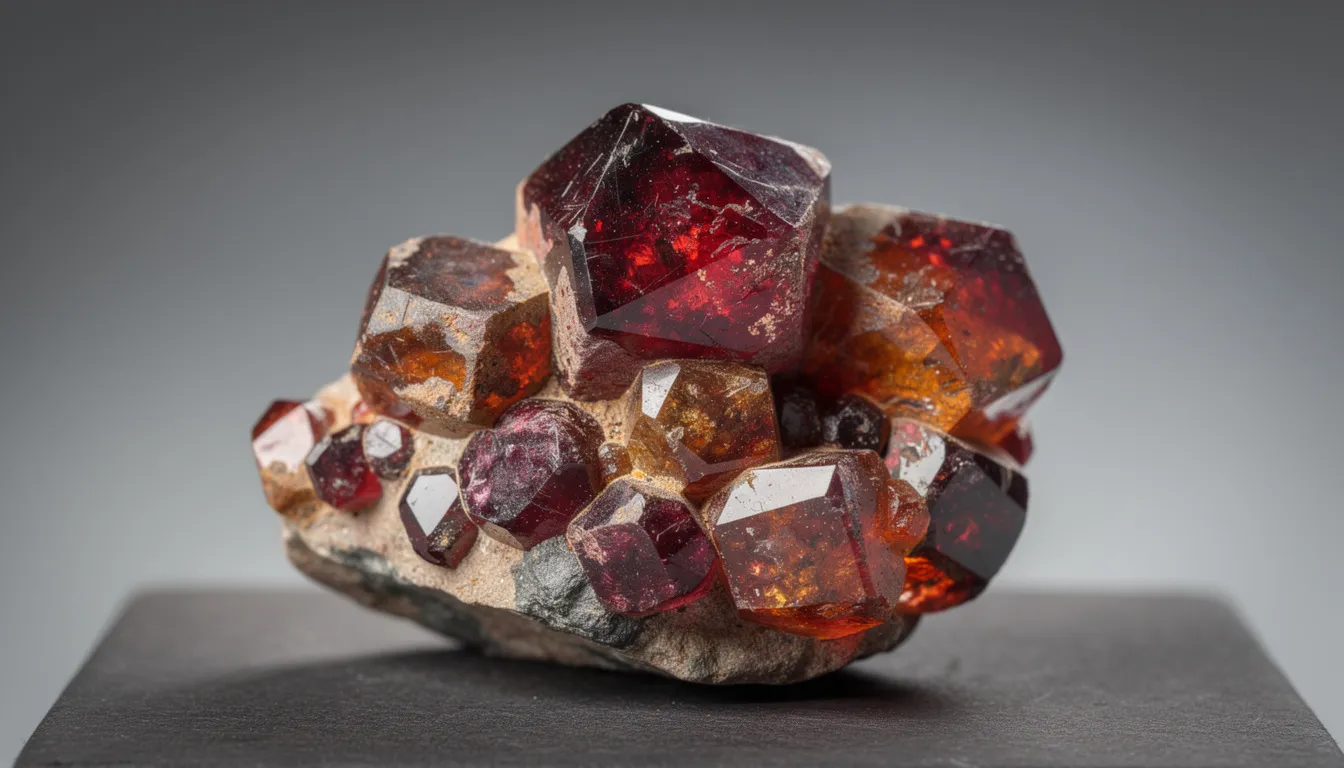
The pyralspite garnet species—pyrope, almandine, and spessartine—share aluminum in the B site of their crystal structure while hosting magnesium, iron, or manganese in the A site. These Al Fe combinations produce the classic red and orange garnets most people recognize, and they form predominantly in metamorphic rocks and certain igneous environments.
Pyrope garnet contains magnesium and aluminum, typically producing gems ranging from deep red to purplish red. Some pyrope specimens appear nearly black due to intense color saturation. This species occurs characteristically in mantle-derived rocks, including peridotite xenoliths brought to the surface by volcanic eruptions and in kimberlite pipes. Chrome-rich pyrope with its vivid red color serves as an important indicator mineral in diamond exploration, since both form under similar high pressure conditions in the Earth’s mantle.
Almandine, the iron–aluminum end-member, represents the most common garnet type. It occurs abundantly in schists and gneisses formed during regional metamorphism, often developing as large porphyroblasts that record pressure–temperature histories. Color ranges from dark red to brownish red, sometimes with reddish shades approaching purple. Almandine provides the bulk of commercial garnet sand used in industrial abrasives, particularly material sourced from metamorphic terrains in India, Australia, and North America.
Spessartine contains manganese and aluminum, yielding colors from vivid orange to orange-red or brownish tones. The finest specimens display a saturated “mandarin” orange prized by collectors. Spessartine typically forms in granite pegmatites and skarn deposits, with notable occurrences in Nigeria, Namibia, and Brazil. Intermediate compositions between spessartine and pyrope (pyrope spessartine mixes) sometimes produce color change garnet material that shifts between daylight and incandescent light.
Rhodolite represents a popular intermediate composition between pyrope and almandine, typically containing roughly two parts pyrope to one part almandine (or similar proportions). Its characteristic purplish-red to rose color has made it a commercial favorite. Historical trade names like “Cape ruby” and “Arizona ruby” once described similar pyrope-almandine blends, though such terminology is now discouraged by gemological authorities.
Ugrandite Garnets (Ca–Fe–Cr–Al Series)
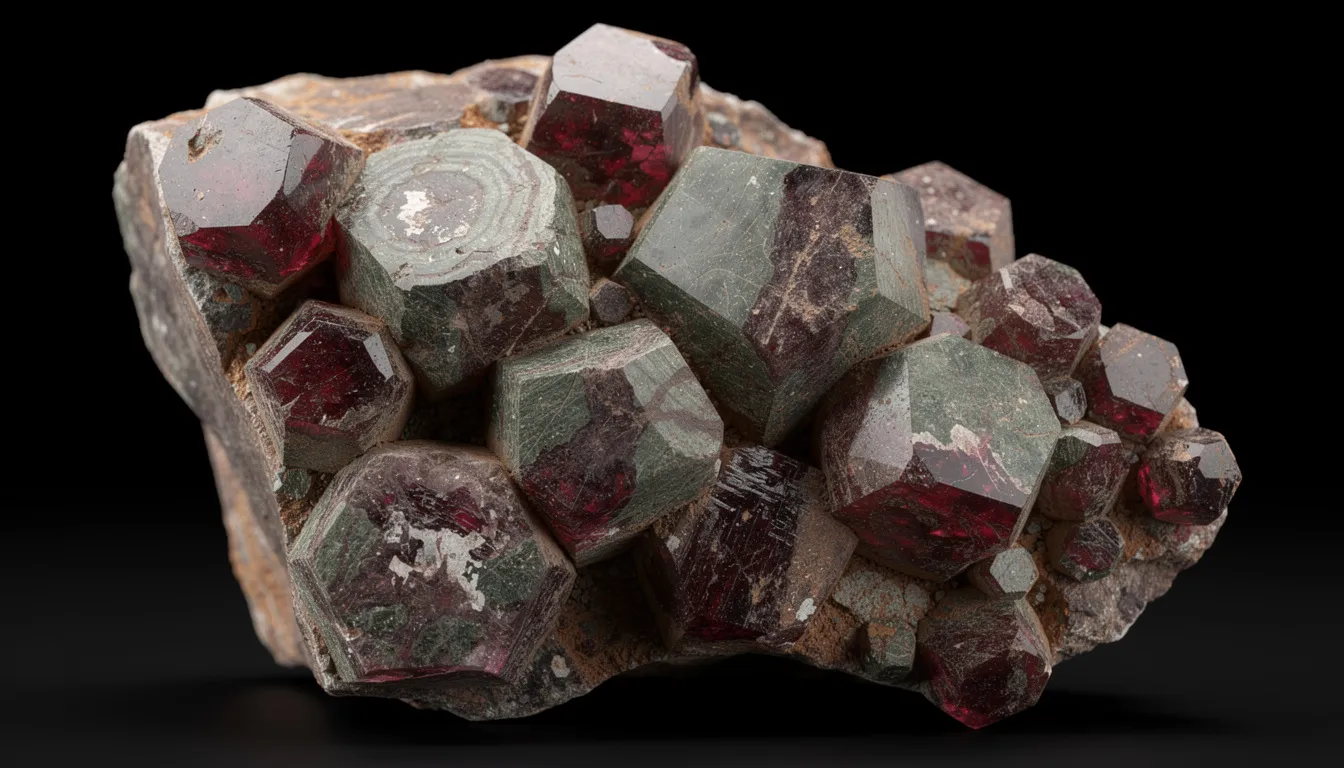
The ugrandite group comprises calcium-bearing garnet species—uvarovite, grossular, and andradite—with calcium occupying the A site while iron, aluminum, or chromium fill the B position. These garnets formed primarily in skarns, contact metamorphic zones, and altered carbonate rocks where calcium was available from limestone or dolomite host rock.
Grossular garnet spans an exceptional color range from colorless through yellow, orange, brown, and various shades of green. The variety called hessonite, sometimes marketed as “cinnamon stone variety,” displays characteristic orange to orange-brown color and distinctive “treacle” or heat-wave inclusions visible under magnification. Hessonite occurs notably in Sri Lanka and India, where it has been used as gemstones for centuries.
Tsavorite, a vibrant green grossular colored by vanadium and chromium, ranks among the most valuable garnets today. Discovered in the late 1960s near Tsavo National Park in Kenya (with additional deposits found shortly after in Tanzania), tsavorite offers an alternative to emerald with superior durability and often better clarity. Gemstone quality transparent specimens of tsavorite above 2–3 carats command premium prices.
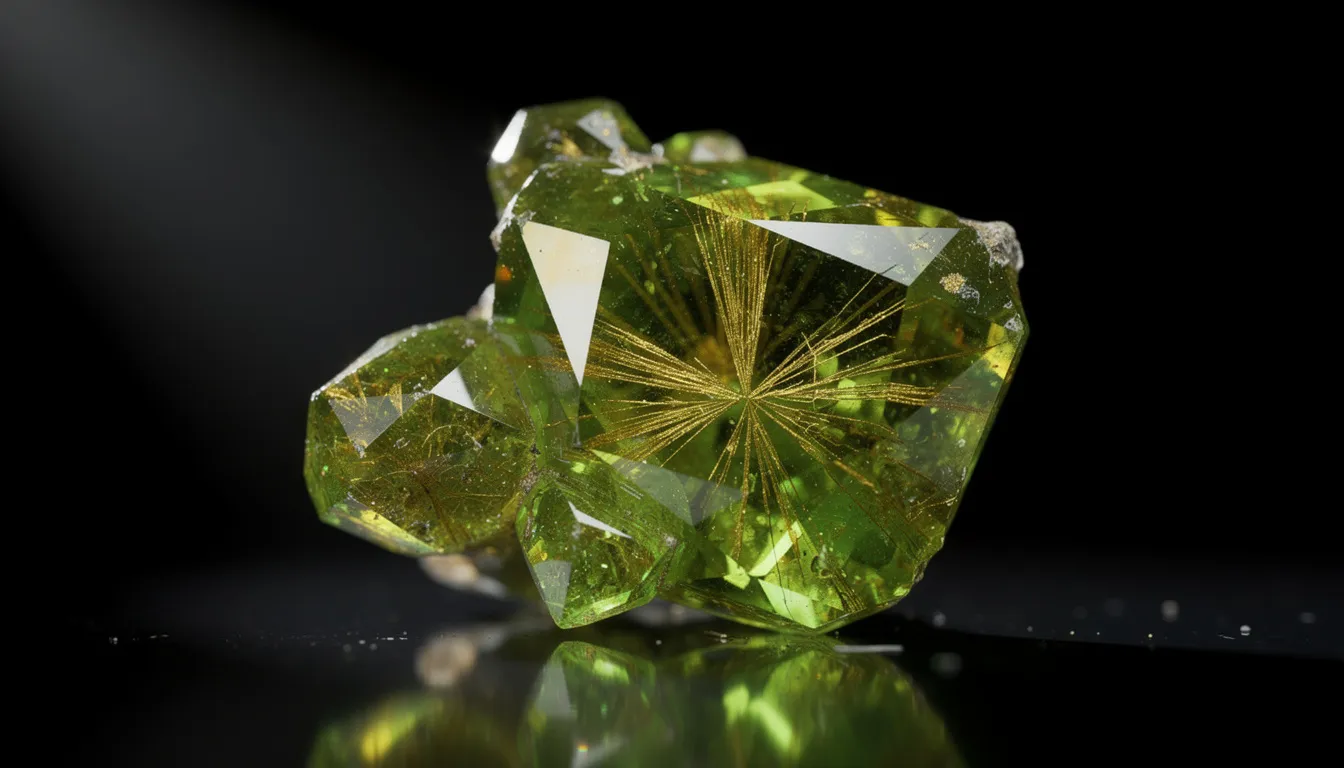
Andradite contains calcium and trivalent iron, with several important varieties. Demantoid—the green, chromium-bearing variety—displays exceptional dispersion (fire) that rivals diamond, making it the most valuable garnet variety by weight. First described from Russia’s Ural Mountains in the 19th century, demantoid often contains characteristic “horsetail” inclusions of chrysotile fibers that actually increase desirability in Russian and Iranian stones. Melanite is black Ti-bearing andradite used in mourning jewelry and decorative objects. Topazolite displays yellow to greenish-yellow colors.
Uvarovite, the pure calcium–chromium garnet, produces brilliant emerald-green color. However, this species rarely forms crystals large enough for faceting—it typically occurs as tiny drusy crystals coating chromite-bearing serpentinites and peridotites. First described from Russia in 1832 and named after Count Uvarov, it remains primarily a collector’s mineral and specimen material.
Less Common and Indicator Garnet Species
Beyond the six principal garnet species commonly encountered in gemology and mineralogy, several rarer end-member compositions exist that hold scientific significance despite limited commercial use. These unusual compositions help geologists understand extreme conditions in Earth’s interior.
Knorringite represents the magnesium–chromium garnet component. Pure knorringite crystals do not occur in nature, but significant knorringite component appears in pyrope garnets from high-pressure mantle rocks. Elevated knorringite content in pyrope provides crucial evidence about formation conditions deep within the mantle, at depths where diamonds also crystallize.
The presence of high-chromium pyrope with strong knorringite component serves as a key indicator mineral in diamond exploration. Geologists sampling stream sediments or glacial till analyze detrital garnet chemistry to identify potential diamond-bearing kimberlite sources upstream. This exploration method has guided discovery of major diamond deposits worldwide.
Other garnets such as goldmanite (calcium–vanadium garnet) and skiagite (iron–iron garnet) document unusual geochemical conditions but remain mineralogical curiosities. Their occurrence signals environments with exceptional concentrations of vanadium or extremely reducing conditions, providing windows into specialized geological processes.
Magnetic and Diagnostic Properties
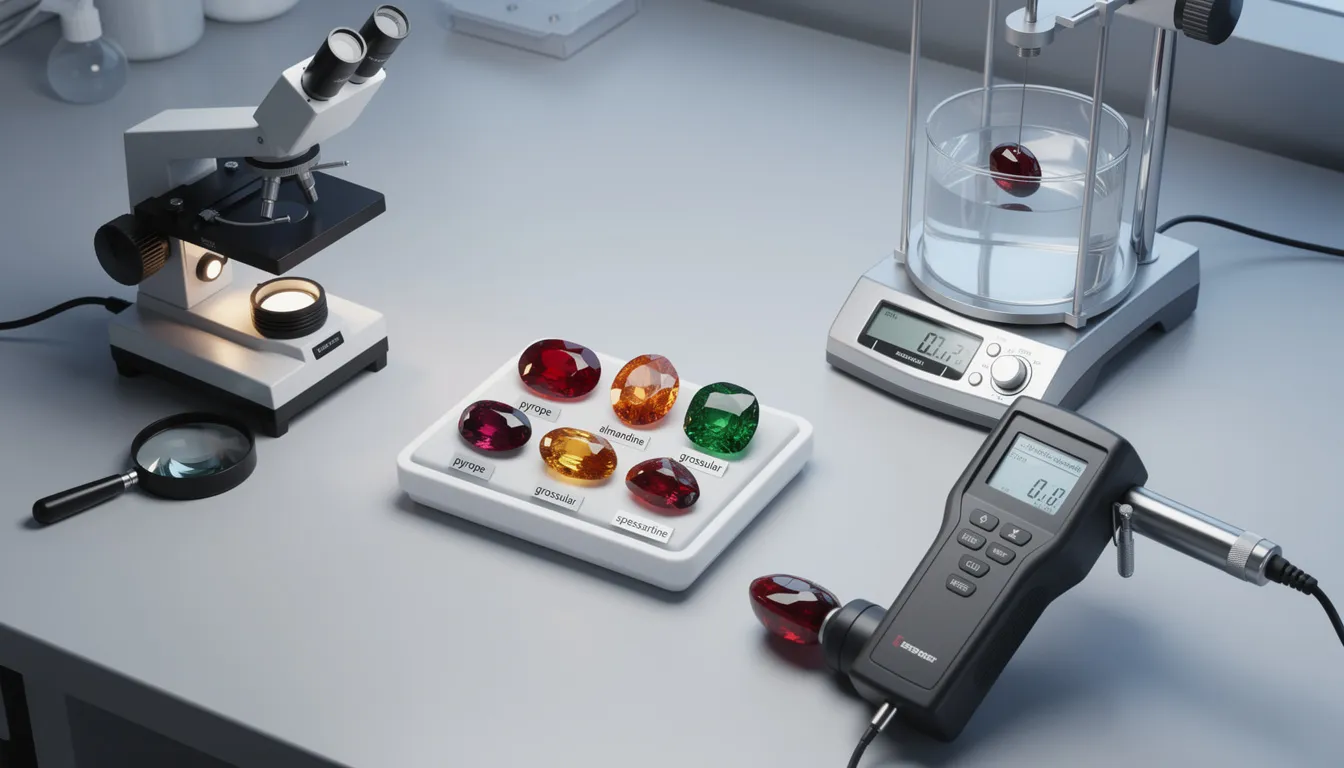
Distinguishing between different garnet varieties requires multiple analytical approaches, particularly when species exhibit overlapping physical properties. Gemological laboratories routinely measure refractive index and specific gravity, but magnetic susceptibility offers an additional diagnostic tool.
Iron-rich and manganese-rich garnets show measurably stronger attraction to powerful neodymium magnets compared to magnesium- or calcium-dominant varieties. Almandine and spessartine respond more strongly than pyrope or grossular. By plotting magnetic response alongside refractive index on diagnostic charts, gemologists can estimate the chemical composition percentages of intermediate garnets without destructive testing.
Additional identification clues include garnets’ singly refractive optical properties (no doubling of inclusions when viewed through the stone), complete absence of cleavage, and characteristic inclusion patterns. Hessonite displays distinctive “treacle” or “heat-wave” inclusions caused by variations in composition. Russian demantoid’s horsetail chrysotile inclusions serve as a geographic origin indicator. These features, combined with standard measurements, allow confident species identification in most gem quality garnets.
Geological Occurrence and Formation
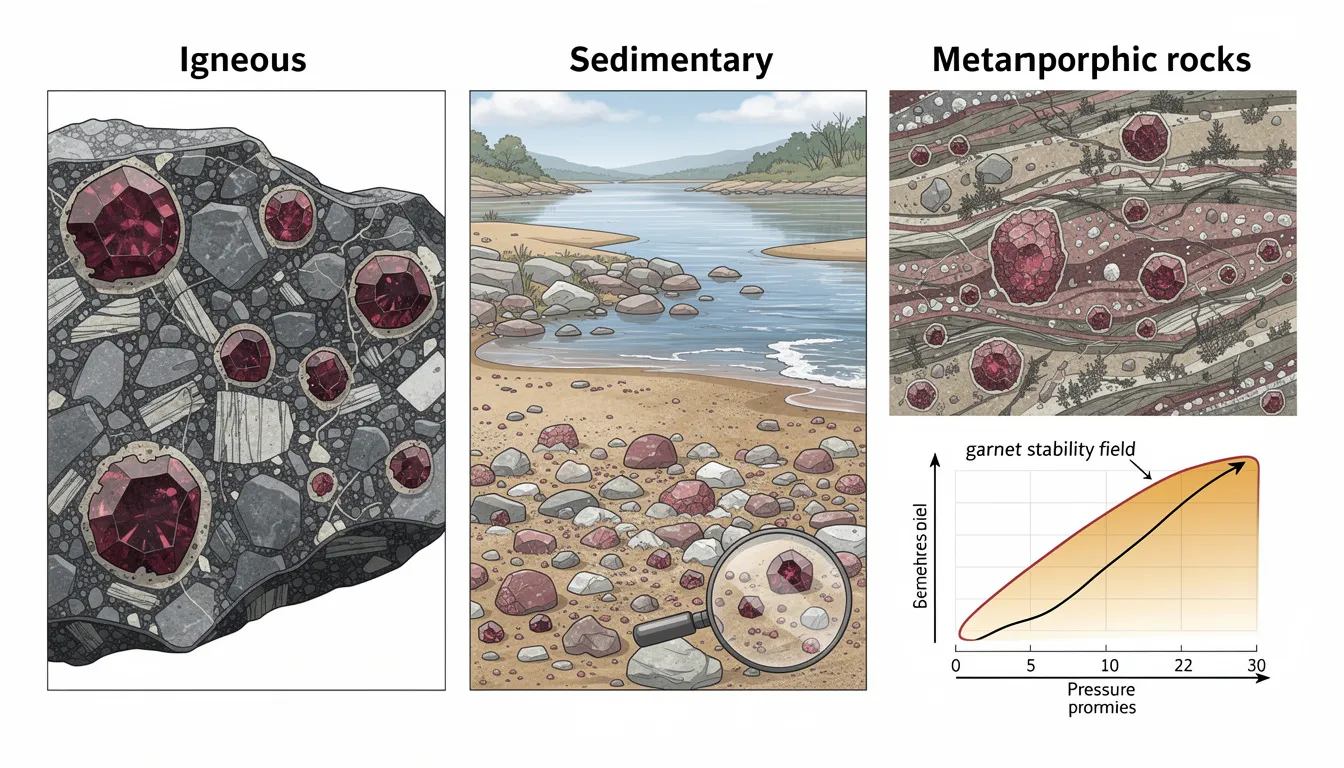
Garnets occur across all major rock types—igneous rocks, sedimentary rocks, and metamorphic rocks—but reach their greatest abundance and development in medium- to high-grade metamorphic terrains. Understanding garnet formation provides insights into the pressure and temperature conditions rocks experienced during burial and heating.
During regional metamorphism, garnets formed as aluminum-rich sedimentary rocks (shales, mudstones) were buried, heated, and subjected to elevated pressures. Garnet schists and gneisses contain characteristic garnet porphyroblasts—large crystals that grew at the expense of surrounding fine-grained matrix minerals. These garnets often display compositional zoning from core to rim, with the chemical formula varying systematically as metamorphic conditions changed during crystal growth.
In igneous settings, garnets crystallize from certain magma compositions under specific conditions. Garnet-bearing granites and pegmatites form in crustal environments, while garnet peridotites represent mantle rocks containing pyrope-rich garnets stable only at high pressure. Kimberlite pipes transport these mantle materials rapidly to the surface, sometimes carrying diamonds alongside high-chromium pyrope and eclogitic garnets.
Because garnets resist chemical weathering remarkably well, they survive transport by rivers and waves to accumulate in placer deposits, alluvial gravels, and coastal mineral sand dunes. These secondary deposits provide most industrial garnet sand mined today, with heavy mineral concentrations forming economically viable resources in Australia, India, and elsewhere.
Garnets can be chemically altered and most often alter to serpentine, talc, and chlorite.
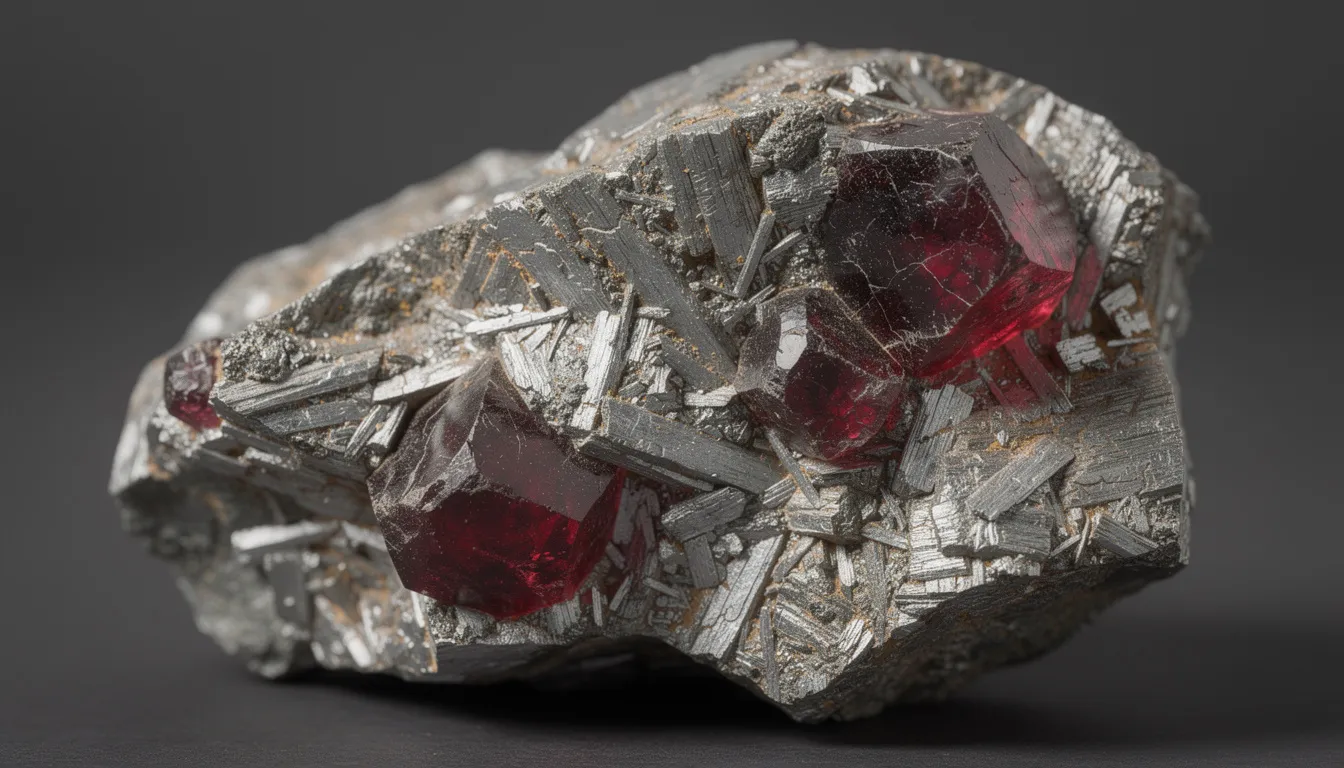
Geothermobarometry and Geological Importance
Garnets serve as powerful recorders of metamorphic conditions, making them invaluable tools in petrology and tectonics. The science of geothermobarometry uses mineral compositions and relationships to estimate the pressures and temperatures at which rocks formed.
Classic thermometers exploit the temperature-dependent exchange of elements like iron and magnesium between garnet and coexisting minerals. The garnet–biotite thermometer and garnet–clinopyroxene thermometer have been refined over decades and remain standard tools in metamorphic petrology. Barometers incorporating garnet with plagioclase, biotite, and muscovite constrain formation pressures.
Garnets can host significant concentrations of trace elements including rare earth elements (REE), yttrium, and chromium. Detailed analysis of how these elements vary from crystal core to rim helps reconstruct metamorphic histories—revealing whether rocks heated gradually, cooled slowly, or experienced multiple metamorphic events.
Radiometric dating methods including Sm–Nd, Lu–Hf, and U–Pb systems can be applied directly to garnet crystals, constraining the timing of metamorphic events. For example, garnet geochronology has precisely dated Grenvillian orogeny metamorphism in the Adirondack region of North America to approximately 1.05 billion years ago, helping unravel the assembly history of ancient supercontinents.
Notable Deposits and Giant Crystals
While many garnets occur as small crystals just a few millimeters across, exceptional localities produce enormous specimens and economically significant concentrations that supply global markets.
The Barton Garnet Mine at Gore Mountain in the Adirondack Mountains of New York represents one of the world’s most remarkable garnet occurrences. Gore Mountain garnet crystals routinely reach 10–18 centimeters in diameter, with some exceptional specimens exceeding 30 centimeters. These dark almandine crystals developed during high-grade metamorphism associated with the Grenvillian orogeny, dated to approximately 1049 ± 5 million years ago. The deposit has supplied industrial abrasive garnet for over a century.
Major industrial garnet sand deposits occur where geological processes concentrated resistant minerals. Port Gregory in Western Australia contains mineralized coastal dunes rich in almandine garnet, forming one of the world’s largest reserves. Indian deposits, particularly in Tamil Nadu and Odisha, supply substantial volumes to global markets. Since the late 20th century, Australia has ranked among the leading global producers of industrial garnet, shipping material to Asia, Europe, and North America for abrasive and filtration applications.
Historical and Cultural Significance
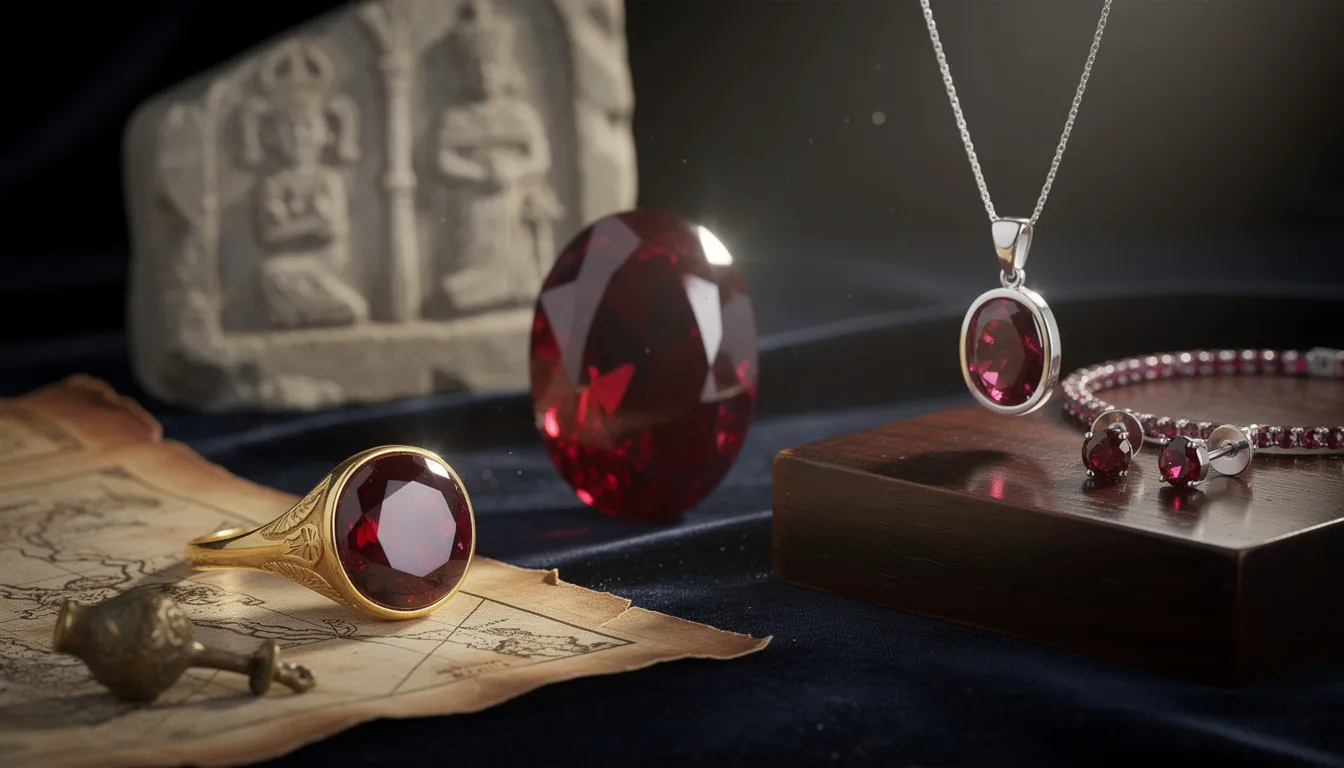
Garnets hold a distinguished place among minerals with continuous human use spanning millennia. From ancient times through modern jewelry traditions, these durable gems have adorned everything from royal insignia to everyday ornaments.
Garnets have been used since the Bronze Age as gemstones and abrasives. Red garnet necklaces were found in the tombs of Egyptian pharaohs, dating back to 3100 BCE. Ancient Romans were known to use carved garnets in signet rings to stamp wax seals on important documents.
During the Middle Ages, jewellers in Scandinavia and Asia used a technique called Cloisonné to decorate metal objects with garnets. Garnets were especially used inlaid in gold cells in the cloisonné technique, found from Anglo-Saxon England to the Black Sea. The 3500 items found in the Staffordshire hoard included weapons, religious artefacts, and jewellery decorated with garnets.
In the 14th century, pyrope-garnet deposits were found in the area now known as the Czech Republic, leading to a thriving gem cutting industry.
Garnets have featured in a range of folklore and legends, including being sought after as a cure for depression in the Middle Ages. Garnets were used by the Hunzas in northern Pakistan between 1889 and 1892 as bullets, believed to be more effective than lead.
Garnets have been favored by lapidaries since ancient times and used widely as an abrasive, demonstrating their long-standing industrial and ornamental importance.
Industrial and Technological Uses
Garnets are essential industrial minerals due to their hardness and lack of cleavage, which make them highly effective abrasives. Non-gem quality garnets, often sourced from metamorphic terrains, provide the bulk of industrial garnet used worldwide.
Abrasives
Garnet sand is a popular abrasive blasting material, frequently replacing silica sand due to its superior safety profile and efficiency. Its hardness and angular grain shape allow it to clean surfaces effectively without producing harmful dust associated with silica.
In addition to abrasive blasting, garnets are commonly used to create skid-resistant surfaces in paints and road construction. Their durability and resistance to weathering enhance the longevity and safety of these applications.
Lapidaries have favored garnets since ancient times for cutting and polishing other gemstones and materials, a practice that continues today in both artisanal and industrial contexts.
Water Jet Cutting
Garnet mixed with very high-pressure water is used in water jet cutting to precisely cut hard materials like steel and ceramics. Garnet extracted from hard rock deposits is especially suitable for this application because its angular particles increase cutting efficiency.
The larger grain sizes of garnet are used for faster cutting work, while smaller grains provide finer finishes, allowing for versatile industrial use.
Water Filtration
Garnet sand serves as a dense filtration medium in water treatment plants due to its high specific gravity. It forms the bottom layer in multi-media filter beds, supporting finer filter materials above while ensuring efficient backwashing and flow dynamics.
Battery Technology
Research on lithium-stuffed garnets, such as Li₇La₃Zr₂O₁₂ (LLZO), has accelerated since the early 2000s. These synthetic garnet-structured materials function as solid electrolytes with potential applications in next-generation solid-state lithium batteries, offering improved safety compared to conventional liquid electrolytes.
The largest source of abrasive garnet today is garnet-rich beach sand, particularly from India and Australia. Garnet is increasingly replacing silica in abrasives because silica poses health risks to workers.
Water jet cutting using garnet produces a cold-cutting process with minimal heat-affected zones and no toxic fumes, making it standard in aerospace, automotive, and architectural fabrication.
Synthetic Garnets and Advanced Materials
The garnet crystal structure has proven remarkably versatile for materials science applications. While synthetic garnets differ chemically from natural gem material, they maintain the same fundamental atomic arrangement and crystallographic symmetry.
Yttrium aluminum garnet (YAG, Y₃Al₅O₁₂) has been grown commercially since the 1960s for multiple applications. Doped with neodymium, it serves as the lasing medium in Nd:YAG lasers used in manufacturing, medicine, and research. Undoped YAG once saw limited use as a diamond simulant due to its high refractive index, though it has largely been supplanted by cubic zirconia in that role.
Yttrium iron garnet (YIG, Y₃Fe₅O₁₂) displays ferrimagnetic properties valuable in microwave technology. It finds use in filters, circulators, and isolators for radar and communications systems, as well as emerging spintronic devices.
Other synthetic garnets include gadolinium gallium garnet (GGG) used as a substrate material for magnetic bubble memory (historically) and as a diamond simulant, lutetium aluminum garnet (LuAG) employed in scintillator detectors for medical imaging, and terbium gallium garnet (TGG) functioning as a Faraday rotator in optical isolators. Synthetic garnets marketed as gems, including YAG and GGG, provide affordable alternatives to natural stones for costume jewelry applications, though they are easily distinguished by their optical properties and specific gravity.
Garnets as Gemstones: Value and Varieties
In the jewelry trade, “garnet” encompasses a remarkably broad palette of stones spanning from affordable mass-market gems to rare collector pieces commanding substantial premiums. Understanding the market segments helps buyers navigate this diverse semi-precious stones garnet group. For those interested in jewelry crafted with elegant design, the Golden Heartbeat Stud Earrings are a stunning example of modern craftsmanship.
Classic red garnets—typically almandine, pyrope, or pyrope-almandine blends—represent the most accessible segment. Almandine garnet is the most common gemstone in the garnet family and is often associated with deep red hues. These stones appear abundantly in commercial jewelry at relatively modest prices, with large clean specimens readily available.
Other garnets in the orange range, particularly spessartine and hessonite, occupy a middle market position with fine “mandarin” spessartine commanding higher prices than brownish material. Grossular garnet can occur in virtually every color except blue, including colorless specimens.
Green garnets represent the premium segment. Tsavorite and demantoid rank among the most valuable colored gems worldwide. Andradite garnet is one of the rarest garnets and features the highest dispersion of all garnet varieties. Fine demantoid with strong color and visible horsetail inclusions from classic Russian sources can exceed prices for equivalent-sized diamonds. Tsavorite competes directly with emerald, often offering superior clarity and durability at comparable per-carat prices for fine material.
Rhodolite (purplish-red pyrope-almandine) offers excellent value for buyers seeking distinctive color without extreme prices. Color change garnet—material that shifts from blue under artificial light to red with purple flashes under incandescent light—appeals to collectors willing to pay premiums for this rare optical phenomenon. Blue garnets, colored by vanadium and trace elements, remain among the rarest gems known.
Typical gem sizes for faceted garnets range from 0.5 to 5 carats, with fine demantoid and tsavorite becoming scarce above 3–4 carats. Different garnet varieties within this single species group can differ in value by orders of magnitude.
Buying Guide: Color, Clarity, Cut, and Carat
Evaluating garnet quality requires understanding that standards vary significantly between different garnet varieties. What constitutes acceptable clarity in one type may be undesirable in another.
-
Color
-
Color assessment depends entirely on garnet type.
-
For pyrope-almandine blends, ideal specimens show vivid pure red without excessive brown or gray modifiers.
-
Rhodolite should display rich raspberry to grape tones.
-
Spessartine values peak with saturated “mandarin” orange—stones trending toward brown command lower prices.
-
Tsavorite and demantoid demand saturated green without yellow, brown, or gray components that dull the appearance.
-
In reflected light, fine garnets should show bright, even color distribution.
-
-
Clarity
-
Many red garnets occur with excellent clarity, making eye-clean stones the norm rather than exception.
-
Hessonite garnet traditionally displays “treacle” inclusions—swirly internal features that are expected and accepted.
-
Fine demantoid may contain visible horsetail chrysotile inclusions that actually increase value when properly oriented.
-
Color change garnets and rare varieties are evaluated more leniently for inclusions given their scarcity.
-
-
Cut
-
Well-proportioned garnets display even brilliance across the face without dark areas of “extinction” caused by light leakage.
-
Common red almandine-pyrope material typically receives standard commercial cuts.
-
Rare and expensive varieties like demantoid and tsavorite often receive custom mixed cuts designed to maximize weight retention while maintaining beauty.
-
Cabochon cut styles suit opaque varieties and some included material.
-
-
Carat
-
Price-per-carat behavior differs dramatically across varieties.
-
Common red garnet prices remain relatively stable across sizes since large clean stones occur regularly.
-
Demantoid and tsavorite prices escalate sharply with size—a 3-carat tsavorite may cost ten times or more per carat than a 1-carat stone of similar quality.
-
For significant purchases, obtaining an independent laboratory report (from GIA or comparable institutions) confirms species identification and verifies natural origin. Multiple species designations may apply to intermediate compositions.
Care, Durability, and Cleaning
Cleaning Methods
Garnets can be cleaned with warm water, mild detergent, and a soft brush. Avoid harsh chemicals including chlorine bleach and strong acids. Sudden temperature changes can stress included stones, potentially causing fractures. Prolonged exposure to very high heat may alter color in some specimens, though normal wear conditions pose no risk.
Ultrasonic cleaners are generally safe for most garnets but should be avoided for heavily included specimens or stones with visible fractures. Steam cleaning carries similar caveats—clean stones tolerate it well, but inclusions may expand under thermal stress.
Durability
Garnets generally offer good durability for jewelry use, with their moderate-to-good hardness protecting against routine scratches. However, their brittleness means they can chip or crack if struck against hard surfaces—a consideration for ring settings that receive daily wear.
Garnets are relatively hard and durable but can be heat sensitive. Garnets are not routinely treated with fracture-filling, dyeing, or heating, so care focuses primarily on physical protection rather than preserving treatments.
Storage Tips
Store garnet jewelry separately from harder gems like diamonds and sapphires that could scratch softer garnet surfaces. Protective settings with bezel or partial-bezel designs offer additional security for frequently worn pieces.
Whether you appreciate garnets for their geological significance, their rainbow of colors, or their practical applications in industry and technology, this mineral family rewards deeper exploration. From the ancient craftsmen who set pyrope in golden cloisonné to modern engineers developing solid-state batteries with garnet electrolytes, these versatile crystals continue finding new roles while maintaining their traditional appeal.
Consider starting your garnet journey with an accessible variety like rhodolite or hessonite before exploring rarer specimens. Visit gemological laboratories, museum mineral collections, or reputable dealers to examine different varieties in person—photographs rarely capture the depth and brilliance of fine garnet material. With species spanning nearly the entire color spectrum and price points accommodating every budget, there’s a garnet waiting for every collector.
Frequently Asked Questions (FAQs) about Garnets
Q: What industrial uses do garnets have?
A: Garnets are widely used in industrial applications, particularly as abrasives. Garnet sand serves as an excellent abrasive and is a common replacement for silica sand in abrasive blasting operations due to its hardness and lack of harmful silica dust. Additionally, garnet mixed with very high-pressure water is used in water jet cutting to precisely cut steel, ceramics, and other tough materials.
Q: What are the different grades of garnet used industrially?
A: Industrial garnet is broadly divided into two main categories: blasting grade and water jet grade. Blasting grade garnet is used primarily for abrasive blasting, offering a durable and efficient alternative to traditional materials. Water jet grade garnet, typically more angular and harder, is used in water jet cutting applications where precision and cutting efficiency are essential.
Q: Is garnet a birthstone?
A: Yes, garnet is the traditional birthstone for the month of January. Its rich red hues and wide range of colors make it a popular choice for birthstone jewelry and gifts.
Q: Why is garnet preferred over silica sand in abrasive blasting?
A: Garnet is preferred because it produces less dust, poses fewer health risks, and is more durable than silica sand. This makes garnet a safer and more environmentally friendly abrasive for blasting operations.
Q: Can garnet be used for water filtration?
A: Yes, garnet sand is also used as a filtration medium in water treatment facilities due to its density and durability, helping to remove impurities effectively.
If you're captivated by the beauty and versatility of garnets and want to incorporate these stunning gemstones into your personal style, explore the exquisite collections at Saras Beads & Jewellery. Based in the UK, Saras Beads offers a wide range of handmade beaded necklaces featuring ethically sourced, high-quality garnet pieces perfect for everyday elegance or special occasions. For inspiration and expert tips on jewelry trends and gemstone styling, explore our articles. Discover unique designs crafted with care and inspired by Mediterranean heritage at sarasbeads.co.uk. Elevate your jewellery collection with meaningful garnet creations that celebrate both tradition and contemporary style.
Leave a comment