

Sodalite is a striking royal blue stone that has captured attention since its formal discovery in 1811. This decorative stone serves triple duty as a gemstone for jewelry, an ornamental stone for interiors, and a trusted companion in crystal healing practices. Whether you’re shopping for sodalite earrings or considering a polished slab for your home, this guide covers everything you need to know.
This article answers the essential questions: what does sodalite mean, how is it used, and how do you recognize quality pieces? We’ll explore its mineralogy, color varieties, global sources, metaphysical healing properties, and practical care tips.
Unlike lapis lazuli, sodalite lacks golden pyrite flecks and typically shows stronger white veins from calcite inclusions—earning it the nickname “poor man’s lapis” among gem traders. The sodalite stone registers 5.5 to 6 on the Mohs scale and may fluoresce orange under ultraviolet light, making it both beautiful and scientifically interesting.
At its metaphysical core, sodalite represents mental clarity, logical thinking, intuition, and calm communication. It’s often called the “Logic Stone” by practitioners.
Key Facts at a Glance:
-
Color: Royal blue to indigo with white calcite veining
-
Hardness: 5.5–6 on the Mohs scale
-
Luster: Vitreous to greasy
-
Crystal system: Isometric (cubic)
-
Notable feature: Many specimens fluoresce orange under UV light
-
Primary associations: Mental clarity, truth, calm expression
Introduction to Sodalite
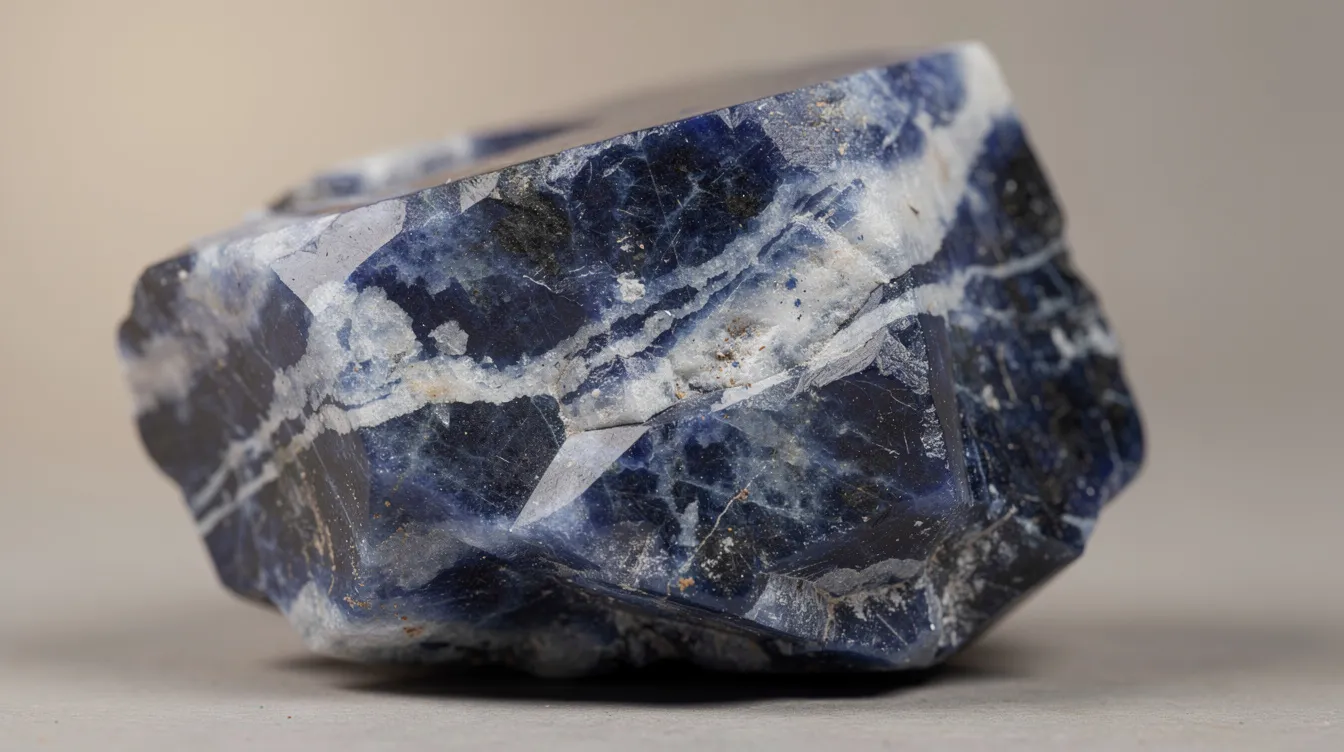
Sodalite is a captivating blue stone celebrated for its vibrant blue color and distinctive white calcite veins. Often called the “Logic Stone,” sodalite is cherished not only for its striking appearance but also for its metaphysical healing properties, which are said to foster emotional balance, calmness, and rational thought. While it is sometimes mistaken for lapis lazuli due to their similar hues, sodalite is a unique mineral in its own right, typically more affordable and free of the golden pyrite flecks found in lapis.
Sodalite crystals and sodalite tumbled stones are especially popular among those interested in crystal healing, as they are believed to support both the throat chakra and third eye chakra. This connection is thought to enhance communication, intuition, and mental clarity, making sodalite a favorite for those seeking greater self-expression and insight. Healing crystal jewellery for the seven chakras offers another way to keep supportive energies close throughout the day. Whether you’re drawn to its rich blue color, its reputation for supporting clear thinking, or its accessibility compared to lapis, sodalite offers a beautiful and meaningful addition to any crystal collection.
What Is Sodalite? (Mineralogy & Identification)
Sodalite belongs to the feldspathoid mineral group, with the chemical formula Na₈(Al₆Si₆O₂₄)Cl₂. Rich in sodium content, this blue stone forms exclusively in silica-poor igneous rock environments like nepheline syenites. You’ll never find sodalite naturally occurring alongside quartz—their chemical requirements are incompatible.
The appearance of most sodalite ranges from royal blue to gray-blue, frequently interrupted by creamy white or greenish white patches of calcite. Some specimens display orange or brown areas from feldspar inclusions or oxidation, creating the variety known by the trade name sunset sodalite.
Distinguishing sodalite from lapis lazuli is straightforward once you know what to look for. Sodalite lacks the metallic pyrite flecks that sparkle throughout genuine lapis. The white veins in sodalite tend to appear more patchy and prominent, while lapis presents a more uniformly ultramarine appearance with gold-like specks.
Sodalite can be identified by its white streak, whereas lapis lazuli typically has a blue streak when subjected to a streak test.
Identification Characteristics:
-
Hardness: 5.5–6 on the Mohs scale (softer than quartz)
-
Luster: Vitreous to greasy
-
Streak: White to pale blue
-
Transparency: Typically opaque; fine material from Namibia or Italy can be translucent
-
UV response: Many specimens fluoresce orange under shortwave or longwave UV light
-
Special behavior: Tenebrescent minerals like hackmanite temporarily change color under sunlight. Freshly quarried hackmanite is especially prized for its vivid colors and powerful metaphysical properties, as it is in its most natural and untreated state.
-
Sulfur note: Cutting or grinding may release a faint “rotten egg” smell from trace sulfur
Colors & Varieties of Sodalite
While sodalite is best known for its deep violet to royal blue coloring, this mineral actually occurs in several distinct varieties with different shades and visual characteristics.
Main Varieties:
-
Blue sodalite: The classic variety ranges from rich blue to navy blue with white calcite streaking. Material from Ontario’s vast deposits often carries trade names like canadian lapis, Canadian Bluestone, or princess blue. This remains the most sought-after color for sodalite jewelry.
-
Sunset sodalite: Warm orange to peach streaks—typically feldspar inclusions—create a striking blue-orange contrast. This variety of sodalite is popular for cabochons and decorative objects, offering a warmer aesthetic than standard blue material.
-
Gray, green, and mottled sodalite: Brazil and Russia produce significant quantities of gray-green sodalite. This lesser material serves primarily for decorative slabs, tiles, and architectural carvings rather than fine jewelry applications.
-
Pink sodalite: An uncommon variety, generally pale pink mixed with gray or white. Sourced mainly from Brazil and Russia, pink sodalite appeals to collectors seeking unusual specimens for high-end jewelry projects.
-
Hackmanite: This sulfur-rich variety exhibits tenebrescence—a reversible color-change phenomenon. Afghan and Myanmar material shifts from white to pink when exposed to sunlight. Greenland and Canadian hackmanite transforms from deep violet to pale gray in a dark environment, then returns to violet with UV exposure.
Each color variety carries slightly different metaphysical emphasis. Blue promotes mental clarity, sunset blends support creativity, and pink resonates with emotional balance and healing.
Where Sodalite Is Found (Geology & Major Localities)
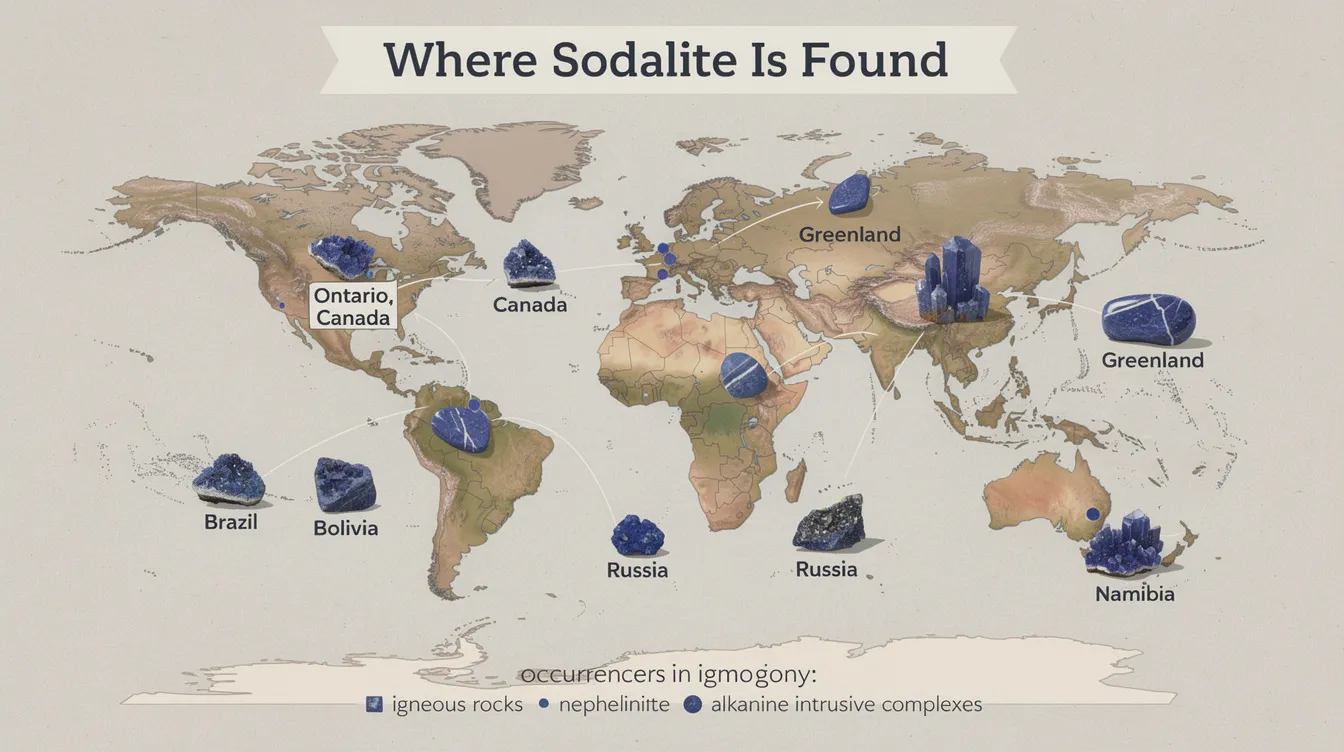
Sodalite was first discovered in 1811 in the Ilimaussaq complex in Greenland. It gained importance as an ornamental stone in 1891 when vast deposits were found in Ontario, Canada. The most celebrated source of sodalite is the Princess Sodalite Mine just east of Bancroft, Ontario, named in 1901 for the Princess of Wales.
Sodalite was identified during the Napoleonic War when a large quantity was traveling from Greenland to Denmark.
Sodalite has also been discovered in ancient ruins in South America, indicating its use by ancient civilizations. In ancient Egypt, priests used sodalite to dispel guilt and fears and to strengthen the power of mind over body.
Sodalite found in nature forms within silica-poor igneous rock formations, particularly nepheline syenites and phonolites. It consistently appears alongside other minerals like nepheline, cancrinite, and alkali feldspar—all indicators of an alkaline, low-silica environment.
-
Canada: Bancroft, Ontario hosts the famous Princess Sodalite Mine, producing large specimens of deep blue sodalite with white and occasional reddish streaks. Smaller deposits exist in Quebec and British Columbia’s Ice River area. Canadian material is highly regarded for uniformity and color depth.
-
Namibia: The Ohopoho region yields intense, almost inky blue sodalite. Some Namibian material achieves translucency and exhibits strong fluorescence, making it prized for both gemstones and architectural panels.
-
Brazil: Bahia and surrounding regions produce massive quantities of blue, gray, and pink sodalite. Brazilian material commonly appears in countertops, tiles, carvings, and bead stock rather than fine jewelry.
-
Greenland: Particularly important for hackmanite specimens and collectible fluorescent pieces discovered in the late 20th century. Greenland sodalite is especially valued by mineral collectors and UV enthusiasts.
-
Other sources: The USA (Maine, Montana), Russia, Afghanistan, Myanmar, India, Norway, and Italy all contribute sodalite crystals to the global market, each with characteristic shades and veining patterns.
-
Value factor: Stronger, uniform blue color with good translucency from Canada and Namibia generally commands higher prices than pale, heavily mottled, or gray-toned stones.
The largest commercial sodalite deposits are in Bancroft, Ontario, Ice River, British Columbia, Litchfield, Maine, and Brazil.
Metaphysical Meaning & Healing Properties of Sodalite

Note: The following information represents traditional spiritual and metaphysical perspectives. It is educational in nature and should not replace professional medical or psychological treatment.
The sodalite meaning centers on uniting rational thought with intuition. Often called the Logic Stone or Thinker’s Stone, sodalite helps users find clarity while remaining connected to their deeper knowing. It encourages honest yet calm self-expression.
Mental and Emotional Properties
Sodalite is believed to stabilize racing thoughts and support logical decision-making. Practitioners use it to ease anxiety, particularly around panic attacks and phobias. The stone reportedly helps break repetitive negative thinking patterns, offering relief from mental loops that drain energy and self esteem, much like other healing crystals and gems for wellness and energy balance.
Communication and Truth
Sodalite helps with speaking truth kindly. It’s associated with improved articulation and supports clear, confident communication in conversations, presentations, and negotiations. Writers and speakers often keep it nearby, and some combine it with crystals for trust and emotional healing to further support honest, heart-centered dialogue.
Intuition and Insight
Connected to the third eye chakra, sodalite enhances pattern recognition, dream recall, and insight during meditation or journaling. Unlike purely intuitive stones, sodalite maintains a grounding quality that preserves critical thinking. Sodalite also dives deep into spiritual insight and introspection, supporting mystical exploration and self-discovery.
Physical Correspondences
Traditional crystal healing associates sodalite with balancing the immune system, supporting metabolism, and easing headaches. In lithotherapy, sodalite is reputed to boost the immune system and balance metabolism. Some practitioners place sodalite near the throat for vocal cords support, while others use it for blood pressure regulation, digestive disorders, and water retention. Comparable beliefs surround other blue stones such as turquoise crystal and its healing properties.
Emotional Healing
Sodalite properties include releasing guilt, resentment, anger, and self-sabotage patterns. The stone fosters self-acceptance and inner peace, encouraging users to examine their shadow aspects without harsh judgment. Sodalite helps those working through emotional wounds find gentler self-assessment.
Sodalite can be cleansed in running water or by smoke, and recharged under moonlight.
Chakras, Color Energy & Spiritual Work
Sodalite is primarily linked with the third eye chakra (brow) and throat chakra, though different blue tones carry slightly different energetic qualities.
-
Third Eye chakra: Deep blue to indigo sodalite placed on the forehead supports intuition, mental clarity, lucid dreaming, and perspective-taking. The eye chakra connection makes it popular for meditation focused on insight and vision.
-
Throat chakra: Medium-blue sodalite at the throat aids clear communication, authentic self-expression, and the ability to speak difficult truths calmly. It’s particularly helpful for those who struggle to voice their needs.
-
Light vs. dark blue energy: Lighter blue stones associate with flexibility, relaxation, and emotional softness. Darker blue and indigo specimens connect with wisdom, integrity, and disciplined thought.
-
Color energy themes: Blue symbolizes trust, patience, sincerity, and respect. Indigo combines intuition with responsibility and spiritual maturity—appropriate for those ready to integrate insight with action.
-
Spiritual practice: Common uses include holding sodalite during meditation, placing it on the brow for visualization work, and keeping it under a pillow for dream work. Some practitioners use sodalite in shamanic or trance journeys as a stabilizing, reality-checking ally that prevents spiritual bypassing.

Sodalite in Everyday Use & Crystal Practice
Sodalite makes an excellent practical stone for daily routines, from wearable jewelry to desk companions and sleep supports. Here’s how to incorporate it effectively.
Meditation
Hold a palm stone or place sodalite tumbled stones on your third eye while focusing on breath and a specific question. Sodalite helps quiet mental chatter and integrates insights after meditation sessions. Allow 10–15 minutes for optimal effect.
Sleep and Dreams
Place sodalite by the bed or under your pillow to encourage restful sleep and reduce overthinking at night. Keep a dream journal nearby—sodalite may enhance dream recall. Some users report more vivid, meaningful dreams.
At Work or Study
Keep sodalite on desks or near computers to support focus, structured thinking, and constructive communication in emails and meetings. It’s particularly useful during project planning or when tackling complex problems, especially when paired with a bracelet crystal worn daily to keep your intentions close at hand.
Tech and EMF Symbolism
A common practice involves placing sodalite on or near electronics to symbolically clear electromagnetic pollution and encourage mindful breaks from screens. While not scientifically proven to affect electromagnetic smog, the practice serves as a visual reminder for digital wellness.
Combining with Other Crystals
-
Sodalite + amethyst: Enhances spiritual clarity and intuition
-
Sodalite + lepidolite: Supports anxiety relief and calms overthinking
-
Sodalite + carnelian: Balances creativity with focus and follow-through
Sodalite can also be paired with other elements, such as additional gemstones or design details, to create diverse jewelry pieces and further enhance its natural beauty, much like other essential healing crystal jewellery that blends aesthetics with energetic intention.
Self-Reflection and Journaling
Hold sodalite while writing to encourage honest self-review. It’s especially helpful when examining patterns like procrastination, perfectionism, or people-pleasing behaviors.
Sodalite in Jewelry, Décor & Collecting
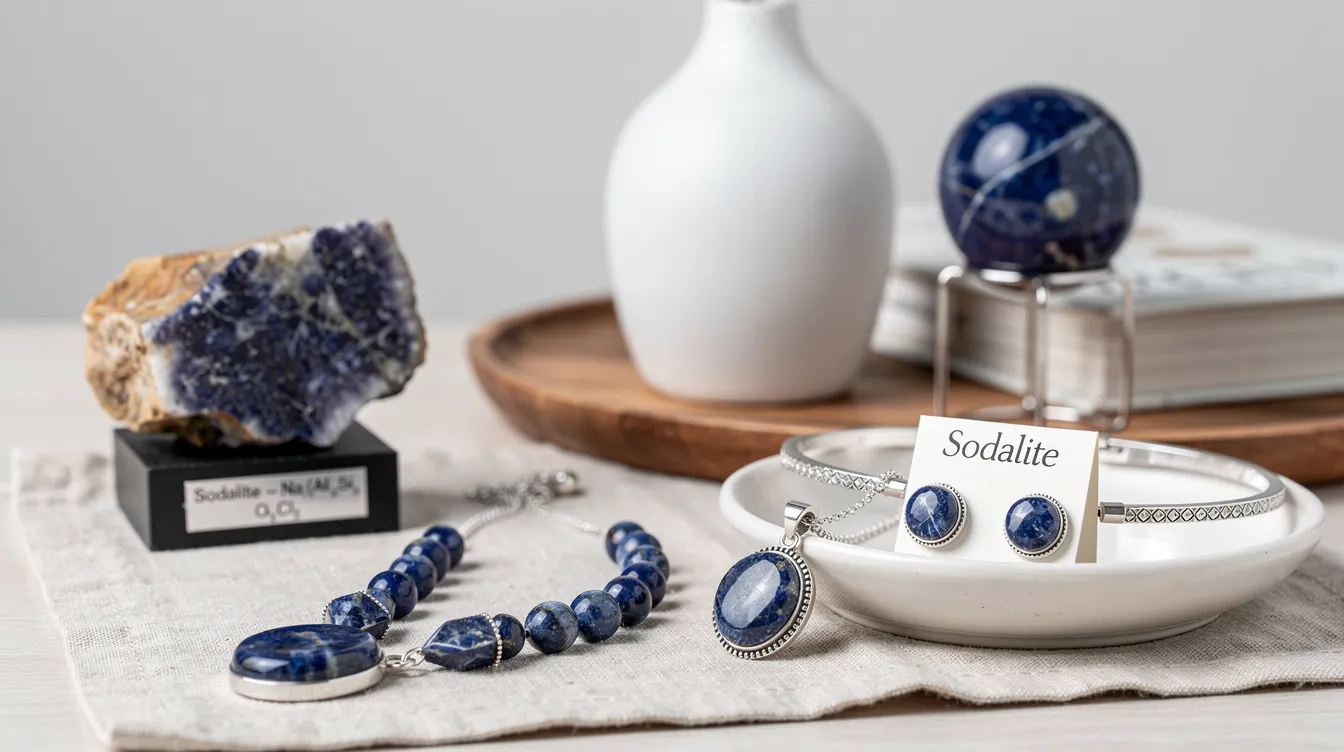
Sodalite lives a dual life as both a gemstone for jewelry and a decorative stone for interiors and sculptural pieces. Its rich blue color and interesting patterns make it versatile across applications.
Jewelry Types
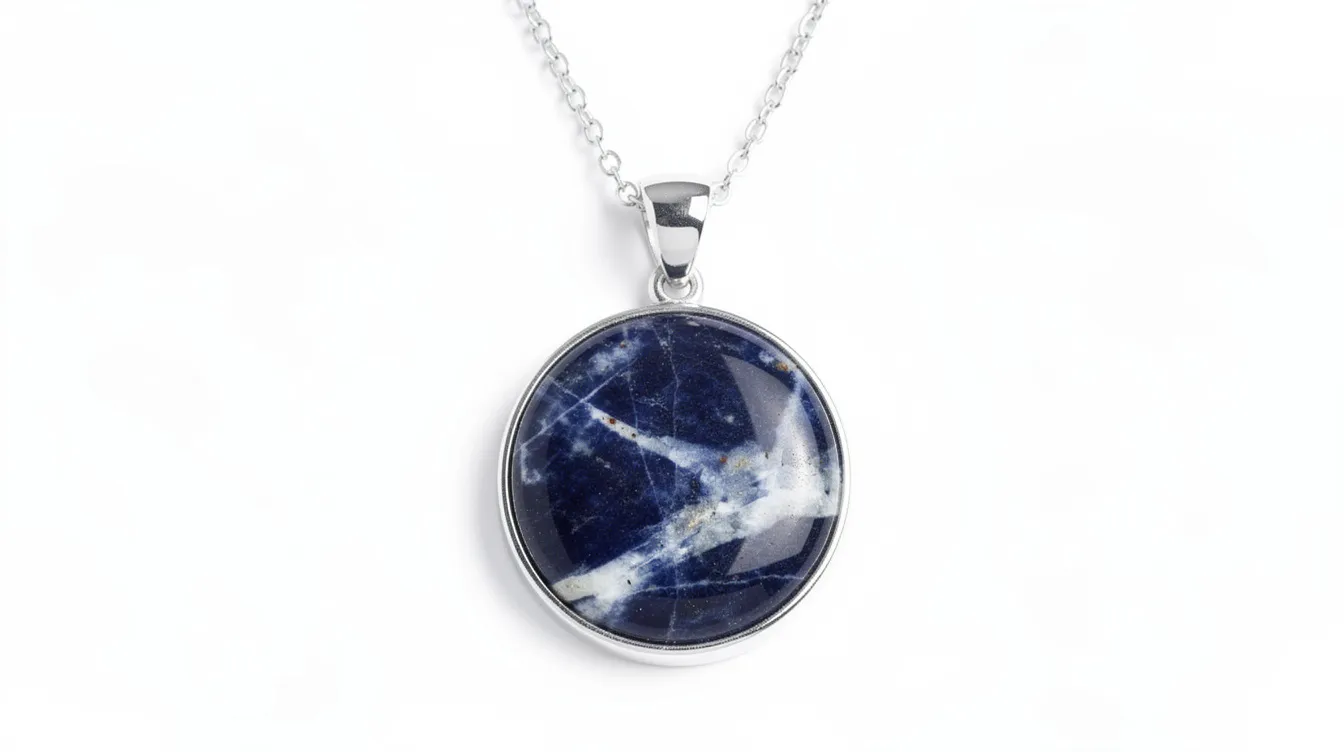
Sodalite jewelry commonly appears as beaded bracelets, statement necklaces, cabochon pendants, sodalite earrings, and fashion rings. The blue color pairs exceptionally well with silver, white metals, and casual denim outfits. Polished stones with good color command attention without overwhelming an outfit, especially when chosen as stones for bracelets that enhance your style.
Sodalite rings can feature simple designs or more elaborate settings, often combined with other stones for added elegance. Sodalite pendants can highlight the stone's natural beauty or feature intricate settings with other gemstones. Additionally, sodalite can be used in brooches, anklets, and charms, adding versatility to jewelry designs, similar to an elegant necklace with moonstone where gemstone choice and metal finish create distinct moods.
Sodalite is often used in jewelry due to its captivating blue color and affordability compared to similar stones. When adding it to your collection, it helps to understand powerful ways to shop for crystals so you can assess quality, authenticity, and alignment with your intentions.
Design Considerations
Sodalite’s busy white veins look best in larger pieces or simple settings where patterns can be appreciated. More uniform blue specimens without heavy veining can be faceted into smaller gems for collectors, though this remains uncommon.
Durability Notes
With hardness 5.5–6 on the Mohs scale, sodalite is softer than quartz (7) and sapphire (9). Rings and bracelets require protective settings to prevent scratching. Earrings and pendants face less daily wear and remain safer for long-term use.
Decorative Uses
Common applications include spheres, bookends, bowls, obelisks, and small statues. Large slabs serve as countertops, tabletops, fireplace surrounds, and accent walls. Marlborough House in London reportedly features sodalite in its interior decoration, demonstrating the stone’s architectural appeal.
Collector Appeal
Fluorescent and tenebrescent pieces—especially from Canada, Greenland, and Namibia—attract mineral collectors and UV light enthusiasts. Specimens that fluoresce orange under UV or change color (hackmanite) command premium prices.
Value, Quality Factors & Treatments
Sodalite is generally affordable compared to other blue gemstones, but quality variations and special effects can significantly influence price. Here’s what determines value.
Color: Rich, even royal blue with minimal gray or brown commands the highest prices. Excessive white veining or dullness typically lowers gemstone value, though bold patterns may be desirable in decorative slabs and polished stones.
Clarity and texture: Opaque appearance is normal for most sodalite. However, slightly translucent material from Namibia or Italy is rarer and more collectible. Coarse, chalky, or generally pale areas reduce desirability.
Cut and size: Cabochons, beads, and smooth polished shapes dominate the sodalite market. Larger, well-colored stones carry higher value for both jewelry and interior applications.
Treatments:
-
Dyeing: Some white or pale sodalite may be dyed to resemble higher-quality blue material
-
Heat treatment: Can reduce color intensity
-
Irradiation: Sometimes used to restore or deepen color in certain specimens
Spotting dye: Look for overly uniform, unnatural blue color, color concentrated in cracks or fractures, or dye bleeding when touched with acetone. Note: acetone testing can damage the stone, so proceed cautiously.
Synthetics and imitations: Synthetic sodalite exists but remains uncommon commercially. Mislabeling as lapis is more frequent than outright fakes. Buyers should verify absence of pyrite flecks and check that pricing seems consistent with sodalite rather than lapis.
Sodalite is often used to imitate lapis lazuli because it's more widely available and less expensive.
Birthstone, Zodiac & Symbolic Associations
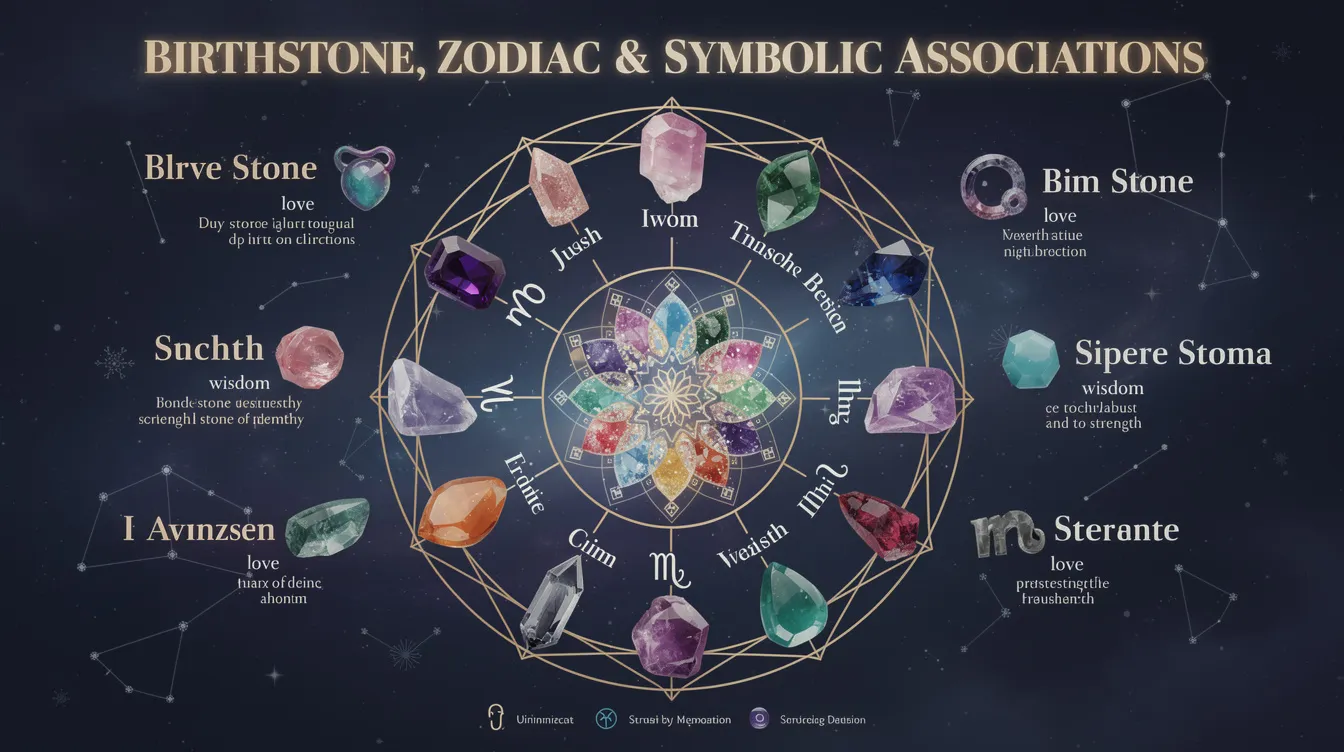
Sodalite is not a traditional modern birthstone but carries widely recognized symbolic associations in crystal practice. By contrast, December has several recognised options, and many people choose between three amazing December birthstones such as blue topaz, tanzanite, and turquoise for meaningful jewellery.
Natural birthstone correspondences: Blue sodalite resonates as a natural birthstone for late Pisces (approximately February 19–March 19), associated with faith, trust, and patience. Indigo sodalite connects with Aquarius (approximately January 20–February 18), linked to insight, truth, and spiritual mastery. For those born earlier in the year, exploring January birthstones like garnet and rose quartz can offer additional symbolic options.
Zodiac: Sodalite pairs frequently with Sagittarius (November 22–December 21), resonating with that sign’s optimism, curiosity, and philosophical exploration. It serves as a supportive stone for Sagittarians wanting to channel enthusiasm into focused goals, while November-born individuals may also resonate with the best stone choices for November birthstones.
Angelic and deity themes: Some traditions associate deep blue sodalite with archangelic energies of protection, truth, and revelation. Connections to wisdom and sky goddesses make it popular for devotional altars across various spiritual paths, similar to how birthstone and flower necklaces weave symbolism and personal meaning into jewellery design.
Talismans: In crystal-gridding language, sodalite functions as a mental “filter” and “enhancer.” It symbolically strengthens beneficial thought patterns while screening out mental noise and negativity—making it useful in grids focused on clarity and communication.
Caring For Sodalite (Physical & Energetic Maintenance)
Proper care preserves sodalite’s polish, blue color, and energetic properties for years of use. Follow these guidelines to maintain your specimens.
Physical cleaning: Use lukewarm water, mild soap, and a soft cloth or brush. Avoid harsh chemicals, ultrasonic cleaners, and steam cleaners—especially when abundant white calcite is present, as calcite is acid-sensitive.
Handling and storage: Store sodalite separately from harder stones like quartz or topaz. Soft pouches or fabric-lined boxes prevent scratches and chips. Avoid tossing sodalite loosely into jewelry boxes with similar minerals.
Exposure to light: Ordinary blue sodalite is generally stable in sunlight. However, tenebrescent varieties like hackmanite will change or fade with UV exposure, then darken again in darkness. This behavior is normal and reversible—part of what makes these specimens special.
Energetic cleansing (for spiritual users): Gentle methods work best: brief running water, smoke from herbs or incense, sound from bells or singing bowls, or placement on selenite. Avoid saltwater, which may attack calcite inclusions.
Charging and re-energizing: Popular practices include placing sodalite under moonlight (especially during full moon) or on an altar dedicated to wisdom, learning, or communication to symbolically recharge its metaphysical properties.
Summary & How to Choose Your Sodalite
Sodalite is a royal blue stone of logic, intuition, and honest communication. From its formal discovery in 1811 to its modern presence in jewelry, décor, and crystal practice, this versatile mineral continues to attract admirers worldwide.
Ideal Uses
-
Meditation aid for mental clarity and quieting mental chatter
-
Bedside stone for calmer sleep and reduced overthinking
-
Desk companion for focus and clear communication
-
Decorative element in blue-themed interiors and collections
Tips for Choosing Your Stone
-
Trust your visual attraction—the “right” stone often catches your eye first
-
Look for pleasing blue tones without excessive gray or brown
-
Decide whether you prefer subtle veining or bold patterns
-
Consider your intended use: wearable jewelry versus larger home pieces
Start with a simple tumbled stone or bracelet to experience sodalite’s energy firsthand. Once familiar with the basics, explore specialty varieties like hackmanite or sunset sodalite, or consider larger decorative pieces for your space.
Whether you’re drawn to sodalite’s striking beauty, its reputation for supporting clear thinking, or its accessibility as an entry point into the world of other crystals, this stone offers something valuable. Keep it close as a steady reminder to think clearly, speak truthfully, and remain calm under pressure.
Frequently Asked Questions About Sodalite
What is sodalite and where does it come from?
Sodalite is a striking royal blue mineral belonging to the feldspathoid group, characterized by its high sodium content and chemical formula Na₈(Al₆Si₆O₂₄)Cl₂. It forms in silica-poor igneous rocks such as nepheline syenites and phonolites. First discovered in 1811 in Greenland's Ilimaussaq complex, sodalite gained prominence with vast deposits found in Ontario, Canada, in 1891. It is also sourced from Namibia, Brazil, Russia, and other locations worldwide.
How can I distinguish sodalite from lapis lazuli?
Though sodalite and lapis lazuli share similar deep blue hues, they are distinct stones. Sodalite is a single mineral, while lapis lazuli is a metamorphic rock composed of sodalite, calcite, and pyrite. Sodalite lacks lapis's characteristic golden pyrite flecks and typically shows more prominent white calcite veins. Additionally, sodalite has a white streak on a streak test, whereas lapis lazuli has a blue streak. Sodalite is often called "poor man's lapis" because of its similar appearance and affordability.
What are the metaphysical properties of sodalite?
Sodalite is known as the "Logic Stone" and is associated with mental clarity, rational thinking, and calm communication. It supports emotional balance, reduces anxiety and panic attacks, and encourages honest self-expression. Linked primarily to the third eye and throat chakras, sodalite enhances intuition, insight, and the ability to speak one's truth clearly. It also promotes spiritual awakening and connection to higher consciousness.
What physical healing properties are attributed to sodalite?
In crystal healing traditions, sodalite is believed to boost the immune system, regulate metabolism, and support digestive health. It is also thought to aid in blood pressure regulation, relieve headaches, and soothe vocal cords. While these claims are not scientifically verified, many users find comfort and support through its use.
How should I care for my sodalite stones and jewelry?
Sodalite is moderately soft, ranking 5.5 to 6 on the Mohs scale, so it requires gentle care. Clean sodalite with lukewarm water and mild soap using a soft cloth or brush. Avoid harsh chemicals, ultrasonic, or steam cleaners, especially for stones with white calcite inclusions. Store sodalite separately from harder stones to prevent scratches. While ordinary sodalite is stable in sunlight, tenebrescent varieties like hackmanite may fade but can regain color in darkness.
Can sodalite change color?
A rare variety of sodalite called hackmanite exhibits tenebrescence, meaning it changes color when exposed to sunlight or ultraviolet light. Hackmanite from Greenland and Canada shifts from deep violet or pink to pale gray or greenish white in sunlight and reverts to its original color in darkness or UV light. This reversible color change is unique and prized by collectors.
Where can I buy sodalite?
Sodalite is widely available in raw and polished forms from various retailers, including online stores and physical shops specializing in gemstones and crystals. It is commonly sold as beads, cabochons, tumbled stones, and jewelry pieces such as necklaces, bracelets, rings, and earrings. When purchasing, look for reputable sellers to ensure authenticity and quality.
Is sodalite suitable for everyday jewelry?
Due to its moderate hardness, sodalite can be used in everyday jewelry but requires protective settings to avoid scratches and damage. Earrings and pendants generally face less wear and are safer for long-term use. Rings and bracelets should have sturdy settings and be worn with care.
What colors and varieties of sodalite exist?
While classic sodalite is royal to indigo blue with white calcite veins, it also occurs in gray, green, pink, and the sunset sodalite variety, which features warm orange to peach feldspar inclusions. Each color variety carries different metaphysical associations and aesthetic appeal.
How is sodalite used in crystal healing and meditation?
Practitioners use sodalite to calm mental chatter, enhance intuition, and promote clear communication. It is often held during meditation, placed on the third eye or throat chakras, or kept near the bed to encourage restful sleep and vivid dreams. Sodalite tumbled stones and jewelry are popular tools for integrating its calming and clarifying energies into daily life.
Conclusion
In conclusion, sodalite stands out as a versatile and enchanting stone, admired for its deep blue color, unique veining, and accessible price point. Its metaphysical healing properties make it a favorite in crystal healing circles, where sodalite crystals and polished stones are used to promote emotional balance, inner peace, and clear communication. Sodalite jewelry, such as sodalite earrings and pendants, not only showcases the stone’s beauty but also allows individuals to benefit from its supportive energy throughout the day.
The trade name sunset sodalite and other varieties add further appeal for collectors and decorators, making sodalite a popular choice for decorative objects and interior accents. Whether you’re seeking to enhance your throat chakra, explore the calming effects of crystal healing, or simply add a splash of blue color to your life, sodalite offers a wealth of possibilities. Its compatibility with other crystals, such as lapis lazuli, further expands its uses in both personal and decorative settings.
By understanding sodalite’s properties, meanings, and uses, you can harness its potential to bring clarity, balance, and tranquility into your daily routine. Whether as part of a jewelry collection, a crystal healing toolkit, or a decorative display, sodalite remains a timeless and meaningful stone for anyone drawn to the world of crystals and minerals.
Leave a comment