

Introduction to the Opal Stone Birthstone and October Birthstone
The opal stone birthstone is a beautiful and captivating gemstone, renowned for its unique rainbow colours and dazzling play-of-colour brilliance, making it the perfect october birthstone. Opal is the traditional birthstone for October. This guide is perfect for anyone interested in October birthstones, gemstone enthusiasts, or those seeking the perfect opal jewellery gift. Learning about the opal stone birthstone matters because it helps you appreciate its unique beauty, symbolism, and how to choose the best opal jewellery for yourself or a loved one.
While opal is the birthstone for October, sapphire is celebrated for September. This precious opal gemstone has fascinated gem enthusiasts and jewellery lovers for centuries, prized for its mesmerizing flashes of colour that seem to dance within the stone.
Opal jewellery, including opal earrings, opal pendants, and opal rings, is highly prized for its beauty and rarity. Often paired with other precious gems such as diamonds and pink tourmaline, opal jewellery creates stunning, elegant pieces that capture the eye and heart alike. Alongside tourmaline, opal is one of the two birthstones for October, each with its own distinct charm and properties.
The opal stone symbolizes hope, purity, innocence, and truth, believed to bring good luck and protection to the wearer. It is also associated with love, passion, and desire, making it a romantic and meaningful gift.
Opal is the traditional birthstone for October.
History and Meaning of the Opal Birthstone

The opal birthstone boasts a rich and fascinating history dating back to ancient times. The name "opal" is derived from the Sanskrit word "upala," meaning "precious stone," reflecting its high value in ancient cultures. Opals were treasured by the ancient Greeks and Romans, who believed they held magical powers. The Greeks thought opals could grant the power of prophecy and protection from disease, while the Romans considered opals symbols of hope and purity.
In the Middle Ages, opals were believed to possess all the virtues of every gemstone seen within their spectral rainbow colours. However, by the 18th century, opals gained a reputation for bringing bad luck, leading to a decline in their popularity. This superstition was so strong that Queen Alexandra, queen victoria's granddaughter, famously removed opals from her tiara, believing them to be bad omens.
Despite this, opals remain deeply symbolic, representing hope, innocence, and truth. They are also the symbolic gem for the zodiac signs Libra (September 23 to October 23) and Scorpio. Additionally, opal is the traditional gemstone given to celebrate the 14th wedding anniversary. Intriguingly, opal has even been found on Mars, making it one of the few gemstones discovered beyond Earth.
Arabic legends add to the opal’s mystique, claiming that opals fell from the heavens during thunderstorms and captured lightning within their depths. Black opal is the rarest and most valuable variety, highly sought after by collectors.
Characteristics and Properties of the Opal Gemstone
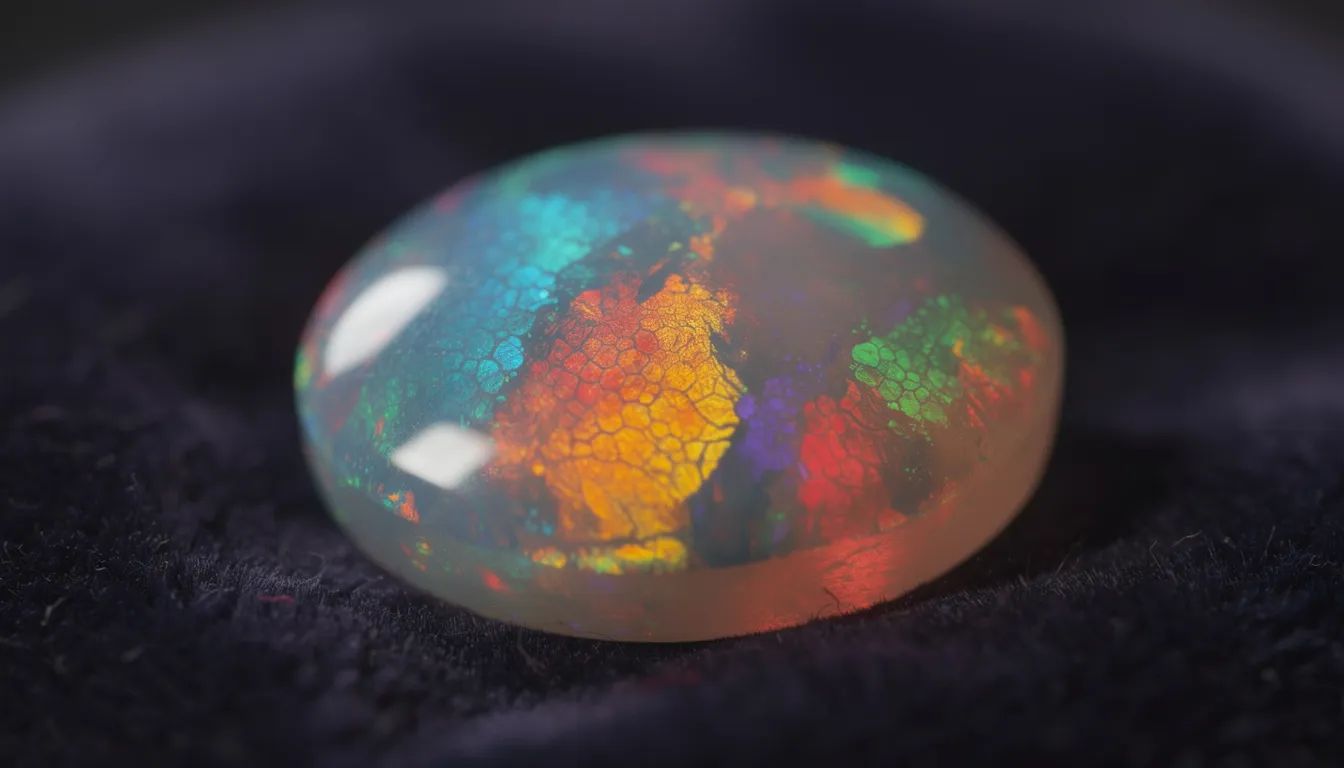
Opals are captivating and mysterious gemstones classified as mineraloids because they lack a defined crystal structure. Opals are classified as mineraloids because they lack a defined crystal structure. They are made up of tiny spheres of silica arranged in a precise grid-like pattern. When light passes through these spheres and the spaces between them, it diffracts, creating the spectacular rainbow colours and flashes that opals are famous for. Opals are valued for their "play-of-color", a phenomenon that creates shifting colors in rainbow hues.
This play-of-colour effect means no two opal gemstones will ever have the exact same flashes of colour, making every opal piece truly unique. The dominant colour of an opal can greatly influence its value, with flashes of ruby red commanding the highest prices, followed by orange, yellow, green, blue, indigo, and violet.
Opals come in various types, including white opal, black opal, boulder opal, and fire opal, each with distinct characteristics. The october birthstone can be commonly found worldwide, with Australia being the most productive source, followed by Ethiopia, Mexico, and Brazil.
Despite their beauty, opals are relatively soft gemstones, with a Mohs hardness of 5.5 to 6.5. This softness requires careful handling and makes opals more vulnerable to damage than harder precious gems like sapphires, emeralds, and rubies.
October Birthstone Jewellery: Choosing and Styling Opal Jewellery
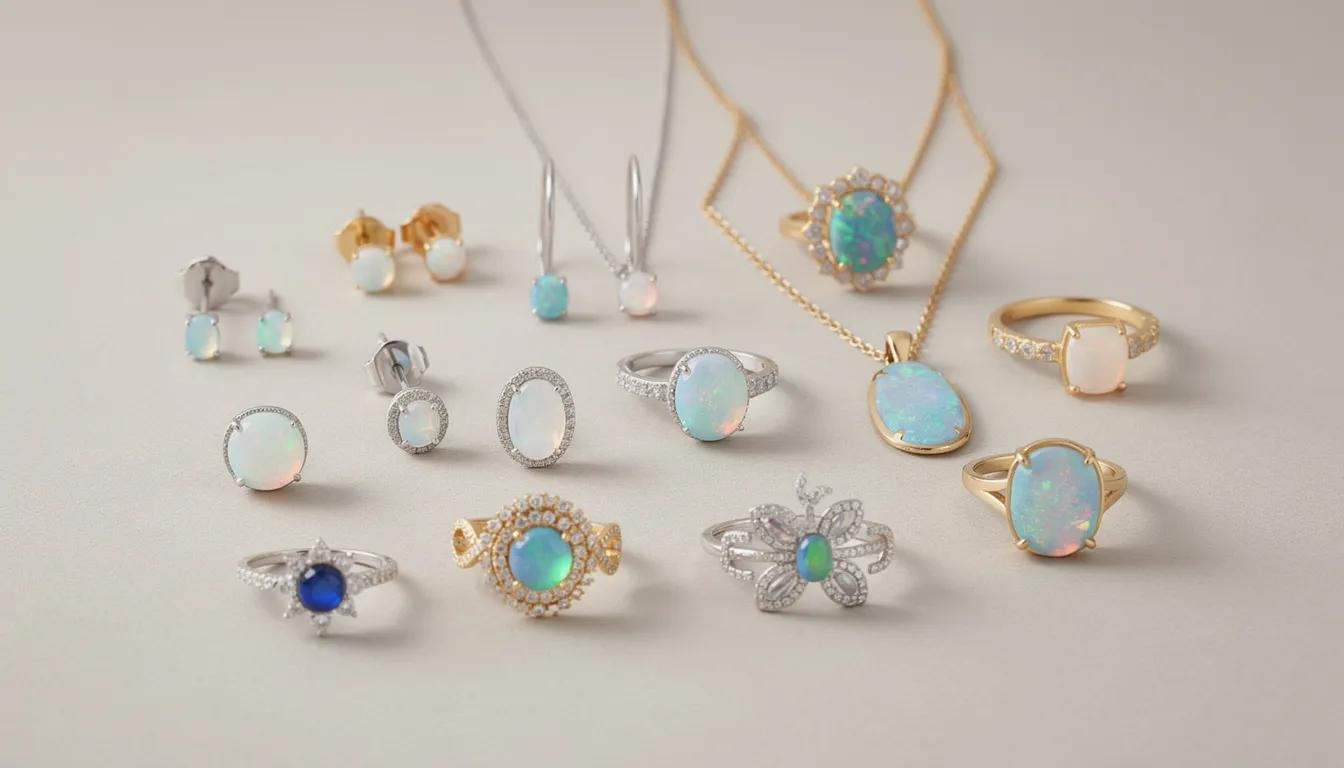
Opal jewellery is available in an array of styles, from delicate opal earrings and pendants to bold opal rings and necklaces. The versatility of opal allows it to be paired with various metals such as white gold, yellow gold, and silver, creating unique and beautiful pieces.
When choosing october birthstone jewellery, it is important to consider the brightness and brilliance of the stone, as well as the body colour, which influences the piece’s value. Clever settings, such as bezel or halo settings, are recommended to protect the delicate opal from damage and enhance its beauty. If you are interested in jewellery for other months, you might also consider the August Birthstone: Peridot Gemstone.
Because no two opals have the same rainbow flashes of colour, owning opal jewellery means owning a one-of-a-kind treasure. Whether as a gift for a loved one or a personal indulgence, opal jewellery is a perfect gift that combines elegance, symbolism, and uniqueness.
Pairing opal jewellery with pink tourmaline pieces can add a colourful and complementary contrast, enhancing the overall aesthetic with a mix of soft pink and vibrant rainbow colours.
Caring for Your Opal Jewellery
Due to their softness and water content, opals require tender loving care. They can react badly to high heat, perfumes, harsh chemicals, and jewellery cleaners. It is best to avoid harsh chemicals and detergents when wearing opal jewellery.
To clean opal pieces, use warm, soapy water and a soft brush, avoiding ultrasonic or steam cleaners that can damage the stone. Prolonged exposure to water may weaken adhesives in opal doublets and triplets, so caution is advised.
Opal jewellery should be stored separately from harder gemstones like sapphires, emeralds, and rubies to prevent scratching. A soft cushioned area in your jewellery box is ideal. Additionally, remove opal jewellery before engaging in physical or hard-hitting activities to avoid damage.
Avoid sudden temperature changes, as opals can crack or break due to their water content drying out in hot conditions.
Types and Colours of Opal and Pink Tourmaline
Opals are celebrated for their dazzling array of rainbow colours, which make each gemstone truly unique. These colours result from the way light diffracts through the microscopic silica spheres within the stone, creating a mesmerizing play-of-colour that can include flashes of red, orange, yellow, green, blue, indigo, and violet. The size and arrangement of these spheres determine the specific colours and patterns visible in each opal, making unusual cases of striking patterns highly prized by collectors and jewellery lovers.
There are several popular types of opal, each distinguished by its body colour and the intensity of its rainbow colours:
-
White Opal: Known for its milky white or light body colour, white opal displays vibrant flashes of rainbow colours across its surface. It is one of the most commonly found opals and is often used in elegant jewellery pieces.
-
Black Opal: The rarest and most valuable variety, black opal has a dark body colour that provides a stunning contrast to its brilliant rainbow flashes. This contrast enhances the visibility of the colours, making black opals highly sought after.
-
Boulder Opal: Found primarily in Queensland, Australia, boulder opals are unique in that the opal forms within ironstone rock, giving each piece a natural, earthy backdrop that complements the vibrant rainbow colours.
-
Fire Opal: Distinguished by its warm body colours ranging from yellow to fiery red and orange, fire opal may or may not exhibit play-of-colour but is prized for its vivid hues that resemble flames.
Regarding blue opal, while opals can display flashes of blue within their play-of-colour, there is no distinct variety known as "blue opal." Instead, blue tones are often part of the broader spectrum of colours seen in white or black opals, contributing to their mesmerizing appearance.
Alongside opal, pink tourmaline is another captivating gemstone often paired in jewellery for its soft yet vibrant pink hues. Tourmaline itself is a diverse gemstone that comes in a wide range of colours, including pink, green, yellow, and even striking blues, known as indicolite. This variety of colours makes tourmaline a versatile and colourful counterpart to opal in birthstone jewellery.
Tourmaline is also a birthstone for October, sharing the month with opal. While opal is the traditional birthstone, tourmaline was added as a modern alternative, offering those born in October a choice between two stunning gemstones. The presence of both opal and tourmaline as October birthstones allows for a rich palette of colours—from the opal’s shifting rainbow hues to the vivid and varied colours of tourmaline.
Pink tourmaline, in particular, symbolizes love, compassion, and emotional healing, making it a meaningful complement to opal’s symbolism of hope, purity, and creativity. Together, opal and tourmaline create jewellery that is not only visually stunning but also deeply symbolic, perfect for celebrating October birthdays or special occasions.
Buying Opal Jewellery: Tips for Selecting the Perfect Piece
When buying opal jewellery, consider the quality of the stone, craftsmanship, and design. Look for pieces made with high-quality materials such as solid gold or silver and featuring well-cut and well-set opal stones.
Research reputable sellers and read customer reviews to ensure authenticity and fair pricing. Investing in opal jewellery is rewarding, as each piece is a unique work of art with a rich history and deep symbolism.
Discover Unique Opal Jewellery at Saras Beads & Jewellery
If you are looking to add the enchanting beauty of opal jewellery to your collection or find the perfect gift for a loved one, visit Saras Beads & Jewellery at sarasbeads.co.uk. Their exquisite selection of opal earrings, pendants, rings, and more showcases the captivating play-of-colour and unique charm of this beautiful birthstone. With expert craftsmanship and a passion for quality, Saras Beads & Jewellery is your trusted destination for timeless and treasured opal pieces. If you have any questions or need assistance, don't hesitate to contact us.
Explore their collection today and experience the magic of the opal stone birthstone for yourself or someone special. Celebrate October with a gift that embodies hope, love, and beauty—or find inspiration for November’s topaz and citrine styles.
Frequently Asked Questions about Opal Stone Birthstone
What makes opal gemstones so captivating and mysterious?
Opal gemstones are captivating and mysterious because of their unique play-of-colour, which creates shifting rainbow hues unlike any other gemstone. Many expert gemmologists dedicate their lives to studying opals due to their complex structure and the fascinating optical effects they produce.
Where did the opal stone originate?
Opal is believed to have originated in India, where it was called "upala," meaning "precious stone" in Sanskrit. This ancient origin highlights the long-standing value and admiration for opals throughout history.
When was opal officially recognized as the October birthstone?
The National Association of Jewelers in the United States standardized the birthstone list in 1912, officially recognizing opal as the traditional birthstone for October. Since then, opal has been celebrated as a symbol of beauty and significance for those born in this month.
What is the historical significance of opal?
In ancient Rome, opals were prized as symbols of hope and purity and were associated with fortune-telling. Opal was also historically believed to embody the virtues and powers of all colored stones, making it a gem of great symbolic importance.
How should I care for and clean my opal jewellery?
Opal jewellery requires gentle care due to the stone's softness and delicate nature. It is recommended to remove opal pieces before doing any physical or hard-hitting activities to prevent damage. The safest way to clean opal jewellery is with warm, soapy water. Additionally, gentle cleaning methods such as polishing with a damp, soft cloth are advised to maintain the stone's brilliance without causing harm.
Why is opal considered a meaningful and traditional gemstone?
Opal is the traditional birthstone for October and symbolizes hope, purity, innocence, and truth. Its rich history, unique beauty, and association with positive virtues make it a meaningful and cherished gemstone for many.
Leave a comment