

Ruby is the primary july birthstone and stands among the world’s most treasured precious stones. This gemstone belongs to the mineral corundum family, making sapphire its sister gemstone—the only difference being colour. Ruby’s defining feature is its deep red hue, created by the element chromium within its crystal structure. The most valuable and sought-after rubies are called pigeon's blood, known for their vivid, deep crimson color and exceptional rarity.
Throughout centuries, ruby has symbolised love, passion, vitality, and protection across ancient cultures. Rubies are often referred to as the 'king of gemstones' due to their historical significance and rarity. In ancient India, owning a ruby was believed to allow one to live in peace with enemies. The name for the July birthstone derives from the Latin word ruber, meaning 'red', a color that has long been associated with romance, passion, strength, and determination. These associations make july birthstone jewellery a popular choice for birthday gifts, engagement rings, and anniversary celebrations—particularly the 15th and 40th wedding anniversaries.
Ruby: The Primary July Birthstone
Ruby holds its position in both modern birthstones lists and traditional stones charts as the official july birthstone. Organisations like the International Gem Society and major gemological institutions recognise no alternative stone that challenges ruby’s dominance for july babies.
The colour range spans from pinkish red to vivid crimson, with the most desirable stones displaying a pure red with a hint of purple or blue undertone. Since ruby and sapphire are both red corundum, the gem trade reserves “ruby” exclusively for stones where red is the dominant colour—lighter or pinkish specimens may cross into pink sapphire territory.
Ruby ranks 9 on the Mohs hardness scale, second only to diamond at 10. This exceptional hardness makes ruby ideal for everyday wear in ring settings, bracelets, and other pieces that experience regular contact.
Alternative July Birthstones
While ruby reigns as the traditional july birthstone, those born in July have a vibrant array of alternative gemstones to consider—each offering its own unique beauty and symbolism. For july babies seeking something beyond the classic deep red of ruby, these alternatives provide fresh ways to celebrate your birth month and personal style.
Carnelian, a member of the mineral corundum family, is a standout choice for its warm, sunlit tones of orange and red. This gemstone is believed to inspire confidence, motivation, and creativity—perfect for those with an adventurous spirit. Carnelian set in yellow gold or paired with diamond accents makes for a striking ring or pendant, and pairing it with a turquoise silver ring can create a striking contrast that radiates energy and power.
Turquoise, with its soothing blue-green hues, often featured in turquoise sun-inspired necklaces, offers a calming contrast to ruby’s fiery presence. Known for promoting emotional balance and clarity, turquoise jewellery in silver is a gemstone choice that brings a sense of tranquility and protection. Whether set in gold or silver, turquoise jewellery is a refreshing option for those who love the cool tones of summer and want a birthstone that stands out from the crowd.
Spinel is another modern alternative gaining popularity among july birthstone enthusiasts, though many still gravitate toward classic ruby birthstone jewellery. Available in a remarkable range of colors—including purple, pink, orange, and even blue—spinel is both rare and versatile. Its joyful energy and affordability make it an appealing choice for unique engagement rings or everyday jewellery. A spinel ring in yellow gold or a vibrant spinel necklace can add a playful twist to any collection.
For those drawn to mystery and elegance, onyx offers a bold, black gemstone option. Associated with strength, resilience, and intuition, onyx is perfect for july babies who want a birthstone that channels inner power. Onyx set in gold or paired with diamonds creates a dramatic look, ideal for statement rings or sophisticated earrings.
Whether you’re captivated by the fiery orange of carnelian, the serene blue of turquoise showcased in a turquoise gold plated pendant, the rare brilliance of spinel, or the enigmatic beauty of onyx, there’s a july birthstone to match every personality. Explore these alternatives for your next piece of jewellery—be it a diamond engagement ring with a twist, a radiant ruby ring, or a modern design in yellow gold. With such a diverse range of gemstones to choose from, every july baby can find a birthstone that truly reflects their individuality and style.
Ruby Meaning and Symbolism
Ruby’s intense red connects it to themes of love, passion, courage, and life force. The gem’s name traces to the latin word ruber, meaning red, reinforcing associations with fire, blood, and vitality that span ancient times to the present day.
Historical beliefs held that rubies could protect the wearer in battle, guard against misfortune, and bring prosperity and wisdom. Warriors believed rubies could predict misfortune by changing colour, while others thought the stone could cure inflammatory diseases and strengthen the circulatory system.
Modern symbolism centres on romantic commitment, resilience, and inner strength. Ruby remains a meaningful choice for engagement rings and anniversary gifts, representing eternal love and enduring passion for loved ones, especially in designs like a ruby and emerald statement ring.
Ruby in History and Legend
Ruby’s reputation as a royal gemstone stretches back through ancient india, Burma, and medieval Europe. In Sanskrit texts, this gem earned the title “ratnaraj”—translated as king of precious stones—placing it above nearly all other gems in status.
Indian maharajahs, Burmese rulers, and European royalty prized rubies for crowns, armour, and ceremonial jewellery. The stone’s beauty and believed power made it essential for those seeking to display wealth and authority.
One legend describes Burmese warriors inserting rubies beneath their skin before battle, believing the gems would render them invincible against blades. Other historical accounts suggest rubies served as talismans that could warn of danger, protect against illness, or darken in tone before misfortune struck.
Where Rubies Are Found Today
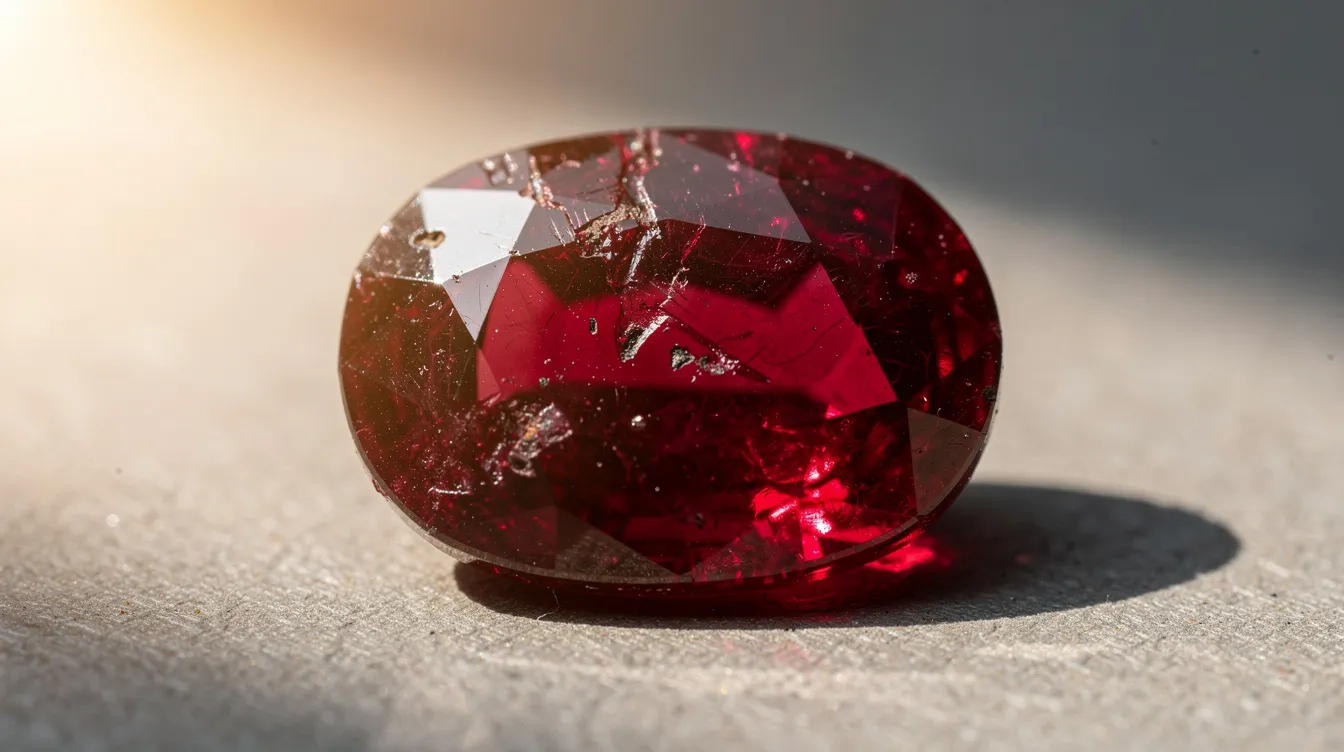
Fine rubies are rare in nature, and a stone’s origin significantly influences both its character and value. Geographic source affects colour saturation, fluorescence, and market perception.
Myanmar (Burma) remains one of the most historically significant gemstones sources, particularly the Mogok Valley. This region produced rubies with exceptional saturation and strong fluorescence under light for centuries. Political factors have shifted production, but Burmese stones retain premium status.
Mozambique emerged as a powerhouse after discoveries in the 2010s. The Montepuez deposit now supplies over 50% of global production, yielding stones that rival traditional Burmese material in colour and size. Vietnam’s Luc Yen and Quy Chau regions produce intensely coloured smaller stones, while Sri Lanka offers lighter, pinkish material. Thailand’s Chanthaburi and Cambodia’s Pailin mines round out significant sources.
Additional origins include Afghanistan, Tajikistan, Kenya, Tanzania, and Madagascar—demonstrating ruby mining’s truly global footprint.
Colour, Quality Factors, and “Pigeon’s Blood” Rubies
Colour dominates ruby valuation, followed by clarity, cut, and carat weight. Gem professionals evaluate three aspects: hue (the actual colour), tone (lightness or darkness), and saturation (colour intensity).
The term called pigeon’s blood describes the most prized rubies: a vivid, saturated red with a subtle purple or blue undertone and strong fluorescence. These stones, typically from Burma or select Mozambican deposits, command premiums reaching 10 times higher than lesser colours.
Very dark rubies can appear brownish or blackish in low light, while very light stones may be classified as pink sapphire in strict markets. Eye-clean rubies are genuinely rare—most natural stones contain inclusions, and extremely clean specimens in fine colours are especially valuable.
View any ruby under different lighting conditions—daylight from the sun and indoor incandescent light—to understand how its colour performs in real-world settings.
Ruby Birthstone Jewellery and Gift Ideas
Ruby’s symbolism makes it natural for birthday celebrations, engagement jewellery, and anniversary gifts. July babies particularly connect with this birth month stone’s passionate associations.
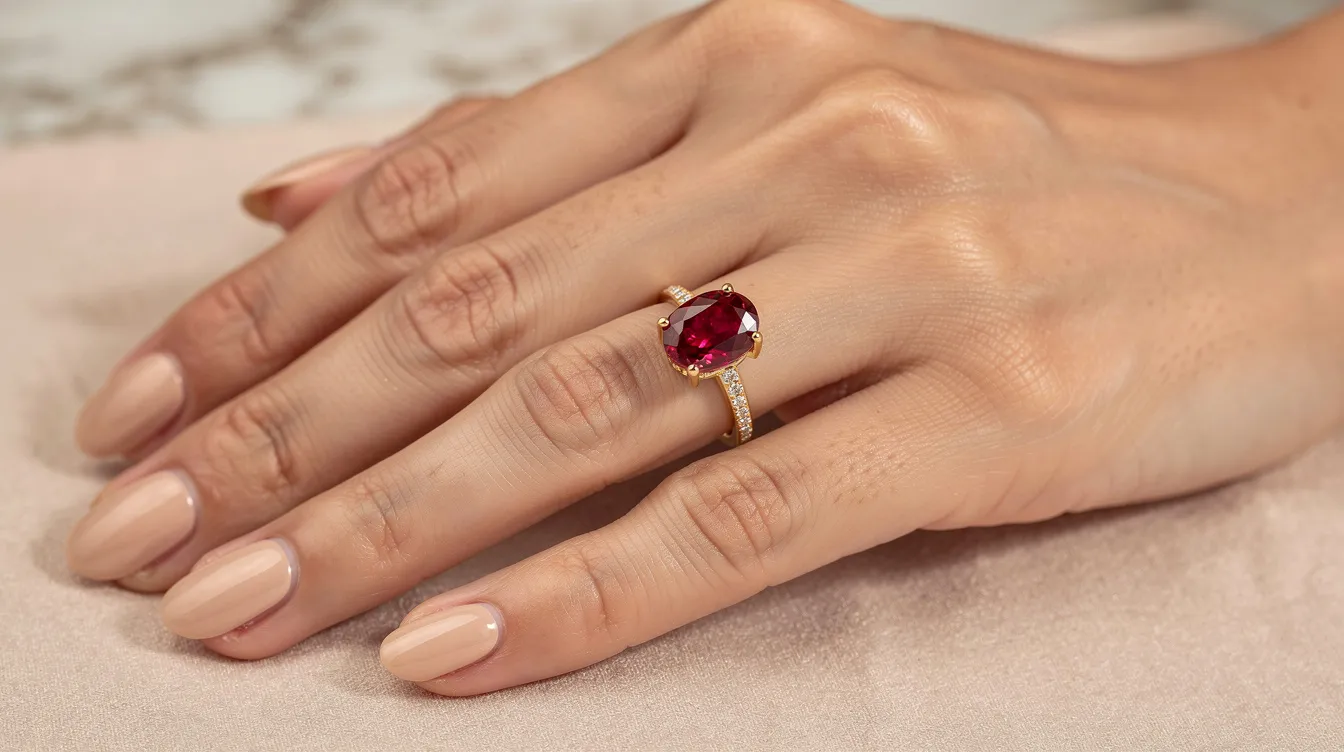
Classic choices include ruby engagement rings (whether solitaire or halo designs), eternity bands for commitment, pendant necklace styles, stud earrings for everyday elegance, and tennis bracelets for special occasions. A diamond engagement ring paired with ruby accents creates striking contrast, while a simple ruby charm offers understated beauty.
Metal pairings affect the overall aesthetic. Yellow gold creates warm, vintage appeal. White gold or platinum provides modern contrast that highlights ruby’s red against silver tones. Rose gold harmonises romantically with ruby’s orange and purple undertones. For 15th and 40th wedding anniversaries, consider engraving or pairing rubies with diamond accents for extra sentiment.
Ruby Treatments, Care, and Cleaning
Most market rubies undergo treatments to enhance colour and clarity. Understanding treatment types helps you make informed decisions about both value and care requirements.
Standard heat treatment (reaching 800–1800°C) dissolves inclusions and intensifies red colour in 80–95% of commercial rubies. This widely accepted practice preserves value when properly disclosed. More intensive methods include lead-glass filling for fractured stones and lattice diffusion—these require specific care and should always be documented at purchase.
For cleaning, warm water with mild soap and a soft brush remains the safest universal method. Ultrasonic and steam cleaners work for untreated or standard heat-treated rubies but should be avoided for fracture-filled or composite stones. Store ruby pieces separately from softer gems like June birthstone pearl jewellery, blue topaz, or october and december birthstones to prevent scratching. Schedule annual professional inspections for frequently worn rings—particularly important given ruby’s status as the only gemstone in its colour class with such hardness.
How to Choose a Ruby for July Birthstone Jewellery
Budget, colour preference, and lifestyle guide ruby selection. The trade-off between size and quality matters: smaller vivid stones often appear more striking than larger, dull specimens.
Prioritise pleasing colour and lively appearance over technical perfection. A well-cut ruby with visible brilliance outperforms one graded microscopically clean but lacking fire. For purchases over significant value, documented origin (Burma or Mozambique) and independent laboratory reports add confidence. Some buyers also appreciate knowing about the june birthstone pearl or september birthstone sapphire for comparison, or exploring pieces like turquoise and moonstone earrings, as actress Eva Longoria and other celebrities have popularised coloured gems.
Whether from a classic source or modern deposit, any genuine ruby makes a meaningful and enduring july birthstone gift. Those curious about other months can also explore January birthstones like garnet and rose quartz. From january through february and beyond, few gems match ruby’s combination of beauty, power, and history.
Frequently Asked Questions About Rubies
What makes rubies so special compared to other gemstones?\
Rubies are exceptionally durable, ranking 9 on the Mohs hardness scale, second only to diamonds. Their rich red color, caused by the element chromium, symbolizes love, passion, and vitality. Historically, rubies have been revered as the "king of precious stones" due to their rarity, hardness, and mystical powers, especially in ancient India.
Where are the best rubies found?\
Some of the finest rubies come from the Mogok area in Myanmar, a source that has been prized for over five centuries. Other significant sources include Mozambique—particularly the Montepuez mines—Sri Lanka, and Vietnam’s Luc Yen region. Additional ruby-producing countries are Afghanistan, Tajikistan, Pakistan, Kenya, Tanzania, and Madagascar.
How are rubies treated to enhance their appearance?\
Rubies are often heat treated to remove purplish hues and enhance their pure red color, a widely accepted practice in the gem trade. However, some rubies are glass-filled or dyed to improve clarity and color; these stones require special care and should only be cleaned with a damp cloth to avoid damage.
How can I verify if a ruby is natural or treated?\
Obtaining a GIA Identification Report is essential for confirming whether a ruby is natural or synthetic and disclosing any treatments it has undergone. This report helps buyers make informed decisions about the stone’s value and care.
Are rubies used for anything besides jewelry?\
Yes, rubies played a crucial role in the creation of the first laser in 1960, marking a significant technological milestone. Beyond their beauty, rubies also hold symbolic meanings; their deep red color is believed to stimulate the heart and root chakras, enhancing life force and vitality.
What are some symbolic meanings and believed benefits of wearing rubies?\
Rubies have long been associated with love, courage, and protection. They were historically thought to calm anger and help wearers navigate passionate social situations. Many also believe that rubies promote good health, wisdom, and confidence.
How should I care for my ruby jewelry?\
For most rubies, warm soapy water and a soft brush are safe for cleaning. Ultrasonic and steam cleaners are generally safe for untreated and heat-treated stones but should be avoided for glass-filled or dyed rubies. Regular professional inspections are recommended to maintain the stone’s beauty and durability.
Why are rubies so valuable?\
Rubies can command the highest price per carat among colored gemstones due to their rarity, durability, and rich symbolism. The most prized rubies, often called “pigeon’s blood,” exhibit a vivid deep red color with a subtle blue or purple undertone, significantly increasing their value.
These FAQs aim to provide a deeper understanding of the allure, care, and significance of rubies as the July birthstone, helping you appreciate their timeless beauty and rich heritage.
Leave a comment