

Gemstones have shaped jewelry design for millennia, and in 2026, their appeal shows no signs of fading. Whether you’re selecting an engagement ring or adding to a collection of everyday pieces, understanding what makes these minerals so captivating will help you make smarter choices.
Gemstones in Jewelry: Quick Overview
Gemstones remain central to jewelry design because they deliver what no other material can: vibrant colour, deep symbolism, exceptional durability, and endless personalisation options. From diamonds anchoring engagement rings to amethyst adding purple depth to sterling silver pendants, these stones transform metal into meaning.
Concrete examples dominate modern collections: ruby in eternity bands, sapphires in halo pendants inspired by royal designs, emerald in art deco cocktail rings, turquoise in boho necklaces, and rose quartz in romantic heart-shaped pendants. You’ll find them in earrings, bracelets, and charm pieces across every price point.
The distinction between precious gemstones (diamond, ruby, sapphire, emerald) and the semi precious category persists culturally, though both drive modern jewellery equally. Why do people choose gemstone jewelry?
-
Bold personal expression through colour
-
Birthstone connections to identity and milestones
-
Investment potential and heirloom quality
-
Customisation through cuts, settings, and combinations
Gemstones: From Earth’s Geology to Everyday Jewelry
Most gemstones form over millions of years through intense heat, extreme pressure, and mineral-rich solutions deep within the earth. These geological processes transform common minerals into the crystals we treasure—aluminium oxide becomes the mineral corundum (sapphires and rubies), while beryl becomes emerald through chromium impurities.
Specific origins matter. Myanmar’s Mogok Valley produces 90% of top-quality rubies. Colombia’s Muzo mines yield the world’s finest emeralds with characteristic jardin inclusions. Brazil’s Rio Grande do Sul supplies 80% of global amethyst from pegmatite deposits, while Sri Lanka’s alluvial gravels deliver exceptional sapphires.
The journey from rough crystal to finished jewellery follows clear stages:
-
Mine: Extraction from primary deposits or alluvial sources
-
Cut: Precision faceting (round brilliant, emerald cut, cabochon) reducing 40-50% of rough weight
-
Set: Securing in metals via prongs, bezels, or channels
-
Wear: Daily resilience determined by Mohs hardness
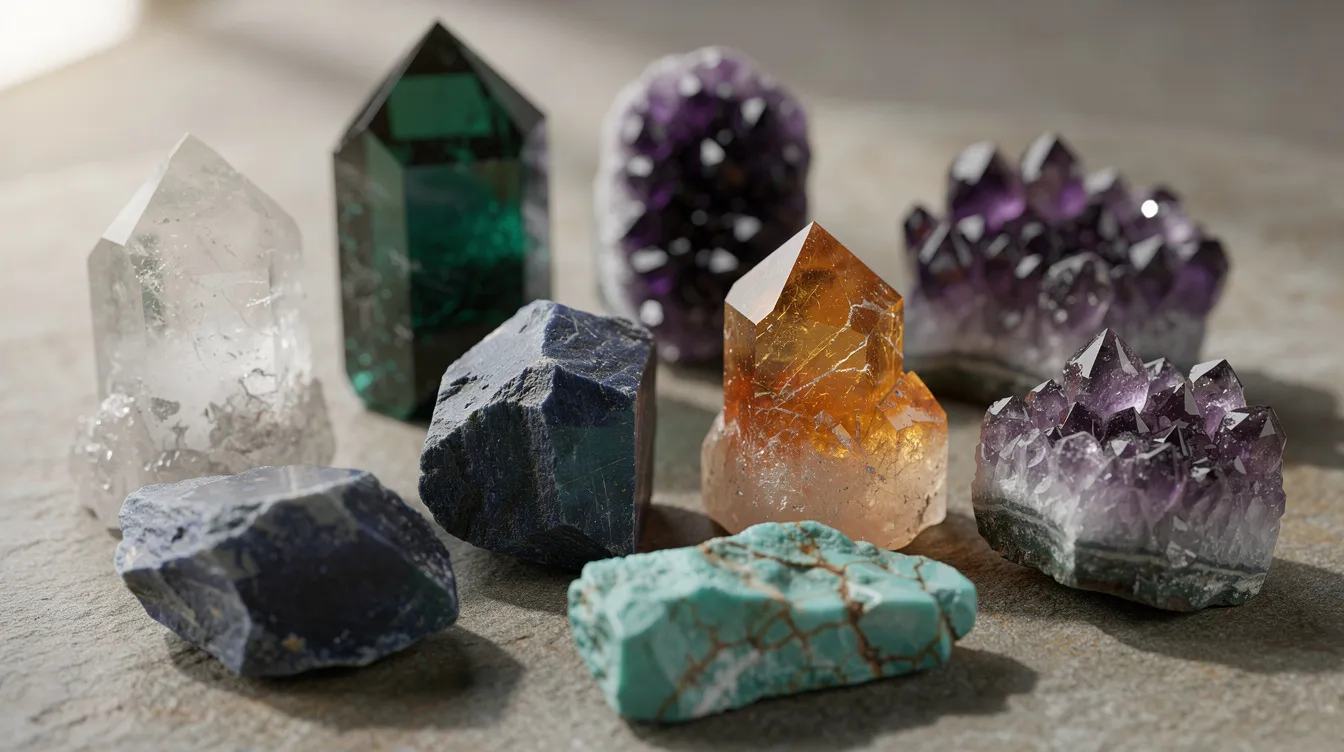
The same gem type looks dramatically different depending on treatment. A cabochon moonstone showcases billowy adularescence ideal for pendants, while faceted citrine in princess cuts amplifies golden sparkle for cocktail rings.
A Brief History of Gemstones in Jewelry and Culture
Ancient Egypt (3000–1500 BC) established gemstones as essential adornment. Lapis lazuli from Afghanistan symbolised the heavens, while carnelian added fiery orange to gold pectorals. Tutankhamun’s tomb, discovered in 1922, revealed a stunning lapis scarab necklace weighing over 2kg—proof of gems as talismans for afterlife protection.
Classical Greece and Rome (500 BC–400 AD) favoured intaglio rings carved with garnet and agate for signet seals depicting gods and emperors. Mughal India (16th–18th centuries) mastered elaborate gold kundan settings with Colombian emeralds, Burmese rubies, and Golconda diamonds in navratna necklaces blending Hindu astrology with imperial opulence.
Victorian Britain (1837–1901) embraced sentimental jewellery featuring jet, garnet, seed pearls, and peridot in filigree brooches symbolising love and loss. The Crown Jewels showcase this long history—the 104-carat Stuart Sapphire and the Black Prince’s Ruby (actually a red spinel) remain central to the Imperial State Crown.
Modern accessibility arrived with Marcel Tolkowsky’s 1919 round brilliant cut, establishing ideal diamond proportions. Automated cutting technology slashed costs 80%, transitioning gems from elite decorative objects to accessible adornment by the Art Deco era.
Precious vs Semi-Precious Gemstones in Jewelry
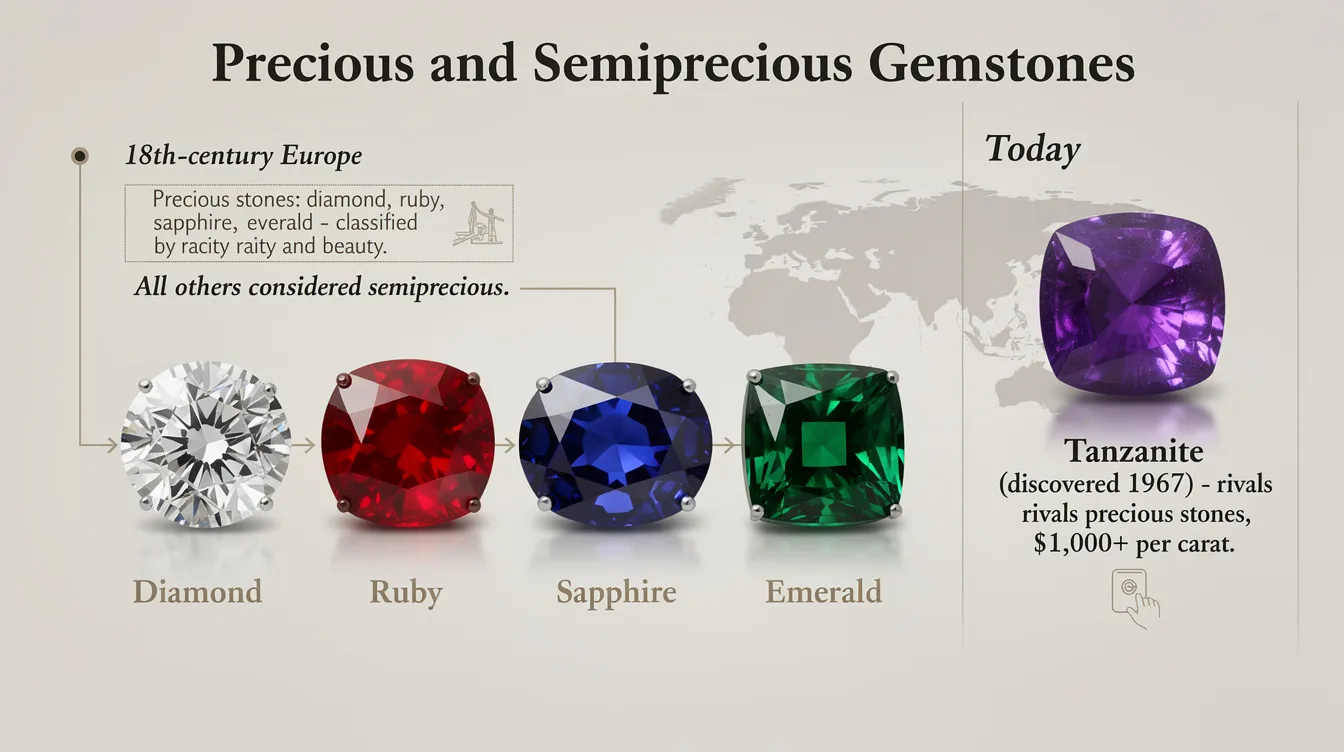
The precious stones classification—diamond, ruby, sapphire, emerald—emerged in 18th-century Europe based on rarity and beauty. Everything else became semi precious stones. Today, this distinction holds more traditional than scientific weight; tanzanite, a relative newcomer discovered in 1967, rivals precious gems at $1,000+ per carat.
Precious gems anchor high-value pieces: platinum diamond solitaire rings, three-stone sapphire and diamond bands symbolising past-present-future, and ruby heirloom pendants. These represent investment-grade jewellery with documented appreciation.
Semi-precious stones—including citrine, garnet, peridot, aquamarine, moonstone, labradorite, onyx, and opal—fuel colourful everyday designs. They enable larger stones at accessible prices, appearing in stacking rings, gemstone beads bracelets, and semi-precious gemstone necklaces.
Semi-precious stones are popular among jewellery makers for their versatility and unique characteristics. Many crafters enjoy mixing these gemstones with other materials, such as metal spacers or pearls, to create distinctive aesthetics and stone bracelets in their jewellery.
Gemstone gift kits have become increasingly popular for those looking to create personalised jewellery or give meaningful gifts. These kits often include a curated selection of stones with explanations for each, making them ideal for hobbyists and jewellery enthusiasts who enjoy wearing crystal bracelets as part of their daily style.
The rise in online platforms has made gemstones more accessible than ever for crafting and jewellery making. Many jewellery makers now prefer to source stones that resonate with their personal stories or intentions, adding emotional value to their creations.
Popular Gemstones and Their Use in Jewelry
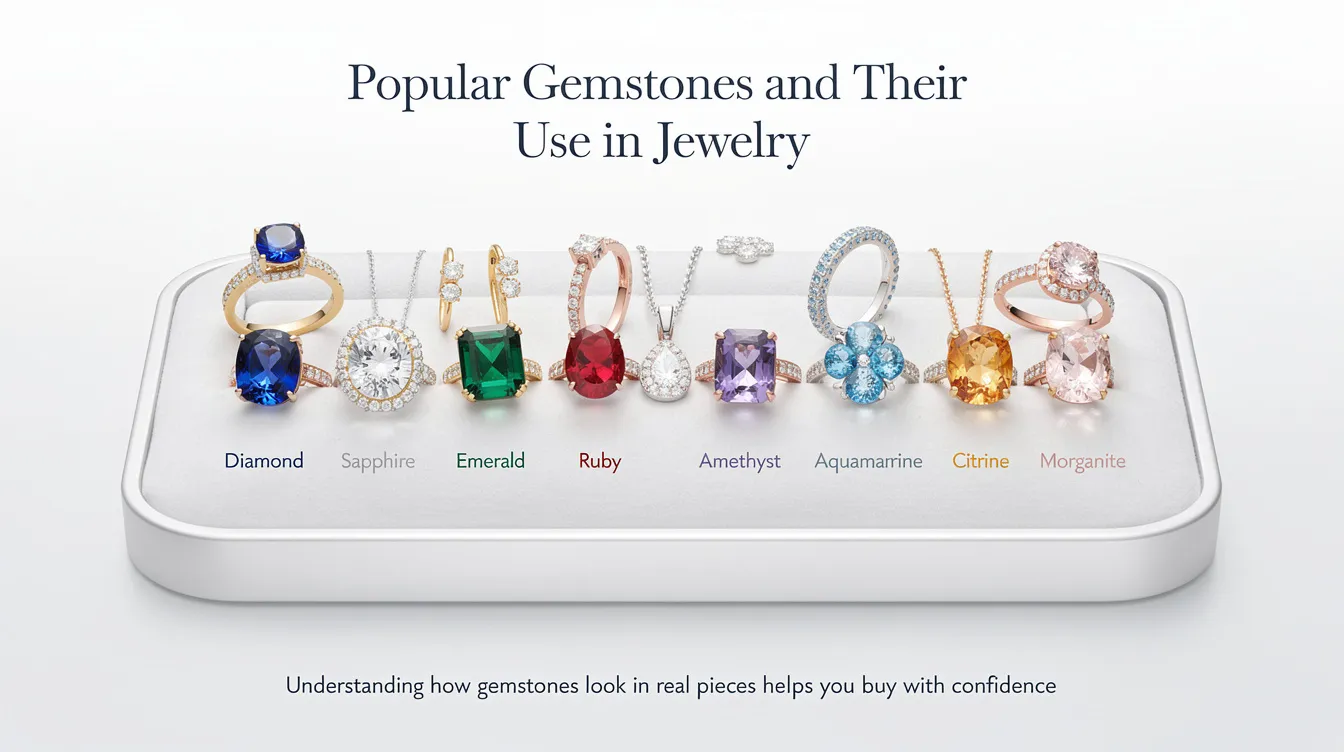
Understanding how popular gemstones appear in real pieces helps you buy gemstones with confidence and approach shopping for crystals with clearer intentions.
Classic Precious Four
Diamonds lead as centre stones in engagement rings (round brilliant or princess cuts), pavé halos, and tennis bracelets. Lab-grown options now deliver 2-3ct studs affordably.
Ruby’s deep pigeon-blood red variety shines in yellow or white gold cluster rings, eternity bands, and July birthstone jewellery, including iconic designs like a radiant ruby ring in sterling silver. Its popularity surged 20% recently, partly through celebrity influence. Rubies symbolize passion, courage, and vitality, recognized for their intense red color and treasured as the quintessential July birthstone.
Sapphires—especially blue—dominate engagement rings inspired by Diana, Princess of Wales’ 12ct Ceylon oval from 1981. Pink and yellow sapphires appear in fine pendants for those seeking quieter luxury. Sapphires represent wisdom, loyalty, and royalty, commonly seen in blue but also available in other colors.
Emerald’s rectangular step-cut showcases jardin inclusions in cocktail rings and art deco designs. May birthstone earrings often feature Colombian or Zambian stones of highest quality. Emeralds signify renewal, growth, and prosperity, prized for their green color but require care due to tendency to have inclusions.
Colourful Quartz and Beryl
Amethyst’s large purple faceted ovals in sterling silver rings evoke February mysticism, extending to beaded bracelets for boho stacks. Amethyst is a purple variety of quartz known for promoting calmness, peace, and spiritual growth, and serves as the February birthstone in many jewellery traditions.
Aquamarine named for its sea-blue colour graces March birthstone bridal jewellery in white gold, emphasising serene, transparent pale blue tones.
Citrine brings warm pale yellow to golden brown autumn collections, often paired with smoky quartz or topaz for November birthstone designs. Citrine is known as the stone of joy and prosperity, ranging in color from light yellow to honey brown, and is widely celebrated as the November birthstone.
Garnet Group and Beyond
The garnet group encompasses closely related minerals in many colors—deep red January birthstones fill signet rings, while orange spessartite varieties trend in contemporary pieces.
Blue topaz (radiation-treated) dominates silver minimalist studs and is one of several December birthstones. Peridot offers distinctive yellow green tones for August birthstones.
Turquoise cabochons define Southwestern-style rings and inlay bracelets—often stabilised for durability. Turquoise is believed to bring protection, healing, and good fortune and is also a key December birthstone. Moonstone and labradorite cabochons showcase cat’s eye effects and iridescent light play in bohemian layers, with moonstone featuring prominently among June birthstones.
Black Onyx, Turquoise, and Tiger's Eye are believed to offer protective energies. Hematite and Smoky Quartz are used for grounding and reducing stress, especially when incorporated into healing crystal jewellery.
Organic Gems
Freshwater pearls form classic strands and stud earrings, while modern mixed-metal pieces incorporate pearls with amber, jade, and even dark onyx for contrast. As one of the key June birthstones, pearls carry particular sentimental value in birthday jewellery. Opaque stones like malachite and agate add bold green, brown, and banded patterns to statement necklaces.
Cabochon gemstones have a flat bottom and polished domed top, making them ideal for earrings, pendants, and rings due to their unique natural inclusions and surface sheen.
Gemstone Symbolism, Birthstones, and Personal Meaning
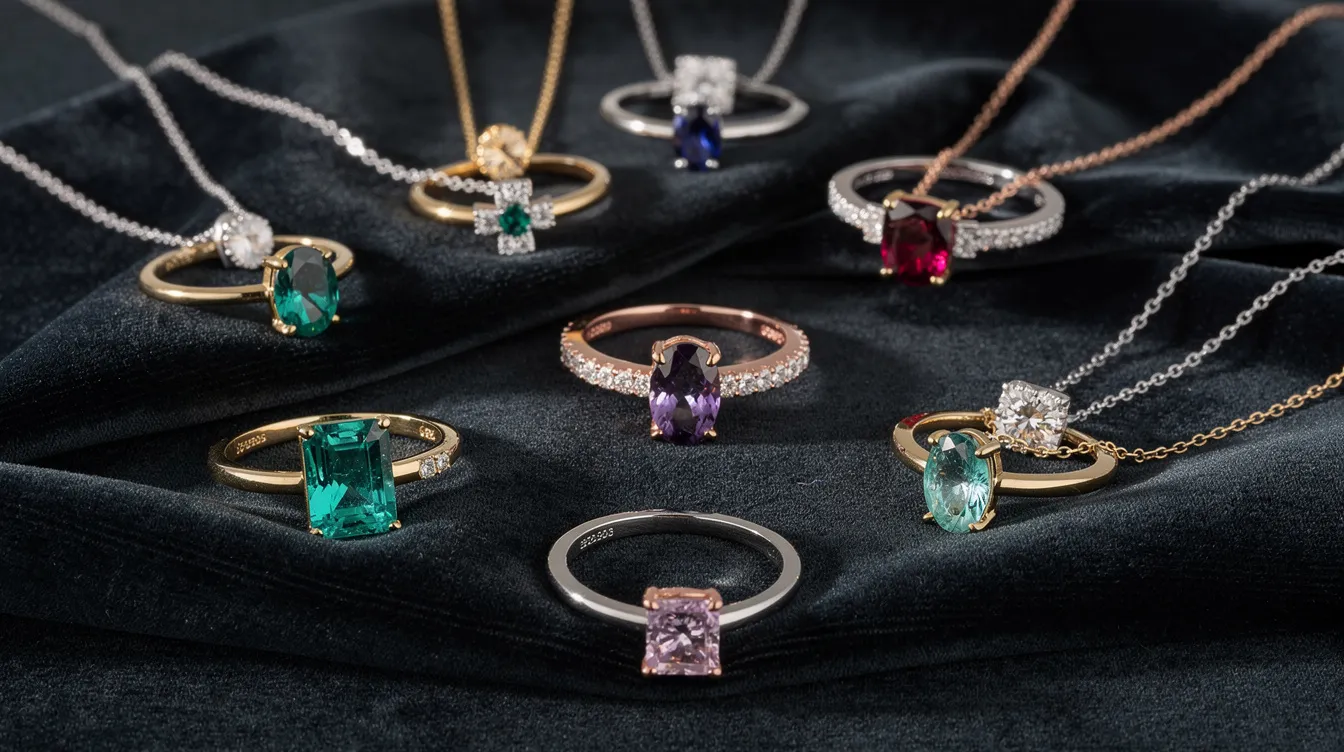
Beyond aesthetics, gemstones encode protection, love, and identity. In 2026, 70% of buyers seek story-connected pieces—birthstones, zodiac alignments, and milestone markers, often choosing powerful gemstone jewellery for positivity to reflect their intentions.
The modern Western birthstone chart (standardised 1912, updated through the 20th century) assigns gems monthly:
-
January: Garnet birthstone jewellery in signet rings for commitment
-
February: Amethyst in sterling silver studs
-
March: Aquamarine in delicate gold rings
-
April: Diamond in classic engagement solitaires
-
May: Emerald in halo pendants
-
June: Pearl or moonstone in drop earrings
Symbolic associations extend further. Rose quartz represents unconditional love in heart-shaped pink pendants and is commonly used for promoting love and healing from grief. Black onyx and tourmaline appear in protective talisman necklaces. Lapis lazuli and turquoise inspire jewellery echoing ancient tribal motifs—blue green stones connecting to wisdom traditions.
Many people today turn to healing crystals to help manage stress, encourage focus, or promote spiritual alignment, increasingly incorporating healing crystal jewellery into everyday wellness routines.
Gemstones have captivated humanity since the dawn of civilisation and continue to serve as symbols of status, protection, and personal identity. They are also often associated with celebration and gifting, making gemstone jewellery a meaningful choice for special occasions.
Gemstone Cuts, Settings, and Jewelry Styles
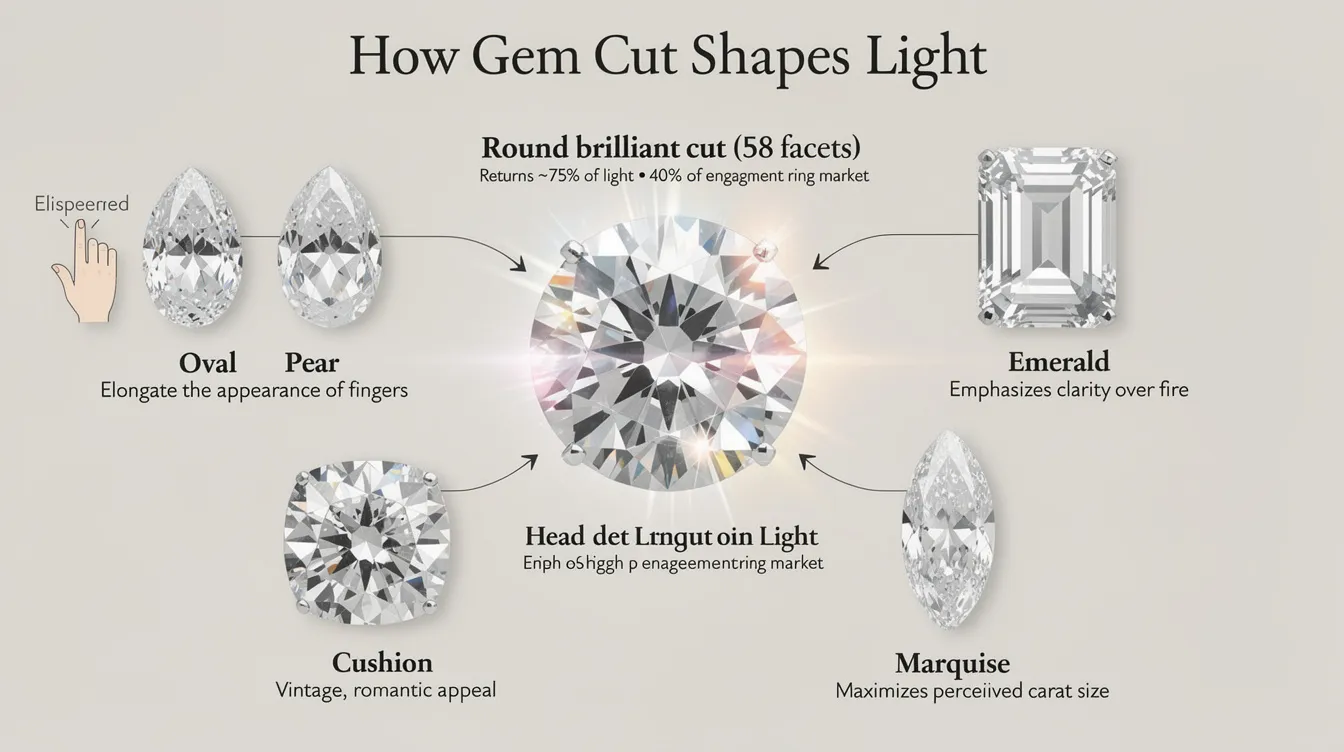
The cut determines how a gem interacts with light. Round brilliant cuts (58 facets) return 75% of light, dominating engagement ring choices at 40% market share. Oval and pear cuts elongate fingers, while emerald cuts emphasise clarity over fire. Cushion cuts offer vintage appeal; marquise maximises perceived carat weight.
Cabochon cuts (domed, uncut) suit opaque stones—turquoise, onyx, labradorite, moonstone—emphasising surface sheen rather than internal sparkle.
Setting types shape design:
-
Prong/claw: Maximum light for diamond solitaires (4-6 metal tips)
-
Bezel: Metal rim protecting softer stones like opal for daily rings
-
Channel/pavé: Row-set diamonds in eternity bands and tennis bracelets
-
Halo: Accent ring boosting perceived centre stone size by 20%
Popular style categories:
-
Classic bridal: Diamond, sapphire, pearl in platinum or white gold
-
Vintage-inspired: Filigree and milgrain with garnet, emerald, old-mine diamonds
-
Bohemian/minimalist: Raw quartz points, simple gemstone bars, stacking cabochons
Effective combinations:
-
Emerald-cut emerald in bezel setting (secure art deco look)
-
Round brilliant diamond in prong solitaire (timeless sparkle)
-
Cushion sapphire in halo setting (romantic depth)
Ethical Sourcing, Sustainability, and Gemstone Alternatives
Consumer demand for ethically sourced gems peaked in the 2020s, with 60% of UK and European buyers prioritising traceable supply chains. Scandals involving labour practices in Myanmar ruby mining accelerated this shift.
Key considerations include fair labour standards, reduced environmental impact, and transparency about treatments. Most sapphires (90%) are heat-treated for stable colour—legitimate when disclosed. Fracture-filled rubies and dyed jade require clear labelling per trade standards.
Ethical sourcing of gemstones involves ensuring that the stones are mined and traded in a manner that respects human rights and the environment. Ethically sourced gemstones are often marketed as a way to ensure that the mining process does not exploit workers or harm the environment while still allowing wearers to enjoy gemstone jewellery for positivity.
Alternatives gaining traction:
-
Lab-grown diamonds, sapphires, and rubies (20% market share, identical optics, 50-70% cheaper)
-
Recycled gems from vintage jewellery reset into new pieces
-
Cluster designs using smaller stones to reduce bulk material use
Buyer tips:
-
Ask for origin documentation where possible
-
Confirm whether stones are treated or enhanced
-
Look for recycled metals (hallmarked)
-
Consider lab-grown for perfect gemstones with clearer provenance
Choosing and Caring for Gemstones in Jewelry
Selecting the right piece requires matching stone properties to purpose.
Selection guide:
-
Decide on purpose (daily-wear ring versus occasional pendant)
-
Match hardness to usage (7+ Mohs for rings; softer stones acceptable for earrings)
-
Choose metal colour that flatters the gem (yellow gold warms citrine; white metals suit aquamarine)
-
Consider budget trade-offs (larger semi-precious versus smaller precious stones)
Care essentials:
-
Store pieces separately in soft pouches—diamonds scratch quartz, creating damage
-
Remove rings when cleaning, exercising, or swimming (porous turquoise absorbs chlorine; opal crazes)
-
Clean most stones with mild soapy water and soft brush; avoid ultrasonics for opals, filled emeralds, and pearls
-
Schedule professional prong checks every 6-12 months (worn settings cause 80% of stone losses)
Whether drawn to the world of rare tanzanite or the accessible range of semi precious gems, thoughtful selection and basic care transform gemstone jewelry into meaningful heirlooms. Those born in November, for example, might gravitate toward topaz and citrine birthstones when choosing signature pieces. The right stone tells your story for decades—choose with intention, maintain with care, and wear with confidence.
Frequently Asked Questions about Gemstones in Jewelry
What are the differences between precious and semi-precious gemstones?
Precious gemstones traditionally include diamond, ruby, sapphire, and emerald. These stones are valued for their rarity, durability, and historical significance. Semi-precious stones encompass a wider variety of minerals such as amethyst, citrine, garnet, and turquoise, including favourites like November birthstone topaz and citrine. Although the distinction is largely historical, some semi-precious stones can be more valuable and rare than certain precious stones. Both categories offer unique qualities that suit different jewelry styles and budgets.
How do I choose the right gemstone for my jewelry?
Choosing the right gemstone depends on several factors: the piece's purpose (daily wear or occasional), the hardness of the stone (measured on the Mohs scale), personal style preferences, and budget. For example, diamonds and sapphires are ideal for everyday rings due to their hardness, while softer stones like opals and pearls are better suited for earrings or pendants, especially when chosen as meaningful June birthstone gifts. Consider the gemstone’s color, symbolism, and whether it resonates with your personal story.
What are loose gemstones, and why are they important?
Loose gemstones are individual, unmounted stones that can be customized and set into jewelry according to personal preferences. They offer flexibility in selecting size, cut, and quality, allowing jewelry makers and buyers to create unique pieces. Loose gemstones are essential for bespoke jewelry and are popular among hobbyists and professionals alike.
Are lab-grown gemstones a good alternative to natural stones?
Lab-grown gemstones have become increasingly popular due to their ethical sourcing, affordability, and identical optical properties to natural stones. They offer a sustainable choice for consumers concerned about environmental impact and human rights issues associated with mining. Lab-grown diamonds, sapphires, and rubies provide perfect gemstones with clearer provenance, making them a compelling option for modern jewelry buyers.
How should I care for gemstone jewelry?
Proper care extends the beauty and life of gemstone jewelry. Store pieces separately in soft pouches to prevent scratching, especially since harder stones like diamonds can damage softer ones like quartz. Remove jewelry during activities like cleaning, exercising, or swimming to avoid exposure to chemicals or physical damage. Clean most stones gently with mild soapy water and a soft brush, avoiding ultrasonic cleaners for delicate stones such as opals, pearls, and filled emeralds. Regular professional checks of settings help prevent stone loss.
What is the significance of birthstones in jewelry?
Birthstones are gemstones associated with each month of the year, believed to hold specific properties and meanings that influence the wearer’s life. They are often gifted to celebrate birthdays and milestones, adding personal symbolism to jewelry pieces. The modern birthstone list was standardized in 1912 and remains widely recognized. Wearing birthstone jewelry connects individuals to tradition, identity, and personal milestones.
Can gemstones be ethically sourced?
Yes, ethical sourcing ensures that gemstones are mined and traded respecting human rights and environmental standards. Transparency about origin and treatment is increasingly demanded by consumers. Locally sourced stones and lab-grown alternatives also support ethical practices. When buying, look for certifications or ask sellers about the gemstone’s provenance to make responsible choices.
What are some popular cuts and settings for gemstones in jewelry?
Popular cuts include round brilliant, princess, oval, pear, emerald, cushion, and cabochon. The cut affects how the gemstone interacts with light and its overall appearance. Common settings are prong (claw), bezel, channel, pavé, and halo. Each setting offers different levels of protection and aesthetic appeal, with bezel settings preferred for softer stones and prongs maximizing light exposure for brilliance.
How can I personalize gemstone jewelry?
Personalization can be achieved through selecting specific gemstones that reflect personal stories, birthstones, or symbolic meanings. Custom cuts, unique settings, and mixing gemstones with other materials like pearls or metal spacers allow for distinctive designs. Gemstone gift kits enable hobbyists to create meaningful, one-of-a-kind pieces, making gemstone jewelry a perfect choice for personal expression.
Are semi-precious stones suitable for everyday jewelry?
Absolutely. Many semi-precious stones like amethyst, garnet, and peridot are durable enough for daily wear when set properly, making them excellent choices for January birthstone jewellery and beyond. They offer a wide range of colors and unique markings, allowing for versatile jewelry styles from casual to elegant. Their accessibility in size and price makes them a popular choice for stacking rings, bracelets, and statement necklaces.
Leave a comment