

Quick Answer: What is the June birthstone stone?
June uniquely features three modern birthstones—pearl, alexandrite, and moonstone—all officially recognised by gemological organisations since the mid-20th century. This makes June one of just three months, alongside August and December, that offer multiple distinct gems for those born in this summer month.
This guide is for anyone interested in June birthstones, whether you're shopping for jewelry, seeking gift ideas, or curious about gemstone meanings. Understanding June's birthstones helps you choose meaningful jewelry and appreciate their unique qualities.
Pearl is an organic gem formed inside mollusks; Alexandrite is a rare, color-changing variety of chrysoberyl; Moonstone is a feldspar mineral known for its adularescence.
Pearl remains the traditional June birthstone, treasured for centuries before alexandrite and moonstone were added in the 1950s to provide broader color range and price points. Each stone carries its own character: pearl offers classic organic elegance prized by the ruling class throughout history, moonstone delivers a dreamy mystical glow connected to the moon, and alexandrite presents rare color-changing luxury that few gems can match.
|
Stone |
Appearance |
Rarity |
Hardness (Mohs Scale) |
Typical Price |
|---|---|---|---|---|
|
Pearl |
Organic luster, white/cream/black |
Cultured: common; Natural: extremely rare |
2.5–3 |
$10–$10,000+ per strand |
|
Moonstone |
Ethereal blue-silver glow |
Moderate |
6–6.5 |
$20–$500 per carat |
|
Alexandrite |
Green-to-red color change |
Very rare |
8.5 |
$500–$15,000+ per carat |
June Birthstones Overview
The modern birthstones list was standardised in 1912 by the National Association of Jewelers in the United States, with updates through the 1950s firmly linking alexandrite and moonstone to June alongside pearl.
Pearl stands as the organic gem formed by living creatures—oysters and mussels—and was historically the only June birthstone in ancient times. Moonstone, a feldspar mineral, captivates with its adularescence, that signature blue or silvery glow floating beneath the surface. Alexandrite, a rare chrysoberyl variety, shifts from greenish daylight tones to reddish hues under incandescent light.
Having three birthstones gives June-born individuals choices across style (vintage-classic pearl, boho-mystical moonstone, modern-luxury alexandrite), durability (from delicate pearls to robust alexandrite suitable for daily wear), and budget (affordable moonstone and freshwater pearls versus investment-grade alexandrite).
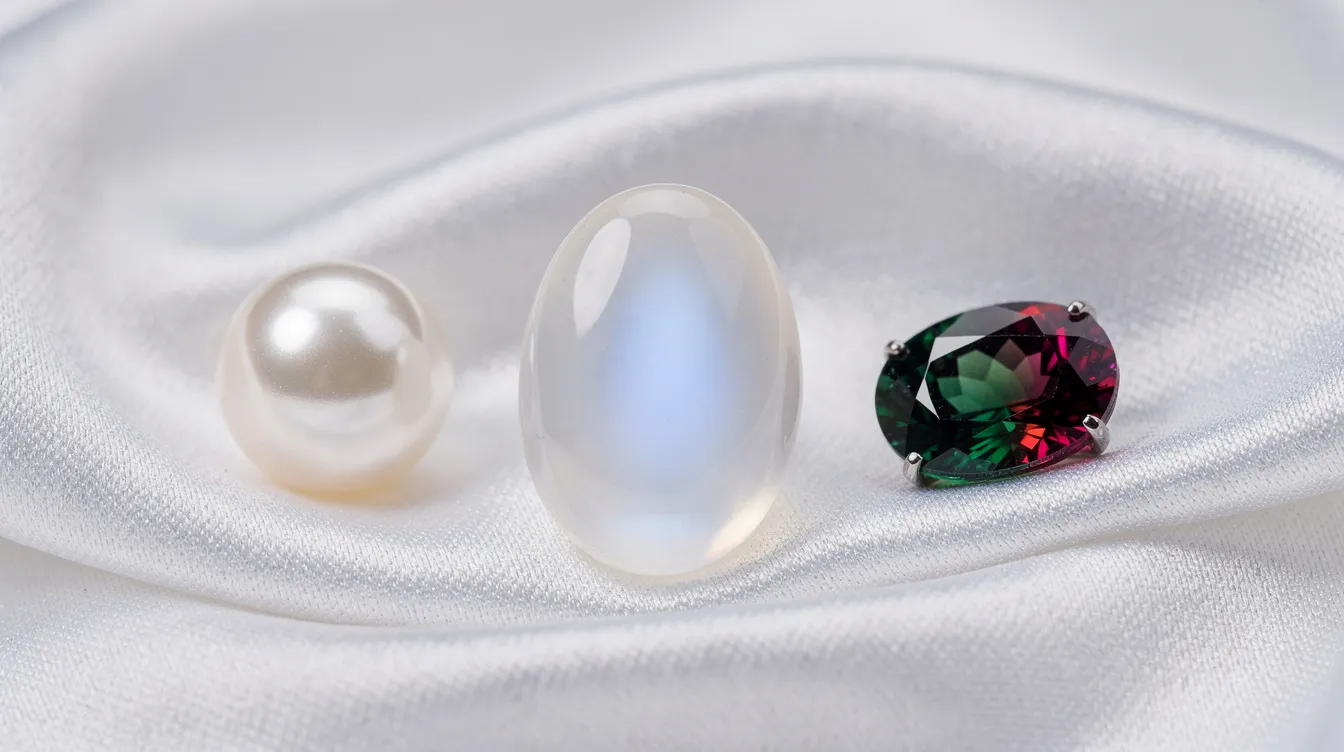
Pearl: Traditional June Birthstone Stone
Pearl has served as the classic June birthstone for centuries, long before alexandrite and moonstone entered the picture. It remains the best-known June gem across cultures worldwide.
Pearls are organic gems that form inside mollusks.
Pearls form biologically inside oysters, mussels, and other mollusks when layers of nacre—a iridescent calcium carbonate substance—coat an irritant over months or years. Natural pearls, formed without human intervention, now represent less than 1% of the market and command museum-level prices. Cultured pearls, pioneered by Mikimoto Kokichi in Japan in 1916, dominate the vast majority of supply through sustainable farming, and their enduring appeal explains why pearl jewellery never goes out of style.
Common pearl types include:
-
Akoya pearls from Japan and China (5–9mm, mirror-like white luster, representing 70% of fine round pearls)
-
South Sea from Australia and Indonesia (10–20mm, luxurious golden or white tones, valued at $2,000–$10,000 per strand)
-
Tahitian from French Polynesia (8–16mm, exotic black with peacock overtones)
-
Freshwater pearls found in China’s lakes (baroque shapes, pastel pink and lavender colors, most affordable starting under $100)
Pearl colors range from iconic white and cream with rose or silver overtones to stunning golden South Sea hues, pale lavender freshwater varieties, and dramatic Tahitian blacks. Superior luster stems from thick, tightly packed nacre layers reflecting light like a prism, making classic freshwater pearl stud earrings a staple for everyday elegance.
Pearl Meaning & Symbolism for June Birthdays
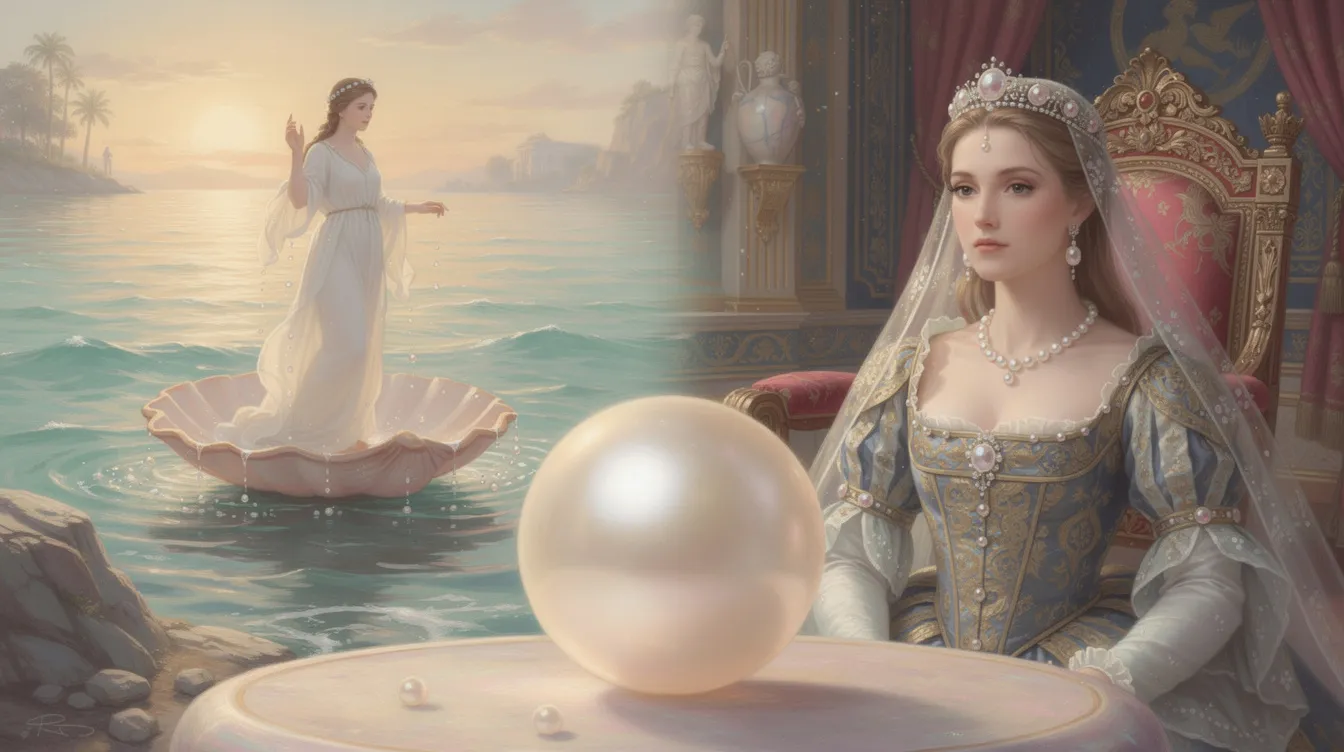
Throughout history, pearl has symbolised purity, humility, and innocence. Ancient Greek mythology connected pearls to Aphrodite’s tears as she emerged from the sea, while European royalty believed pearls conveyed wisdom and serenity.
Key symbolic associations include: wisdom and balanced decision-making for the wearer, emotional clarity and honesty in relationships, and feminine nurturing energy aligning with the zodiac sign Cancer (June 21–July 22) and zodiac sign Gemini (May 21–June 20). Pearls have traditionally adorned women across cultures as bridal jewelry, representing the bride’s purity and new beginnings.
For modern June birthdays, pearl jewelry—especially strands, studs, and pendants—has become a “coming-of-age” gift for 16th, 18th, or 21st birthdays, carrying forward centuries of significance into contemporary celebrations.
Where Pearl June Birthstones Are Found
Pearl production shifted dramatically in the 20th century from perilous wild harvesting to sustainable aquaculture. Today, 99% of pearls are cultured on carefully managed farms.
Major modern sources include: Akoya pearl farms along coastal Japan and China in temperate waters that produce high luster, South Sea operations in northern Australia’s Broome region and Indonesia’s Arafura Sea yielding large sizes, Tahitian farms in French Polynesia’s atolls like Rangiroa fostering dark hues, and freshwater farms in China’s Hunan and Zhejiang provinces producing 20–50 pearls per mussel.
Natural pearl beds in the Arabian Gulf, Red Sea, and Caribbean are now largely depleted and tightly regulated. Farming conditions—clean, warm, low-pollution waters—directly influence pearl quality and environmental responsibility.
Pearl Care & Cleaning
Pearls require special care due to their low hardness (2.5–3 on the Mohs scale) and organic composition sensitive to acids, heat, and chemicals.
Follow these care guidelines: apply perfume, hairspray, and cosmetics before putting on pearl jewelry (“last on, first off”), store pearls separately in a soft pouch rather than plastic bags, and avoid prolonged exposure to direct sunlight, extreme heat, or chlorinated pools.
For cleaning, gently wipe pearls with a soft, slightly damp cloth after each wear. For deeper cleaning, use lukewarm water with mild soap, then dry flat on a soft towel. Never use ultrasonic or steam cleaners. Consider restringing pearl strands every few years to maintain security.
Moonstone: Mystical June Birthstone Stone
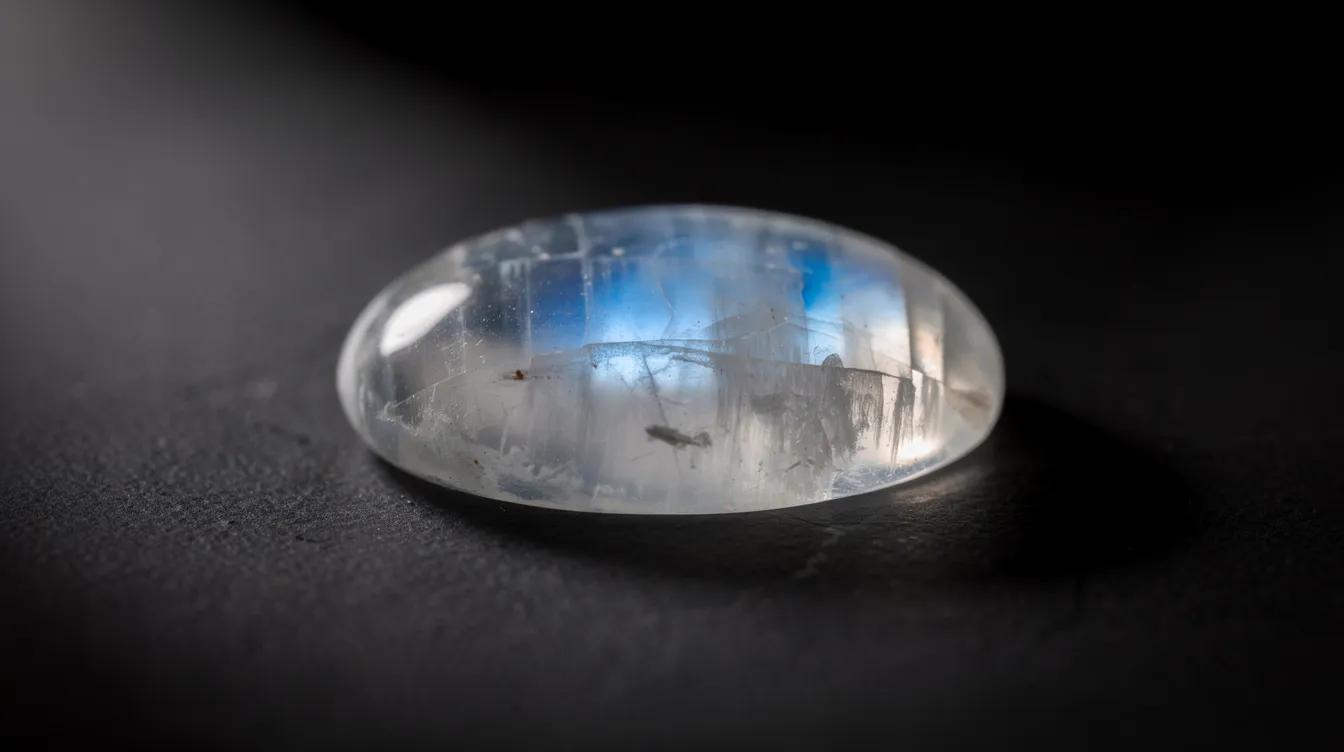
Moonstone captivates with its dreamy, semi-transparent appearance and floating moon-like glow called adularescence. This phenomenon occurs when light scatters off thin layers inside the stone, creating a soft, moving sheen that appears blue or silvery white.
Moonstone is known for its adularescence, which gives it a special glow.
High-quality moonstone is nearly colorless with intense blue sheen, while commercial grades appear milky white, gray, peach, or soft brown with silver shimmer. Moonstone belongs to the feldspar group with hardness around 6–6.5 on the Mohs scale, meaning it can scratch more easily than sapphire, ruby, or diamond, but its ethereal look makes it perfect for moonstone magic jewellery collections.
Moonstone Meaning & History for June
In hindu mythology, moonstone was considered solidified moonbeams, prized for fertility and intuition. Romans and Greeks linked it to lunar deities like Diana and Artemis.
Core symbolic meanings include: love, passion, and romantic intuition for the wearer, good luck and safe travel especially at night, and fertility and feminine cycles tied to the moon’s phases. Art Nouveau designers like René Lalique and Louis Comfort Tiffany popularised moonstone in flowing, nature-inspired jewelry during the late 19th century, a legacy that lives on in today’s elegant moonstone necklaces.
Moonstone resurged during 1960s bohemian movements and 1990s New Age trends, becoming a favourite for spiritual and crystal-healing pieces believed to enhance mental clarity and emotional health.
Where Moonstone June Birthstones Are Found
Classic blue-sheen moonstone historically came from Sri Lanka, which remains one of the most important sources today. India produces rainbow moonstone varieties with multi-colored flashes, widely used in contemporary boho jewelry.
Additional sources include Myanmar, Madagascar, Brazil, Tanzania, and parts of the United States like New Mexico and Virginia. Sri Lankan and Indian mining regions rely on small-scale artisanal operations, often cutting stones locally for export. India supplies up to 80% of commercial moonstone.
Moonstone Care & Cleaning
Moonstone’s moderate hardness combined with perfect cleavage means it can crack if struck. It’s better suited for earrings, pendants, or protected ring settings than exposed stacking rings.
Basic care rules include: avoiding hard knocks, sudden temperature changes, and high heat, never using ultrasonic or steam cleaners, and removing moonstone rings before sports or gardening. Clean with warm water, mild soap, and a soft cloth, then rinse and pat dry. Store separately from harder gemstones like emerald, sapphire, or garnets.
Alexandrite: Rare Color-Change June Birthstone Stone
Alexandrite stands as the most rare and luxurious June birthstone, discovered in Russia’s Ural Mountains around 1830 and named after future Czar Alexander II. Its signature color change—green to bluish-green in daylight, shifting to red or raspberry under incandescent light—earned it the description “emerald by day, ruby by night.”
Alexandrite is a rare variety of chrysoberyl that changes color in different lighting.
Alexandrite is a chrysoberyl variety with exceptional hardness (8.5 on the Mohs scale) and toughness, making it suitable for engagement rings and daily wear. Fine natural alexandrite is extremely scarce, especially stones over one carat, driving prices higher than many colored gems—sometimes exceeding $15,000 per carat.
Alexandrite Meaning & Symbolism
Alexandrite’s red-and-green colors echoed Imperial Russian military colors, creating associations with nobility, courage, and power. The stone symbolises balance and duality (day and night, logic and intuition), transformation and adaptability during life changes, and good fortune and sharp perception.
Because of its rarity and durability, alexandrite has become a popular unconventional choice for engagement rings and milestone anniversaries, symbolising relationships that adapt and endure through change, while more delicate gold-plated June birthstone necklaces featuring pearl and moonstone offer a softer, romantic alternative.
Where Alexandrite June Birthstones Are Found
The original Russian Ural deposits discovered in the 19th century are largely depleted, making those stones prized collectibles. Current major sources include Brazil’s Minas Gerais region (accounting for approximately 60% of market share), Sri Lanka producing lighter-colored stones with attractive color change, and East African deposits in Tanzania, Zimbabwe, and Madagascar.
Lab-grown alexandrite offers an affordable alternative, though natural, well-cut stones remain investment-grade rarities with prices that have increased significantly since 2000.
Alexandrite Care & Cleaning
Alexandrite’s hardness and toughness make it relatively easy to care for compared to pearl and moonstone. Safe cleaning methods include warm soapy water with a soft brush. Ultrasonic and steam cleaners are generally acceptable unless the stone has visible fractures.
Store alexandrite jewelry separately to prevent scratching softer stones like turquoise, citrine, or orange gems. Check prongs regularly if wearing alexandrite rings daily, and remove during heavy manual work to protect settings.
Choosing the Right June Birthstone Stone for You
The “best” june birthstone depends on your lifestyle, taste, budget, and connection to each stone’s symbolism.
Compare along key dimensions: for style, pearl offers classic elegance, moonstone delivers ethereal boho appeal, and alexandrite provides modern luxury. For durability, alexandrite handles everyday toughness, moonstone requires occasional-wear caution, and pearl demands special care as an heirloom. For budget, moonstone and freshwater pearls start affordably under $100, while fine alexandrite represents significant investment.
Consider scenarios: June birthstone jewelry such as pearl studs or pendants for timeless elegance, moonstone rings or bracelets for spiritual and zodiac-inspired pieces, and alexandrite for statement jewelry or major milestones. Combining stones—like pearl and moonstone together—creates layered meaning blending purity with intuition.
Gifting Ideas for June Birthstone Jewelry
June birthstone jewellery makes versatile gifts for june birthdays, anniversaries, Mother’s Day, graduations, and holidays, offering both personal symbolism and everyday wearability. A dedicated guide to June’s three birthstones can help you match each gem to the recipient’s style and story.
By occasion: For June birthdays, consider classic pearl studs, birthstone charm bracelets, or moonstone stacking rings. Alexandrite solitaires work beautifully for milestone years. For Mother’s Day, create necklaces featuring children’s birthstones including June’s pearls. Anniversaries (especially the 3rd for moonstone or 30th for pearl) call for dainty pendants or multi-stone designs. Graduation gifts of subtle moonstone pendants symbolise luck and new beginnings—perfect for those about to create their next chapter, especially when chosen as part of meaningful New Age jewellery for a spiritual journey.
Metal pairings: White metals (silver, white gold, platinum) complement cool-toned moonstone and pearls. Yellow or rose gold enhances warm-toned pearls and alexandrite’s red-green play.
Adding personal touches like engraved dates, initials, or short messages transforms any june birthstone piece into a wedding gift or treasured heirloom with lasting sentimental value, an idea explored often in our jewellery articles and guides.
Frequently Asked Questions About June Birthstones
What are the unique characteristics of pearls as a June birthstone?
Pearls are organic gems formed inside living mollusks, primarily oysters and mussels. Their hardness ranges from 2.5 to 4.5 on the Mohs scale, making them relatively soft and delicate compared to other gemstones. The finest pearls have unblemished surfaces with even coloring, which greatly enhances their value. Due to the depletion of natural pearl beds, cultured pearls now account for the vast majority of pearl sales, offering a sustainable and accessible option for jewelry lovers who appreciate timeless pearl jewellery.
How should I care for and clean my pearl jewelry?
Because pearls are soft and sensitive, they require special care. Always store pearls separately from other gemstones and metal jewelry to prevent scratching. Avoid storing them in plastic bags, as plastic can emit chemicals that damage the pearl’s surface. Clean pearls gently using a soft, damp cloth after each wear. For more thorough cleaning, use lukewarm water with mild soap, and never use ultrasonic or steam cleaners. Applying perfume, hairspray, and cosmetics before putting on pearl jewelry helps protect their delicate surface.
What is the significance of pearls in ancient cultures?
In ancient Sanskrit texts, pearls were believed to bestow long life and prosperity. Pearls have long symbolized purity, humility, and innocence, often associated with wisdom and emotional clarity. Their water energy in feng shui is thought to promote flexibility, flow, and rare beauty, making them not only beautiful but also spiritually meaningful.
What makes alexandrite a special June birthstone?
Alexandrite is a rare variety of chrysoberyl, prized for its remarkable color change from greenish hues in daylight to reddish tones under incandescent light. It was first discovered in Russia’s Ural Mountains in 1830 and named after Alexander II of Russia, the heir apparent at the time. Alexandrite is one of the more expensive colored gems due to its scarcity, especially in larger sizes, and has a hardness of 8.5 on the Mohs scale, making it durable enough for daily wear, similar to many of the colourful December birthstone options.
How do I care for alexandrite jewelry?
Alexandrite is relatively easy to care for because of its hardness and toughness. It can be safely cleaned with warm soapy water and a soft brush. Ultrasonic and steam cleaners are generally safe unless the stone has visible fractures. Store alexandrite pieces separately to avoid scratching softer gemstones.
What are the notable features of moonstone as a June birthstone?
Moonstone is a semi-precious gemstone known for its adularescence—a glowing, ethereal sheen that resembles moonlight. It has a hardness of 6 to 6.5 on the Mohs scale but poor toughness, meaning it can crack if exposed to high heat or sharp impacts. Moonstone symbolizes good luck, love, passion, and new beginnings, making it a thoughtful gift for anyone born in June and a central feature of many moonstone magic jewellery designs.
How should I care for moonstone jewelry?
To protect moonstone, avoid hard knocks, sudden temperature changes, and exposure to high heat. Clean moonstone with warm, soapy water and a soft brush, and avoid ultrasonic or steam cleaners. Store moonstone separately from harder stones to prevent scratches.
What is the feng shui significance of pearls and moonstone?
In feng shui, pearls are associated with water energy, promoting flexibility, flow, and rare beauty. Moonstone carries calming 'yin' energy and is beneficial for balancing excess fire energy in homes or offices. Wearing moonstone is said to help obtain balance, enhance mental clarity, and reduce insomnia, which is why it appears so often in New Age spiritual jewellery.
Are moonstone jewelry pieces suitable for gifting occasions?
Yes, moonstone jewelry makes a meaningful gift for various special occasions such as Mother's Day, anniversaries, graduations, and Christmas. Its symbolism of love, passion, and good luck adds sentimental value to any gift, especially when you choose a thoughtfully designed elegant necklace with moonstone.
Why do June birthdays have three birthstones?
June is unique in having three birthstones—pearl, alexandrite, and moonstone—offering a diverse range of colors, styles, and price points. This variety allows those born in June to select a birthstone that best suits their personality, lifestyle, and budget, and a detailed overview of the 1 birthstone for June and its variations can make that choice even more meaningful.
Leave a comment