

Emerald jewellery at a glance
Jewellery with emerald captures something that few other gemstones can replicate—a vivid, intense green that commands attention without demanding it. In 2025, emerald jewellery continues to hold its position as one of the most sought-after coloured gemstone categories, appealing to everyone from first-time buyers to seasoned collectors building a lifelong jewellery collection. This guide is designed for anyone interested in purchasing, gifting, or learning about emerald jewellery, from first-time buyers to experienced collectors.
The classic pieces remain enduringly popular: emerald rings for engagements and anniversaries, necklaces that add sophistication to both everyday outfits and evening wear, earrings ranging from subtle studs to dramatic drops, bracelets that catch the light with every movement, and pendants that sit elegantly against the skin. What makes emeralds particularly versatile is their ability to transition effortlessly from a Monday morning meeting to a Saturday evening dinner—the same piece working across multiple contexts. Emerald jewellery stands out for its unique symbolism, versatility, and enduring appeal, making it a meaningful and stylish choice for a wide range of occasions.
The symbolism woven into emerald jewellery runs deep. Across cultures and centuries, this gemstone has been associated with renewal, hope, love, truth, and emotional balance. Ancient Egyptians treasured emeralds as symbols of eternal life. European royalty commissioned elaborate tiaras and parures. Modern UK jewellery houses continue this tradition, crafting pieces that honour the stone’s heritage while embracing contemporary design sensibilities.
What you’ll discover throughout this guide is practical knowledge to help you navigate emerald jewellery with confidence—from understanding the differences between natural and lab-created stones to choosing the right setting for your lifestyle, and from caring for your pieces properly to recognising the trends shaping the market in 2024 and 2025.
Meaning and symbolism of emeralds
Emerald has long been called the gemstone of inspiration and eternal patience, a stone believed to sharpen intuition and bring clarity to the wearer. Its intense green colour—ranging from deep jungle tones to bright mint hues—reflects the vitality of spring, new growth, and the natural world at its most alive.
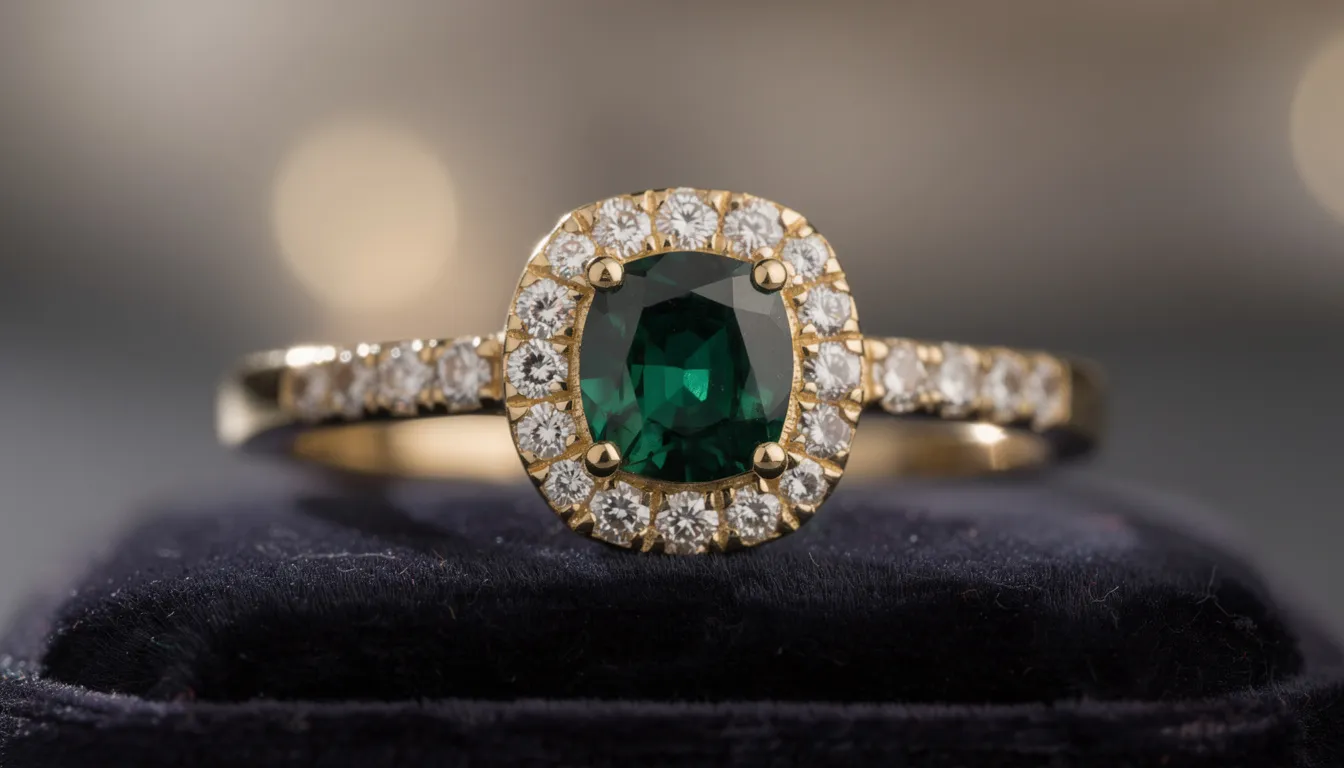
The connection between emerald and love runs through centuries of tradition. This gemstone symbolises devotion and deep emotional connection, making it a meaningful choice for engagement rings and anniversary gifts. Couples drawn to emerald jewellery often cite its representation of harmony in relationships—a visual reminder of patience, understanding, and lasting commitment. Unlike the flash of a diamond, the emerald’s allure lies in its depth, offering something more contemplative and personal.
Historical references to emerald’s significance are extensive. Cleopatra’s famed love of emeralds is well documented; she adorned herself with the stone and gifted emeralds to visiting dignitaries as symbols of power and renewal. During the 16th and 17th centuries, Mughal emperors incorporated emeralds into spectacular jewellery and decorative objects, often inscribed with religious texts. European royal families followed suit, with elaborate emerald tiaras appearing throughout the 1800s as markers of status and taste.
Emerald holds particular significance for milestone dates. As the May birthstone, it’s a natural gift choice for spring birthdays. It’s also the designated gemstone for 20th and 35th wedding anniversaries, representing wisdom accumulated through years of partnership. In recent years, emerald jewellery has gained popularity as “push presents”—meaningful gifts celebrating the birth of a child, with the green stone symbolising new life and rebirth.
The stone’s association with truth and clarity extends to its reputation for bringing emotional balance. Those who believe in gemstone properties often choose emerald for its supposed calming influence, thought to encourage honesty and open communication. Whether or not you subscribe to these beliefs, there’s no denying that emerald jewellery carries weight beyond its aesthetic appeal—it’s a piece with a statement built into its very nature.
Types of emerald jewellery pieces
Emeralds appear across full jewellery suites, from bold cocktail rings designed to turn heads at formal events to delicate stud earrings suitable for everyday elegance. Understanding the range of options helps you find the piece that fits your personal style and intended purpose. Emerald jewellery collections typically include rings, necklaces, earrings, and bracelets.
Rings represent perhaps the most popular category for emerald jewellery. Solitaire designs showcase a single emerald as the centrepiece, typically in sizes ranging from 0.25ct to 1.50ct for engagement or dress rings. Halo settings surround the centre stone with a frame of diamonds, amplifying the emerald’s presence and adding brilliance. Trilogy rings—featuring an emerald flanked by two diamonds or vice versa—symbolise past, present, and future, making them a popular choice for engagements and anniversaries. Cluster designs group multiple smaller emeralds together, creating visual impact without requiring a single large stone. Right-hand rings and cocktail styles tend toward bolder designs, often featuring larger stones in ornate settings.
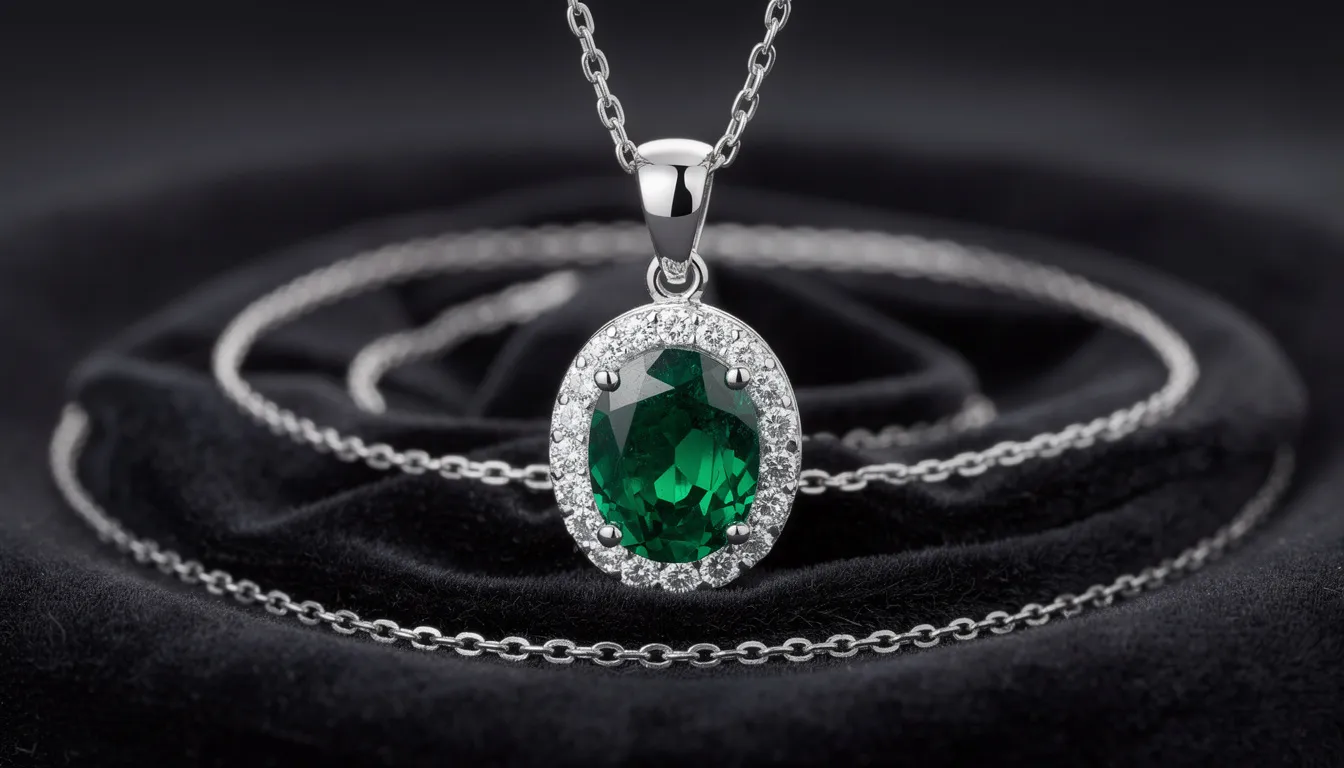
Necklaces and pendants offer versatility that rings cannot match. Minimalist single-stone pendants work beautifully for daily wear, with the emerald suspended on a fine chain in lengths typically adjustable between 16 and 18 inches. Halo pendants add sparkle around the central gemstone, perfect for those who want subtle drama. Statement necklaces featuring multiple emeralds or elaborate designs serve as centrepieces for formal occasions, commanding attention at weddings, galas, and black-tie events.
Stud earrings range from understated to show-stopping. Stud earrings featuring small emeralds (often 0.20ct to 0.50ct per stone) provide a touch of colour that complements any outfit without overwhelming it. Drop earrings introduce movement, with emeralds suspended below diamond accents or gold findings. Hoop designs increasingly incorporate emerald accents—small stones set along the curve add unexpected colour to a classic silhouette.
Bracelets and bangles allow emeralds to encircle the wrist in various configurations. Tennis bracelets alternating emeralds with diamonds create continuous lines of colour and sparkle, while slim gold bangles with bezel-set emeralds offer a more architectural, modern aesthetic. These pieces work equally well solo or stacked with other bracelets for a layered look.
Jewellery sets coordinate multiple pieces—typically earrings paired with a pendant, sometimes including a ring—ensuring a cohesive look for special occasions. Complete sets are frequently chosen for weddings, graduations, and formal events where consistency across pieces creates polished sophistication.
Emerald gemstones: natural, created and treated
Jewellery with emerald can feature natural, lab-created, or treated stones, and reputable jewellers will clearly disclose which category applies. Emerald jewellery can be crafted using either natural or lab-grown emeralds. Understanding these distinctions helps you make informed decisions about value, appearance, and ethics.
Natural emeralds form deep within the earth over millions of years, and their origin significantly influences their characteristics and value. Colombian emeralds dominate the market, representing 70-90% of global production and setting the standard for quality. Stones from the Muzo and Chivor mines are renowned for their intense, slightly bluish-green colour—the benchmark against which all other emeralds are measured. Zambian emeralds from the Kagem region offer excellent clarity with fewer inclusions and a cooler, slightly bluish tone at more accessible price points. Brazilian emeralds tend toward lighter, yellowish-green hues with superior clarity, though they lack the depth of colour that Colombian stones command.
A defining characteristic of natural emeralds is their inclusions—internal features called “jardin” (French for garden) that resemble delicate foliage within the stone. Unlike diamonds, where clarity is paramount, emeralds are classified as Type 3 gemstones, meaning visible inclusions are expected and even embraced. Clarity grades for emeralds typically range from I1 to I3, with SI1 reserved for exceptionally clean specimens. When evaluating natural emeralds, colour takes precedence over clarity, brilliance, or other factors.
Emerald quality is evaluated using the "Four Cs"—color, clarity, cut, and carat weight—with color being the most critical factor.
Lab-created emeralds share the identical chemical composition as their natural counterparts—both are beryl with chromium and sometimes vanadium providing the green colour. The difference lies in origin: lab-grown stones form in controlled environments over weeks rather than millennia. These emeralds typically display fewer inclusions, offering cleaner appearances at significantly lower costs. For buyers seeking larger stones (1ct to 3ct centres) without the premium attached to natural specimens of equivalent size, lab-created options provide an attractive alternative.
Treatments are standard practice in the emerald industry. Oiling and resin-filling address the surface-reaching fractures common in natural emeralds, improving clarity and appearance. These treatments are widely accepted—virtually all commercial-grade emeralds undergo some form of enhancement—but should be disclosed in product descriptions. Understanding that your stone has been treated helps with proper care decisions later.
The ethical and environmental dimension increasingly matters to UK and EU buyers. Traceable sourcing programmes now allow consumers to verify where their natural emeralds originated. Recycled metals frequently accompany emerald collections, and lab-grown options eliminate mining concerns entirely for those prioritising sustainability. Responsible jewellers make this information accessible, ensuring you can align your purchase with your values.
Emerald cuts, shapes and settings
How an emerald is cut and set dramatically influences how its colour appears to the eye and how the finished piece interacts with light. Understanding these choices helps you select jewellery that maximises the stone’s natural beauty.
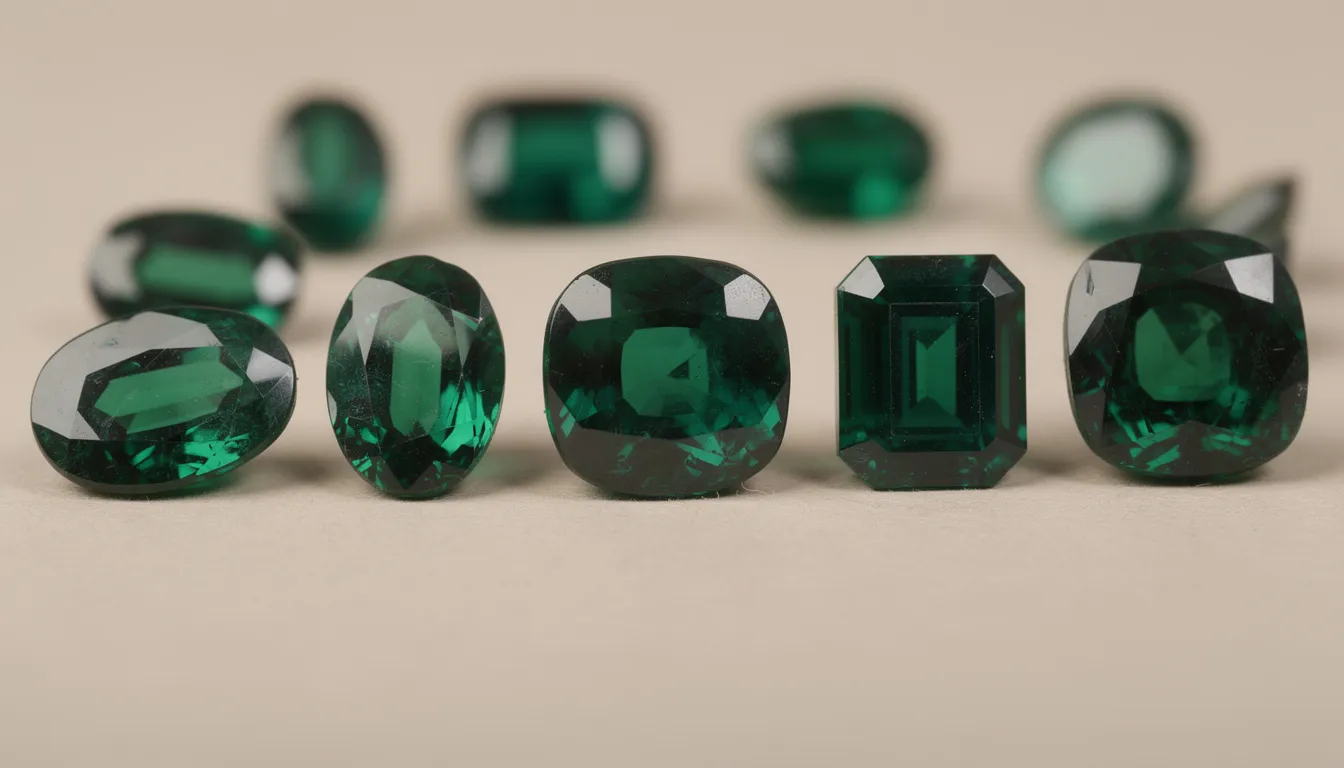
Popular shapes for emeralds balance aesthetic appeal with practical considerations. The classic emerald cut—a rectangular step-cut with beveled corners and large, concentric parallel facets—originated in the 1500s at Colombia’s Muzo mine. This cut was specifically designed to add visual depth while minimising the risk of chipping during cutting, and it remains the dominant choice today because it showcases the stone’s colour and characteristic inclusions beautifully. Oval cuts are equally favoured in UK collections, offering elongated elegance that flatters the hand when set in rings. Cushion cuts provide a softer, rounded-corner alternative with vintage appeal. Round brilliant cuts, while less common due to rough wastage during cutting, deliver maximum sparkle. Pear shapes create distinctive silhouettes for pendants and drop earrings.
Settings determine how the emerald is secured and displayed within the piece. Halo settings surround the centre stone with a frame of diamonds, typically featuring stones ranging from 0.20ct to 0.97ct total weight depending on the design. This configuration amplifies the emerald’s visual presence and adds brilliance from multiple angles. Cluster arrangements group several smaller emeralds together, creating impact without relying on a single large stone—often more budget-friendly while still delivering significant colour. Trilogy mounts position the emerald alongside two complementary stones, traditionally diamonds, in a symbolic three-stone arrangement. Solitaire settings allow the emerald to stand alone, emphasising its individual characteristics without distraction.
Metal choices interact with emerald’s green hue in distinct ways. White metals—platinum and white gold—enhance the cool, vivid tones in bluish-green emeralds, creating a crisp, contemporary aesthetic. Platinum offers superior durability and hypoallergenic properties, while white gold provides similar appearance at a lower price point. Yellow gold creates warmer, vintage-inspired looks that many associate with classic emerald jewellery; the combination of yellow gold and rich green has a timeless beauty that never fully falls from fashion. Rose gold, though less traditional, pairs surprisingly well with certain emerald tones for those seeking something unique.
Design styles range from cable chains supporting simple pendants to elaborate vintage-inspired filigree settings echoing Art Deco aesthetics. Modern bezel settings—where metal wraps around the stone’s circumference—offer excellent protection for daily-wear pieces. Bold cocktail designs with sculptural metalwork serve evening wear, designed to command attention under ambient lighting. For those seeking a delicate touch of elegance, bracelet options with refined motifs also offer versatile styling for both casual and formal occasions.
How to choose emerald jewellery
This section provides practical guidance for anyone shopping for emerald jewellery in 2025, whether browsing online or visiting a jeweller in person. The right approach depends on balancing several key factors.
Budget and carat weight present the first trade-off. Larger emeralds naturally cost more, but size alone doesn’t determine value. A smaller stone (0.30ct to 0.50ct) with intense, saturated green colour will often appear more striking than a larger stone (0.80ct to 1.00ct) with weak colour saturation. Medium-to-deep green with good saturation commands premium prices because colour is the primary value driver for emeralds. If budget is limited, consider prioritising colour over size—a vibrant smaller emerald creates more impact than a pale larger one. Lab-created options extend purchasing power significantly, offering equivalent appearance at a fraction of natural stone costs.
Occasion and lifestyle should guide design choices. For rings intended for daily wear—including engagement rings—protective settings matter. Bezel settings encircle the emerald’s edges with metal, reducing chip risk. Halo designs also offer some protection while adding visual presence. Platinum provides the most durable setting metal for everyday pieces. For occasional wear—special occasions, evenings out, formal events—more delicate designs become practical. Cluster cocktail rings, elaborate drop earrings, and ornate pendants may be reserved for moments when you’ll handle them carefully.
Metal and skin tone influence how the finished piece appears when worn. Yellow gold tends to complement warmer skin tones beautifully, creating harmony between the metal and the wearer. White gold and platinum often suit cooler skin tones, though personal preference ultimately matters more than any rule. Consider what metals dominate your existing jewellery box—matching or intentionally contrasting adds coherence to your overall collection. Rose gold offers a contemporary alternative that flatters many complexions and pairs well with mint-green emeralds.
Sizing requires attention, particularly for ring purchases. Typical UK ring sizes run from I through Q for most buyers, though sizing outside this range is readily available. Professional sizing ensures accuracy—many jewellers offer this service for a small fee or free with purchase. When buying jewellery as a gift without knowing exact size, adjustable necklace lengths and earrings avoid sizing issues entirely. Some rings can be resized after purchase, though certain designs (particularly eternity rings with stones set around the full band) have limitations.
Certification and guarantees provide peace of mind. Look for gemstone reports specifying clarity (I1, I2, SI1), carat weight, colour description, and any treatments applied. Reputable jewellers provide clear information about origin (natural vs lab-created), any enhancements, and care requirements. Returns policies typically range from 14 to 30 days for unworn items—confirm these terms before purchasing. Warranties covering manufacturing defects and offering services like re-tipping prongs or polishing add long-term value.
Caring for emerald jewellery
Emeralds rate 7.5 to 8 on the Mohs hardness scale, making them suitable for jewellery but requiring more gentle care than diamonds (10) or sapphires (9). Their characteristic inclusions and common treatments mean careful handling extends the life and beauty of your pieces.
Cleaning emerald jewellery works best with simple methods. Lukewarm water, mild soap (washing-up liquid works well), and a soft brush—an old toothbrush with gentle bristles is ideal—remove everyday dirt and oils effectively. Gently brush the stone and setting, rinse thoroughly, and dry with a soft, lint-free cloth. Avoid steam cleaners entirely; the heat and pressure can damage oiled stones or worsen existing inclusions. Ultrasonic cleaners present similar risks—the vibrations that work well for diamonds can fracture emeralds or strip protective treatments from treated stones.
Storage protects emeralds from harder gemstones that could scratch their surfaces. Individual soft pouches prevent contact with diamonds, sapphires, or other pieces that outrank emeralds on the hardness scale. Lined compartments in a jewellery box serve the same purpose. Avoid storing emerald pieces loose together with other jewellery, and keep them away from extreme temperature changes that could stress the stone.
Wearing tips extend to practical daily decisions. Remove emerald rings and bracelets before sports, gardening, DIY projects, or any activity involving impact or harsh chemicals. Household cleaners, chlorine from swimming pools, and even some perfumes can damage both the stone and its treatment. Put emerald jewellery on last when dressing—after applying makeup, hairspray, and perfume—and remove it first when undressing.
Professional checks maintain your pieces over time. An annual inspection by a qualified jeweller ensures settings remain secure, with prongs checked for wear and tightened if necessary. Emeralds that have been oiled may benefit from re-oiling every few years, particularly for frequently worn pieces or heirloom items acquired before 2010 when treatment standards varied more widely. A professional can assess whether retreatment would benefit your stone’s appearance.
Emerald jewellery trends in 2024–2025
Emeralds maintain their position as a key coloured gemstone trend across UK and global markets, with particular strength in bridal and occasion jewellery categories. Several specific directions are shaping how designers and buyers approach emerald pieces this year.
Bridal trends show emeralds gaining ground as engagement ring alternatives to traditional diamonds. Emerald centres surrounded by diamond halos deliver the best of both worlds—vivid colour anchored by familiar sparkle. Three-stone rings symbolising past, present, and future feature emeralds alongside diamonds in various configurations. Mixed metal designs—white gold shanks with yellow gold settings, for example—offer personalised looks that stand apart from conventional offerings.
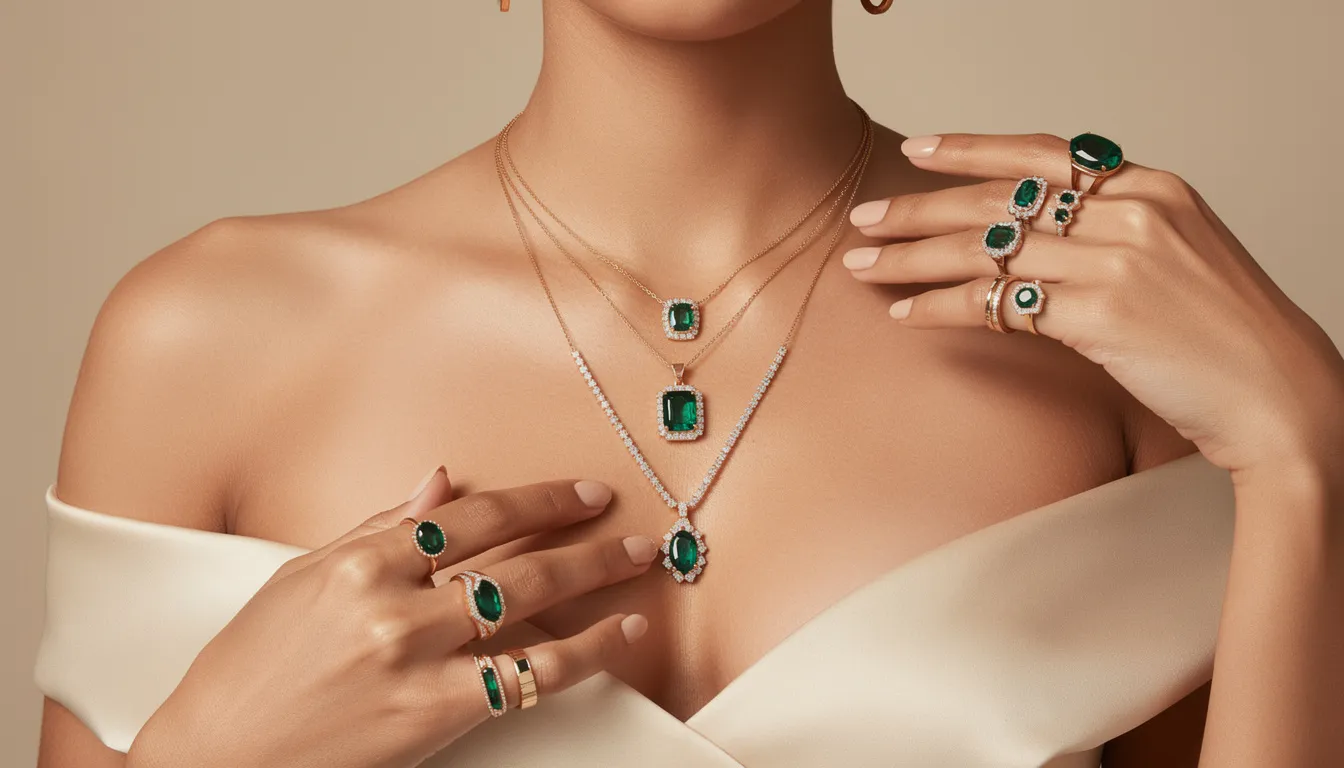
Fashion trends emphasise layering and stacking. Slim emerald pendants worn in multiples at different lengths create depth and visual interest. Thin emerald eternity rings stack beautifully with plain bands or diamond alternatives, allowing wearers to build combinations that reflect their personal style. Emerald studs paired with minimalist gold hoops—worn together in pierced ears—balance colour with clean metal lines. These approaches let buyers incorporate emeralds incrementally, adding pieces to their collection over time.
Sustainability drives meaningful change in how emerald jewellery reaches consumers. Lab-grown emeralds appeal to environmentally conscious buyers seeking identical beauty without mining impact. Recycled gold reduces new extraction demands. Traceable sourcing programmes for natural stones allow buyers to verify ethical origin—collections released from 2022 onwards increasingly feature this transparency. UK consumers particularly favour brands demonstrating genuine commitment to responsible practices.
Celebrity and red carpet appearances keep emeralds visible at the highest profile events. Major film premieres and award ceremonies throughout 2023 and 2024 featured dramatic emerald drop earrings, statement necklaces, and cocktail rings on influential figures. These appearances reinforce emerald’s status as a prestige gemstone while inspiring buyers seeking pieces that echo high-end glamour. The ripple effect appears in collections offering more accessible interpretations of runway-adjacent designs.
Frequently asked questions about jewellery with emerald
This section addresses practical questions commonly raised by buyers new to emerald jewellery, helping you navigate purchasing decisions with confidence.
Are emeralds durable enough for daily wear rings?
Emeralds are suitable for daily wear with appropriate precautions. Their hardness (7.5–8 on the Mohs scale) is lower than sapphires or rubies, and their typical inclusions can make them more prone to chipping if struck. Protective settings like bezels or substantial halos minimise risk. Many emerald engagement ring wearers choose to remove their ring during manual tasks, sports, or household work. With reasonable care, emerald rings serve beautifully for years, but it’s wise to avoid exposing them to harsh chemicals or rough impacts.
How do natural and lab-created emeralds differ in price and appearance?
Lab-created emeralds share identical chemical composition with natural stones but typically display fewer inclusions, resulting in cleaner appearances. Price differences are substantial—lab-grown emeralds often cost 50-80% less than natural equivalents of similar size and colour. Natural emeralds carry geological history and often more character through their inclusions. Neither is inherently “better”; the choice reflects priorities around budget, appearance, and what the stone represents to you. Lab-grown stones also appeal to buyers seeking ethical and sustainable options.
What clarity is “good enough” for an emerald?
Unlike diamonds, emeralds are valued primarily for colour rather than clarity. Eye-visible inclusions are standard and accepted—even expected—in fine emerald jewellery. Clarity grades of I1 or I2 are common in quality pieces. SI1 clarity is exceptional and commands significant premiums. Focus first on colour saturation and tone; clarity becomes secondary unless inclusions dramatically impact transparency or stability. Remember that inclusions, known as “jardin,” add character and authenticity to natural emeralds.
Which metal best complements emeralds?
Personal preference matters most, but general guidance helps. White metals (platinum, white gold) enhance cooler, bluish-green emeralds and create contemporary aesthetics. Yellow gold pairs classically with warmer green tones and offers vintage appeal. Rose gold suits mint-green hues particularly well. Consider your existing jewellery collection and skin tone when deciding—or simply choose what you find most beautiful. Silver is another elegant choice that can highlight emerald’s vivid green while offering a more affordable option.
How do I know my emerald is real?
Purchase from reputable jewellers who provide clear documentation of the stone’s type (natural, lab-created), any treatments applied, and origin where known. Gemstone reports from recognised laboratories verify authenticity. If buying vintage or second-hand, consider independent appraisal. Genuine emeralds display characteristic inclusions (jardin) visible under magnification; flawless stones at low prices warrant suspicion. Be cautious of synthetic or treated stones sold without disclosure. For example, Amazonite necklaces should also include such certification when purchasing.
Can emerald jewellery be resized or reset later?
Most emerald rings can be resized within reason, though eternity rings with stones around the full band have limitations. Resetting emeralds into new designs is generally possible—the stone is removed from its current mount and placed in a fresh setting. A skilled jeweller assesses the stone’s condition before undertaking work. Discuss resizing and resetting potential before purchasing if flexibility matters to you.
Who should not wear emerald stones?
While emeralds are beloved for their beauty and symbolism, some traditions and beliefs suggest they may not suit everyone. People with certain astrological signs or health conditions are sometimes advised to avoid emeralds, as the stone’s energy is believed to amplify specific traits or sensitivities. For example, those with heart or nervous system ailments might be cautioned in some cultures. However, these beliefs vary widely, and from a jewellery perspective, anyone who appreciates emerald’s allure and symbolism can wear it confidently.
How much should a real emerald cost?
The cost of a real emerald varies widely depending on factors like size, colour, clarity, origin, and treatment. High-quality natural emeralds with vivid, pure green colour and good transparency command premium prices, often ranging from several hundred to thousands of pounds per carat. Colombian emeralds typically fetch the highest prices, followed by Zambian and Brazilian stones. Lab-created emeralds offer a more affordable alternative, often costing 50-80% less than natural stones of comparable appearance. Always request certification and buy from trusted jewellers to ensure fair pricing.
What does the emerald jewellery symbolize?
Emerald jewellery symbolizes renewal, hope, love, truth, and emotional balance. Birthstone jewellery has been treasured across cultures for centuries as a stone of devotion and harmony, often associated with patience and eternal life. As the May birthstone and a popular choice for milestone anniversaries, emeralds—recognized as a birthstone with protective qualities—carry meanings of growth, rebirth, and enduring commitment. Wearing emerald jewellery can be a personal statement reflecting these values and a connection to nature’s vitality.
What jewellery looks good with emerald green?
Emerald green pairs beautifully with a variety of jewellery styles and metals. Yellow gold enhances emerald’s warmth and creates a classic, timeless look. White gold, platinum, and silver offer a sleek, modern contrast that highlights the stone’s vividness. Complement emerald green with diamonds for added sparkle or mix with other gemstones like sapphires or pearls for a unique, colourful ensemble. Emerald jewellery works well with both bold statement pieces and delicate designs, making it versatile for everyday wear and special occasions.
Whether you’re drawn to the symbolic meaning of emerald—its associations with hope, renewal, and love—or simply captivated by that distinctive green colour, jewellery with emerald offers something for every taste, budget, and occasion. Explore collections that align with your values and aesthetic preferences, and discover a piece that becomes part of your own story. The perfect emerald awaits.
Leave a comment