

Introduction to Turquoise
Turquoise stone is a rare and captivating natural gemstone composed of copper aluminium phosphate, renowned for its unique sky blue to blue-green hues. This guide is designed for jewelry buyers, collectors, and anyone interested in gemstone meanings who want to understand the value and significance of turquoise stone—knowledge that is essential for making informed purchases, appreciating cultural heritage, and recognizing authentic quality. Turquoise is a hydrous phosphate of copper and aluminium (CuAl6(PO4)4(OH)8·4H2O). The blue color comes from copper, while iron can create greener tints. Its chemical composition results in the vibrant blue to green coloring that makes turquoise so desirable. Turquoise typically appears opaque with distinctive matrix patterns and veins, such as brown or black limonite veining, commonly referred to as "spiderweb matrix." Forming in compact nodules or veins within host rock, turquoise boasts a solid mass and structure, making it a durable and beautiful choice for jewellery. Its good polish and translucent to opaque appearance add to its appeal, while its rarity enhances its value in the market.
History and Cultural Significance
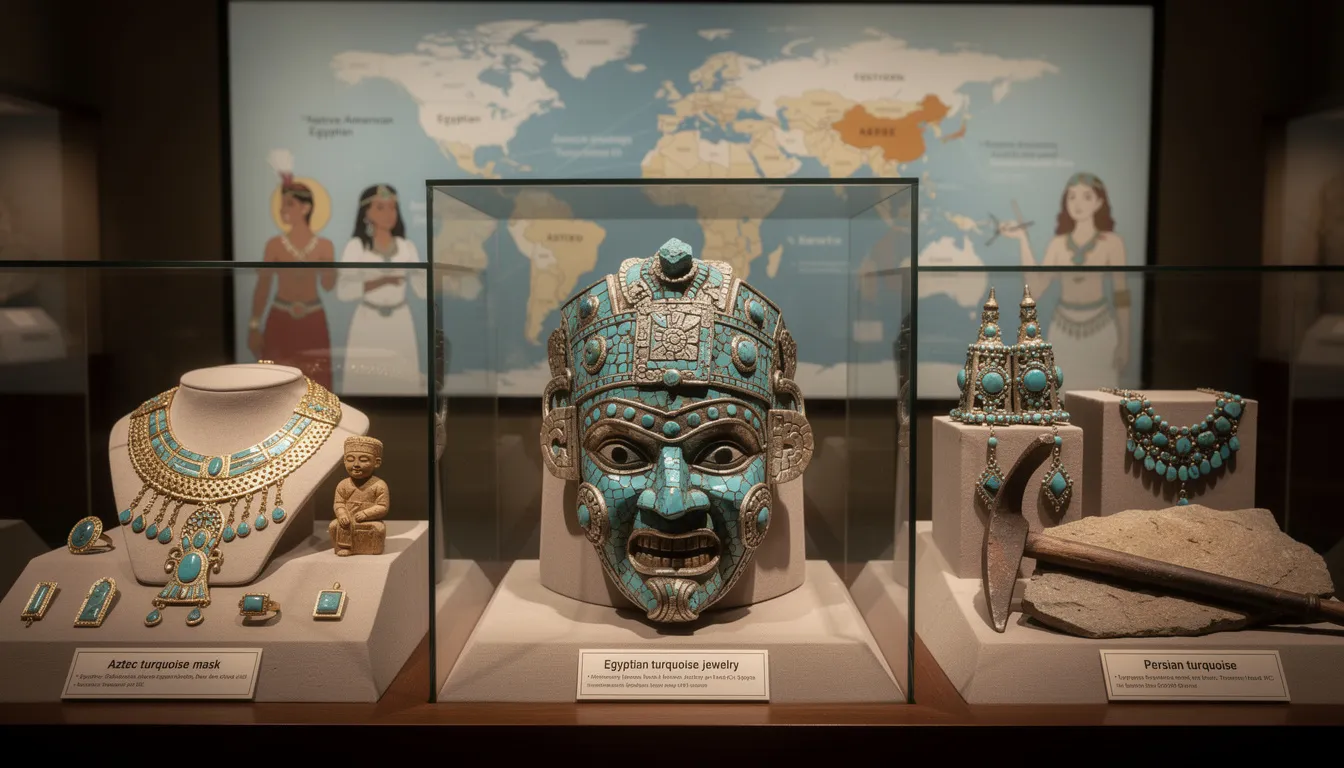
Turquoise in Ancient Cultures
Since ancient times, turquoise has held deep cultural significance across various civilizations. Native Americans, Egyptians, Aztecs, and Persians revered this gemstone for its protective and spiritual qualities. The Aztecs valued turquoise even more than emeralds, incorporating it into ceremonial masks alongside other semi-precious stones. Ancient Egyptians, whose artifacts are displayed in institutions like the British Museum, used turquoise extensively in jewellery and art, admiring its unique colour and beauty. Persian turquoise, in particular, has been prized for millennia, with mining and usage dating back to ancient Egyptian times around 3,000 BCE.
Cultural Associations
Turquoise jewellery has long been associated with wisdom, truth, and emotional balance. Many cultures regard it as a powerful protector and wear it as a symbol of good fortune. Beyond its aesthetic appeal, turquoise is believed to promote wellbeing and positivity, helping to calm and balance emotions. Its spiritual significance adds a meaningful dimension to its use in jewellery across the world.
Turquoise is culturally significant in Native American jewelry, symbolizing health, protection, and good fortune. Turquoise is also the traditional birthstone for December, symbolizing good fortune and protection.
Next, let's explore the different types of turquoise found around the world.
Types of Turquoise
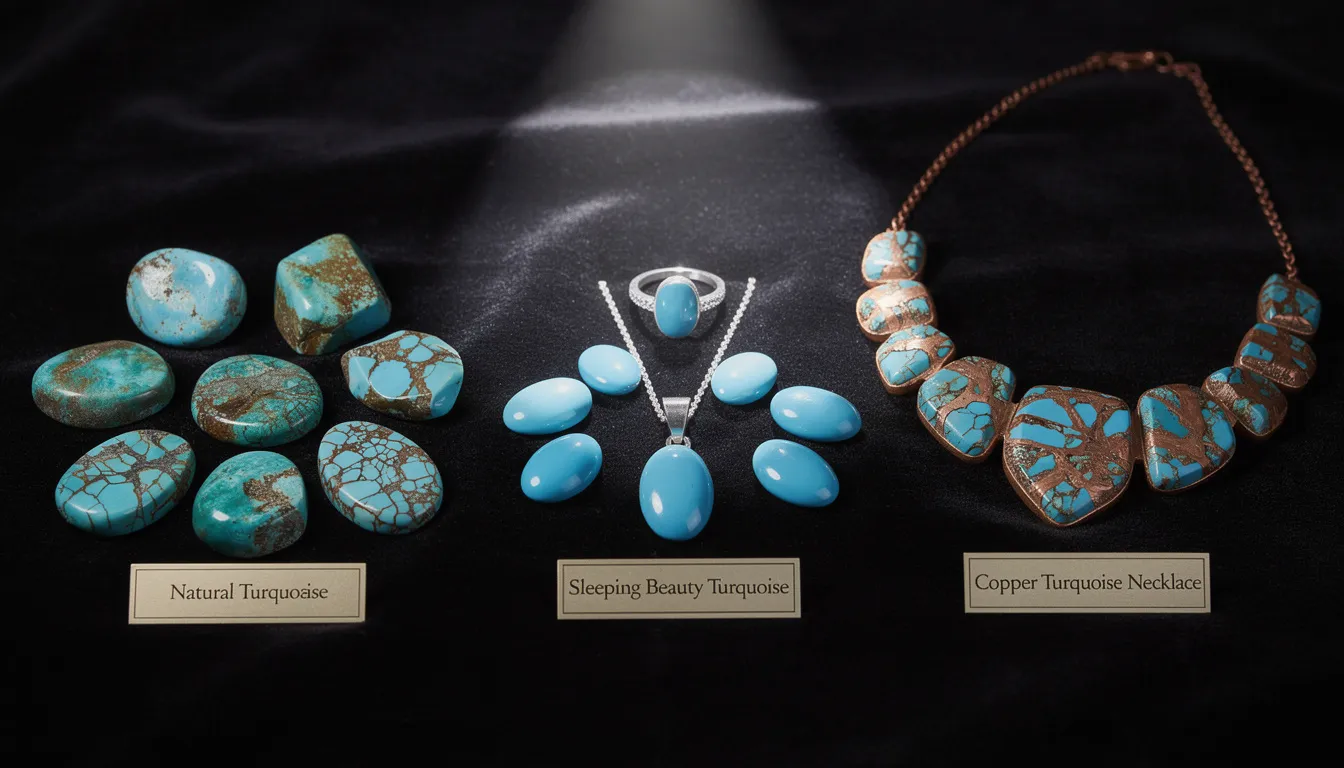
Natural Turquoise
Natural turquoise is traditionally valued for its vibrant blue to green colours, solid structure, and characteristic matrix veins. High-grade turquoise is preferred untreated to preserve its authentic quality and beauty. Each stone’s unique colour and matrix patterns make it a special and prized gemstone. Typically opaque, natural turquoise forms in compact nodules or veins and is known for its excellent polish and translucent to opaque appearance.
Sleeping Beauty Turquoise
Among turquoise varieties, Sleeping Beauty turquoise stands out for its intense blue colour and minimal matrix patterns. Highly prized for its fine colour and solid structure, it is a popular choice for high-end jewellery such as turquoise rings and pendants. This rare and beautiful stone is often considered a special gift for those who appreciate its distinct beauty.
The unique characteristics of each turquoise type make them highly sought after by collectors and jewelry enthusiasts. Now, let’s see how turquoise is used in jewelry design and craftsmanship, such as with a stunning copper turquoise necklace.
Turquoise Jewellery
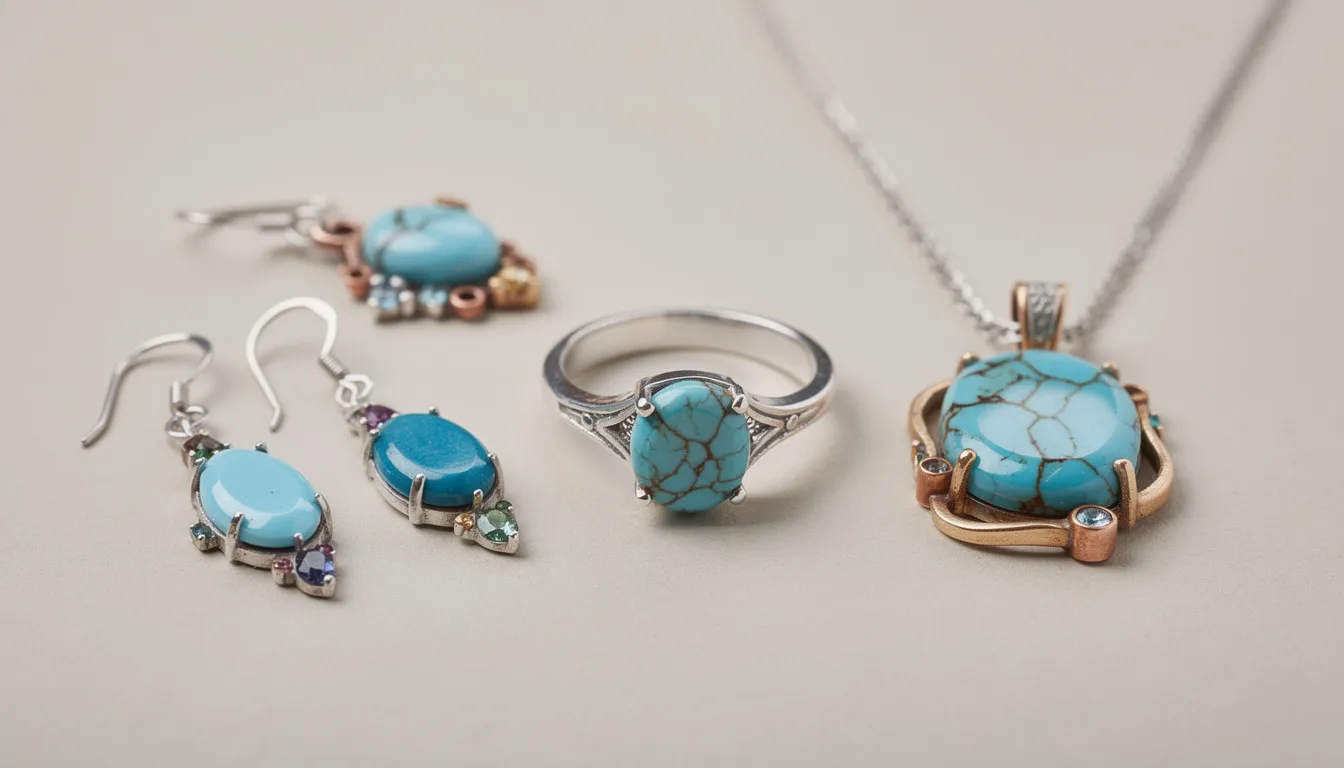
Turquoise jewellery remains a popular choice for those who value the stone’s unique colour and natural beauty. Common pieces include turquoise rings, earrings, and necklaces, frequently set in sterling silver or gold. Often combined with other semi-precious stones, turquoise jewellery adds a vibrant and meaningful touch to any collection. It is especially favored for special occasions like birthdays and anniversaries, making it a thoughtful and cherished gift.
Turquoise and Sterling Silver
The combination of turquoise and sterling silver is classic and timeless. Sterling silver complements the stone’s vibrant hues with elegance and durability, allowing for versatile styles and designs. This pairing is often enhanced by incorporating other materials such as copper and gold, creating unique and beautiful jewellery pieces. Sterling silver jewellery continues to be a staple in both traditional and contemporary collections.
Turquoise Gemstones
Turquoise gemstones are available in various forms, including cabochons and beads. Persian turquoise, known for its intense blue colour and minimal matrix, remains one of the most sought-after varieties. Turquoise from New Mexico also holds significance, reflecting the rich heritage of Native American craftsmanship. These gemstones showcase the natural beauty and unique characteristics that make turquoise so prized worldwide.
Benefits of Turquoise
What is the benefit of turquoise stone?
Turquoise is often regarded as a master healer stone with a range of emotional and spiritual benefits. It is believed to promote emotional balance by calming mood swings and relieving stress, making it a popular choice for those seeking inner peace and wellbeing. Many cultures consider turquoise a protective stone that wards off negativity and harmful energies. It is also thought to enhance communication, wisdom, and truth, helping wearers express themselves clearly and confidently. Additionally, turquoise is said to bring good fortune and improve overall positivity in life.
Who should not wear turquoise gemstones?
While turquoise is widely appreciated for its benefits, some traditions suggest that certain individuals may need to avoid wearing this stone. People with sensitive skin or allergies to copper might experience irritation, as turquoise contains copper. Additionally, those who are advised by their astrologers or spiritual guides to avoid copper-based stones or who have incompatible planetary influences might be cautioned against wearing turquoise. It is always recommended to consult with a knowledgeable jeweler, gemologist, or astrologer before wearing turquoise gemstones, especially if you have health concerns or specific spiritual beliefs.
Which zodiac should wear turquoise?
Turquoise is commonly associated with several zodiac signs, making it a favored stone for individuals born under these signs. It is particularly beneficial for Sagittarius, as it is believed to enhance their adventurous spirit and bring protection during travels. Turquoise is also linked to Aquarius and Pisces, where it supports emotional balance, creativity, and spiritual growth. Wearing turquoise can help these zodiac signs connect with their intuitive and communicative strengths, promoting harmony and positive energy.
Is turquoise an expensive stone?
The price of turquoise varies widely depending on its quality, color, origin, and treatment. High-grade turquoise, such as untreated Persian turquoise or Sleeping Beauty turquoise with intense blue color and minimal matrix, can be quite valuable and command premium prices. In contrast, lower-grade turquoise, which may be softer, porous, or treated, tends to be more affordable. Rare varieties like spiderweb turquoise with distinctive matrix patterns also attract collectors and can be expensive. Overall, turquoise offers options across a broad price range, making it accessible for many budgets while still offering beautiful and meaningful gemstones.
Buying and Caring for Turquoise
Buyer’s Guide
When purchasing turquoise, it is essential to consider the stone’s quality, colour, and matrix patterns. High-grade turquoise is preferred untreated to maintain its authenticity and natural beauty. Buyers should also be mindful of the stone’s durability and porosity, as turquoise can be affected by exposure to skin oils, cosmetics, and sunlight. Selecting a piece that highlights the stone’s unique colour and matrix will ensure a beautiful and valuable addition to any jewellery collection.
Caring for Your Turquoise
Proper care is vital to preserving turquoise’s beauty and longevity. Follow these care instructions:
-
Avoid ultrasonic or steam cleaning.
-
Gently wipe the stone with a damp cloth followed by immediate drying.
-
Clean jewellery after wearing to remove skin oils and cosmetics, which can alter the stone’s appearance.
-
Minimize exposure to heat and chemicals, as turquoise is sensitive to both.
-
Store turquoise jewellery separately to prevent scratching.
With appropriate care, turquoise jewellery can remain a treasured possession for many years.
Conclusion
Turquoise Jewelry as a Gift
Turquoise jewellery makes a thoughtful and unique gift that celebrates the stone’s natural beauty and spiritual significance. Its rarity and distinctive matrix patterns make each piece special and one of a kind. Often chosen to mark special occasions such as birthdays and anniversaries, turquoise jewellery is a meaningful and lasting present. The timeless appeal and cultural heritage of turquoise ensure that it remains a cherished addition to any jewellery collection.
Frequently Asked Questions (FAQ) about Turquoise Stone
What is turquoise stone made of?
Turquoise is a hydrous phosphate mineral composed of copper and aluminium, giving it its distinctive blue to blue-green hues. Its chemical formula is CuAl6(PO4)4(OH)8·4H2O. The presence of copper provides the vibrant blue color, while iron impurities can contribute to greener shades.
Why is turquoise so valued in jewelry?
Turquoise is prized for its unique and beautiful color, solid structure, and cultural significance. Its vibrant hues, ranging from sky blue to greenish blue, make it a popular choice for turquoise jewellery such as rings, bracelets, earrings, and necklaces. High-grade turquoise, especially untreated turquoise with fine color and minimal visible matrix, is considered highly valuable.
What does the matrix in turquoise mean?
Matrix refers to the veins or patterns of the host rock within the turquoise stone. These can appear as brown, black, or spiderweb-like patterns known as spiderweb turquoise. While some collectors prefer turquoise stones without matrix for their uniform intense blue color, others appreciate the unique aesthetic that matrix patterns add to the gemstone.
How can I tell if turquoise is natural or treated?
Most turquoise on the market has undergone some form of treatment to enhance color and durability. Untreated turquoise is rarer and generally more valuable. Treatments can include:
-
Waxing
-
Oiling
-
Stabilization with resins
-
Dyeing
A reputable jeweler or gemologist can help identify treatments through specialized testing.
How should I care for my turquoise jewelry?
Turquoise is porous and sensitive to heat, chemicals, and skin oils. To maintain its beauty:
-
Avoid exposure to cosmetics, perfumes, and harsh cleaning agents.
-
Clean turquoise jewellery gently with a soft, damp cloth and dry immediately.
-
Store pieces separately to prevent scratching.
-
Avoid ultrasonic or steam cleaners.
What is the difference between Persian turquoise and Sleeping Beauty turquoise?
-
Persian turquoise is renowned for its intense, uniform blue color often called "Persian Blue," with minimal matrix, making it highly prized.
-
Sleeping Beauty turquoise, mined in Arizona, is also famous for its pure, vivid blue color and solid structure but may have slight variations in tone.
Both are considered fine turquoise varieties valued by collectors and jewelers.
Can turquoise change color over time?
Yes, turquoise can darken or change color due to exposure to skin oils, sunlight, and chemicals. Porous turquoise absorbs these substances, which may alter its appearance. Proper care can minimize color changes and prolong the stone’s natural beauty.
Are turquoise beads and turquoise cabochons different?
Turquoise beads are small, rounded pieces often used in necklaces and bracelets, while turquoise cabochons are polished, domed stones commonly used in rings, pendants, and earrings. Both showcase the stone’s unique color and matrix but differ in shape and typical use in jewellery making.
Is turquoise suitable for everyday wear?
While turquoise is a beautiful gemstone, it is relatively soft (5-6 on the Mohs hardness scale) and porous, making it susceptible to scratching and damage. It is best worn with care, avoiding rough activities, and protected from chemicals and prolonged sun exposure to maintain its beauty over time.
What makes spiderweb turquoise special?
Spiderweb turquoise features fine, intricate matrix patterns resembling a spider’s web. This pattern is highly sought after by collectors and adds a unique character to the stone. The black matrix contrasts beautifully with the intense blue color, enhancing the gemstone’s visual appeal.
Can turquoise be used in all types of jewellery?
Yes, turquoise is versatile and used in various jewellery types including rings, bracelets, earrings, necklaces, and inlays. It pairs well with sterling silver and gold, often combined with other semi-precious stones to create unique and meaningful pieces.
Where is turquoise commonly mined?
Turquoise is mined in several parts of the world, including:
-
The American Southwest (Arizona, New Mexico, Nevada)
-
Iran (Persian turquoise)
-
China
-
Egypt
-
Mexico
Each region produces turquoise with distinct color characteristics and matrix patterns.
Is turquoise a good birthstone?
Turquoise is the traditional birthstone for December. It symbolizes good fortune, protection, and emotional balance, making it a meaningful gift for those born in this month or for special occasions like anniversaries.
How is the value of turquoise determined?
The value of turquoise is primarily determined by its color, texture, and the presence or absence of matrix. Quality is measured by:
-
Hardness
-
Color saturation
-
The presence or absence of matrix
Origin also plays a significant role, with Persian and Sleeping Beauty turquoise being among the most prized. Turquoise is culturally significant in Native American jewelry, symbolizing health, protection, and good fortune. Turquoise is the traditional birthstone for December, symbolizing good fortune and protection.
Leave a comment