

Carnelian is a warm, fiery gemstone that has captivated humanity for millennia. This orange to reddish-brown chalcedony combines natural beauty with remarkable durability, making it a favorite for jewelry, spiritual practice, and decorative arts across the world.
Quick Answers: What Is Carnelian & Why It Matters
Carnelian is a cryptocrystalline variety of quartz known as chalcedony, and it ranges in color from yellow to orange to red and reddish-brown, with the most prized colors being warm oranges and vivid reds. The hardness of carnelian is rated between 6.5 and 7 on the Mohs scale, making it a durable stone suitable for everyday wear.
This gem has been used in jewelry since at least the 4th millennium B.C., with ancient civilizations crafting beads and cabochons from the stone. Common uses include:
-
Rings, necklaces, and carnelian beads
-
Carved talismans and seal rings
-
Tumbled decor stones and figurines
-
Meditation and crystal healing tools
Key associations: vitality, courage, motivation, creativity.
What Is Carnelian? (Geology & Gem Basics)
Carnelian belongs to the chalcedony family, itself a microcrystalline form of quartz closely related to agate, sard, jasper, and onyx. Its cryptocrystalline structure means the tiny interlocking crystals are invisible to the naked eye, giving the material a smooth, homogeneous appearance.
Carnelian’s color ranges from pale orange to deep reddish-brown due to iron oxide impurities. The vibrant colors are primarily due to the presence of iron oxide, which can create shades from yellowish red to brown. Carnelian is typically translucent to opaque with a waxy or vitreous luster when polished.
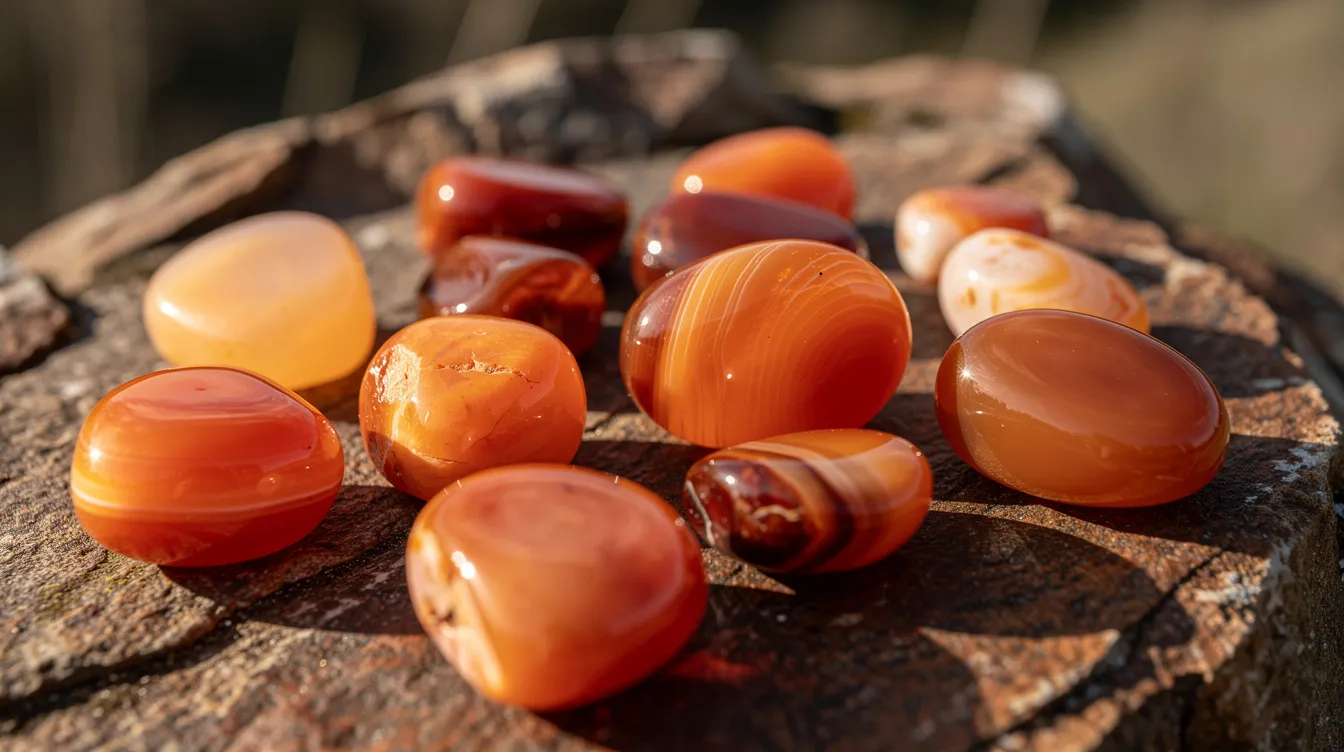
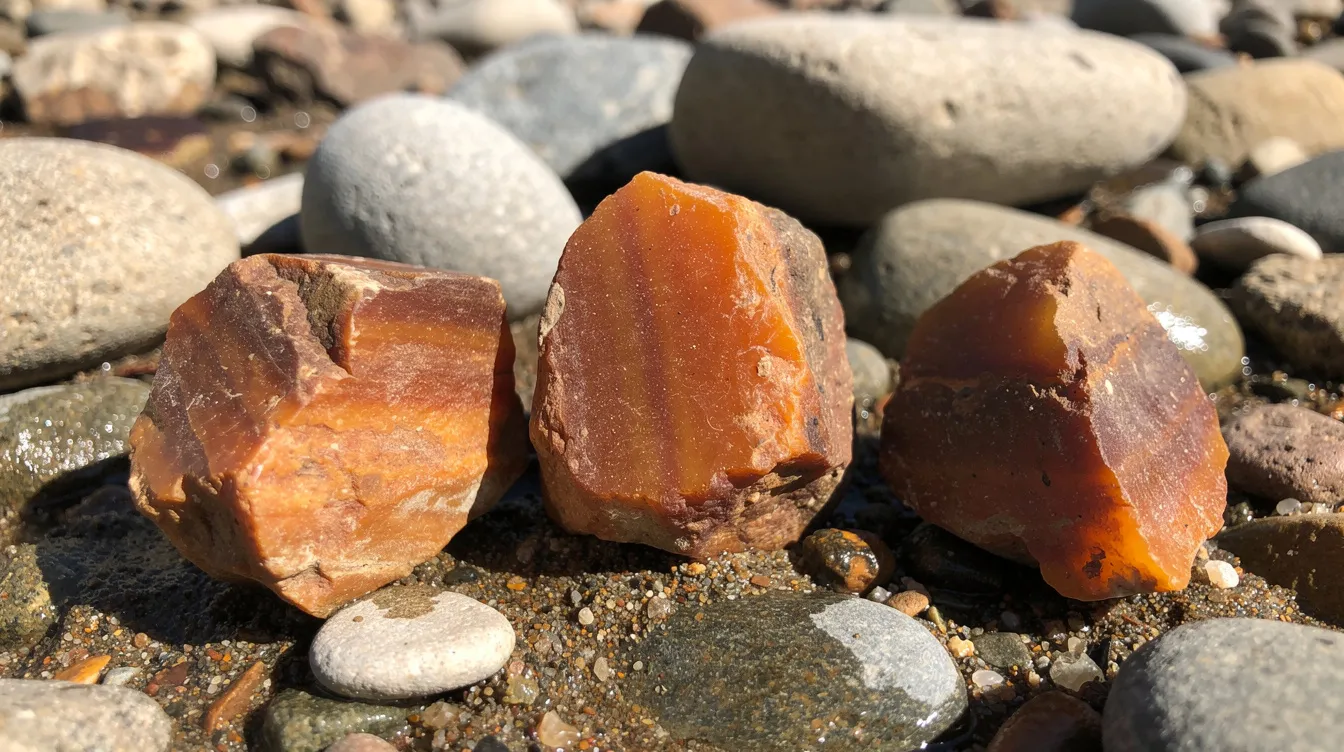
Carnelian forms in volcanic cavities and sedimentary rocks through the deposition of silica-rich fluids. You’ll find it as nodules, vein fillings, or water-worn pebbles. With a specific gravity of 2.58–2.64 and good toughness, it’s ideal for:
-
Smooth cabochons for rings and pendants
-
Beads for bracelets and necklaces
-
Intaglios and cameos for seals
-
Tumbled stones for collection or decor
Why Is Carnelian Red-Orange? (Color & Treatments)
The gem’s warm hues come from iron content and oxidation state. When iron-bearing solutions infiltrate chalcedony during formation, oxidation produces the signature orange and red tones—much like rust on metal.
Traditional heating practices in India, used for centuries, involve sun-baking or low-temperature firing to deepen coloration. Modern treatments include controlled kiln heating and iron salts staining to enhance or uniform color. Many bright stones on the market are actually dyed or heat-treated agate.
Signs a stone may be treated:
-
Unnaturally uniform neon-orange color
-
Visible white bands or banding patterns typical of agate
-
Dye concentrations pooling near cracks or surface cavities
High-quality carnelian is often identified by its cloudy color, while dyed or heat-treated stones may exhibit stripes and a more uniform appearance.
Carnelian vs. Sard vs. Sardonyx
These three gemstones share the same chalcedony mineralogy but differ in appearance. Scholars and gem traders have used the two names interchangeably throughout history.
Carnelian and sard are often used interchangeably, but they can also refer to distinct subvarieties of chalcedony, with differences primarily in color and iron oxide content. The distinction between carnelian and sard is largely a matter of degrees, influenced by the amount of iron oxide present during formation.
-
Carnelian: Orange to red, warm and saturated, minimal brown
-
Sard: Sard is typically described as russet-colored or deep dark brown with a reddish-orange tinge
-
Sardonyx: Bands or layers of sard/carnelian alternating with white chalcedony, ideal for cameos
Ancient sources from antiquity through Rome and the lore of medieval Europe used these terms flexibly based on local material.
How to Tell If a Red Stone Is Real Carnelian
Many precious stones sold as carnelian are actually dyed chalcedony or glass imitations. Genuine carnelian has a smooth, waxy texture and is translucent.
Natural carnelian shows cloudiness or uneven color distribution when held up to a light source. Look for subtle internal patterns and soft color gradations rather than sharp rings. Real carnelian does not have air bubbles, which are typical in glass.
Quick checks:
-
Cool, dense feel (heavier than plastic)
-
No visible bubbles in the material
-
Color doesn’t pool in cracks or surface pits
-
Even glow with mottled zones under strong light
Buy from reputable dealers who disclose treatments, especially for intense, perfectly uniform orange piece offerings.
Where Carnelian Comes From (Major Localities)
The finest carnelian is sourced from India, but it is also found in Brazil, Mexico, Saudi Arabia, Sri Lanka, Thailand, Australia, Germany, and Madagascar. Uruguay also supplies significant chalcedony material.
India’s Gujarat region has produced carnelian since the Indus Valley Civilization. The 17th-century Taj Mahal features thousands of carnelian slices in its famous floral inlays. Brazil dominates modern supply, with much rock heat-treated to achieve consistent color.
In the United States, notable sources of carnelian include Oregon, where nodules can be found on coastal beaches and in river gravels. Paris-based collectors and those in Germany historically prized material from Idar-Oberstein.
History of Carnelian in Ancient Cultures
Carnelian has been used in jewelry since at least the 4th millennium B.C., with beads found in Bulgarian grave sites dating back 8,000 years. This makes it one of humanity’s oldest gemstones.
In ancient Egypt, carnelian was used for beads and cabochons, often set in gold alongside lapis lazuli and other protective stones such as turquoise with its rich crystal meaning and uses, and was believed to symbolize fertility and courage. Ancient Egyptians associated it with the “blood of Isis” for afterlife protection. The gem appeared in Tutankhamun’s treasures and countless royal artifacts.
Indus Valley Harappan artisans (2600–1900 BCE) produced finely drilled and etched carnelian beads traded to Mesopotamia. Romans used intaglio rings to seal wax on letters and documents, believing the stone brought luck and protection.
Later, Islamic traditions favored carnelian mohurs—seal rings engraved with Quranic verses. One tradition holds that the Prophet himself wore such a ring.
Milestone cultures and uses:
-
Egypt: scarabs, symbolic amulets, royalty jewelry
-
Indus Valley: etched beads, international trade
-
Rome: signet rings, wax seals
-
Islamic world: inscribed seal rings for piety
Cultural Meanings, Lore & Metaphysical Associations
Carnelian was associated with life and protection in ancient and medieval times, believed to attract good spirits and ward off evil, while also promoting courage and eloquence, much like other healing crystals and gems for wellness and energy balance. The flesh-colored stone—its name possibly from the French word for flesh or the Kornel cherry—carried blood symbolism across cultures.
Carnelian is closely linked to the sacral chakra, which governs passion and creativity and is often featured in healing crystal jewellery for the seven chakras. Modern practitioners use it to stimulate creativity, spontaneity, and self-confidence. Carnelian is believed to enhance physical energy, stamina, and motivation.
Common metaphysical themes:
-
Boosting courage and confidence in public speaking
-
Supporting grounding and emotional stability
-
Enhancing sexual energy and fertility (symbolic, not medical)
In Feng Shui, placing carnelian in the south region of a home is believed to invite abundance and recognition, similar to other powerful gemstone jewellery for positivity. Sometimes listed as an alternative July or Virgo birthstone, it remains a popular choice for those seeking to bring vitality into their life, much as February birthstone amethyst and its meaning or December birthstone options like tanzanite, turquoise, zircon, and blue topaz do for their respective months, and as monthly birthstones for protection and personal meaning do across the year.
These meanings are part of spiritual traditions and should complement—not replace—professional care.
How Carnelian Is Used Today
Today, carnelian is valued by lapidary artists for its vibrant colors and durability, making it suitable for earrings, pendants, and rings, and it is a popular choice among those exploring stones for bracelets. Carnelian is a staple in both high-end and everyday jewellery, appearing in necklaces, bracelets, rings, and earrings.
Carnelian beads are commonly used to create beautiful bracelets and necklaces, while cabochon cut stones serve as striking centerpieces in rings. Carnelian pairs well with yellow or rose gold, fitting both boho and refined aesthetics.
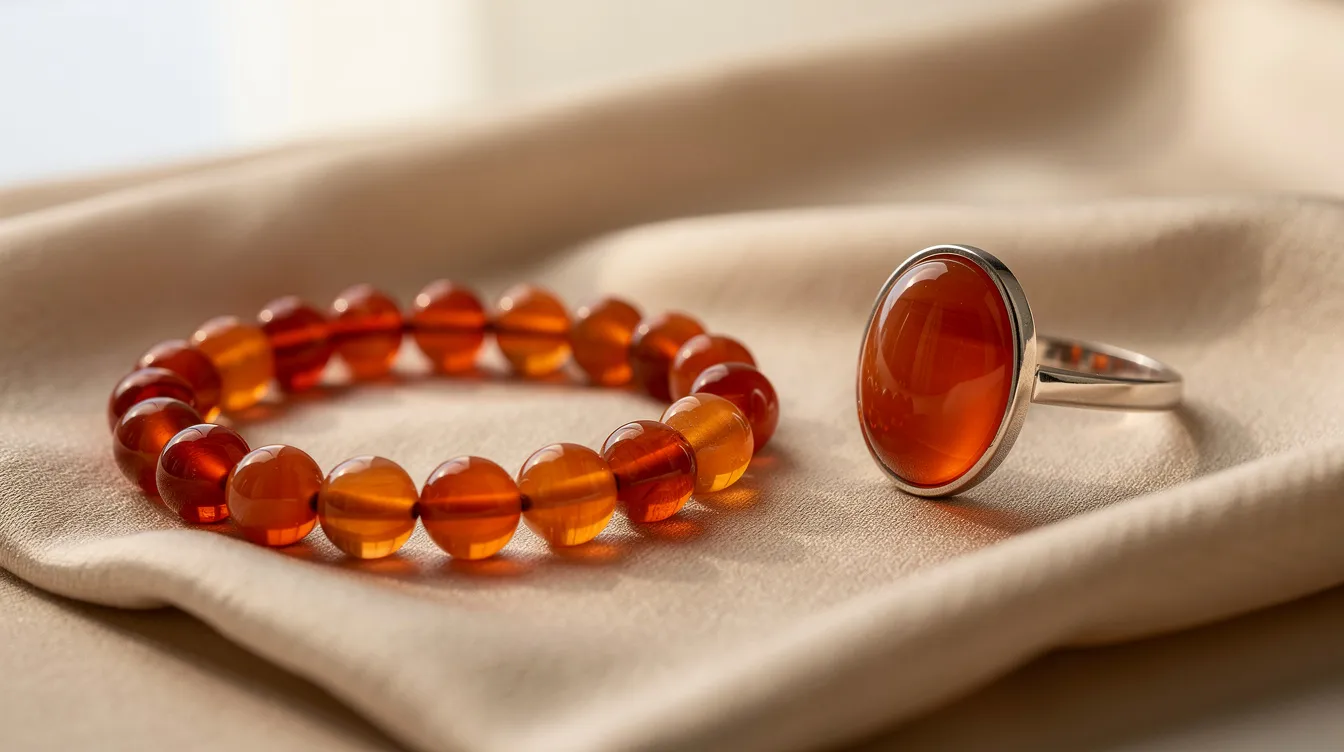
Popular uses:
-
Jewelry: bead strands, cabochon rings, stud earrings, layered necklaces
-
Spiritual practice: meditation stones placed on sacral/solar plexus, desk stones for motivation, pocket carries for courage
-
Home decor: tumbled stone bowls, agate bookends, small claw-foot figurines
Carnelian can be charged by placing it in the sun or under moonlight for gentler recharging—a common practice among crystal enthusiasts.
Buying & Caring for Carnelian
When shopping, look for natural translucency, subtle color variation, and smooth polish, especially if you plan to enjoy the benefits of wearing a bracelet crystal daily. The difference between natural and treated material often shows in color distribution—resemble natural gradients rather than uniform neon. Request treatment disclosure for higher-value purchases or easy translation of quality certificates.
Carnelian can be cleaned using warm, soapy water and a soft cloth. Avoid ultrasonic cleaners, harsh chemicals, and sudden temperature changes. Store separately in soft pouches to remove risk of scratches from harder gems like sapphire, and consult jewellery care insights from dedicated articles on crystal and gemstone jewellery.
Care tips:
-
Clean with lukewarm soapy water solution
-
Dry with soft cloth
-
Store away from harder stones
-
Optional: cleanse energetically with smudging, moonlight, or quartz clusters
With simple care, carnelian can be worn daily for many years. Whether you’re drawn to its rich history, its symbolic power as a talisman, or simply its warm orange beauty, adding this gem to your collection brings a piece of antiquity into modern life.
Frequently Asked Questions About Carnelian
Q1: What is the significance of carnelian in ancient times?
Carnelian was highly valued in ancient times for its vibrant color and durability. It was used for jewelry, amulets, and talismans believed to symbolize fertility, courage, and protection. Ancient Egyptians regarded it as a symbol of life and used it in royal artifacts. It was also linked to good fortune and was worn by nobles in various cultures.
Q2: How can I tell if a carnelian stone is genuine?
A genuine carnelian stone typically has a smooth, waxy texture and shows cloudy or uneven color when held to light. It does not have air bubbles, which are common in glass imitations. Real carnelian often exhibits subtle internal patterns and soft color gradations rather than uniform or striped appearances.
Q3: What does carnelian symbolize?
Carnelian is a symbol of vitality, courage, motivation, and creativity. It is closely associated with the sacral chakra, which governs passion and emotional expression. Throughout history, it has been seen as a talisman to attract good spirits, ward off evil, and promote eloquence and confidence.
Q4: How should I care for my carnelian jewelry?
To care for carnelian jewelry, clean it gently with warm, soapy water and a soft cloth. Avoid harsh chemicals, ultrasonic cleaners, and sudden temperature changes. Store carnelian pieces separately in soft pouches to prevent scratches from harder gemstones.
Q5: Can carnelian be charged or cleansed?
Yes, carnelian can be energetically charged by placing it in sunlight or under the moonlight for gentler recharging. Many practitioners also use smudging or quartz clusters to cleanse and recharge carnelian stones, enhancing their symbolic and healing properties.
Q6: What is the difference between carnelian and sard?
Carnelian and sard are closely related subvarieties of chalcedony distinguished mainly by color and iron oxide content. Sard tends to be russet-colored or deep dark brown with reddish-orange tones, while carnelian is more orange to red with minimal brown. The distinction is subtle and often a matter of degree.
Q7: Is carnelian suitable for everyday wear?
Yes, carnelian’s hardness rating of 6.5 to 7 on the Mohs scale makes it durable enough for everyday jewelry such as rings, bracelets, and necklaces. Its toughness and resistance to scratches make it a practical and beautiful choice for regular use.
Q8: What does the term "fingernail" have to do with carnelian?
The term "fingernail" relates to sardonyx, a banded variety of chalcedony that combines sard or carnelian layers with white chalcedony. Sardonyx was named because its layered appearance resembles a fingernail with a white tip above a reddish base, a feature prized in cameos and intaglios.
Q9: What is the order of carnelian’s use in historical jewelry?
Carnelian has been used in various orders throughout history, starting from beads and cabochons in the Neolithic period, to intaglios and seal rings in Roman times, and inscribed rings in Islamic culture. Its use has evolved but consistently symbolized status, protection, and creativity.
Q10: Where is the best place to buy authentic carnelian?
The best places to buy authentic carnelian are reputable dealers who disclose treatments and provide certification. India, Brazil, and Madagascar are known sources of high-quality carnelian. Always look for natural translucency, uneven coloration, and avoid stones with overly uniform or striped colors that may indicate treatment.
Leave a comment