

Chakras are energy centres in the body, each associated with a specific color that corresponds to its unique frequency. The concept of chakras and colours bridges ancient wisdom with modern wellness, highlighting how energy centers in the human body correspond to specific colors. These colors serve as vibrational cues that reflect the state of each chakra, influencing both physical health and emotional stability. Understanding the connection between chakras and colors can help you achieve greater balance, clarity, and vitality in daily life. This guide is designed for anyone interested in exploring the chakra system—from beginners to seasoned practitioners—offering practical insights into how colors can enhance balance and meditation.
Main Chakras: Overview of the Seven Main Chakras
The seven primary chakras are energy centres in the body, each associated with a specific color that corresponds to its unique frequency. The seven primary chakras are the main energy centres aligned along the spine, each associated with a specific color that corresponds to its unique vibrational frequency. These chakras represent a progression of energy from the physical to the spiritual, following the order of the visible light spectrum: red, orange, yellow, green, blue, indigo, and violet. Their locations and roles are as follows:
-
Root Chakra: Located at the base of the spine, associated with grounding and survival instincts. Its color is red, symbolizing physical vitality and stability.
-
Sacral Chakra: Positioned just below the navel, this chakra governs creativity and emotions, resonating with the color orange.
-
Solar Plexus Chakra: Found in the upper abdomen, just below the ribcage, it is tied to personal power, confidence, and motivation, represented by yellow.
-
Heart Chakra: Physically located in the center of the chest, it embodies love and compassion, serving as a bridge between the lower physical chakras and the higher spiritual ones. Its color is green.
-
Throat Chakra: Situated at the throat area, this chakra governs communication and self-expression, associated with the color blue.
-
Ajna (Third Eye) Chakra: Located between the eyebrows, it relates to intuition and insight, represented by the indigo color.
-
Crown Chakra: At the top of the head, symbolizing spiritual connection and enlightenment, its color is violet.
Each chakra’s unique frequency and color reflect its energetic qualities and influence on the body and mind.
Now that you have an overview of the main chakras, let's look at how their colors are commonly associated and remembered.
Chakra Colors: Quick Color Associations
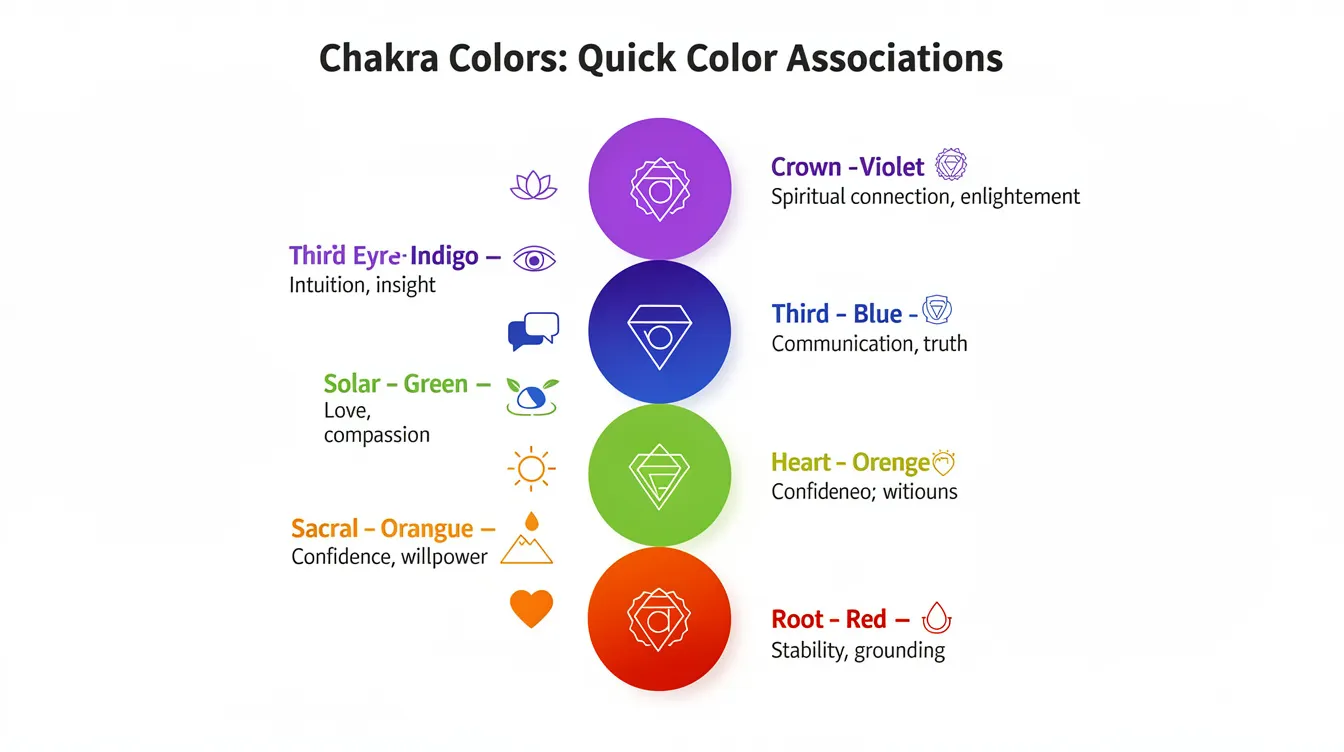
The seven chakra colors follow the sequence of the visible light spectrum, often remembered by the acronym ROYGBIV:
-
Root Chakra: Red
-
Sacral Chakra: Orange
-
Solar Plexus Chakra: Yellow
-
Heart Chakra: Green
-
Throat Chakra: Blue
-
Third Eye Chakra: Indigo
-
Crown Chakra: Violet
These colors represent a progression from the grounded, physical energy of the Root Chakra to the higher spiritual consciousness of the Crown Chakra.
Now that we've covered the basic color associations, let's explore these colors in more detail with a quick reference chart.
Quick Chakra Color Chart
|
Chakra |
Location |
Color |
|---|---|---|
|
Root |
Base of the spine |
Red |
|
Sacral |
Lower abdomen |
Orange |
|
Solar Plexus |
Upper abdomen |
Yellow |
|
Heart |
Center of chest |
Green |
|
Throat |
Throat area |
Blue |
|
Third Eye (Ajna) |
Forehead |
Indigo |
|
Crown |
Top of the head |
Violet |
With this chart in mind, you can quickly identify each chakra's location and corresponding color.
Chakra Colors: Summary
Each of the seven chakras is associated with a specific color that corresponds to its unique vibrational frequency, following the order of the visible light spectrum: red, orange, yellow, green, blue, indigo, and violet. The colors range from red to violet and represent a progression from physical, grounded energy to higher spiritual consciousness. Chakra colors are believed to influence emotional and physical well-being; for example, the green color of the Heart Chakra is associated with love and compassion, while the blue color of the Throat Chakra relates to communication and self-expression.
Next, let's discover how color resonance works and why it matters for your energy and well-being.
Chakra Color: How Color Resonance Works
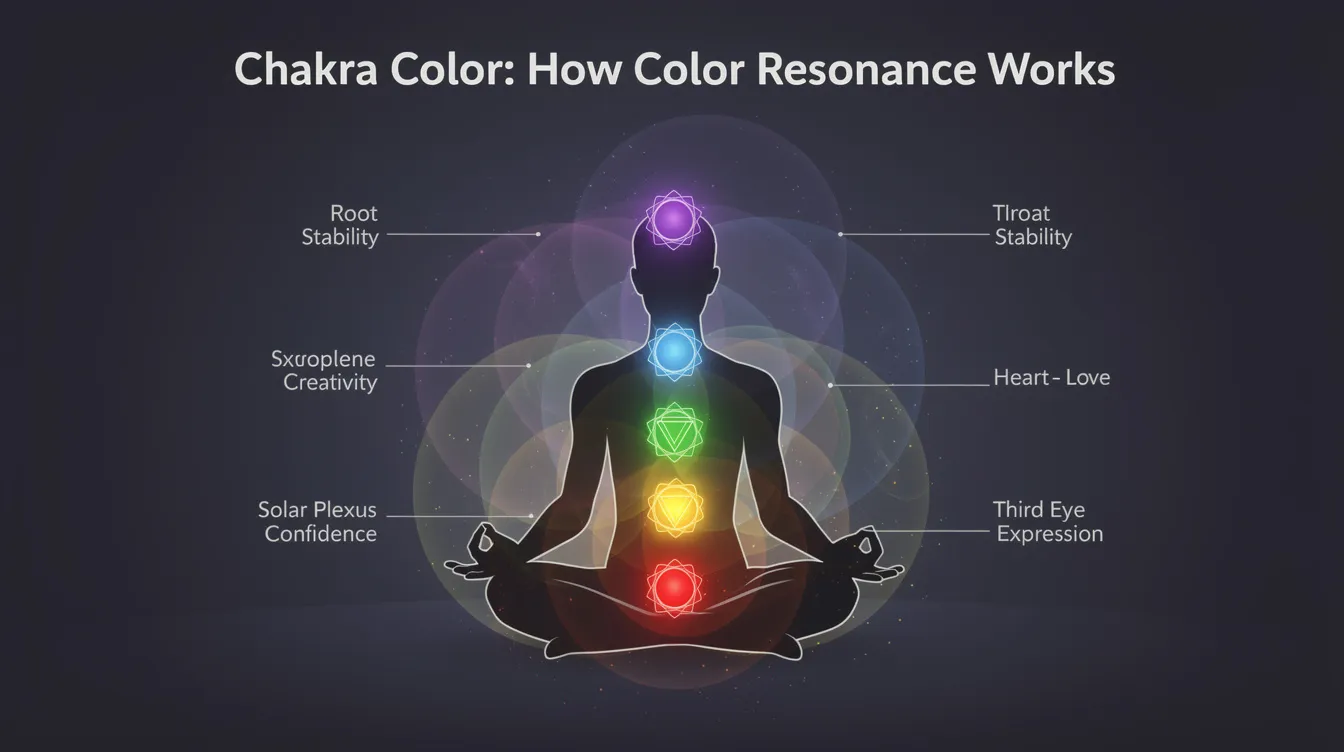
Each chakra's color represents its vibrational frequency, acting as a metaphor for the energy flowing through that center. The colors of the chakras represent the frequency at which that specific energy center vibrates, influencing emotional and physical well-being. Colors are more than visual cues; they symbolize the chakra's energetic quality and influence on the energy flow within the body. When a chakra is balanced, its color appears vibrant and clear, indicating free and harmonious energy flow. Conversely, blockages or imbalances cause the chakra’s color to appear dull or missing, signaling disruptions in energy.
Understanding how color resonance works sets the stage for exploring how these colors can affect your mood and energy.
Chakra Colors Affect Mood and Energy
How Chakra Colors Influence Mood
Colors linked to chakras can profoundly impact mood and energy levels. Here’s how each chakra color may influence your emotional state and vitality:
-
Red (Root Chakra): Evokes feelings of security, grounding, and physical vitality.
-
Orange (Sacral Chakra): Inspires creativity, joy, and emotional openness.
-
Yellow (Solar Plexus Chakra): Boosts confidence, motivation, and mental clarity.
-
Green (Heart Chakra): Encourages love, compassion, and emotional healing.
-
Blue (Throat Chakra): Promotes calmness, clear communication, and self-expression.
-
Indigo (Third Eye Chakra): Enhances intuition, insight, and deep concentration.
-
Violet (Crown Chakra): Fosters spiritual connection, peace, and enlightenment.
Try a simple experiment: spend a few minutes each day focusing on one chakra color and observe any changes in your mood or energy.
Now that you know how chakra colors can influence your mood, let's move on to the spiritual and healing aspects of individual chakras.
Crown Chakra: Violet, White, and Spiritual Connection
The Crown Chakra is the gateway to spiritual awareness, located at the top of the head. Its colors—violet and white—symbolize higher consciousness and connection to universal energy. Practices like meditation focusing on violet light or imagining a white light enveloping the head can stimulate this chakra, fostering a sense of inner peace and enlightenment.
After exploring the Crown Chakra, let's look at how the Heart Chakra supports emotional balance and healing.
Heart Chakra: Green Healing and Emotional Balance
Situated in the chest, the Heart Chakra governs love, compassion, and emotional openness. Its green color embodies healing and harmony. Engaging in green color exercises, such as visualizing a glowing green light in the chest or spending time in nature, can nurture emotional stability. A simple breath practice focusing on the heart area can further deepen this connection and promote self-expression through love.
With the Heart Chakra covered, let's move to the Third Eye Chakra and its role in intuition and insight.
Ajna Chakra / Eye Chakra: Indigo Insight
The Ajna Chakra, also known as the Third Eye Chakra, resides between the eyebrows and is associated with intuition and insight. Indigo, its representative color, reflects deep concentration and spiritual wisdom. Signs of imbalance may include confusion or lack of focus. Visualizing indigo light during meditation can enhance clarity and strengthen intuitive abilities, supporting a clearer perception of both inner and outer worlds.
Next, let's see how the Throat Chakra and the color blue support communication.
Color Blue: Throat Chakra and Communication
The Throat Chakra, symbolized by the color blue, governs communication and creative expression. Engaging with blue through visualization or wearing blue clothing can help unblock a blocked throat chakra, encouraging authentic self-expression. Exercises such as chanting or mindful breathing focused on the throat area can further support this chakra’s energetic flow. Signs of a misaligned Throat Chakra may manifest as communication difficulties or physical symptoms like throat discomfort.
Now, let's explore the Solar Plexus Chakra and how the color yellow empowers personal strength.
Color Yellow: Solar Plexus Chakra and Personal Power
Located in the upper abdomen, the Solar Plexus Chakra corresponds to the color yellow, symbolizing personal power, confidence, and motivation. Visualizing bright yellow light or incorporating yellow foods into your diet can activate this energy center, boosting self-esteem and willpower. Breathwork targeting this area can also enhance physical energy and mental focus. An imbalanced Solar Plexus Chakra may present as digestive issues or low energy.
With an understanding of individual chakras, let's learn how to recognize imbalances and their symptoms.
Chakra Imbalances and Symptoms
Recognizing Chakra Imbalances
Imbalances in chakras can manifest as physical, emotional, and mental disorders, often leading to chronic tension, low energy, or persistent emotional patterns despite lifestyle changes. When a chakra is blocked or functioning poorly, symptoms such as anxiety, irritability, and grief may arise—often subtle and easily dismissed. Signs of chakra misalignment typically correspond to the chakra's location and energy; for example, digestive problems may indicate issues with the Solar Plexus Chakra, while communication problems can signal a blocked Throat Chakra.
Understanding these symptoms can help you identify which chakras may need attention before moving on to healing practices.
Crystals and Chakra Healing
Crystals corresponding to chakra colors, such as red jasper for the Root Chakra or amethyst for the Third Eye, are often used as amplifiers in meditation and healing sessions. These healing crystals and gems for wellness and energy balance resonate with the vibrational frequency of their respective chakras, helping to clear blockages and promote balance. Using crystals during meditation or placing them on the corresponding chakra can enhance energetic alignment and support the healing process.
Now that you know how crystals can support chakra healing, let's discuss why maintaining balanced chakras is so important.
Chakra Balance: Why Balanced Chakras Matter
The Importance of Balanced Chakras
Maintaining balanced chakras ensures that energy flows freely through the body, supporting both physical well-being and emotional harmony. Balanced chakras promote better digestion, clearer thinking, and greater emotional resilience. For instance, a balanced solar plexus chakra can improve digestion and confidence, while a balanced heart chakra fosters compassion and healthy relationships.
Understanding the importance of balance, let's look at practical methods you can use every day to support your chakras.
Chakra Balancing: Everyday Practical Methods
Here are some simple practices you can incorporate into your daily routine to support chakra balance:
-
Root Chakra: Practice grounding routines like barefoot walking or standing poses to connect with the earth.
-
Sacral Chakra: Engage in creative activities or hip-opening yoga poses to stimulate creativity and emotional flow.
-
Solar Plexus Chakra: Use breathwork techniques to energize and activate personal power.
-
Heart Chakra: Practice loving-kindness meditation or spend time in nature to nurture compassion and healing.
-
Throat Chakra: Try chanting, singing, or mindful breathing focused on the throat area to encourage self-expression.
-
Third Eye Chakra: Meditate with visualization or journaling to enhance intuition and insight.
-
Crown Chakra: Practice mindfulness or meditation focusing on spiritual connection and higher awareness.
-
Color Awareness: Wear clothing or accessories in your chakra’s color to consciously invite balance.
-
Environmental Colors: Surround yourself with colors corresponding to chakras in your living or workspaces to subtly influence your energy.
With these practical methods in mind, let's move on to meditation practices that can further support your chakra system.
Chakra Meditation Practices
Create a focused meditation environment by minimizing distractions and using calming elements. Progress through the chakras sequentially—from the Root to the Crown—visualizing each chakra’s color and location. After meditating on each chakra, journal your experiences to deepen awareness and track shifts over time.
Chakra Meditation: Step-By-Step Guided Practice
-
Sit comfortably with your eyes closed.
-
Breathe slowly and deeply for five minutes to center yourself.
-
Visualize each chakra color in order, starting at the base of the spine and moving upwards.
-
Envision a radiant white light enveloping your entire body to conclude the session.
Now that you have a meditation practice, let's look at tools that can help you maintain chakra balance.
Tools: Crystals, Light, Clothing for Balancing
Supporting chakra balance can be enhanced with the following tools:
-
Crystals: Red jasper for Root, carnelian for Sacral, citrine for Solar Plexus, rose quartz for Heart, lapis lazuli for Throat, amethyst for Third Eye, and clear quartz for Crown. You can also work with healing crystal jewellery for the 7 chakras to keep this supportive energy close throughout the day.
-
Colored Light Therapy: Short sessions using lights that correspond to chakra colors can help unblock energy centers.
-
Energy Bracelets: Wearing energy bracelets made with healing gemstones can complement your chakra work by supporting emotional, physical, and spiritual well-being.
-
Clothing: Intentionally wearing chakra colors reinforces focus and promotes energetic quality alignment.
With these tools, you can further support your journey toward chakra balance. Next, let's discuss how to track your progress and notice changes.
Testing and Tracking Chakra Changes
Use a daily checklist to monitor physical and emotional symptoms linked to each chakra. Track mood changes related to color exposure weekly to identify patterns and areas needing attention, and notice how working with crystals for trust and emotional healing may influence these shifts.
After tracking your progress, you may want to explore additional resources for deeper learning.
Resources: Further Reading and Guided Audio
For deeper exploration, consider beginner-friendly books on chakras and guided audio meditations that focus on chakra cleansing and alignment. You might also incorporate chakra bracelets for balance and well-being or wearing a bracelet crystal daily as tangible supports for your energy practice.
Final Thoughts
Understanding chakras and colours offers a practical path to enhancing your physical health, emotional balance, and spiritual growth. By incorporating chakra colors into meditation, daily routines, and your environment, you can promote energy flows freely and restore harmony within your chakra system. Begin with small, intentional steps—whether visualizing your sacral chakra symbol, exploring essential healing crystal jewellery for UK wellness, choosing amethyst jewellery for emotional balance and spiritual growth, or wearing a red root chakra garment—and observe how these vibrant energies transform your life. Your journey to balance starts now.
Frequently Asked Questions (FAQs)
1. What is the significance of the root chakra symbol?
The root chakra symbol, also known as the muladhara chakra, features a four-petaled lotus with a square and a downward-facing triangle. This symbol represents stability, grounding, and the foundation of our physical body. The square signifies the earth element, emphasizing the chakra's role in connecting us to the material world and survival instincts. Understanding this symbol can help you focus on restoring balance to the root chakra, especially if you experience symptoms of a blocked root chakra such as insecurity or physical discomfort in the lower body.
2. How do the 7 chakras relate to overall well-being?
The 7 chakras are energy centers that influence physical, emotional, and spiritual health. Each chakra corresponds to specific glands and organs in the physical body and governs unique emotional reactions and energetic qualities. When balanced, chakras promote harmony and vitality; when blocked or imbalanced, they can lead to physical discomfort, emotional instability, and mental fog. Incorporating practices from holistic healing practice traditions like yoga and meditation helps to restore balance and optimize chakra function, and visiting New Age stores for mind, body, and spirit wellness can introduce you to supportive tools such as crystals, oils, and sound therapy.
3. What does the throat chakra symbol represent?
The throat chakra symbol consists of a sixteen-petaled lotus with a circle and a downward-pointing triangle inside. It symbolizes communication, self-expression, and spiritual purification. The blue color associated with this chakra enhances clarity and openness, helping to unblock communication channels. Visualizing or meditating on the throat chakra symbol can support healing and encourage authentic expression.
4. Can chakra colors affect physical health?
Yes, chakra colors are believed to influence the physical body by resonating with the energetic frequency of each chakra. For example, the red chakra (Root Chakra) supports grounding and vitality, while the yellow of the solar plexus chakra symbol relates to digestion and personal power. Imbalances often manifest as physical symptoms, such as digestive issues linked to the solar plexus or throat discomfort related to the throat chakra. Using color therapy or visualization can help restore balance and alleviate these symptoms.
5. How is the crown chakra symbol connected to spiritual growth?
The crown chakra symbol is depicted as a lotus with a thousand petals, representing the infinite nature of consciousness and spiritual awakening. Located at the top of the head, this chakra governs higher states of awareness and connection to universal energy. Its violet color and association with the pineal gland signify enlightenment and transcendence. Meditating on the crown chakra symbol can deepen spiritual insight and foster a sense of unity.
6. What are common signs of a blocked root chakra?
A blocked root chakra often presents as feelings of fear, insecurity, and instability. Physically, it may cause lower back pain, fatigue, or digestive issues. Emotionally, individuals might feel disconnected from their body or experience anxiety related to survival needs. Recognizing these signs is the first step toward healing through grounding exercises, color therapy, or yoga poses that target the root chakra.
7. How can I use the heart chakra symbol in my healing practice?
The heart chakra symbol features a twelve-petaled lotus with two intersecting triangles forming a six-pointed star, representing balance and harmony. Its green color is linked to healing properties, love, and compassion. Incorporating this symbol in meditation or wearing jewelry with the heart chakra design can help open emotional pathways, promote forgiveness, and restore balance in relationships.
8. What is the eye chakra symbol and its importance?
The eye chakra symbol refers to the Third Eye Chakra or Ajna, characterized by a two-petaled lotus and an inverted triangle. This symbol represents intuition, insight, and inner wisdom. The indigo color resonates with the pineal gland, which regulates sleep and circadian rhythms. Focusing on the eye chakra symbol during meditation can enhance clarity, perception, and spiritual awareness.
9. How does the word chakra relate to these energy centers?
The word chakra comes from Sanskrit, meaning "wheel" or "disk," symbolizing the spinning energy centers within the body. Each chakra acts as a vortex that channels life force energy through the physical and subtle bodies. Understanding this concept helps practitioners appreciate how chakras influence emotional reactions and physical health, and why restoring their flow is essential in a holistic healing practice.
10. What practical steps can I take to restore balance to a specific chakra?
To restore balance to a specific chakra, you can engage in targeted practices such as meditation focusing on the chakra’s color and symbol, using corresponding crystals, practicing yoga poses that stimulate the chakra, or incorporating foods matching the chakra’s color. For example, to balance the solar plexus chakra, visualize bright yellow light, practice core-strengthening yoga, and include yellow foods like bananas in your diet. These methods help clear blockages and promote energetic harmony, especially when you shop for crystals with clear intention and care so the stones you choose truly align with your goals.
Leave a comment