

Overview and Angle
Astraea, whose name translates to 'Star-Maiden' or 'starry maiden,' is a captivating figure in Greek mythology, embodying purity, justice, and hope. Astraea is most commonly identified as the Greek goddess who became the constellation Virgo, embodying the ideals of justice, purity, and moral order. Often depicted as the last immortal to live among humans during the idyllic Golden Age, Astraea's myth bridges ancient lore, astrology, and cultural symbolism. This article explores her story, her connection to the zodiac sign Virgo, and her enduring influence across history and art, appealing to readers fascinated by mythology and astrology alike.
Astraea Goddess and the Golden Age
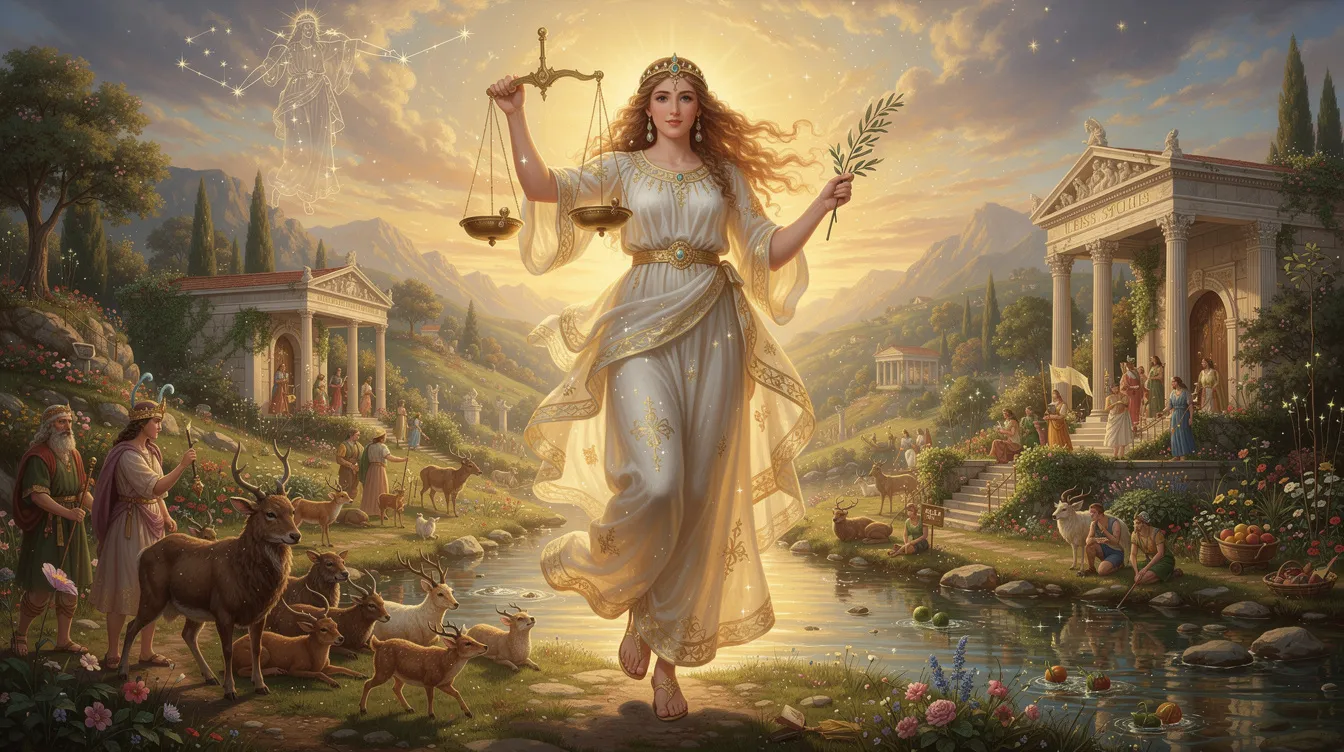
Astraea's Parentage and Role in the Golden Age
According to ancient sources, Astraea was either the daughter of Astraeus and Eos—the deities of dusk and dawn—or of Zeus and Themis, linking her to divine justice and celestial cycles. She lived among humanity during the Golden Age, a time of virtue, peace, and harmony when gods and mortals coexisted. As humanity’s morality declined, Astraea witnessed the onset of corruption and strife, marking the transition into the Iron Age. Hesiod’s works frame this narrative, describing how divine beings, including Astraea, departed from Earth as mankind fell into decadence. Astraea’s departure is closely associated with the onset of divine retribution, as the loss of justice led to increased chaos and the punishment of human sins.
Astraea's Departure and Prophecy of Return
Ovid’s Metamorphoses narrates Astraea’s departure as the last immortal to leave Earth, symbolizing the end of this utopian era. Her ascent to the heavens as the constellation Virgo represents a celestial promise of her eventual return. This return is prophesied to herald a new Golden Age, restoring justice, harmony, and moral order to humanity. The presence of Astraea in the night sky thus serves as a beacon of hope for a future era of peace and virtue.
A classical quote capturing this sentiment is found in Virgil’s Eclogues, where Astraea’s return is linked to the restoration of harmony and the end of conflict during the Augustan rule:
“Iam redit et virgo, redeunt Saturnia Regna.”
(“Justice returns, returns old Saturn’s reign.”)
Astraea as Goddess of Justice
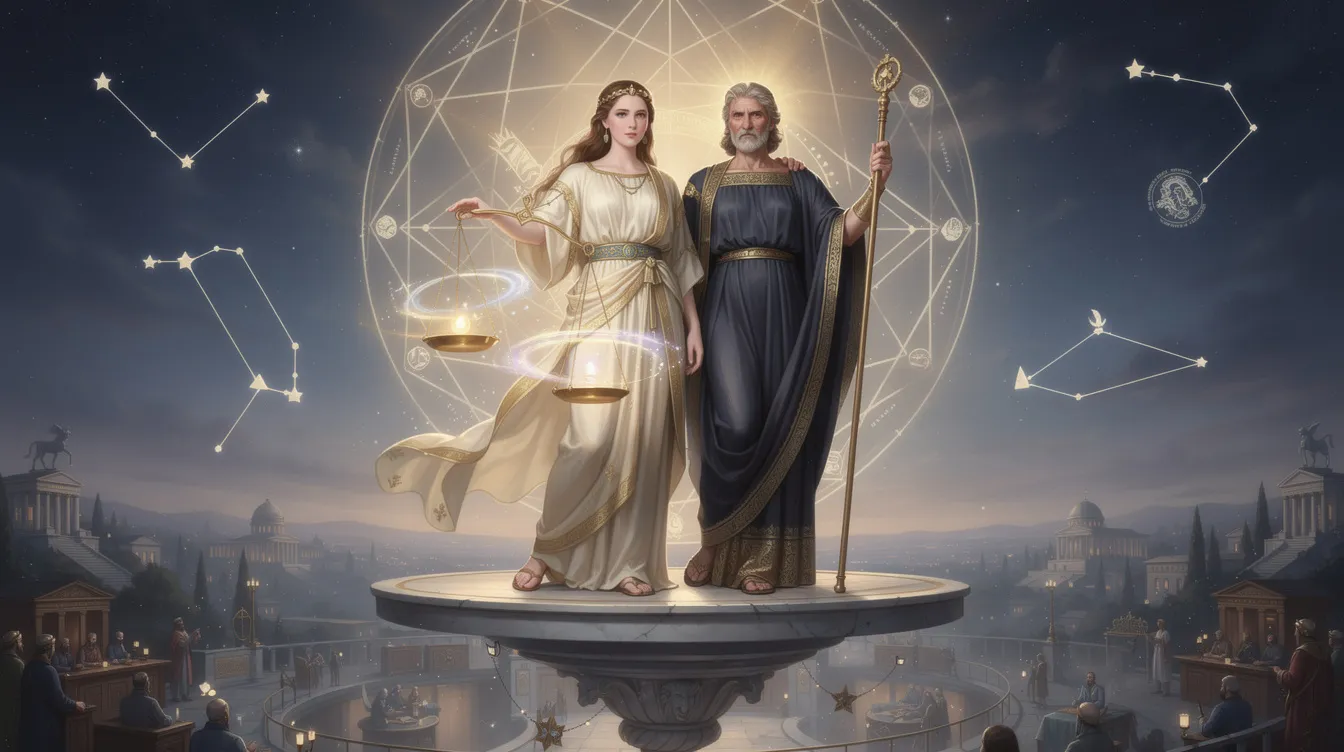
Astraea is closely associated with divine justice, as Virgo is associated with the concept of divine justice, and Astraea is often conflated with Dike, the Greek goddess who personifies fairness and moral order. Both goddesses symbolize the ideal of justice that transcends human laws, embodying cosmic balance. Astraea is traditionally represented holding scales, a symbol of justice and impartiality, with the bright star Spica representing the ear of wheat she carries. This imagery connects her to the harvest and the Earth’s cycles, emphasizing her role as a guardian of order and as an embodiment of wisdom, serving as a guiding force for moral clarity and enlightenment.
Her parentage varies in sources, with some naming Astraeus and Eos as her parents, while others cite Zeus and Themis, the goddess of divine justice. This dual lineage reinforces her celestial and judicial significance. Astraea’s image in art often shows her as a young maiden holding scales or a sword, motifs that have been adopted in legal iconography to represent ideals of truth, fairness, and purity.
Virgo as Zodiac Sign and Virgo Goddess
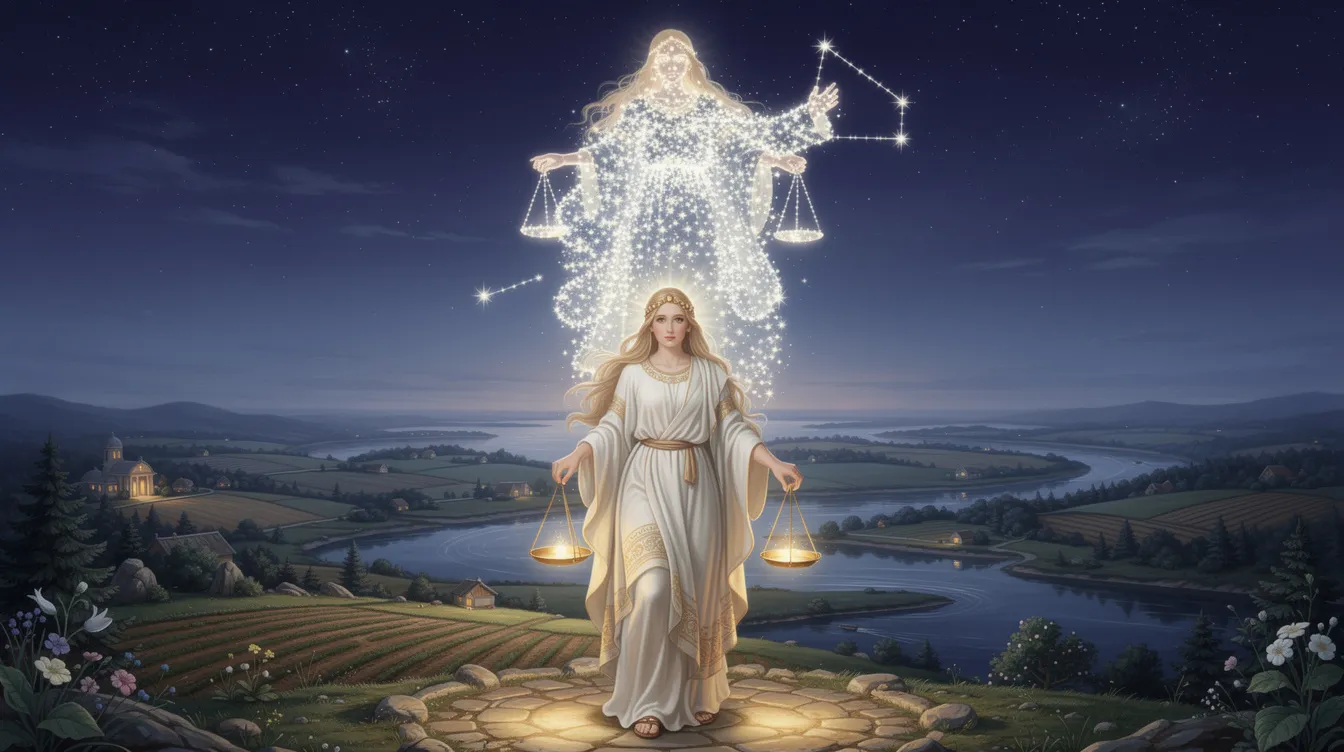
Astraea’s transformation into the constellation Virgo cements her role as the embodiment of the virgin goddess archetype in astrology. Virgo, an earth sign, symbolizes purity, service to the world, and the orderly cycles of nature. The Virgo archetype is characterized by qualities such as practicality, mental clarity, and high standards, reflecting Astraea’s dedication to justice and moral order. Virgo energy manifests through attention to detail, discernment, and a strong focus on health and healing. This energy emphasizes the importance of holistic well-being, highlighting the mind-body connection and the need to maintain balance within the body's systems. Virgo’s association with the body encourages listening to bodily signals and prioritizing physical health as part of spiritual and practical life.
Virgo's Association with Demeter and Persephone
Virgo is associated with several goddesses in mythology and astrology, each representing different aspects of the sign’s symbolism:
-
Astraea: The virgin goddess of justice, purity, and innocence, who lived among humans during the Golden Age before ascending to the heavens as the constellation Virgo.
-
Demeter: The goddess of grain and fertility, with Virgo’s visibility coinciding with the harvest season. Many agricultural communities view Virgo as the likeness of Demeter, watching over the fields and the bounty of the Earth.
-
Persephone: Demeter’s daughter, who is said to spend half her life in the Underworld, symbolizing the balance between light and dark and the cyclical nature of renewal. Persephone’s return from the underworld marks the arrival of spring and renewal.
Astraea's Iconography in Virgo
Astraea is depicted as a maiden holding a sheaf of wheat, connecting her to the harvest and the Earth’s cycles—an alignment with Virgo’s themes of service and practicality. The constellation Virgo is visible during April and May in the Northern Hemisphere, traditionally signaling the time of planting and growth, further reinforcing its association with renewal and hope. As the sun transitions from the exuberant, creative energy of Leo to the more grounded and practical nature of Virgo, it marks the shift from summer to fall, highlighting the sun's role in illuminating natural cycles and seasonal change.
Virgo Season
Virgo season, spanning late August through September, reflects Astraea’s qualities of purity and service. This period aligns with the harvest, a time of gathering and gratitude, and encourages rituals centered on the eternal qualities of renewal, balance, and service, as well as preparation for the coming seasons. Seasonal practices might include offerings of wheat or other grains to honor the Earth’s bounty and meditations focused on mental clarity and justice.
Cultural harvest festivals around the world echo these themes, celebrating the cycles of nature and humanity’s connection to the Earth. Virgo season invites reflection on personal and societal order, encouraging high standards of compassion, truth, and harmony—qualities embodied by Astraea.
Stones Associated with Virgo and Astraea
For those wishing to connect with Astraea’s energies or enhance Virgo qualities, certain stones are traditionally considered beneficial. These stones promote purity, clarity, justice, and healing—reflecting Astraea’s symbolism and Virgo’s practical, discerning nature:
-
Sapphire: Known for wisdom, mental clarity, and divine favor, sapphire aligns with Astraea’s celestial justice and purity.
-
Peridot: A stone of renewal and growth, peridot supports healing and positive change, echoing Virgo’s connection to the cycles of nature.
-
Carnelian: Encouraging courage and motivation, carnelian aids in practical action and service, key Virgo traits.
-
Amazonite: Promotes truth, harmony, and balance, resonating with Astraea’s role as a goddess of justice.
-
Chrysoprase: Symbolizes hope and regeneration, supporting Astraea’s prophecy of a new Golden Age.
Wearing or meditating with these stones can enhance one’s connection to Astraea’s divine justice, purity, and the regenerative energy of Virgo.
Constellation, New Moon, and Celestial Symbolism
The constellation Virgo, representing Astraea, is a prominent feature in the night sky and is often depicted holding a sheaf of wheat, symbolizing the harvest. The bright star Spica within Virgo is one of the most luminous stars, reinforcing Astraea’s radiant presence among the heavens. Notably, Spica is actually a binary system consisting of two stars orbiting each other, adding to its significance in the constellation. The adjacent constellation Libra, symbolized by the scales of justice, complements Virgo’s themes of balance and fairness.
The new moon in Virgo is associated with renewal and new beginnings, mirroring the mythic promise of Astraea’s return and the dawn of a new Golden Age. This lunar phase encourages setting intentions around justice, purity, and service, resonating with the celestial virgin’s ideals.
Including a star chart image highlighting Virgo and Spica would visually enhance the understanding of Astraea’s celestial symbolism.
Iconography, Worship, and Rituals
Astraea's Iconography
Astraea’s iconography features motifs such as scales, swords, stars, and a sheaf of wheat. These symbols collectively represent justice, purity, and the harvest. Artistic depictions often show her as a serene maiden, embodying innocence and moral clarity.
Modern Rituals Honoring Astraea
Modern devotees might engage in simple rituals honoring Astraea’s qualities. Ritual items and practices include:
-
Offering wheat or grains to symbolize gratitude for the Earth’s abundance
-
Presenting white flowers to represent purity and innocence
-
Reciting affirmations of fairness, truth, and commitment to justice
-
Invoking Astraea’s guidance in personal and societal matters
Astraea’s story also serves as inspiration for acts of dedication, creativity, and meaningful ritual practice, motivating original expressions of devotion.
Literary and Cultural Influence
During the European Renaissance, Astraea emerged as a symbol of cultural renewal and hope, often associated with Queen Elizabeth I and the notion of a new Golden Age in England. Revered as a roman goddess of justice and morality, Astraea also influenced Roman cultural narratives, further underscoring aspirations for peace, justice, and prosperity under her reign.
Astraea’s myth has been referenced in various literary works, notably in Virgil’s Eclogues, where her anticipated return heralds the restoration of harmony and the end of conflict during the Augustan era. In myth, Astraea departed from Earth to Mount Olympus, the celestial home of the gods, symbolizing the gods' withdrawal from humanity during the decline of moral virtue. Across history, her image has been employed politically and artistically to symbolize ideals of fairness and purity.
In art and legal iconography, Astraea’s depiction as a young woman holding scales or a sword continues to represent justice and moral order, inspiring hope for a just society.
Visuals, SEO, and Article Structure
This article uses clear H2 sections to explore Astraea’s myth, her astrological significance, and her cultural legacy. The keyword “virgo greek goddess” is featured prominently in the title and introduction to optimize search relevance. A comparison table contrasting Astraea and Dike could further clarify their intertwined identities.
Sources and Further Reading
Primary sources include Hesiod’s Works and Days, Ovid’s Metamorphoses, and Aratus’s Phaenomena. Modern interpretations can be found in scholarly works published by Oxford University Press and Harvard University Press. For star charts and astronomy resources, reputable observatory websites provide detailed visuals of Virgo and Spica.
Frequently Asked Questions About Astraea, the Virgo Greek Goddess
Who was Astraea in Greek mythology?
Astraea, whose name means "Star-Maiden," was a Greek goddess associated with purity, innocence, and justice. She is often depicted as the last immortal to live among humans during the Golden Age. Her departure from Earth marked the end of this utopian era and the beginning of the Iron Age, a time of moral decline and strife.
What does Astraea symbolize as the constellation Virgo?
After leaving Earth, Astraea ascended to the heavens and became the constellation Virgo. In the night sky, Virgo symbolizes purity, justice, and hope. The appearance of Virgo in April and May traditionally coincides with the arrival of spring in the Northern Hemisphere, reinforcing themes of renewal and harmony.
How is Astraea connected to the concept of divine justice?
Astraea is closely linked to divine justice and is often conflated with Dike, the Greek goddess of justice. Both represent moral order and fairness, transcending human laws. Astraea is commonly portrayed holding scales, symbolizing impartiality and balance.
Is there a prophecy about Astraea’s return?
Yes, mythology holds a prophecy that Astraea will return to Earth at the dawn of a new Golden Age. Her return is believed to restore harmony, justice, and moral order to humanity, signaling a hopeful future for the human race.
Why is Astraea associated with Virgo in astrology?
Virgo, an earth sign, embodies qualities such as purity, service, and practicality, which align with Astraea’s attributes. As the Virgo Greek goddess, Astraea represents the virgin archetype and is often depicted holding a sheaf of wheat, symbolizing the harvest and connection to the cycles of life.
How does Astraea’s myth relate to human history and morality?
Astraea’s story reflects the decline of human morality from a time of virtue and harmony to one of corruption and strife. Her departure from Earth signifies humanity’s loss of divine justice, while her anticipated return offers hope for regeneration and a restored moral order.
What is the significance of Astraea in cultural and artistic traditions?
Throughout history, Astraea has been a symbol of justice and purity in art and literature. During the Renaissance, she represented cultural renewal and was associated with the hope for a new Golden Age. Her image continues to inspire legal iconography and artistic depictions of justice.
Leave a comment