

Introduction
A necklace clasp is a fundamental component in jewellery design, serving as the mechanism that secures a necklace around the neck. This ultimate guide is designed for jewellery enthusiasts, makers, and buyers who want to understand the different types of necklace clasps, their uses, pros and cons, and how to choose the right one based on security, appearance, and convenience. Common necklace clasps include lobster claw, spring ring, box, toggle, barrel, S-hook, and magnetic clasps. Jewellery clasps are essential components in jewellery making that ensure security and functionality. By the end of this guide, you’ll have a comprehensive understanding of the main types of necklace clasps, their specific uses, and tips for selecting the best clasp for your needs.
What Is a Necklace Clasp?
A necklace clasp, also known as a necklace fastener, is the small device that connects the two ends of a necklace, allowing it to be securely worn and easily removed. Clasps are an essential component of jewellery making, providing both security and style. The word "clasp" itself means a device used for holding objects together, often by hooking or locking mechanisms. Jewellery clasps are crucial for ensuring security and enhancing the overall aesthetic of jewellery pieces.
Necklace clasps are essential components in jewellery making that ensure security and functionality. Common necklace clasps include lobster claw, spring ring, box, toggle, barrel, S-hook, and magnetic clasps.
Now that we've defined what a necklace clasp is and introduced the main types, let's explore each type in detail.
Different Types of Clasps for Jewellery
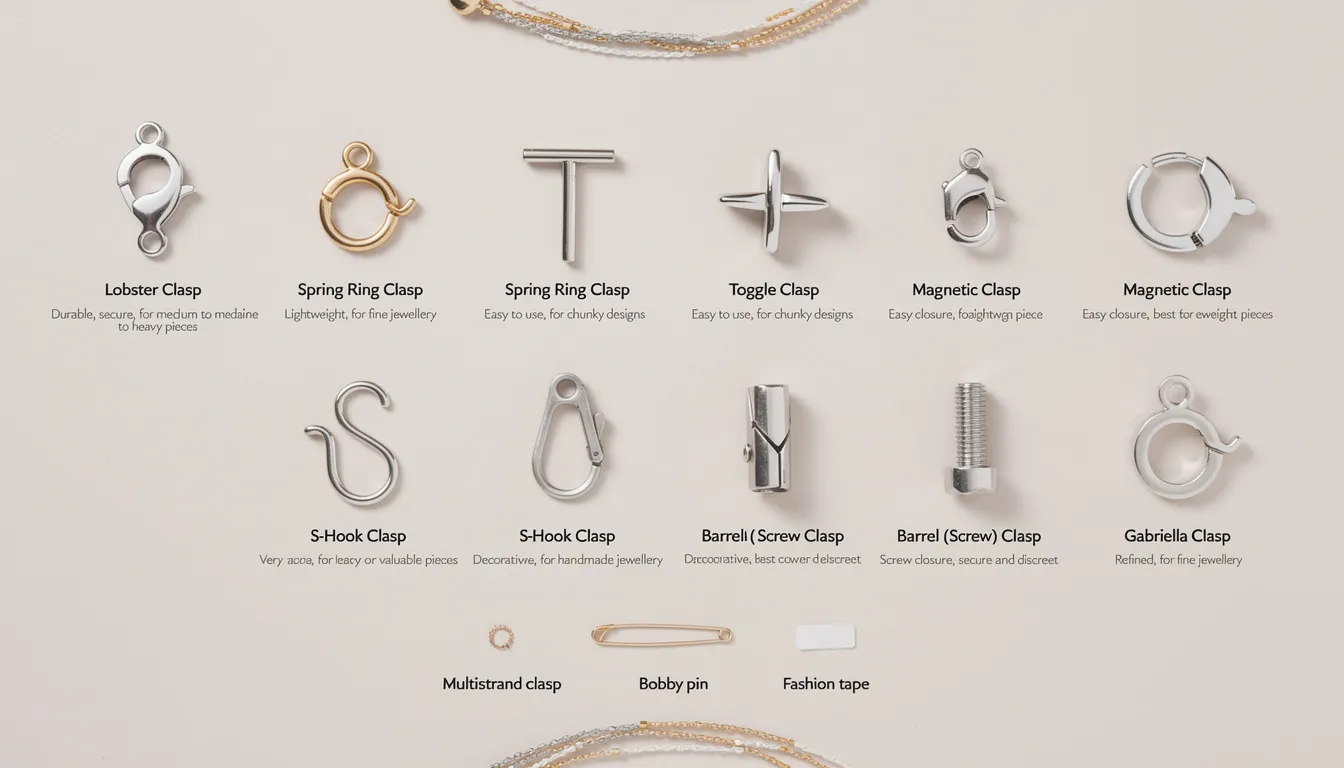
Below is a comparison table outlining the most common necklace clasps, their key features, and best uses:
|
Clasp Type |
Key Features |
Best Uses |
|---|---|---|
|
Lobster Clasp |
Durable, secure, spring-loaded mechanism, resembles a lobster claw |
Medium to heavy necklaces and bracelets |
|
Spring Ring Clasp |
Lightweight, lever mechanism, small circular ring |
|
|
Toggle Clasp |
T-bar fits through a circular loop, easy to use, decorative |
Thicker or chunkier pieces |
|
Magnetic Clasp |
Uses magnets, easy to operate, convenient for limited dexterity |
Lightweight jewellery, seniors |
|
Box Clasp |
Box-shaped component locks into a slot, strong closure |
Heavier or valuable pieces |
|
S-Hook Clasp |
S-shaped hook, simple, decorative |
Artistic or handmade jewellery |
|
Barrel (Screw) Clasp |
Two pieces screw together, seamless finish |
Explore our collection of blending ancient protection with British elegance. evil eye jewellery Necklaces and bracelets needing security |
|
Gabriella Clasp |
Elegant design, secure closure, less common |
5 Types of Gold Plating for Jewellery: Complete Guide 2025 Gold Plated Jewellery Gold plated jewellery sets Fine jewellery |
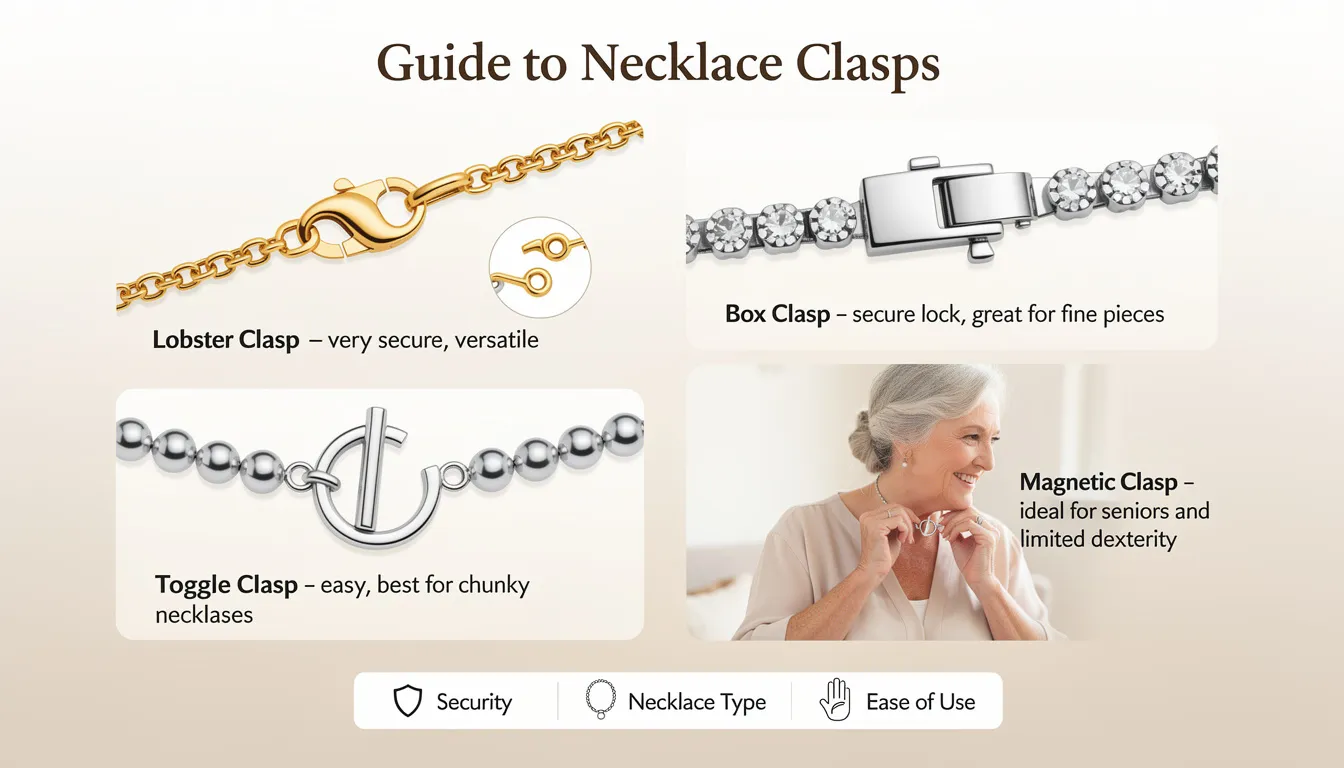
Box clasps feature a small box-shaped component that fits securely into a corresponding slot, often accompanied by a latch or lever mechanism that locks the clasp in place. This design provides a sturdy and reliable closure, making box clasps ideal for heavier or valuable jewellery pieces where security is paramount. Their elegant and often decorative appearance also allows them to serve as a stylish finishing touch or focal point on the jewellery.
Multi-strand clasps are specifically designed for jewellery pieces that have more than one strand, such as layered necklaces or bracelets. These clasps feature multiple loops or connectors that keep each strand aligned and separate, preventing tangling and ensuring a neat, professional finish. They are available in various styles and finishes to complement different jewellery designs and are perfect for creating complex, multi-layered looks with ease.
Magnetic clasps are extremely easy to use, employing strong magnets to snap the two ends of a necklace or bracelet together effortlessly. This makes them particularly convenient for individuals with limited dexterity or seniors who may find traditional clasps challenging to operate. However, while magnetic clasps offer great ease of use, they are generally less secure than mechanical clasps like lobster or box clasps. They are best suited for lightweight jewellery pieces and may not hold as firmly under heavy stress or with valuable items.
To further enhance the security and comfort of necklace clasps, especially to prevent unwanted movement or slipping, tools such as bobby pins and fashion tape can be employed. Bobby pins can discreetly hold a clasp in place against the skin or clothing, while fashion tape provides a gentle adhesive that keeps the necklace steady without damaging the jewellery or skin. These simple aids are especially useful for special occasions or when wearing delicate or lightweight necklaces that tend to shift during wear.
Common necklace clasps include lobster claw, spring ring, box, toggle, barrel, S-hook, and magnetic clasps.
Now that we've covered the main types of clasps, let's look at which are most secure.
What Is the Most Secure Clasp for Jewellery?
Security is paramount when selecting a clasp. The most secure clasps include lobster clasps, box clasps, and screw barrel clasps due to their locking mechanisms and durability. Toggle clasps can be secure depending on the weight of the jewellery, but magnetic clasps, while convenient, may not offer the strongest hold for heavy pieces.
After discussing clasp security, it's important to consider which types are best suited to specific needs.
What Type of Clasp Is Best for Necklaces?
Choosing the best clasp depends on the necklace's weight, style, and the wearer’s needs. Lobster clasps are versatile and secure for most necklaces. Toggle clasps offer elegance and ease of use for chunkier designs. Magnetic clasps are ideal for those preferring hassle-free fastening, particularly seniors or individuals with limited dexterity.
Now that you know which clasps are best for different necklace types, let's focus on options for seniors.
What Is the Best Jewellery Clasp for Seniors?
For seniors or those with dexterity issues, magnetic clasps are often the best choice due to their ease of operation. Toggle clasps also provide a simple fastening method. Avoid small spring ring clasps, which can be difficult to manipulate.
With seniors' needs addressed, let's move on to replacing necklace clasps.
Replacing a Necklace Clasp
Can You Replace a Clasp on a Necklace?
Yes, clasps can be replaced to refresh or repair a necklace. This is a common practice in jewellery making and repair. A jeweller can remove the old clasp and attach a new one, often upgrading to a more secure or stylish option.
Now that you know clasps can be replaced, let's explore alternative fastening methods.
Alternative Necklace Fastening Methods
What to Use Instead of a Clasp?
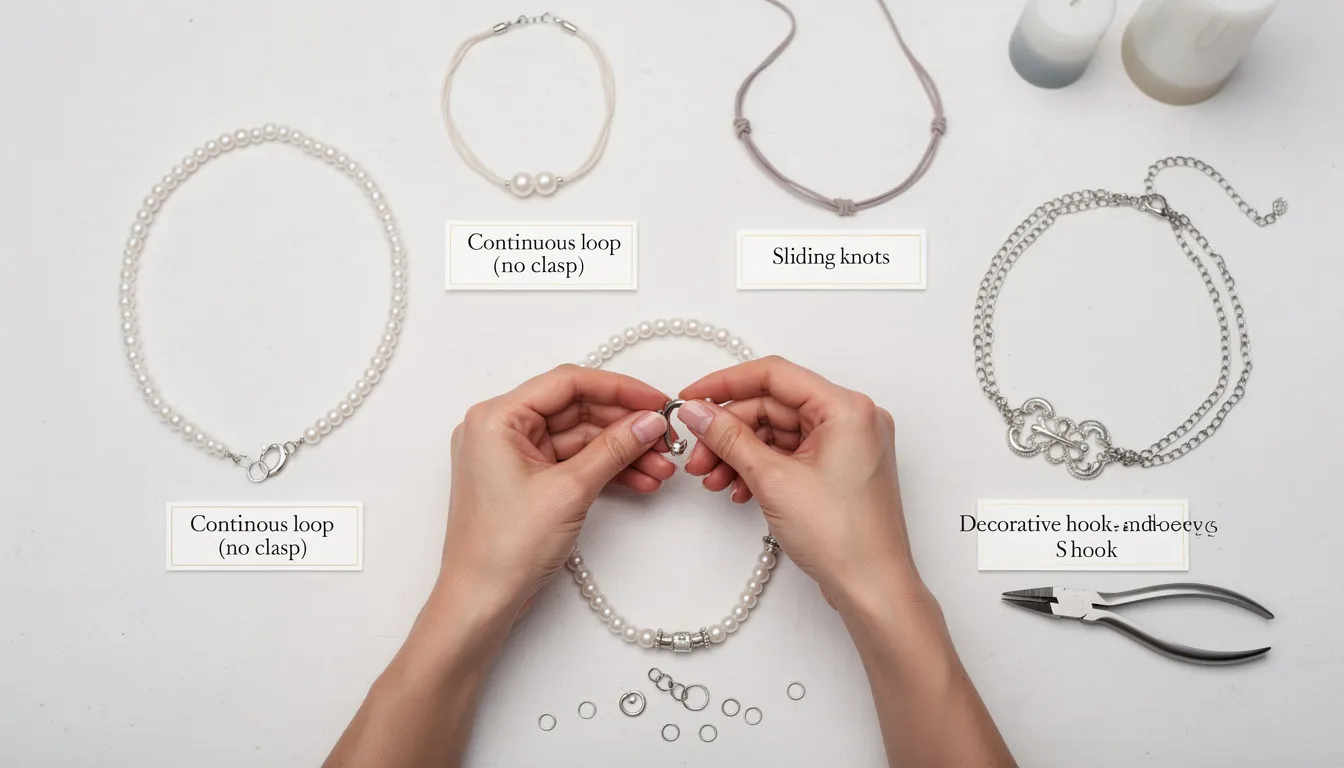
If you prefer not to use a traditional clasp, consider these alternatives:
-
Continuous loops (no clasp)
-
Sliding knots for adjustable length
-
Magnetic closures
-
Decorative hook-and-eye or S-hook clasps that double as focal points
After reviewing alternatives, let's discuss how to attach a clasp to beaded jewellery. For those interested in learning more about chakra bracelets and their benefits, check out our helpful guide. If you have any questions or need assistance, feel free to contact us.
Attaching Clasps to Beaded Jewellery
How to Attach a Clasp to Beads
Attaching a clasp to beaded jewellery typically involves threading the beading wire or thread through a clasp component such as a crimp bead or jump ring, then securing it by crimping or knotting. This ensures the clasp stays firmly in place and the beads remain secure.
Securing the End of a Beaded Bracelet
How to Secure the End of a Beaded Bracelet
To secure a beaded bracelet’s end, crimp beads or tubes are commonly used. After threading the beads, the wire is looped through the clasp and back through the crimp bead, which is then flattened with pliers to hold the wire firmly.
Preventing Necklace Movement
How to Avoid a Necklace from Moving
To prevent a necklace from shifting around the neck, small knots can be tied in the chain near the clasp or a clear rubber band or hair tie can be used to secure it in place discreetly. Additionally, tools such as bobby pins and fashion tape can help keep the clasp steady, providing extra security and comfort during wear.
Bracelet Clasp Terminology
What Is the Clip on a Bracelet Called?
The clip on a bracelet is generally referred to as the clasp. Common types include lobster clasps, spring ring clasps, toggle clasps, and box clasps.
Bracelet Sizing Guidelines
What Is the Two Finger Rule for Bracelets?
The two finger rule suggests that a bracelet should fit comfortably with enough room to slide two fingers between the wrist and the bracelet, ensuring it is neither too tight nor too loose.
Clasp Rings in Jewellery
What Is a Clasp Ring?
A clasp ring, often called a jump ring, is a small metal ring used to attach clasps to jewellery pieces. It can be opened and closed to connect components securely.
Clasp Pricing
How Much Do Clasps Typically Cost?
Clasp prices vary depending on material and complexity. Basic clasps like spring rings or lobster clasps can cost a few pence to a few pounds, while more intricate or precious metal clasps, like box or Gabriella clasps, may cost significantly more.
Pendant Attachment Components
What Is the Thing Called That Attaches a Pendant to a Necklace?
The small loop or ring that attaches a pendant to a necklace chain is called a bail. It allows the pendant to hang freely and can be decorative or simple in design.
Fixing a Necklace Clasp
How to Fix a Clasp That Fell Off a Necklace
If a clasp falls off, it can usually be reattached using jewellery pliers to open a jump ring or link and reconnect the clasp. For more complicated repairs, consulting a jeweller is recommended.
Conclusion
Choosing the right necklace clasp is essential for both the security and aesthetic of your jewellery. Whether you prefer the elegance of a toggle clasp, the strength of a lobster clasp, or the convenience of magnetic clasps, understanding the types, uses, and maintenance tips will help you make the best choice for your collection. Remember, the clasp is not just a functional piece but can also be a focal point that adds to the overall beauty of your jewellery creation.
Frequently Asked Questions (FAQs) About Necklace Clasps
What is the most popular type of necklace clasp?
The lobster clasp is the most popular choice due to its durability, secure hold, and ease of use. It suits a wide range of jewellery pieces, from medium to heavier necklaces and bracelets.
Are magnetic clasps secure enough for valuable jewellery?
Magnetic clasps offer convenience and are ideal for those with limited dexterity, but they may not provide the strongest secure finish for heavier or valuable jewellery pieces. For high-value or heavy necklaces, lobster or box clasps are more suitable.
Can I replace the clasp on my necklace myself?
Yes, if you have basic jewellery-making tools and skills, you can replace a necklace clasp by opening and closing jump rings or using crimp beads. However, for precious or delicate pieces, it’s best to consult a professional jeweller.
What clasp is best for seniors or people with limited dexterity?
Magnetic clasps and toggle clasps are excellent options for seniors or those with dexterity issues because they are easy to fasten and unfasten without requiring fine motor skills.
How do I prevent my necklace clasp from moving around my neck?
You can prevent necklace movement by tying small knots near the clasp on the chain or using a clear rubber band or hair tie to secure it discreetly in place. Additionally, bobby pins and fashion tape can be used to keep the clasp steady.
Can clasps be decorative as well as functional?
Absolutely! Many clasps, such as toggle, box, and Gabriella clasps, serve as a finishing touch or focal point in jewellery design, adding elegance and enhancing the overall aesthetic of the piece.
What materials are necklace clasps commonly made from?
Necklace clasps are often made from metals like silver and gold, but they can also be found in other finishes and materials such as antique brass or stainless steel to suit various jewellery projects and styles.
Where can I shop for a wide range of necklace clasps?
You can shop for necklace clasps at specialised bead shops, jewellery supply stores, and online retailers that stock a diverse range of styles, sizes, and finishes to suit your project needs and wishlist.
Are multi-strand clasps necessary?
If you are creating or wearing jewellery with multiple strands, multi-strand clasps are suitable as they keep each strand aligned and secure, preventing tangling and ensuring a neat, professional finish.
What is a clasp ring in jewellery?
A clasp ring, commonly called a jump ring, is a small metal ring used to attach the clasp to the necklace chain. It can be opened and closed to connect components securely during jewellery making.
Leave a comment