

Blue aventurine is a rare variety of quartz crystals that captivates crystal enthusiasts with its distinctive denim-blue coloration and subtle, shimmering sparkle. Unlike its more common green cousin, this mesmerizing gemstone draws attention for its association with the mind and voice rather than the heart and luck.
This remarkable gemstone connects strongly with the Third Eye chakra and Throat chakra, making it a favorite among those seeking mental clarity, honest communication, and intuitive insight. Where green aventurine meaning centers on emotional healing and attracting abundance, blue aventurine emphasizes rational thinking, self-discipline, and the confidence to speak your truth.
Modern crystal healing practitioners, meditators, and jewelry lovers gravitate toward blue aventurine for its gentle energy. It’s particularly valued by professionals who need to communicate under pressure, students preparing for exams, and anyone working to transform impulsive reactions into thoughtful responses. The stone’s rising popularity since the late 20th century reflects a growing interest in tools that support both inner peace and practical empowerment.
What Is Blue Aventurine?
Blue aventurine belongs to the quartz family, distinguished by platy mineral inclusions—typically dumortierite or crocidolite—that give it both its blue color and signature aventurescent shimmer. When light hits the aligned inclusions within the stone, it creates a dynamic sparkle that shifts as you move it, resembling tiny stars embedded in the surface.
Visually, this aventurine stone presents in medium to deep denim-blue or slate-blue tones, ranging from semi-translucent to opaque. You’ll notice subtle sparkles, streaky patches, or tiny star-like glints under direct light, often accompanied by natural color variations like gray or greenish casts.
With a Mohs hardness of approximately 6.5 to 7, blue aventurine is durable enough for everyday wear in bracelets, pendants, rings, and tumbled worry stones, making it an appealing choice among stones for bracelets and other gemstone jewellery. It resists scratches from daily activities while maintaining its polish over time.
Unlike synthetic alternatives such as goldstone (a glass infused with copper filings that creates bold, uniform glitter), genuine blue aventurine displays fine, irregular shimmer patterns. It also feels cooler to the touch, carries greater weight density, and shows visible quartz graininess under magnification. Compared to other blue stones like sodalite (duller, more opaque with white flecks) or lapis lazuli (deeply veined with pyrite, no aventurescence), blue aventurine stands out for its lively, light-catching quality.
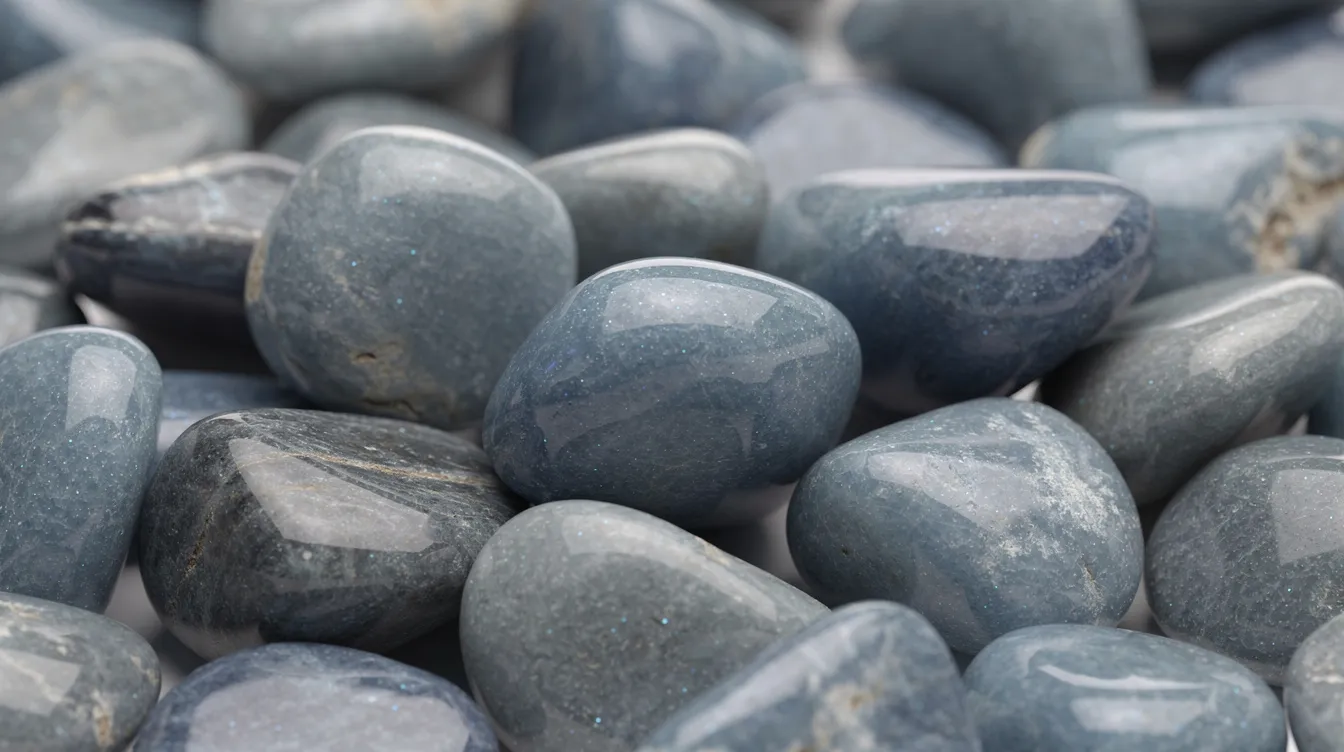
Geological Formation & Where Blue Aventurine Comes From
Aventurine quartz forms through metamorphic processes where silica-rich quartz integrates plate-like mineral inclusions during regional metamorphism or hydrothermal activity. The inclusions’ flat, parallel orientation creates the optical aventurescence effect as light scatters off their surfaces.
In blue aventurine specifically, the coloration arises from dispersed blue minerals such as dumortierite (a boron silicate) or crocidolite (a fibrous amphibole mineral) embedded as needles or platelets within the quartz matrix. These bright inclusions often yield subtler sparkles compared to the larger fuchsite flakes in a green aventurine crystal.
Primary modern sources include:
|
Region |
Notable Areas |
Characteristics |
|---|---|---|
|
India |
Tamil Nadu, Karnataka |
Major cutting and export hub; large-scale production |
|
Brazil |
Minas Gerais |
High-quality deposits |
|
Russia |
Various regions |
Sporadic finds |
|
Spain & Chile |
Smaller deposits |
Less commercially significant |
|
India dominates global production, serving as the primary cutting and export center for both green and blue aventurine since the late 20th century. Rough blue aventurine is typically extracted in sizable blocks from quartz veins in metamorphic terrains, then slabbed and cut into cabochons, beads, or tumbled stones for worldwide markets. |
|
|
Blue Aventurine Color & Aventurescence
Aventurescence refers to the metallic, glistening sparkle caused by light diffraction from densely packed, parallel-oriented platy minerals within the stone. This effect produces a dynamic shimmer that shifts with movement—a quality that distinguishes aventurine from ordinary dyed glass or similar shimmering appearance imitations.
Blue aventurine’s color spectrum spans soft dusty blues, denim-like mediums, steel-grays, and occasional deeper indigo shades. Some specimens display grayish or greenish undertones, with the blue derived from iron-bearing mica inclusions imparting fibrous streaks or patches throughout.
The shimmer in blue aventurine is generally more subdued than in some green aventurine stone varieties. Rather than prominent glitter, you’ll see fine, diffuse twinkles or hazy glows—an understated elegance that appeals to those seeking refined aesthetics in jewelry or healing tools.
Natural imperfections like uneven color zoning, darker inclusions, and faint linear streaks are hallmarks of authenticity. These variations reflect the heterogeneous distribution of inclusions during formation and are prized rather than viewed as flaws. Unlike lapis lazuli (intensely blue with golden pyrite veins) or sodalite (cloudy with white mottling and a matte finish), blue aventurine’s quartz clarity and mobile aventurescence provide a distinctive, lively quality.
Blue Aventurine Meaning & Symbolism
At its core, blue aventurine symbolizes clear communication, mental discipline, and serene confidence. It acts as a metaphorical bridge between reactive emotions and thoughtful, authentic expression—helping users transform knee-jerk responses into measured, intentional words.
The stone aligns symbolically with two key energy centers. The Throat chakra connection supports truthful speech, boundary-setting, and honest dialogue. The Third Eye chakra association promotes intuitive discernment, structured insight, and the integration of logical reasoning with higher guidance.
Key symbolic associations include:
-
Cultivating self-discipline to overcome impulsivity
-
Promoting constructive dialogue in challenging scenarios
-
Reinforcing leadership qualities through responsible, empowered decision-making
-
Balancing masculine energy in a rational yet compassionate form
Many practitioners describe blue aventurine as a “gentle awakener” that shifts users from emotional volatility to poised responses. It encourages full accountability for life’s circumstances while empowering proactive change. This makes it particularly valuable for those seeking to enhance their inner strength without aggression—a calm confidence that comes from knowing your own mind and voice.
Blue aventurine is frequently associated with the fiery determination of Aries and the element of Air, aligning it with broader practices that use healing crystals and gems for wellness and energy balance.
Historical Notes & Cultural Associations
Blue aventurine as a distinct color variety was recognized later than green aventurine and doesn’t carry extensive ancient mythology specific to it. However, it inherits the broader aventurine meaning and nomenclature from a fascinating historical origin.
The name derives from the Italian word “a ventura” (meaning “by chance”), originating in 17th-century Murano near Venice. There, glassmakers accidentally created aventurine glass by dropping copper filings into molten glass, producing a sparkling effect that mimicked natural quartz aventurescence. This technique influenced gemstone appreciation across Europe for centuries.
Blue aventurine’s distinct popularity surged in the late 20th century, particularly from the 1980s onward. The New Age crystal healing movement and growing interest in chakra-centric spirituality brought this green stone’s blue cousin into the spotlight. Western esoteric circles, Indian traditions, and commercial crystal markets all contributed to its rising profile, inspiring many contemporary articles on crystal jewellery, healing stones, and modern jewellery trends.
Modern practitioners across Europe, North America, and India employ blue aventurine for practical empowerment scenarios:
-
Public speaking to convey ideas calmly
-
Exam preparation for focused recall
-
Negotiations for fair outcomes
-
Mindful communication in therapy or leadership roles
This positions blue aventurine as a contemporary talisman rather than a relic of antiquity—a practical tool for modern challenges.
Metaphysical & Healing Properties of Blue Aventurine
Metaphysical claims for blue aventurine are rooted in spiritual traditions and should complement, not replace, professional healthcare. These beliefs focus on three main pillars: mental acuity, expressive communication, and emotional poise.
The stone’s physical healing properties in traditional practice include anecdotal reports of easing chronic stiffness, supporting the nervous system, balancing blood pressure, and addressing thymus gland concerns. Blue aventurine is believed to aid with chronic stiffness, ease migraines and headaches, and strengthen the respiratory and circulatory systems.
Blue aventurine targets overthinkers, reticent speakers, and stress-reactive individuals. Its healing properties purportedly work by quieting mental noise, supporting the Throat chakra against communication blocks, and deepening Third Eye intuition for self-discovery. The following subsections explore these metaphysical properties in detail.
Mental Clarity & Focus
Practitioners attribute to blue aventurine the ability to sharpen concentration and impose mental structure. Students cramming for exams report reduced over-analysis when keeping the stone nearby. Professionals mapping complex projects describe grounded ideation when placing a tumbled stone near their laptops during brainstorming sessions.
The stone reputedly diminishes internal chatter and distractions, fostering disciplined meditation and workflow persistence. Teachers use it for visionary lesson planning, while musicians report maintaining composure during performances. This stems from its Third Eye chakra stimulation, promoting objective discernment over rumination.
For practical application, try placing a small blue aventurine near your workspace when you need to stick with decisions amid competing pressures. The crystal’s soothing vibrations may help anchor scattered thoughts into actionable plans.
Blue aventurine is often described as a 'mental healer' focused on calming an overactive mind and improving discipline.
Blue aventurine is used to calm hyperactive minds, relieve anxiety, and promote emotional stability.
Blue aventurine is used to improve communication skills and assist in reading others empathically.
Communication & the Throat Chakra
The Throat chakra connection makes blue aventurine valuable for those who struggle to articulate thoughts under pressure. It’s said to help users speak calmly in high-stakes situations and set healthy verbal boundaries without aggression.
Specific scenarios where practitioners find it helpful include:
-
Job interviews requiring confident self-presentation
-
Difficult relationship conversations needing diplomatic honesty
-
Business negotiations where respectful outcomes matter
-
Artistic performance like singing or acting that requires open throat energy
Many people wear blue aventurine pendants positioned at collarbone height to keep its energy near the throat area throughout the day. This physical placement serves as both an energetic support and a tactile reminder of communication intentions, similar to how wearing a bracelet crystal daily can keep your goals and energetic focus close at hand.
Emotional Balance & Self-Control
Blue aventurine cools fiery tempers and impulsivity, nurturing patience for those working to break negative emotions and old patterns. It appeals to anyone seeking emotional calm amid external chaos—from managing workplace stress to overcoming reactive behaviors in relationships.
The stone’s emotional healing properties support maturity and self-discipline. It’s often paired with breathing exercises or journaling to reinforce regulation, creating a complete practice that links mental clarity to verbal restraint.
For those working on breaking bad habits or addressing passive-aggression, blue aventurine serves as a physical anchor for intentions. Holding it during moments of stress can create a pause between stimulus and response—space enough for a thoughtful choice rather than a reactive one.
Spiritual Insight & the Third Eye
Blue aventurine gently activates the Third Eye chakra (associated with the pineal gland) without overwhelming intensity. This makes it suitable for spiritual growth without dramatic psychic experiences—practical self-reflection rather than sensational visions.
Common applications include:
-
Forehead placement during meditation for inner guidance
-
Positioning near tarot or oracle card spaces for enhanced discernment
-
Keeping beside a dream journal to support intuitive recall
Users report enhanced self-reflection, better discernment in daily decisions, and occasional experiences of what some describe as Akashic access or angelic communication. The stone’s metaphysical properties ground spiritual development in everyday wisdom, supporting inner growth that translates to practical life improvements.

How to Use Blue Aventurine in Daily Life
Blue aventurine is versatile and easy to integrate into routines at home, work, and during spiritual practice. Common forms include tumbled stones, palm stones, beads, bracelets, pendants, and small carvings—each suited to different applications.
The following sections provide concrete, everyday application ideas for maximizing this nurturing energy in practical ways. Whether you’re drawn to formal meditation or simply want a focus charm on your desk, there’s an approach that fits your lifestyle.
Meditation & Mindfulness Practices
For basic meditation, hold a tumbled blue aventurine in your non-dominant hand while focusing on slow, counted breaths for 5-10 minutes. The tactile sensation helps anchor wandering attention and promotes mental decluttering.
To work with the Third Eye, lie down and place a flat stone between your eyebrows. Breathe steadily and allow any scattered thoughts to settle. Some practitioners set a candle in front of them and gaze softly past the flame, letting the stone’s gentle energy support focused stillness.
Blue aventurine pairs well with guided meditations—especially those aimed at communication improvement, exam preparation, or calm decision-making. Speaking an intention like “I think clearly and speak truthfully” before beginning can set the tone for your practice.
Jewelry & Personal Carry
Wearing blue aventurine as jewelry keeps its positive energy accessible throughout the day. A green aventurine bracelet supports heart-centered work, while a blue aventurine bracelet worn to the office supports calm communication during meetings and can be combined with chakra bracelets for overall energy balance and well-being.
Consider these use cases:
-
A pendant worn during public speaking engagements
-
A pocket stone touched before important phone calls
-
Simple stud earrings for all-day Third Eye support
-
A ring on the non-dominant hand as a subtle reminder of communication intentions
While skin contact isn’t mandatory, many practitioners prefer the tactile connection. Choose comfortable, simple designs for regular wear rather than fragile statement pieces if the goal is consistent energetic support.
Home, Study & Workspace Placement
Strategic placement around your environment creates spaces that support focused, clear work. Consider placing blue aventurine on desks near monitors or laptops to symbolize concentrated effort. A stone near your phone or in meeting rooms encourages respectful, thoughtful conversations.
For students, keeping a tumble on a study desk or in a pencil case serves as a focus charm during revision and exams. Some place green aventurine pyramid shapes in prosperity corners while positioning blue aventurine near study areas—using each stone’s distinct energy for its strongest purpose.
If you work from home, try a small specimen near your workspace where you’ll see it during challenging tasks. The visual reminder reinforces intentions for clarity and communication and can complement crystals that foster trust, emotional healing, and open communication.
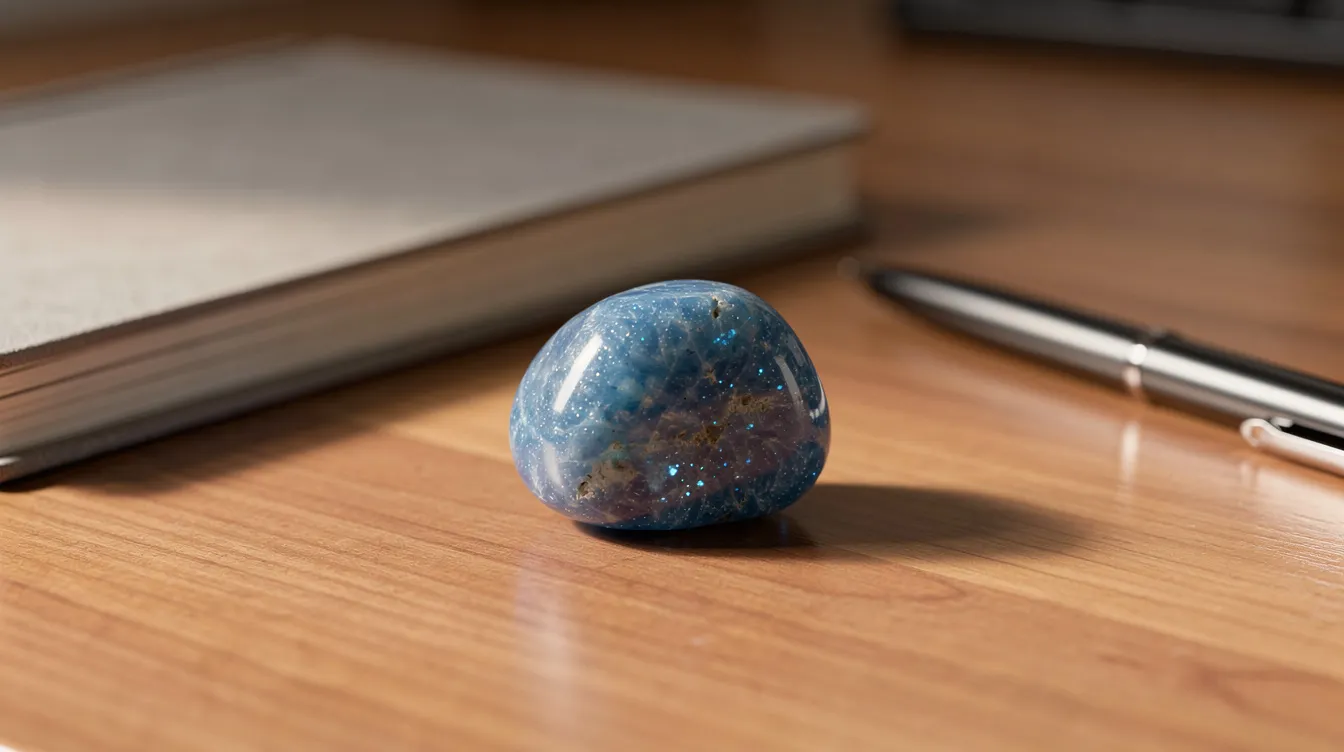
Rituals, Intention-Setting & Journaling
A simple daily ritual: hold your blue aventurine, state a clear intention (such as “Today I speak clearly and kindly”), and place the stone where you’ll see it throughout the day. This takes less than a minute and establishes conscious focus.
Pairing blue aventurine with journaling amplifies both practices. Keep it beside your notebook while writing about communication goals, decisions you’re weighing, or plans you’re developing. The stone becomes associated with that reflective work.
Weekly check-ins using the same stone help track progress. Review how you’ve handled difficult conversations, whether you’ve spoken up when needed, or how your emotional regulation has shifted. This iterative approach builds relationship between your intentions and the stone’s supportive energy.
Blue Aventurine & Chakras, Zodiac, and Elements
Blue aventurine connects most strongly with the Throat and Third Eye chakras, supporting the communication-mind-intuition theme that defines its metaphysical properties. Elementally, it’s associated with Air (mental clarity, logic, communication) and sometimes a gentle Water undertone (emotional calm, flowing adaptability).
Correspondences vary between systems, but the core themes remain consistent. Common zodiac associations include Aries (discipline and directness), Libra (balanced communication), and Aquarius (rational idealism)—though anyone can work with this stone regardless of birth sign.
Chakra Correspondence
For Throat chakra work, place blue aventurine at the base of your throat while lying down, focusing on releasing fears around speaking up or setting boundaries. Signs of imbalance this placement addresses include difficulty expressing needs, fear of confrontation, and recurring throat tension.
For Third Eye work, position the stone between your eyebrows, addressing scattered thoughts, difficulty trusting your own judgment, and disconnection from intuition.
A simple chakra-balancing layout combines colors: place green aventurine at the heart chakra (as the comforter and heart healer it’s known to be), blue aventurine at the throat, and optionally at the Third Eye. This creates an integrated practice supporting emotional healing through to clear expression.
Zodiac & Elemental Links
While blue aventurine serves anyone, certain signs find particular resonance:
-
Aries benefits from its discipline-enhancing qualities, tempering impulsive communication with thoughtful directness
-
Libra appreciates its support for balanced dialogue and fair negotiation
-
Aquarius connects with its rational idealism and innovative thinking support
The Air element connection reflects mental flow—clarity, logic, and the exchange of ideas. The subtle Water influence brings emotional calm and regeneration, balancing intellectual sharpness with compassionate delivery. These symbolize career-path harmony and well being in communication-heavy roles.
Caring for Blue Aventurine
Physical and energetic care both matter for maintaining your blue aventurine. Regular cleaning preserves natural beauty and surface quality, while metaphysical cleansing and charging refresh its energy for continued spiritual practice.
Blue aventurine’s Mohs 6.5-7 hardness makes it relatively sturdy, but gentle handling prevents scratches and chips that can accumulate over time.
Physical Cleaning & Storage
Clean blue aventurine with lukewarm water and mild soap, using a soft cloth to gently remove dust and oils. Dry thoroughly before storing. Avoid ultrasonic cleaners, harsh chemicals, and extended exposure to strong detergents.
For jewelry pieces, keep stones away from prolonged contact with perfume, chlorinated pool water, and abrasive surfaces. Remove blue aventurine rings before heavy manual work.
Store pieces separately in soft pouches or lined compartments. This prevents scratching from harder stones (like rose quartz or clear quartz) or metal jewelry components.
Energetic Cleansing & Charging
Popular metaphysical cleansing methods include:
-
Smudging with sage or palo santo smoke
-
Placing on a selenite plate overnight
-
Using sound vibrations from singing bowls or chimes
To charge green aventurine or blue aventurine energetically, leave the stone in indirect sunlight or moonlight for a few hours. Placing it on a piece of clear quartz amplifies charging. You can also hold the stone while visualizing bright light filling it, setting or reaffirming intentions for focus and communication, much like practices used with turquoise crystal for protection, balance, and spiritual growth.
Remember: these are spiritual practices based on personal belief. Charge green aventurine for luck and heart healing; charge blue aventurine for mental clarity and honest expression.
How to Choose Authentic Blue Aventurine
The market includes dyed quartz and glass that can be mistaken for genuine blue aventurine, so knowing a few checks helps ensure you’re getting authentic material. Purchasing from reputable crystal or gemstone suppliers remains the most reliable approach, especially for higher-priced jewelry items, and aligns with guidance on how to shop for crystals wisely and ethically.
Recognizing Genuine Material
Real blue aventurine shows fine, subtle shimmer and natural variation in color and texture. It won’t display perfectly uniform “painted” blue across the entire surface—some irregularity is expected and desirable.
Glass imitations tend to look very even in color, may show large glitter-like particles (similar to aventurine glass), and feel lighter and warmer in hand compared to natural stone. The luckiest stone for your collection will show visible quartz-like grain or tiny inclusions under good light.
Check physical appearance carefully: natural irregularity, cool temperature, and noticeable density are positive signs of authenticity.
Assessing Color, Cut & Use
Choose pieces where the blue is appealing but not unnaturally neon or uniformly saturated. Natural blue aventurine displays depth and variation rather than artificial perfection.
For quality, look for:
-
Smooth finishes on cabochons, beads, and tumbled stones
-
No sharp pits, large cracks, or rough edges that catch on clothing
-
Proportional shapes appropriate for intended use
Match form with function: flat palm stones work best for meditation, beads for bracelets and jewelry, smaller tumbles for pockets or crystal grids.
Blue Aventurine vs. Other Aventurine Colors
Aventurine comes in several colors, including green, blue, red, yellow, purple, gray, and orange, each resulting from different mineral inclusions within the quartz.
|
Color |
Key Inclusions |
Primary Associations |
|---|---|---|
|
Green |
Fuchsite |
Heart chakra, luck, the stone of opportunity, good fortune |
|
Blue |
Dumortierite, Crocidolite |
Third Eye/Throat, mental clarity, communication |
|
Red/Peach |
Hematite, Goethite |
Vitality, creativity, grounding |
|
Yellow |
Pyrite, Muscovite |
Confidence, personal growth, manifestation |
|
While green aventurine is often called the gambler’s stone and recognized as potentially the luckiest stone for manifesting prosperity and attract luck, blue aventurine focuses on the mind and voice: reasoned choices, honest expression, and calm confidence. |
|
|
|
Green aventurine represents harmony through emotional prosperity and heart healer qualities. Blue aventurine offers mental structure and the ability to speak your truth. Green aventurine good for attracting abundance pairs naturally with blue aventurine’s support for clear articulation of goals and boundaries. |
|
|
Building a multicolor collection allows you to address different needs—place green aventurine near the heart during emotional work, use blue at the throat or Third Eye for communication and insight, and explore other colors for grounding or creativity.
Blue aventurine stands as a supportive ally for speaking up, thinking clearly, and approaching life with calm confidence. Whether worn as a daily bracelet, placed on your study desk, or held during meditation, this enhances creativity in problem-solving while it represents harmony between thought and expression, much like a protective sterling silver blue eye necklace talisman can symbolise intuition and safeguarding your energy.
Start with a single tumbled stone. Notice how your communication shifts when you carry it through a challenging conversation. Then decide whether this green color’s blue cousin deserves a permanent place in your crystal practice.
Green Aventurine: History, Properties & Uses
Green aventurine is believed to have first been discovered in India, where it was highly regarded for its healing and spiritual properties. Throughout history, green aventurine has been associated with luck and prosperity, being used in ancient China for carved amulets to attract good fortune.
Legends from various cultures, including Tibetan and Celtic traditions, highlight green aventurine's significance as a stone of growth and connection to nature, often used in rituals to honor earth goddesses.
Green Aventurine Healing Properties
Green aventurine is known for its physical healing properties, including improvements in circulation, immune system function, and overall health, as well as having an anti-inflammatory effect. The stone promotes emotional healing by encouraging self-love, emotional balance, and the release of negative emotions, making it a powerful ally for those seeking inner peace.
Green Aventurine Spiritual Properties & Chakra
The stone's vibrant green color symbolizes the lushness of nature and represents harmony, balance, and healing. Green aventurine chakra is primarily associated with the Heart chakra, which supports emotional calm, compassion, and harmonious relationships.
Green Aventurine Practical Uses
Wearing green aventurine jewelry, such as bracelets or necklaces, allows individuals to keep the stone's positive energy close throughout the day, promoting emotional balance and attracting good fortune.
Incorporating green aventurine into home and office decor can enhance the environment by promoting harmony, abundance, and well-being, making it a popular choice for creating a positive atmosphere.
Using green aventurine during meditation can help achieve optimal energy balance and spiritual growth, particularly when placed on the heart space to invigorate the heart chakra.
Green Aventurine Cleansing and Charging
To cleanse Green Aventurine, you can rinse it under running water or use sage smoke to remove accumulated negative energy. Regular cleansing and charging of Green Aventurine is essential to maintain its energetic properties and effectiveness, as it can absorb and hold onto energetic residue.
Blue Aventurine Identification Notes
Blue aventurine is sometimes mistaken for blue quartzite, dumortierite quartz, or artificial blue goldstone.
Frequently Asked Questions About Blue Aventurine
What gives blue aventurine its unique color?
Blue aventurine gets its distinctive denim-blue to slate-blue color primarily from inclusions of dumortierite, a boron silicate mineral. These mineral inclusions are aligned within the quartz matrix, creating the characteristic shimmering effect known as aventurescence.
How does blue aventurine differ from green aventurine?
While both are varieties of quartz called aventurine, blue aventurine contains dumortierite or crocidolite inclusions that produce its blue color and more subtle shimmer. In contrast, green aventurine’s vibrant green hue comes from fuchsite inclusions, which provide a brighter, more glittery aventurescence. Their metaphysical properties also differ, with blue aventurine focusing on mental clarity and communication, and green aventurine emphasizing luck and emotional healing.
What are the lucky and healing properties of blue aventurine?
Blue aventurine is believed to calm hyperactive minds, ease anxiety, and support emotional balance. It promotes self-discipline, clear communication, and intuitive insight, making it helpful for overcoming mental blocks and fostering personal growth.
Can blue aventurine be used to enhance meditation?
Yes, placing blue aventurine on the Third Eye chakra during meditation can deepen mental focus and enhance spiritual insight. It helps quiet the mind, allowing for clearer intuition and a calmer meditative state.
How should I cleanse and charge blue aventurine?
To cleanse blue aventurine, gently wash it with lukewarm water and mild soap, then dry with a soft cloth. Energetic cleansing can be done with sage smoke or by placing it on a selenite plate. Charge the stone by leaving it in indirect sunlight or moonlight for a few hours, avoiding prolonged sun exposure to preserve its color.
Is blue aventurine suitable for all zodiac signs?
While blue aventurine is associated with Aries, Libra, and Aquarius due to its qualities of discipline, balanced communication, and rational idealism, it can be beneficial for anyone seeking mental clarity and improved expression.
How can I tell if my blue aventurine is authentic?
Authentic blue aventurine shows natural variations in color and texture, with a fine, irregular shimmer rather than uniform glitter. It feels cool and dense to the touch, unlike glass imitations. Purchasing from reputable sources helps ensure authenticity.
What practical uses does blue aventurine have?
Beyond jewelry, blue aventurine can be placed on desks or in study areas to support focus and clear communication. It is also used in rituals and intention-setting to promote calm speech and thoughtful decision-making.
Can blue aventurine help with emotional wounds and stagnant energies?
Yes, blue aventurine’s calming energy aids in releasing stagnant energies and soothing emotional wounds, promoting emotional maturity and inner peace.
How is blue aventurine connected to the statue's visionary powers?
Historically, aventurine—including varieties like green aventurine—was used in Tibetan statues to enhance their visionary powers. While blue aventurine is less commonly noted in this context, its association with psychic capability and intuition aligns it with such spiritual symbolism.
Leave a comment