

Introduction to Bloodstone
Bloodstone is a striking dark green chalcedony distinguished by its dramatic red spots, a natural stone that has captivated humanity for millennia. This gem carries traditional associations with courage, vitality, and protection—qualities that ancient warriors and modern collectors alike find compelling.
As a classic March birthstone, bloodstone shares the honor with aquamarine gemstones, though the two couldn’t look more different. While aquamarine stone displays a light blue translucent quality reminiscent of the sea, bloodstone offers an opaque, earthy presence that speaks to blood and earth rather than ocean and sky. Bloodstone is a type of chalcedony characterized by its dark green body color and red to orange spots, which are caused by iron oxides such as hematite.
You’ll encounter several alternative names for this gem. Heliotrope remains the most historically accurate, derived from Greek words meaning “sun turner”—a reference to ancient beliefs about the stone’s solar properties. Note: Terms like blood jasper and blood agate appear frequently but are technically incorrect from a gemological standpoint, since true bloodstone belongs to the chalcedony family rather than jasper or agate classifications.
This article will guide you through everything you need to know: physical and chemical properties, rich cultural symbolism stretching back to antiquity, practical value and pricing guidance, methods for distinguishing authentic specimens from imitations, proper care protocols, and versatile applications in jewelry and metaphysical practice.
Physical Properties of Bloodstone
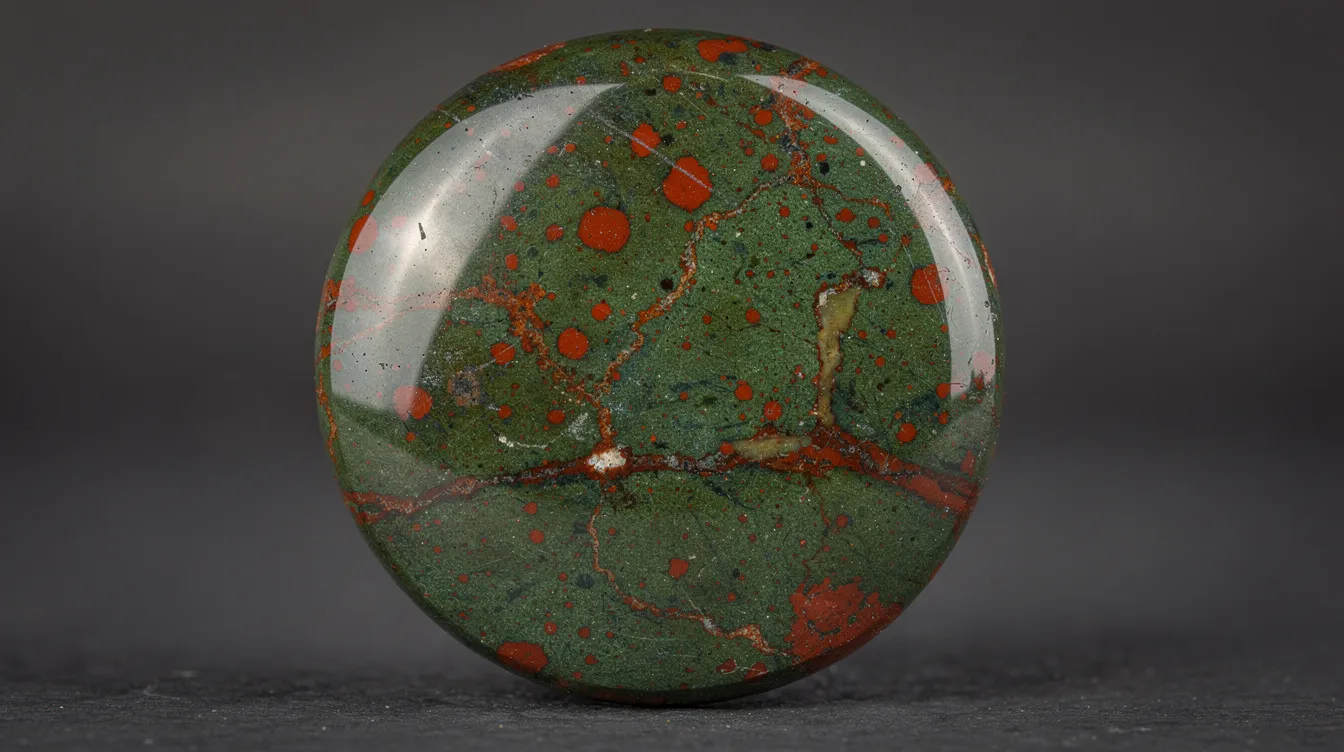
Bloodstone presents as a variety of chalcedony that ranges from opaque to slightly translucent, featuring a dominant dark green body punctuated by distinctive red to brownish-red spots. Understanding these physical characteristics helps buyers and collectors evaluate quality and authenticity.
Color and Appearance:
-
Deep forest-green background serves as the primary body color
-
Scattered blood-red to rusty orange spots or streaks create the signature mottled effect
-
Red coloration stems from iron oxide inclusions, primarily hematite
-
Green matrix results from finely dispersed chlorite, actinolite, or hornblende minerals
-
Color distribution varies significantly between specimens, affecting overall value
Texture and Surface Qualities:
-
Waxy to vitreous luster when properly polished
-
Surfaces feel smooth, cool, and dense to the touch
-
Overall opacity precludes any sparkle or transparency
-
Ideal for cabochon cuts, tumbled beads, and intricate carvings like seals or figurines
Hardness and Durability:
-
Registers 6.5–7 on the Mohs scale, making it durable for everyday wear
-
Tough and resistant to breaking when properly mounted in jewelry
-
Conchoidal fracture pattern means impacts can produce sharp chips if mishandled
-
Suitable for rings, bracelets, pendants, and earrings with secure settings
Crystal Structure:
-
Microcrystalline quartz with fibrous aggregates too minute for unaided visibility
-
Does not display visible crystals like amethyst or rock crystal
-
Fine-grained texture ensures uniformity in cut stones
Natural Forms:
-
Occurs as nodules, waterworn pebbles from alluvial deposits, and vein fillings
-
Found within volcanic basalts and sedimentary layers
-
Most effectively showcased in domed cabochons that highlight undulating inclusion patterns
-
Also available as tumbled stones and small decorative carvings
Chemical Composition and Gemology
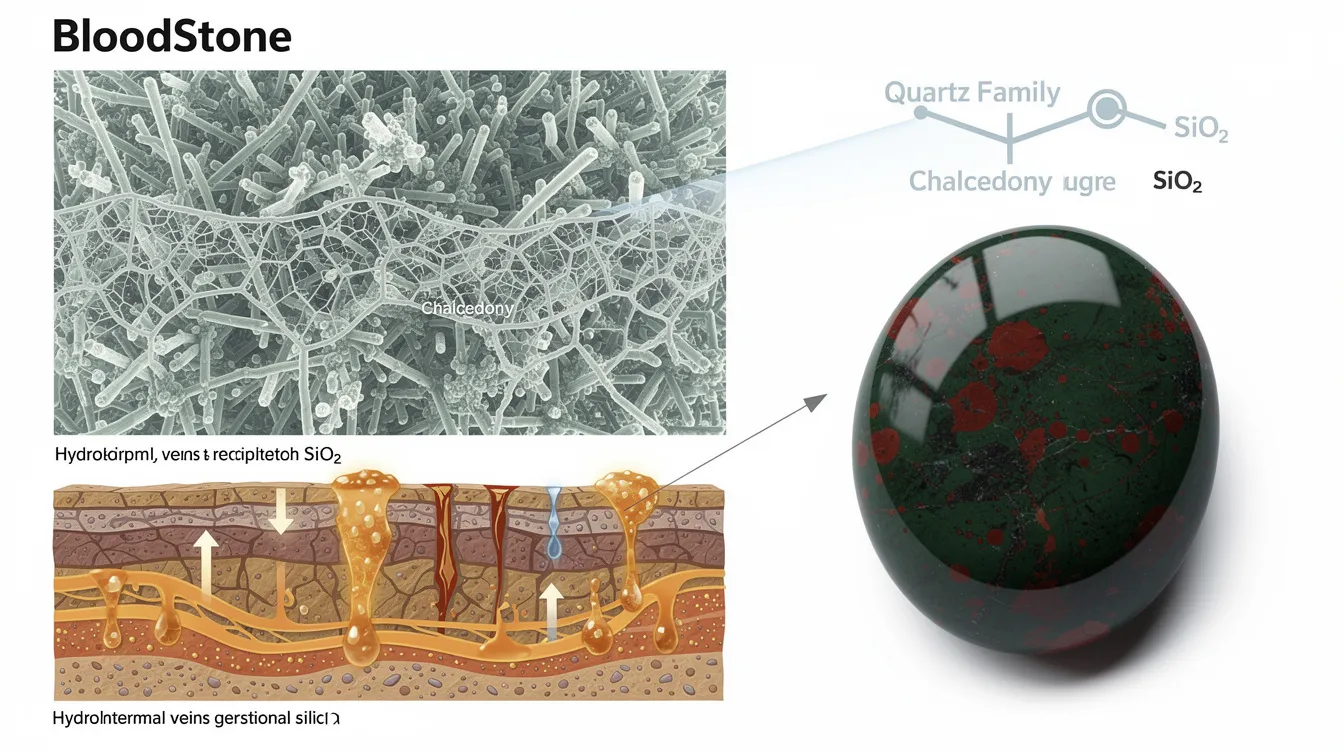
At its foundation, bloodstone belongs to the chalcedony subgroup of the quartz family, sharing the chemical formula SiO₂ with other silicon dioxide minerals. This microcrystalline arrangement forms through slow precipitation of silica from hydrothermal fluids over geological timescales.
Base Composition:
-
Nearly pure silicon dioxide in a microcrystalline structure
-
Trace mineral inclusions create the characteristic color combination
-
The presence of various elements influences both appearance and value
Green Color Origin:
-
Finely dispersed chlorite (magnesium-aluminum-iron silicate) particles
-
Amphibole minerals like actinolite or hornblende contribute green tones
-
These elements introduce minor iron content throughout the stone
-
Particle distribution must be fine enough to create even body color without disrupting cohesion
Red Spot Formation:
-
Iron oxides, predominantly hematite (Fe₂O₃), create the blood-like spots
-
Some spots contain localized jasper-like quartz enriched with iron
-
Density, size, and distribution of these inclusions directly impact desirability
-
Vivid, well-distributed spotting enhances value; overly clustered or faint marks diminish it
Gemological Constants:
-
Refractive index ranges from 1.530 to 1.540, typical of chalcedonies
-
Specific gravity measures 2.58 to 2.64, influenced by inclusion density
-
Fractures conchoidally without cleavage, contributing to durability
-
These constants aid laboratory identification via refractometry or densitometry
Optical Properties:
-
Pervasive opacity distinguishes bloodstone from translucent chalcedony varieties
-
Unlike carnelian (iron-induced orange-red) or chrysoprase (nickel-silica green), bloodstone does not transmit light
-
Non-pleochroic and birefringence-free under polarized light
-
Clarity assessment focuses on inclusion quality rather than transparent characteristics
Geological Formation and Sources
Bloodstone emerges through the deposition of silica-rich hydrothermal fluids into cavities, veins, and fractures within host rocks. This process incorporates ambient iron oxides and green silicates, crystallizing over geological timescales into characteristic nodules and seams at temperatures typically below 200°C.
Geological Settings:
-
Basaltic volcanics provide ideal vesicle fillings for formation
-
Sedimentary alluvial gravels and riverbeds polish pebbles smooth over time
-
Secondary deposits occur in hydrothermal veins cutting through sedimentary sequences
-
Both volcanic activity and sedimentary diagenesis contribute to deposit formation
Major Modern Sources:
-
India dominates contemporary production, particularly from Krishna River gravels in Andhra Pradesh and the Deccan Traps region, yielding intense green material with bold red spotting
-
Brazil contributes specimens from Minas Gerais pegmatites and alluvials, though often more subdued in color
-
Australia produces material from Western Australian basalt quarries with variable quality
-
China offers deposits from Inner Mongolian regions
-
United States yields specimens from Oregon’s volcanic terrains and California’s coastal pebbles
-
Germany and the Czech Republic represent European sources with historical significance
Historical Localities:
-
Premium heliotrope historically came from Helgoland Island in the North Sea, celebrated in Middle Ages lore for exceptional purity
-
Mediterranean outcrops in Sicily and Armenia supplied ancient Greek and Roman artisans from the 4th century BCE onward
-
Archaeological evidence includes intaglios and seals from these classical sources
Quality Variations:
-
Indian stones frequently display superior color saturation and spot vibrancy
-
Brazilian and Australian variants may appear more grey-tinged or muted
-
Origin influences market segmentation and pricing
-
Specimens from historic localities like Madagascar carry collector interest
Cultural History, Symbolism, and Metaphysical Beliefs
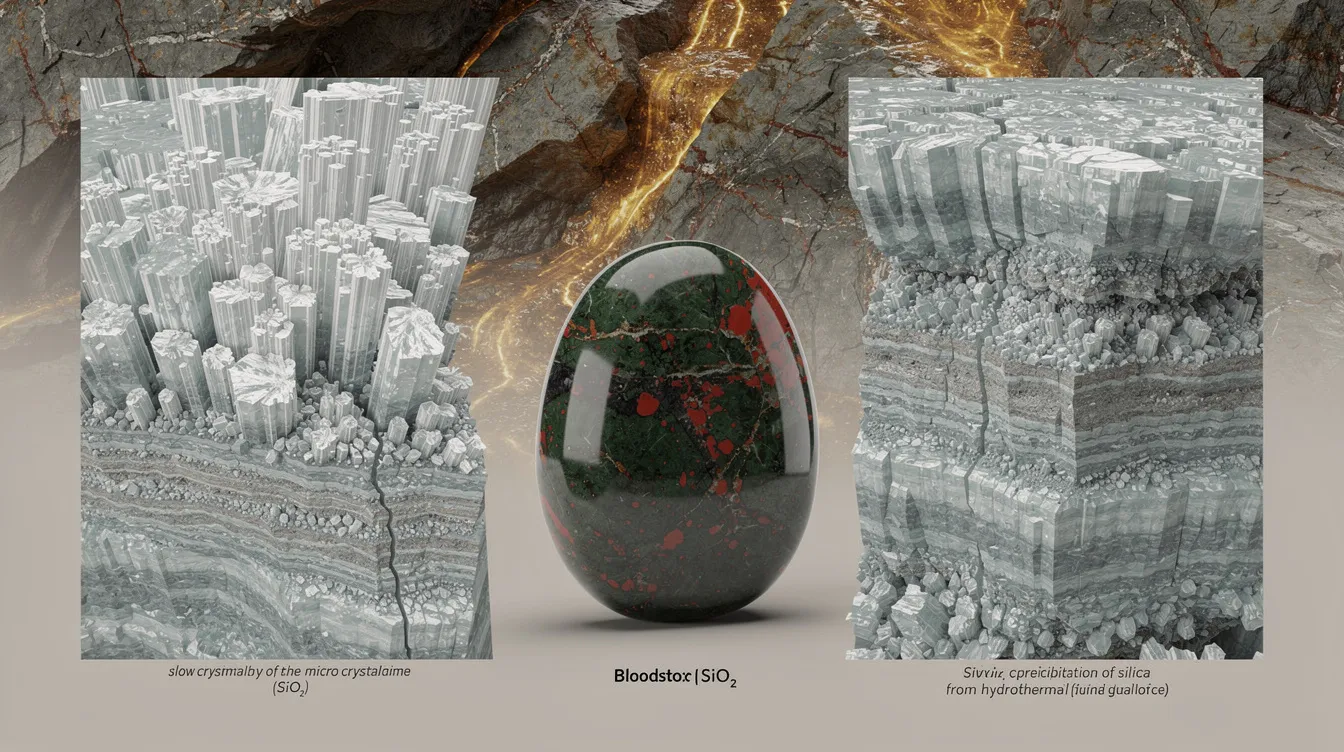
At its foundation, bloodstone belongs to the chalcedony subgroup of the quartz family, sharing the chemical formula SiO₂ with other silicon dioxide minerals. This microcrystalline arrangement forms through slow precipitation of silica from hydrothermal fluids over geological timescales.
Classical Antiquity (4th Century BCE – 3rd Century CE):
-
Greek and Roman lapidaries carved bloodstone into signet rings and intaglios
-
Common depictions included Mars, the god of war, and heroic figures like Alexander the Great
-
Pliny the Elder documented beliefs that the stone could turn the sun blood-red when immersed in water and exposed to sunlight
-
Egyptian scarabs and Mesopotamian seals employed bloodstone for vitality charms
-
The gem was mentioned in numerous classical texts as capable of conferring invisibility and weather control
-
In ancient Mesopotamia, bloodstone was used in divination and worn as amulets to ward off evil forces
Medieval Christian Europe (5th–15th Centuries):
-
Legends claimed the red spots materialized from Christ’s blood spilling onto jasper at Golgotha
-
This narrative transformed bloodstone into a martyrdom symbol worn by pilgrims
-
Carved into rosary beads and reliquaries throughout the Middle Ages
-
The 13th-century Lapidario of Alfonso X amplified these religious associations
-
Considered a stone of sacrifice, piety, and divine protection
-
Throughout the Middle Ages, bloodstone was used to stop bleeding and as protection against evil and plague
Renaissance Period (15th–16th Centuries):
-
Naturalists like Camillo Leonardi reiterated powers of eloquence, weather mastery, and poison detection
-
Giorgio Vasari’s biography recounts how a bloodstone placed on his back miraculously halted a hemorrhage
-
Combined ancient wisdom with emerging scientific curiosity
-
Sailors carried bloodstone for protection during sea voyages, believing it could calm storms
-
The gem appeared in numerous lapidaries as a source of happiness and vitality
Modern Metaphysical Associations:
-
Aligned with the root chakra for grounding survival instincts
-
Connected to the heart chakra for compassionate vitality
-
Practitioners believe it enhances circulation, immunity, and detoxification of blood, liver, and spleen
-
Purportedly aids anemia relief, inflammation reduction, and emotional resilience against stress, especially when incorporated into daily crystal bracelet practices
-
Used for root-heart balancing to foster intuition and creativity
-
Bloodstone is traditionally believed to support blood circulation and boost the immune system
-
Bloodstone is known to reduce irritability and impatience, fostering a calm, focused mind
-
Bloodstone is associated with courage and justice, often believed to provide strength in high-pressure situations
-
Bloodstone is traditionally associated with bravery and vitality, often linked to the Roman god Mars due to its blood-like appearance
-
Bloodstone has been referred to as the 'Martyr's Stone' due to its association with the blood of Christ
-
Bloodstone is still commonly ground down and sold in India as an aphrodisiac and for purifying the blood
Bloodstone Price, Quality Factors, and Buying Tips
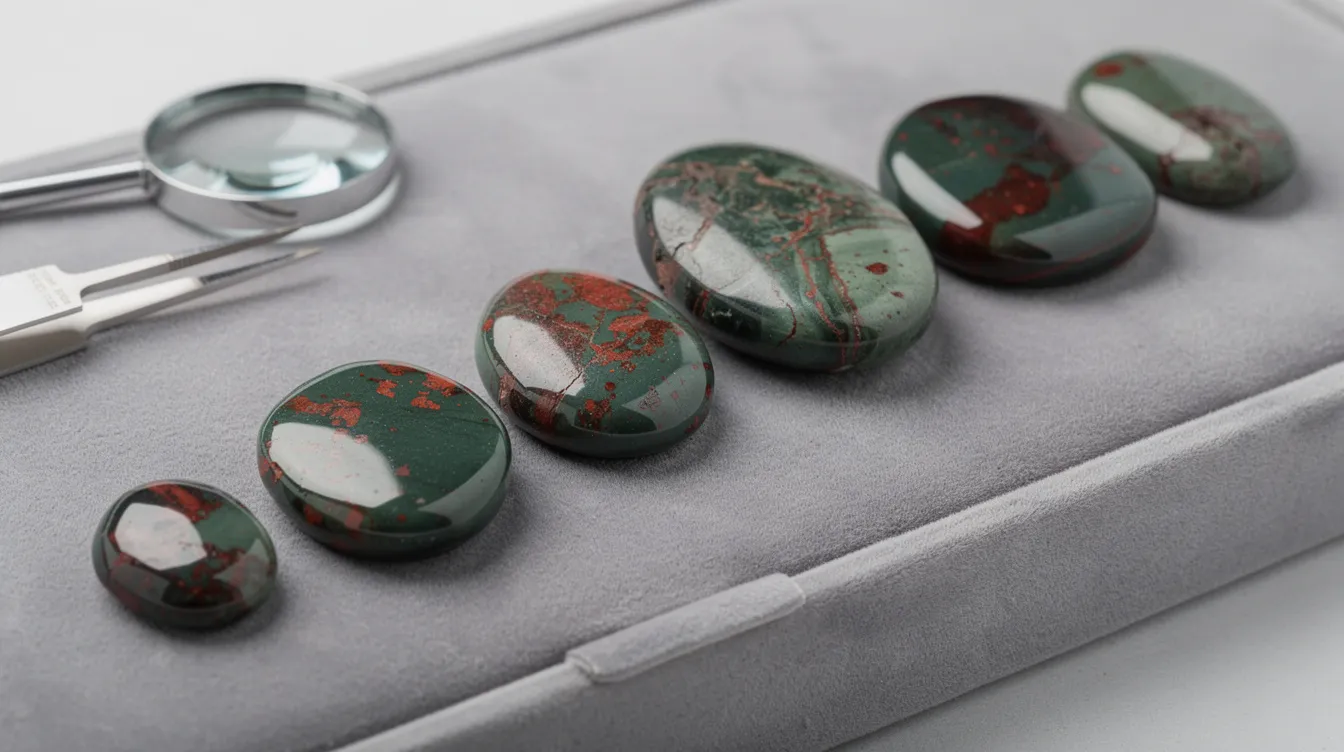
Bloodstone remains one of the more accessible gems in the market, making it an excellent entry point for collectors. Prices depend primarily on color intensity, red spot prominence and patterning, cut precision, and size—without approaching the stratospheric values of rare gems like diamonds or sapphires.
Key Quality Factors:
-
Body Color: Premium specimens display deep, uniform forest-green without greyish or brownish undertones
-
Spot Quality: Vivid deep red or rust-orange hematite spots should be clearly visible and well-contrasted
-
Distribution: Spots should be plentiful yet balanced—not sparse wisps nor overwhelming clusters
-
Pattern: Dynamic streaks or “landscape” motifs command premiums over random scattering
-
Symmetry: Eye-catching, balanced distributions enhance collector appeal
Size and Cut Impact:
-
Larger pieces over 10 carat weight with exceptional spotting fetch higher per-carat rates due to scarcity
-
Dome height in cabochons should maximize inclusion visibility
-
Antique carvings like 18th-19th century heritage-style signet rings with provenance can reach hundreds or thousands of dollars
-
Craftsmanship and historical significance dramatically influence valuable antique pieces
Price Ranges (Retail, USD):
|
Category |
Typical Price Range |
|---|---|
|
Small tumbled stones, basic cabochons |
$1–5 per piece |
|
Mid-grade beads, 5–15mm cabochons |
$5–20 each |
|
Fine jewelry settings in silver |
$20–100 |
|
Bespoke or antique items |
$100+ |
|
These ranges reflect 2020s retail from reputable dealers and remain subject to market fluctuations. |
|
|
Practical Buying Tips: |
|
-
Inspect under natural and white light for color fidelity and inclusion authenticity
-
Probe edges for chips or fractures common in pebble-form specimens
-
Reject pieces showing surface painting or dye (detectable by scratching or acetone tests)
-
Prioritize “natural chalcedony” certification over vague “bloodstone jasper” labels
-
Request origin information when possible—Indian material often represents the highest quality graded specimens
-
Error on the side of caution with suspiciously low prices
Authenticity, Look-alikes, and Imitations
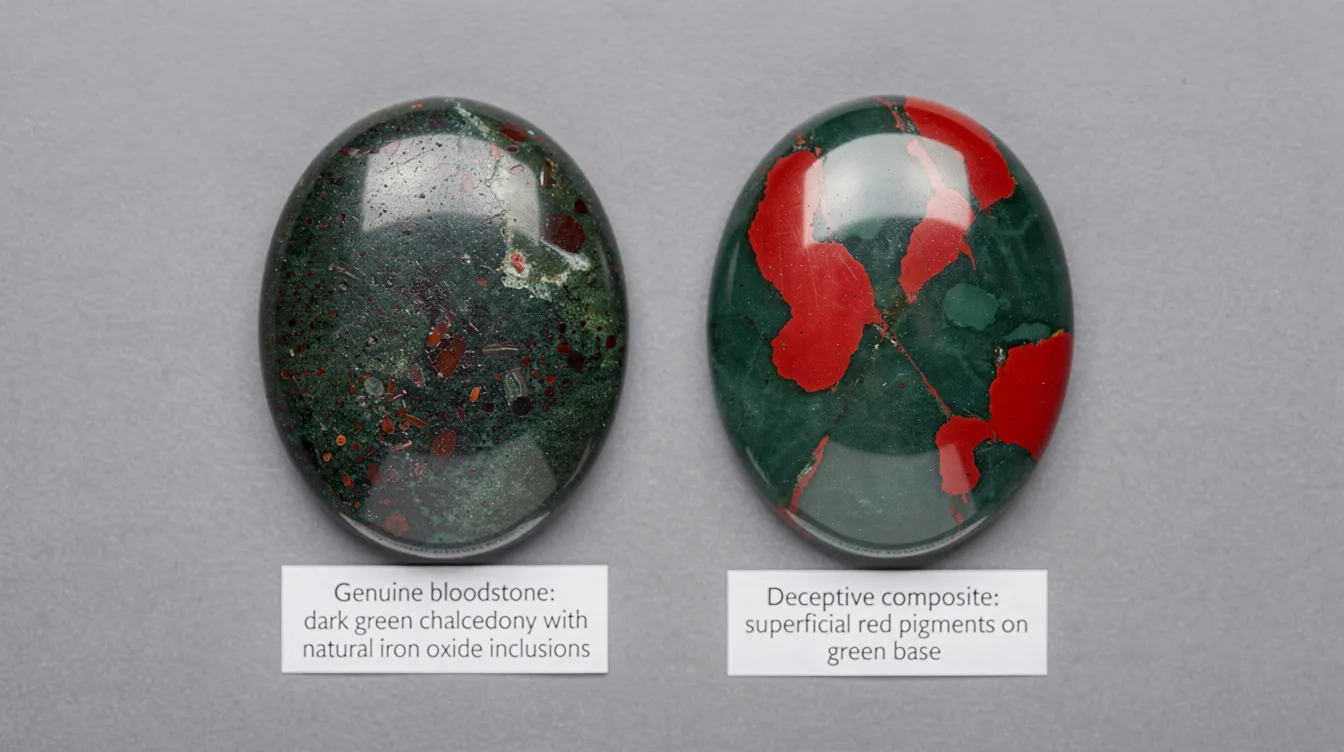
Distinguishing genuine bloodstone from deceptive green-red composites is essential in a market where misidentification occurs frequently. True specimens are dark green chalcedony quartz bearing naturally dispersed iron oxide inclusions that permeate the matrix rather than superficially applied pigments.
Identifying Authentic Bloodstone:
-
Waxy luster distinguishes it from glassy imitations
-
Opaque uniformity throughout the specimen
-
Granular microstructure visible under 10x loupe magnification
-
Fine chalcedony fibers intertwined with hematite flecks
-
Red spots occur naturally within the stone, not painted on surfaces
Common Look-alikes:
-
Green-red jaspers: Display blocky, less homogeneous textures and duller polish without chalcedony’s subtle sheen
-
Moss agate: Features dendritic black-green inclusions that mimic spots but lack red tones
-
Fancy jaspers: Ocean jasper or red jasper varieties show bolder banding absent in bloodstone’s subtle mottling
-
Serpentine: Sometimes confused due to green coloration but lacks red spotting entirely
Synthetic and Imitation Materials:
-
No widely available synthetic bloodstones exist on commercial scales
-
Glass composites and ceramic materials can replicate the mottled green-red appearance
-
Japanese “maple stone” (kaede-seki) glass imitates the palette with unnaturally uniform spotting
-
These imitations often display visible air bubbles, swirling striations, or excessive translucency
At-Home Identification Methods:
-
Compare luster: genuine specimens show waxy finish versus glassy fake materials
-
Search for air bubbles using magnification (indicates glass)
-
Check weight: authentic bloodstone’s 2.6 specific gravity feels denser than lightweight glass
-
Look for mold lines or overly perfect patterns suggesting manufactured origin
-
Test with jeweler’s loupe to observe fibrous versus uniform microstructure
Professional Verification:
-
Gemologists employ refractometry (1.53–1.54 RI confirms chalcedony)
-
Spectroscopy identifies iron signatures characteristic of genuine inclusions
-
Raman analysis confirms SiO₂ matrix composition
-
Consider professional authentication for valuable or antique pieces, particularly when pairing them with gold plated jewellery sets for special occasions
-
Reputable sourcing reduces risk more effectively than other methods of verification
Uses, Jewellery Design, and How to Wear Bloodstone
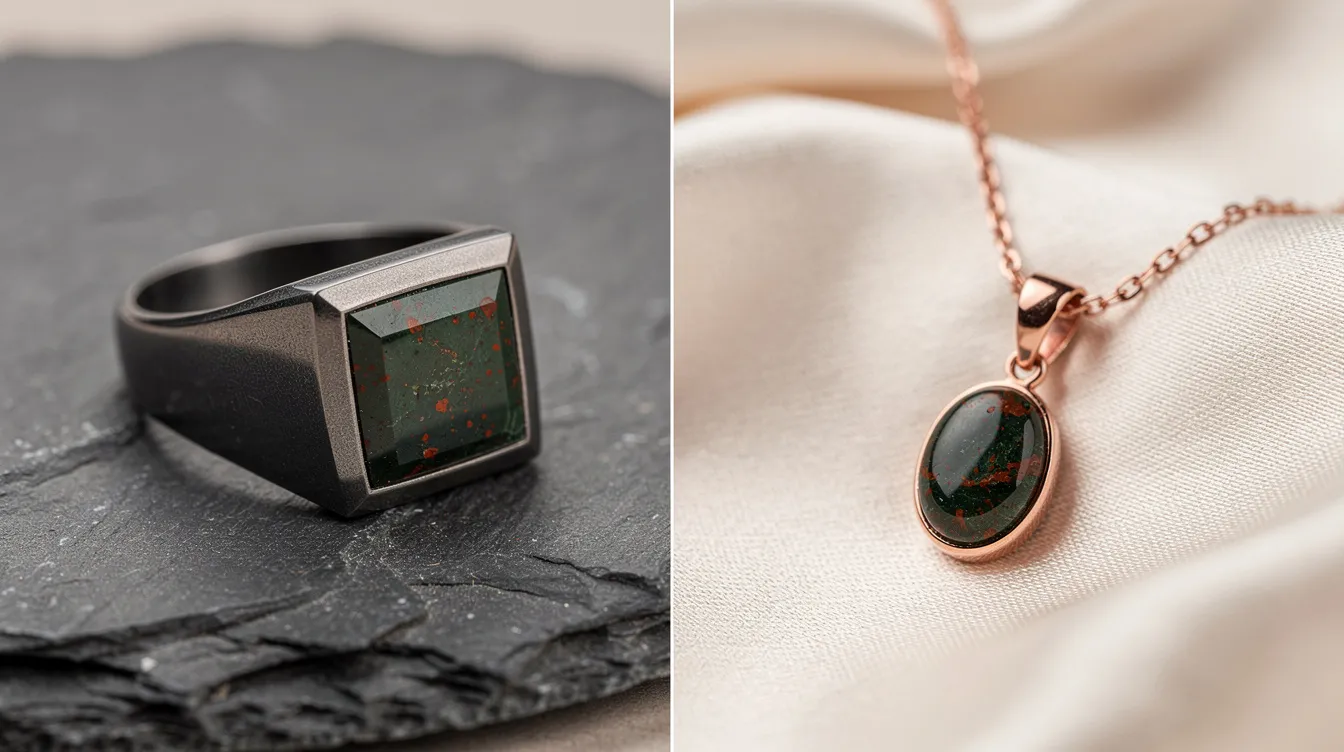
Bloodstone’s versatility makes it equally appealing in rugged masculine designs and elegant feminine pieces. From signet rings to delicate pendants, this gem adapts to diverse aesthetic preferences while maintaining its distinctive character.
Traditional Applications:
-
Signet rings for wax seals bearing family crests (particularly popular 16th–19th centuries) sit comfortably alongside modern sterling silver jewellery trends for 2025
-
Military and heraldic rings favored by knights and nobility anticipate contemporary silver jewellery styles
-
Devotional rosary beads in Catholic piety traditions now inspire symbolic motifs seen in current designs
-
Engraved medals depicting saints or crosses
-
Talismanic amulets carried by soldiers into battle echo protective symbolism in modern collections
-
Signet rings were historically used by noblemen to seal documents and remain popular in men's jewelry today, evolving alongside today's sterling silver trends
Modern Jewelry Trends:
-
Minimalist sterling silver gemstone pendants for everyday talismans
-
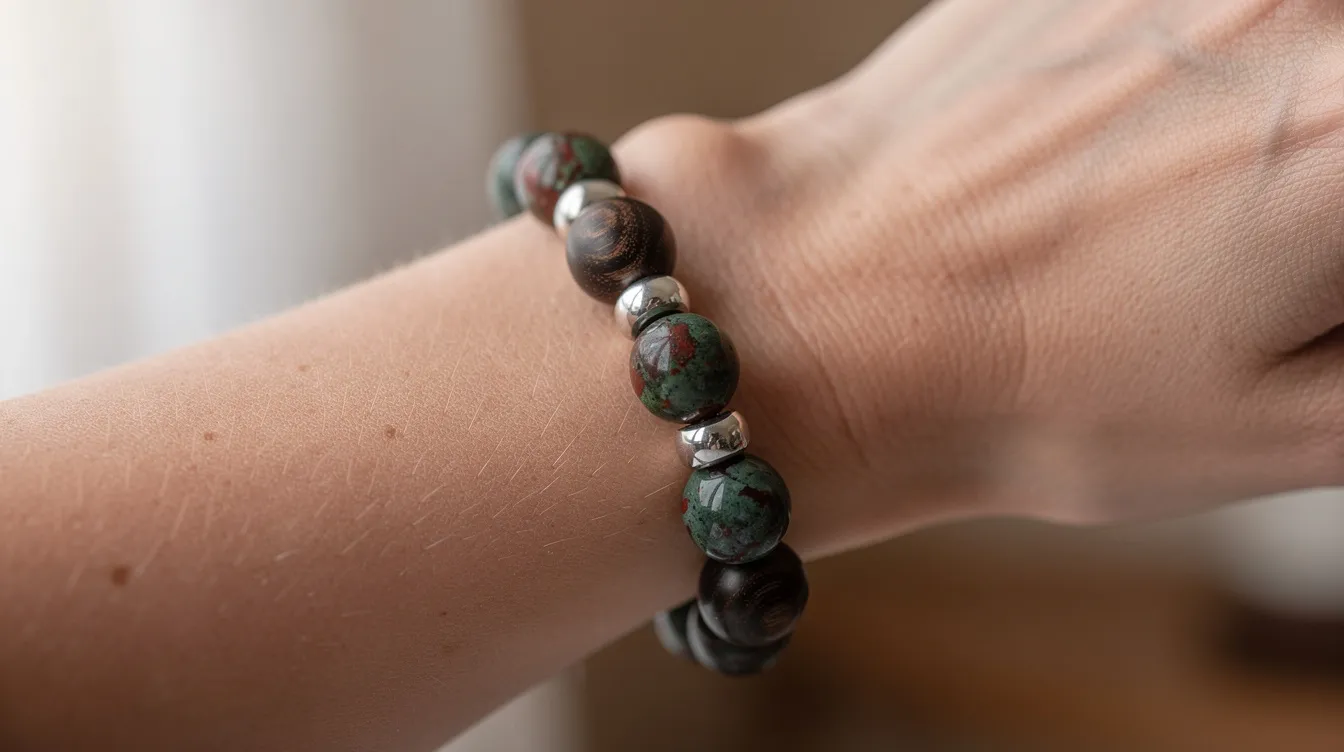
Rustic beaded bracelets in 6–8mm sizes or delicate clover bracelets with zirconia accents strung with stainless steel accents pair beautifully with classic sterling silver jewellery
-
Statement cocktail rings featuring oval or freeform cuts
-
Pairings with black onyx or smoky quartz bezels to amplify earthy depth
-
Men’s cufflinks and tie accessories in professional settings complement sterling silver circle stud earrings for coordinated looks
-
Princess cut shapes for contemporary ring designs within the growing world of affordable jewelry brands (though cabochons remain most common)
Metal Pairing Recommendations:
|
Metal |
Effect |
|---|---|
|
Cool contrast, contemporary edge, budget-friendly; explore more classic sterling silver designs |
|
|
Stainless steel |
Durable, modern masculine appeal |
|
Rose gold |
Warm tones, heirloom aesthetic |
-
Complements earthy tones: olive drab, charcoal, mahogany, brown
-
Serves as subtle accent in professional office wear (cufflinks, pocket seals) or paired with intricate sterling silver earrings
-
Functions as bold centerpiece in bohemian or gothic-inspired outfits
-
Pairs well with leather cord necklaces for rustic festival looks
-
Works effectively in layered bracelet combinations, especially when styled alongside sterling silver jewellery sets
Lithotherapy Considerations:
-
Wrist bracelets align with pulse points for perceived circulation benefits
-
Finger rings purportedly ground root chakra energy
-
Heart pendants amplify vitality symbolism for practitioners
-
Users report anecdotal stamina increases during high-stress pursuits like athletics or public speaking
Care, Cleaning, and Storage
Despite its commendable 6.5–7 Mohs hardness, bloodstone requires thoughtful care to preserve its polish and prevent damage. Proper maintenance ensures your pieces remain beautiful through years of wear.
Routine Cleaning Process:
-
Use lukewarm water with mild dish detergent
-
Apply a soft brush to gently dislodge grime from surface details
-
Rinse thoroughly under running water to remove all soap residue
-
Dry immediately with a lint-free microfiber cloth to prevent water spots
-
Clean after each wearing session for pieces exposed to skin oils or cosmetics
Cleaning Methods to Avoid:
-
Ultrasonic cleaners may damage porous inclusions or loosen glued settings
-
Steam cleaning risks thermal shock, particularly in antique pieces
-
Harsh household chemicals and abrasive cleaners can dull polish
-
Reserve mechanical cleaning methods for professional lapidaries
Storage Guidelines:
-
Keep bloodstone jewelry in separate compartments or soft fabric pouches
-
Isolate from harder gems like sapphire or diamond (both Mohs 9-10) to prevent scratches
-
Avoid tossing loose stones into mixed jewelry collection boxes
-
Store flat rather than stacked to prevent pressure damage
Environmental Precautions:
-
Remove before intense physical activity, swimming, or heavy manual work
-
Avoid exposure to strong acids (pool chemicals) and alkalis (ammonia cleaners)
-
Prolonged direct sunlight may fade rare color variations in some specimens
-
Extreme heat above 100°C risks fracturing tensioned inclusions
-
Keep away from cosmetics, perfumes, and hairsprays during application
Periodic Maintenance:
-
Inspect settings regularly for loosened prongs or compromised bezels
-
Professional repolishing remains viable for cabochons showing dull surfaces
-
Schedule annual professional inspection for valuable or antique pieces
-
Address any chips or fractures promptly to prevent further damage
Whether you’re drawn to bloodstone for its striking appearance, its rich history stretching from ancient Greece through the Middle Ages to today, or its metaphysical associations with vitality and courage, this gem offers accessible entry into meaningful jewelry collecting. Start your collection with a quality cabochon pendant, perhaps styled with a sterling silver pearl necklace, or choose a beaded bracelet as a meaningful jewelry gift, and you’ll quickly understand why this natural stone has captivated humanity for thousands of years.
Aquamarine: Meaning, Properties, and Uses
Aquamarine is a captivating gemstone belonging to the beryl family, prized for its serene light blue to blue-green hues that evoke the tranquil sea. Its name derives from the Latin 'aqua marina', meaning sea water, reflecting its ocean-like color.
Aquamarine Origins and Cultural Significance
Historically, aquamarine was believed to be the treasure of mermaids and was used by sailors as a protective charm against shipwrecks. In ancient cultures, it was valued for intaglio engraving and associated with therapeutic virtues and magical powers of luck and protection.
Geological Formation and Sources
Aquamarine found primarily in granite pegmatites and is mined in countries such as Brazil, Afghanistan, India, Madagascar, and others. The largest known aquamarine, the Dom Pedro, weighs approximately 10,363 carats and is housed in the National Museum of Natural History in Washington.
Mining and Extraction
The initial stages of aquamarine mining involve prospecting and exploration using geological mapping, remote sensing, and sampling to locate aquamarine-bearing geological formations. Aquamarine can be mined using both open-pit and underground techniques, depending on the operation size and deposit characteristics. The most popular large-scale extraction method is open-pit mining, which entails removing soil, vegetation, and rock cover to reveal the aquamarine-bearing ore.
After extraction, the ore is processed to extract the aquamarine crystals through crushing, cleaning, and methods like magnetic separation and gravity separation. The crystals are then sorted by size, shape, color, and clarity, and assessed by gemologists based on the four C's: color, clarity, cut, and carat weight.
Physical Properties and Jewelry Uses
Aquamarine's hardness ranges from 7.5 to 8 on the Mohs scale, making it durable and suitable for everyday wear. Its appealing light blue color pairs well with silvery metals like 925 silver or stainless steel and can also be combined with gold finishes for a more sophisticated look.
Aquamarine is primarily used for jewelry, including rings, earrings, necklaces, and bracelets, due to its appealing color and durability. Its crystal structure and clarity make it an excellent choice for various jewelry designs, from minimalist to elaborate pieces.
Conclusion
Both bloodstone and aquamarine offer unique beauty and rich histories, making them cherished choices for collectors and jewelry enthusiasts. Whether drawn to the earthy strength of bloodstone or the oceanic calm of aquamarine, these gemstones continue to inspire and captivate across cultures and ages.
Frequently Asked Questions (FAQs) About Bloodstone and Aquamarine
Q1: What is bloodstone, and how is it different from other green gemstones?
Bloodstone is a variety of chalcedony characterized by its dark green body color and distinctive red spots caused by iron oxide inclusions, primarily hematite. Unlike other green gemstones such as emerald or chrysoprase, bloodstone's opaque appearance and unique red spotting make it easily recognizable and symbolically rich.
Q2: Where is bloodstone commonly found?
Bloodstone is primarily found in India, which is the largest producer today, especially from the Krishna River gravels and Deccan Traps region. Other notable sources include Brazil, Australia, China, the United States, Germany, and the Czech Republic.
Q3: What does the name "aquamarine" mean?
Aquamarine derives from the Latin phrase 'aqua marina,' meaning sea water, a nod to its serene light blue to blue-green color that resembles the ocean.
Q4: How durable are bloodstone and aquamarine for everyday jewelry?
Bloodstone has a hardness of 6.5 to 7 on the Mohs scale, making it durable for various jewelry types but requiring some care to avoid chipping. Aquamarine is harder, ranging from 7.5 to 8 on the Mohs scale, making it suitable for everyday wear in rings, earrings, necklaces, and bracelets.
Q5: Can bloodstone and aquamarine be used together in jewelry?
Yes, while they have contrasting appearances—bloodstone’s earthy green and red hues versus aquamarine’s light blue tones—their complementary symbolism of courage and calm can make for meaningful paired pieces.
Q6: What are the metaphysical properties associated with bloodstone?
Bloodstone is traditionally believed to support blood circulation, boost the immune system, reduce irritability, and foster a calm, focused mind. It is also associated with courage, justice, and vitality, often linked to the Roman god Mars.
Q7: Are there any historical beliefs about bloodstone?
Yes, ancient Egyptians prized bloodstone for its supposed ability to grant invisibility and superhuman strength. The Greeks and Romans called it heliotrope, believing it could turn the sun red when submerged in water.
Q8: How should I care for bloodstone jewelry?
Clean bloodstone jewelry with warm soapy water and a soft brush. Avoid ultrasonic cleaners and harsh chemicals. Store pieces separately to prevent scratches, and remove jewelry before heavy physical activity or exposure to chemicals.
Q9: Where is aquamarine typically found?
Aquamarine is found in granite pegmatites across Brazil, Afghanistan, India, Madagascar, and several other countries. The largest known aquamarine, the Dom Pedro, was found in Brazil.
Q10: What metals pair well with aquamarine in jewelry?
Aquamarine’s light blue color pairs beautifully with silvery metals such as 925 silver or stainless steel. It can also be combined with gold finishes like gold plated or gold filled for a more sophisticated look.
Q11: What factors affect the value of bloodstone?
The value of bloodstone is primarily determined by the intensity of its green body color and the number, size, and distribution of red or dark orange spots. Stones with more vivid and well-distributed spots typically command higher prices.
Q12: Is bloodstone still used in traditional practices today?
Yes, bloodstone is still commonly ground down and sold in India as an aphrodisiac and for purifying the blood, maintaining its place in traditional medicine and cultural practices.
Q13: How is aquamarine mined?
Aquamarine is mined through both open-pit and underground techniques. Open-pit mining is the most popular large-scale method, involving removal of soil and rock to access aquamarine-bearing ore, which is then processed to extract and sort the crystals.
Q14: What is a notable example of a large aquamarine stone?
The Dom Pedro aquamarine, weighing approximately 10,363 carats, is the largest known example. It was found in Brazil and is displayed at the National Museum of Natural History in Washington.
Q15: Can aquamarine fade or change color over time?
Some rare varieties of aquamarine, like maxixe, may shortly fade in color when exposed to sunlight. However, most aquamarine stones maintain their color well with proper care.
Leave a comment