

Labradorite captures attention like few other gemstones can, making it a standout among gemstones labradorite enthusiasts. This guide covers the meaning, properties, and uses of labradorite gemstones for jewelry lovers, collectors, and those interested in crystal healing, highlighting what makes this stone unique and valuable. With its calcium-enriched plagioclase feldspar composition and mesmerizing iridescent flashes—called labradorescence—labradorite offers both visual magic and a rich metaphysical reputation. Whether you are drawn to its aurora-like colors, its transformative symbolism, or its versatility in jewelry and décor, labradorite matters for anyone seeking a gemstone that combines beauty, energy, and history.
Overview of Labradorite
The labradorite stone was first discovered in 1770 on Paul Island off the coast of Labrador, Canada, by Moravian missionaries who were immediately struck by its unusual optical effect. Since then, significant deposits have been found across Madagascar, Canada, Finland, Russia, Ukraine, Australia, and the United States, especially in Oregon.
What draws people to this gem is a combination of factors:
-
Visual appeal: The stone transforms from a dull gray or black base to brilliant spectral displays reminiscent of the aurora borealis
-
Metaphysical reputation: Crystal traditions associate it with transformation, intuition, and protection
-
Versatility: It works equally well in fine jewelry, meditation practices, and home décor
It’s worth noting that healing and spiritual uses come from longstanding crystal healing traditions. These properties are not scientifically proven and should complement—never replace—professional care.
What is Labradorite? (Geology, Origin, and Characteristics)
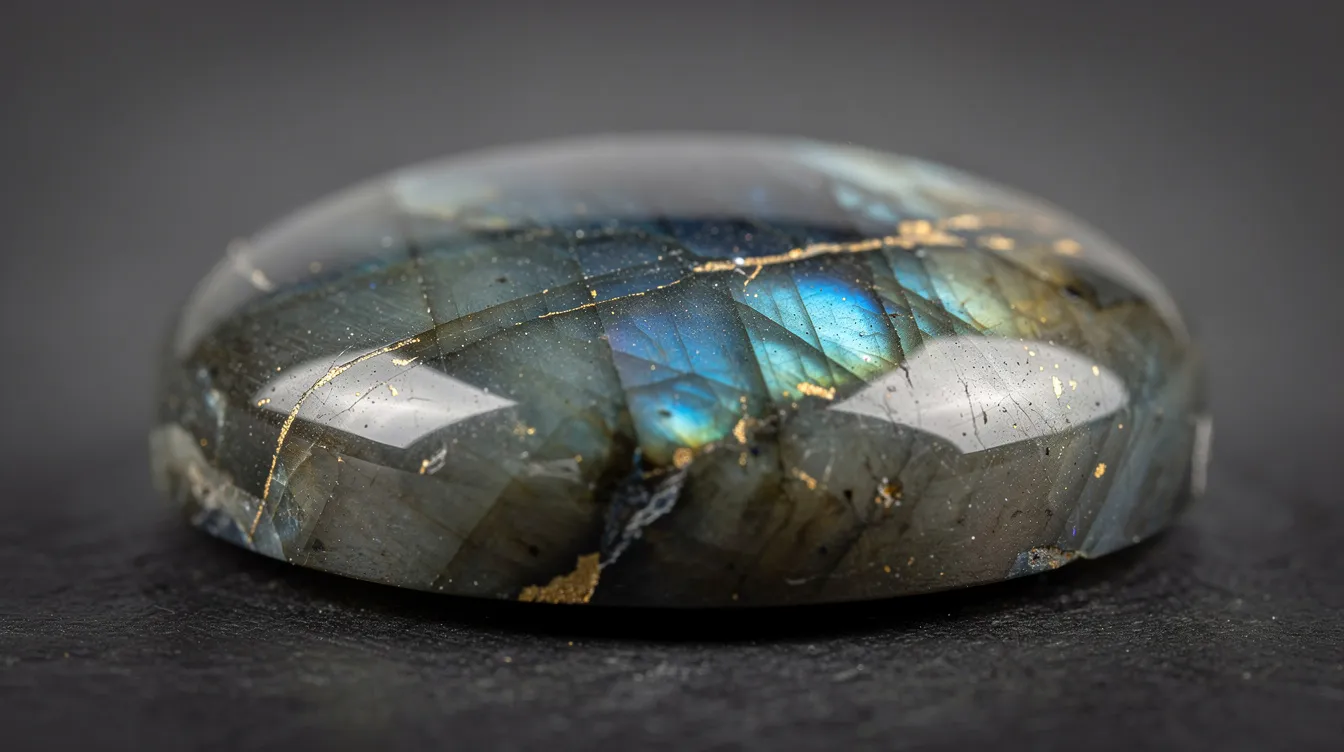
Labradorite is a calcium-enriched plagioclase feldspar mineral. It belongs to the plagioclase feldspar group with a Mohs hardness of 6 to 6.5 and specific gravity between 2.68 and 2.75. This makes it suitable for everyday jewelry with reasonable care, though it is susceptible to scratching from harder materials like quartz.
Labradorescence is an optical phenomenon that occurs when light hits microscopic, layered internal structures, scattering it to create vibrant flashes of blue, green, yellow, orange, or sometimes purple and pink. The signature labradorescence occurs when light interacts with thin, plate-like layers of albite and oligoclase within the stone. As you tilt the gem, these internal structures diffract light to produce metallic-looking flashes in blues, greens, golds, yellows, and sometimes purples or reds.
Key geographic sources include:
-
Canada: The original Labrador and Newfoundland deposits remain classic sources
-
Finland: Spectacular “Spectrolite” from Ylämaa, commercialized in the mid-20th century, is considered the most prized variety for its intense multi-color flashes. Spectrolite is a high-quality variety of labradorite from Finland that shows a full color spectrum.
-
Madagascar: Known for high-quality material with vivid displays
-
Russia and Ukraine: Substantial production of quality specimens
-
Oregon, USA: Produces rarer transparent faceted stones in colorless, yellow, green, or coppery hues
-
Australia: Another source of fine labradorite specimens
Regarding trade names: Spectrolite specifically refers to intense Finnish labradorite. Rainbow Moonstone is a type of labradorite that is technically transparent to translucent white with strong blue to rainbow schiller—a nuance worth knowing when shopping.
Physical Appearance and Color Range
The labradorite range of appearances starts with typical body colors from gray to dark gray, brownish, or nearly black. Against this base, metallic-looking flashes appear predominantly in blue and green but extend across the full spectrum.
-
Opacity: Opaque to translucent
-
Luster: Vitreous (glassy) to pearly, enhancing the ethereal sheen
-
Rare varieties: Transparent faceted Oregon stones showcase subtle yellow, green, or coppery hues without dramatic schiller
The quality of color play strongly affects value—stronger, full-spectrum displays command premiums over blue-only flashes. Beyond gems, labradorite-bearing rocks are polished into large slabs for building stones, countertops, and architectural facades where the blue sheen dances across surfaces as viewers move.
Historical Discovery and Legends
Moravian missionaries documented labradorite on Labrador’s coast in 1770, introducing it to European jewelry by the late 18th century. The stone appeared in Victorian pieces prized for their exotic iridescence and later in bold Art Deco designs of the early 1900s.
An enduring Inuit legend connects labradorite to the aurora borealis. According to the story, the Northern Lights were once trapped inside coastal rocks until a warrior struck them with his spear, releasing the light. The fragments left behind became labradorite—a narrative explaining why the stone seems to contain dancing light within.
Historically, shamans and healers have used labradorite to access deeper states of awareness, enhance psychic gifts, and provide protection against negative energies.
By the 1800s, lower-grade material found practical use in decorative stonework and building cladding, demonstrating the gem’s versatility across applications.
Meaning and Symbolism of Labradorite
Labradorite is widely known as a stone of magic, intuition, and hidden potential, often featured alongside other healing crystals and gems for wellness and energy balance. Modern crystal literature frames it as a symbol of transformation, representing the shift from darkness to enlightenment—much like finding light in life’s challenges.
Core symbolic associations include:
-
Transformation: Supporting personal evolution and life changes
-
Inner light: Revealing hidden truths and potential within oneself
-
Protection: Shielding against negativity and unseen forces
-
Mystery: Connection to the night sky and cosmic consciousness
The stone appeals to energy workers, empaths, and anyone navigating significant transitions. These symbolic associations arise from spiritual and metaphysical traditions rather than geological science, though the stone’s optical physics provides a tangible basis for its aura of mystery.
Cultural and Spiritual Associations
Shamans, healers, and mystics in contemporary spiritual communities favor labradorite for enhancing inner vision and psychic abilities. The flashing colors evoke aurora themes of cosmic light and hidden realms.
Practical uses in spiritual communities include:
-
Holding during meditation circles for boosting intuition
-
Placement on ritual altars or crystal grids for awakening and truth-seeking
-
Integration into dreamwork and intuitive practices for deeper self-knowledge
The stone serves as a bridge between physical and spiritual worlds, reinforcing its role in practices focused on spiritual awareness and spiritual growth.
Healing and Metaphysical Properties of Labradorite
The healing properties attributed to labradorite are based on crystal healing traditions and personal belief. They should complement—not replace—professional medical or psychological care.
Crystal healers commonly associate labradorite with:
-
Emotional balance during turbulent periods
-
Mental clarity and focus
-
Energetic protection from draining influences
-
Support for transformation and intuition development
In crystal healing, labradorite is particularly associated with the Throat and Third Eye chakras. It is often used as a psychic shield, forming an aura of protection around the wearer and deflecting unwanted energy.
Emotional and Mental Benefits
Labradorite is said to calm anxiety and soothe emotional turbulence, particularly during uncertainty or transition. Users report it helps reduce stress and brings inner calm when life feels chaotic.
Additional emotional and mental associations include:
-
Building self confidence and inner resilience
-
Quieting mental chatter for improved focus
-
Encouraging creativity, imagination, and original problem-solving
-
Supporting the courage to follow inner wisdom despite external pressure
These healing benefits make it popular among creative professionals and those facing challenging decisions requiring perseverance.
Protective and Energetic Properties
Many believe labradorite functions as a protective shield against negative energies and emotional overload. This powerful energy makes it favored for:
-
Maintaining personal boundaries and aura integrity
-
Supporting therapists, caregivers, and highly sensitive people in intense environments
-
Creating home protection grids around living spaces
-
Carrying during travel or emotionally charged events
The stone’s ability to deflect unwanted influences while supporting awareness of subtle energy makes it a powerful ally for empaths.
Chakra and Spiritual Connections
Labradorite’s chakra connections center primarily on the upper energy centers:
-
Third Eye Chakra (Ajna): The primary connection—supports intuition, insight, and inner truth. Practitioners use it to enhance intuition and access inner wisdom
-
Throat Chakra: Linked to clearer, more authentic communication, particularly when expressing spiritual or emotional truths
-
Crown Chakra: Occasional associations with higher consciousness, meditation, and cosmic awareness
These connections support overall spiritual growth and the flow of energy through the upper chakras, especially when combined with healing crystal jewellery aligned with the seven chakras.
How to Use Labradorite in Daily Life
Labradorite works beautifully as jewelry, meditation tools, and home décor. The key is combining aesthetic enjoyment with mindful intention—whether for protection, clarity, or intuition. Here are several main approaches to incorporating this gem into your routine.
Wearing Labradorite Jewelry
Labradorite is commonly cut into gemstones for jewelry, including rings, pendants, and beads, due to its ethereal look and iridescent qualities. Labradorite can be fashioned into cabochons, beads, and pendants for jewelry. Labradorite jewelry is considered unique as every stone has individual flash patterns, making each piece one of a kind and is often highlighted among essential healing crystal jewellery for modern wellness.
Options include:
|
Style |
Best For |
|---|---|
|
Pendants/necklace |
Communication, throat chakra work |
|
Rings |
Constant contact, focus reminders |
|
Bracelets/beads |
Personal protection, energy work |
|
Metal pairing suggestions: |
|
-
Sterling silver or stainless steel for cool, modern aesthetics
-
Yellow gold or gold vermeil for warmer, luxurious styling
-
Oxidized silver for mystical, antique appeal
When you wear labradorite near the throat or wrists, you support communication and personal protection in work or social settings.
Meditation and Spiritual Practice
Meditating with labradorite can deepen your state of calm and intuition. Holding a polished stone or placing it on your Third Eye during meditation may help clear mental clutter and enhance psychic visions. Use it during new moon or full moon rituals for setting intentions.
Using labradorite during goal-setting rituals can encourage perseverance and help overcome obstacles, making it a supportive tool for personal growth and transformation, especially when combined with other crystals that foster trust and emotional healing.
Home, Office, and Sleep Space Placement
In home décor, labradorite can be used in raw or polished form for tables, altars, or terrariums, enhancing beauty and positive energy in the space. Labradorite can also be carved into worry stones or massage wands, providing both aesthetic appeal and practical use for stress relief and relaxation.
Placing labradorite strategically throughout your spaces maximizes its benefits:
-
Desk or workspace: A slab near computers symbolizes mental clarity and energetic shielding
-
Entry table: A freeform specimen filters incoming energy and creates a stunning focal point
-
Bedroom: Bedside placement enhances dream recall and lucid dreaming
Labradorite in Feng Shui
When used in Feng Shui, labradorite helps to shift the atmosphere of a space, promoting clarity, balance, and renewed energy flow. Its iridescent sheen reflects not just light, but subtle energy, helping to dissolve energetic blockages and encourage smooth chi circulation.
According to the Bagua map:
-
North (Career): Supports professional transitions and guidance
-
Northeast (Knowledge/Spirituality): Enhances learning and spiritual development, particularly when you incorporate chakra bracelets designed for balance and well-being
-
Meditation corners or altars: Defines sacred space and creates protective energetic boundaries
Astrological, Feng Shui, and Crystal Pairings
While not limited to a single zodiac sign, labradorite appears frequently in astrology, Feng Shui, and crystal combinations for those seeking transformation and protection. Commonly associated signs include Leo, Sagittarius, and Scorpio, though it appeals to anyone exploring mysticism and deeper awareness.
Labradorite is often regarded as a psychic enhancer, heightening clairvoyance, telepathy, and other extrasensory perceptions, making it a favored stone for spiritual seekers, much like turquoise with its rich spiritual and protective properties.
Best Crystal Combinations with Labradorite
Pairing crystals amplifies specific intentions:
|
Pairing |
Purpose |
|---|---|
|
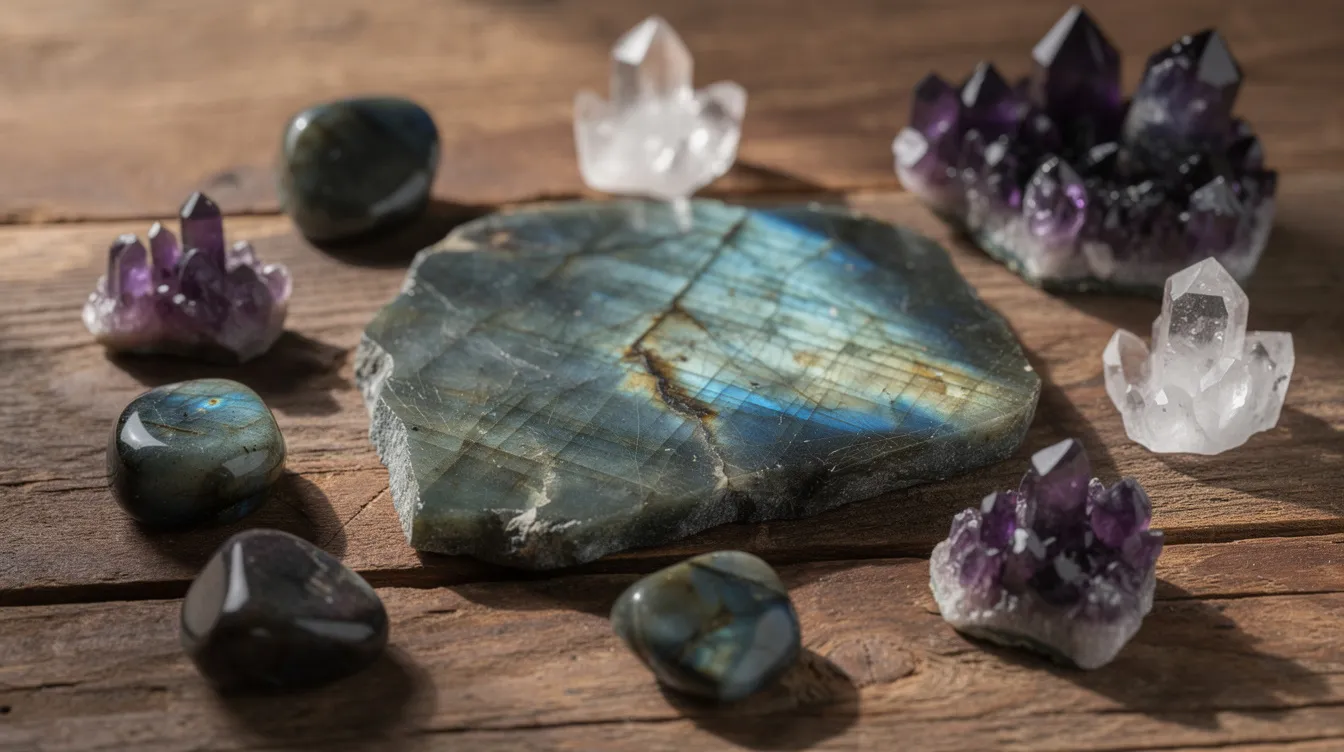
Labradorite + amethyst |
Deepens intuition while maintaining calm—excellent upper-chakra synergy |
|
Labradorite + black tourmaline |
Grounded protection balancing visionary energy with stability |
|
Labradorite + clear quartz |
Amplifies intentions and boosts overall energy |
|
Labradorite + hematite |
Supports manifestation with grounding |
|
Create a small trio on your desk or nightstand tailored to your specific goals—whether creativity, protection, or focus. |
|
 |
|
Labradorite Jewelry, Décor, and Collecting
Labradorite is commonly cut into gemstones for jewelry, including rings, pendants, and beads, due to its ethereal look and iridescent qualities. Labradorite can be fashioned into cabochons, beads, and pendants for jewelry.
From fine faceted gems and cabochons to polished slabs for interior design, labradorite offers options across the spectrum. Strong labradorescence, appealing color combinations, and excellent polish define quality pieces.
Popular Jewelry Styles and Settings
Common jewelry applications include:
-
Statement pendants with large, high-flash cabochons
-
Cocktail rings showcasing dramatic color play
-
Beaded bracelets with tumbled stones for everyday wear
-
Boho-style necklaces mixing labradorite with other minerals
-
Minimalist earrings highlighting natural beauty
For evening impact, choose pieces featuring large cabochons in geometric bezel settings. Casual everyday pieces work well with simple beads and oxidized silver frames.
Home and Workspace Décor
Polished labradorite slabs make dramatic statement pieces in living rooms and offices. The stone’s form adapts to multiple applications:
-
Bookends displaying blue-green flashes
-
Freeform sculptures as meditation space focal points
-
Small bowls or candle holders for ritual use
-
Altar plates combining beauty with intentional practice
Historically, labradorite-bearing rocks have been used for building facings and floor tiles where their magical shimmer appears as people move through rooms, and many also value it as part of a wider tradition of protective gemstones used against the evil eye.
Caring for and Cleansing Labradorite
Despite reasonable hardness, labradorite requires mindful care due to its cleavage planes and potential for surface scratching, similar to other crystals where thoughtful selection and maintenance—like those outlined in guides on how to shop for crystals wisely—help preserve both beauty and energy.
Physical Cleaning and Storage
Follow these guidelines for physical care:
-
Cleanse by rinsing gently in lukewarm water for a few seconds and pat dry with a soft cloth
-
Avoid harsh chemicals, salt water, hot water, ultrasonic cleaners, and abrasive substances that may damage its surface
-
Store separately from harder crystals to prevent scratching, using a soft pouch or lined jewelry box
-
Remove rings and bracelets before manual work, sports, or exposure to household cleaners
Energetic Cleansing and Recharging
Crystal healers recommend these gentle cleansing methods:
-
Smudging: Pass through sage or palo santo smoke for about 30 seconds
-
Sound cleansing: Use singing bowls or bells
-
Selenite: Rest on a selenite charging plate overnight
-
Moonlight: Recharge under full moon light to align with aurora symbolism
Proper care ensures your labradorite remains vibrant, both in energy and appearance.
Conclusion and Key Takeaways
Labradorite stands out among gemstones for its captivating labradorescence—a scientifically grounded optical effect that creates the appearance of northern lights trapped within stone. Combined with its metaphysical properties of intuition, transformation, and protection, it offers both visual beauty and symbolic depth.
This versatile gem works across multiple applications:
-
Fine and boho jewelry for everyday wear
-
Meditation and spiritual practices
-
Home décor and architectural features
-
Crystal collecting and intentional arrangements
While the healing and spiritual associations aren’t scientifically verified, many find personal value in labradorite’s symbolic resonance and its ability to serve as a tangible reminder of inner strength and hidden potential.
Start with a simple palm stone, pendant, or desk specimen to discover how you personally connect with this stone of inner light. Whether you’re drawn to its nature as visual art or its reputation for supporting spiritual development, labradorite rewards exploration.
FAQs
-
What does labradorite do spiritually?
Labradorite enhances intuition, spiritual awareness, and protects the aura by deflecting negative energies and promoting inner guidance. It is often used during spiritual awakening to deepen connection with higher consciousness and access hidden truths. -
What is the benefit of labradorite stone?
It supports emotional balance, boosts confidence, protects energy, and fosters transformation during personal or spiritual growth. Labradorite promotes well being by calming anxiety and encouraging perseverance through challenges. -
Why is labradorite so special?
Its unique iridescence, called labradorescence, and energetic properties make it a powerful stone for transformation, protection, and unlocking inner magic. Each gemstone labradorite piece has a distinct angle and flash pattern, making every stone one of a kind. -
Which zodiac can wear labradorite?
Labradorite is especially beneficial for Leo, Sagittarius, and Scorpio, enhancing their intuition, creativity, and spiritual strength. However, its transformative energy can support anyone undergoing change or seeking spiritual growth. -
Who should not wear a labradorite stone?
Those seeking constant grounding might avoid labradorite, as its energy can be mentally or spiritually stimulating. People sensitive to strong psychic energy should use it mindfully to avoid feeling overwhelmed. -
How do I cleanse and recharge labradorite?
Cleanse labradorite by rinsing it gently in lukewarm water and drying with a soft cloth. For deeper cleansing, smudge it with sage or palo santo smoke for about 30 seconds. Recharge by placing it in moonlight overnight, preferably during a full moon. -
Can labradorite jewelry be worn daily?
Yes, labradorite jewelry such as rings, necklaces, and bracelets can be worn daily to keep the stone's energy close to your body, providing continuous support and protection. However, avoid rough activities that might scratch or damage the stone. -
How should I store labradorite?
Store labradorite separately from harder gemstones to prevent scratching. Use a soft pouch or lined jewelry box to maintain its vibrancy and energetic properties. Avoid prolonged exposure to direct sunlight to prevent color fading.
Leave a comment